

Mercedes M256 Engine Piston: Oil Consumption & Failure Guide for E-Class, GLE, S-Class & More (2018-2024)
A detailed look at the engine pistons in the Mercedes 3.0L M256 inline-six, focusing on common failure symptoms like oil consumption and what to check before buying a used part.
- The most commonly reported issue related to M256 pistons is excessive oil consumption, which can be a sign of premature piston ring wear.
- Piston replacement is a 5/5 difficulty job requiring a full engine teardown; it is not a DIY task and labor costs can exceed $10,000.
- Due to the extreme labor cost, replacing a single piston is not advised. A complete set or a low-mileage used engine is the recommended repair.
- Before buying, confirm your vehicle has the M256 inline-6 engine, not the older M276 V6, as parts are completely different.
Symptoms of Engine Piston Failure


Piston problems in the M256 engine can manifest in several ways, ranging from subtle performance loss to critical engine damage. Because piston replacement is one of the most labor-intensive repairs possible, it's crucial to diagnose the issue correctly.
Excessive Oil Consumption
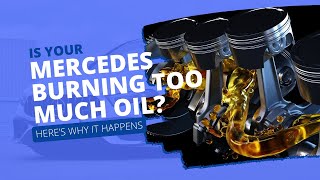
One of the most frequently discussed issues by owners of M256-equipped vehicles is higher-than-expected oil consumption. This is often the first sign of failing piston rings. When the rings can no longer effectively scrape oil from the cylinder walls, a small amount of oil enters the combustion chamber and is burned with each cycle. You may find yourself needing to top off the engine oil between scheduled changes. 🎬 See why your Mercedes might be burning excessive oil. One owner of a 2021 CLS 450 reported needing an engine teardown under warranty at 60,000 miles due to oil consumption problems.
Blue or Grey Exhaust Smoke
When oil burns in the combustion chamber, it creates a distinct blue or grey smoke that exits the tailpipe. This smoke is often most noticeable during acceleration or right after starting the engine. While normal exhaust can be white and thin, smoke caused by burning oil is thicker and may have a distinct burning smell.
Loss of Power and Poor Performance
Worn or damaged pistons and rings lead to a loss of compression in the affected cylinder. Since compression is essential for making power, a failure can result in sluggish acceleration, a general feeling of being underpowered, and engine hesitation. In some cases, the vehicle may shudder or stall.
Engine Knocking or Pinging
A knocking sound from the engine, sometimes described as "piston slap," can indicate excessive clearance between the piston and the cylinder wall. This noise may be more pronounced when the engine is cold and can lessen as it warms up and the metal expands. Severe knocking can also be a sign of engine detonation, where the fuel ignites prematurely, putting extreme stress on the piston.
Check Engine Light and Misfire Codes
A loss of compression from a piston issue can lead to incomplete combustion, causing an engine misfire. This will almost always trigger the Check Engine Light. Common diagnostic trouble codes (DTCs) associated with this condition include P0300 (Random/Multiple Cylinder Misfire Detected) or cylinder-specific codes like P0301, P0302, etc. While many things can cause a misfire, it can be a direct symptom of a mechanical engine problem like a bad piston.
Buying a Used Engine Piston: What to Look For


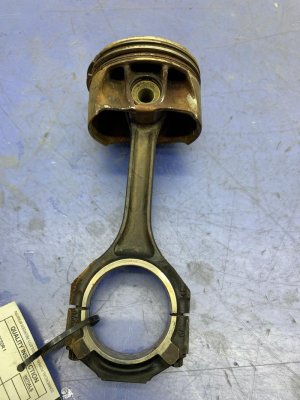
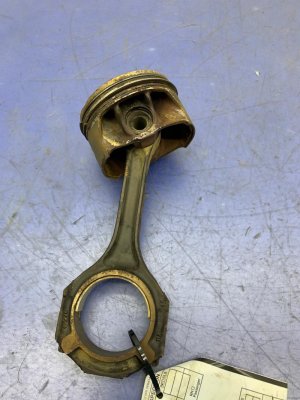
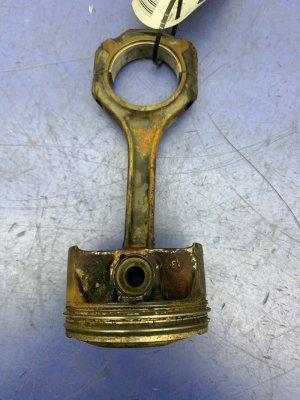
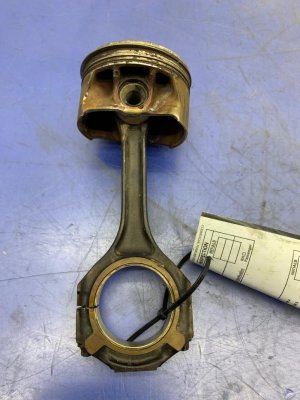
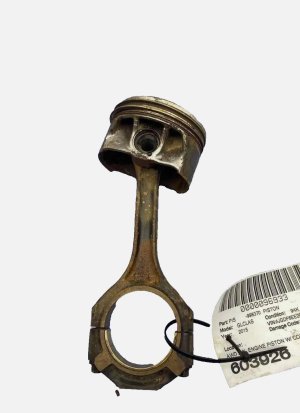
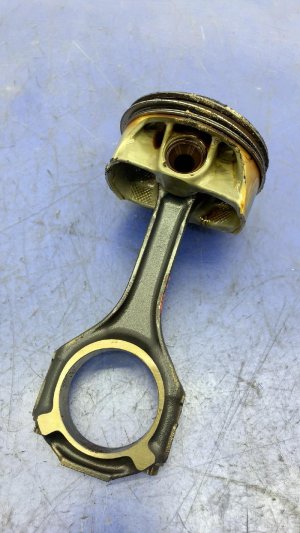
Replacing a piston in an M256 engine is a massive undertaking that requires a complete engine teardown. For this reason, buying a single used piston is generally not recommended. The labor cost far outweighs the part cost, and it's wise to replace all pistons and rings as a set. A more practical and often more economical solution is to purchase a complete, low-mileage used M256 engine. However, if you must inspect individual used pistons, here’s what to check:
- Verify Compatibility: The M256 engine is used across the 2018-2024 AMG GT, 2019-2023 E-Class, 2019-2023 CLS, 2019-2024 GLE, 2019-2024 GLS, and 2019-2024 S-Class. Ensure the piston is from an M256 engine and matches the OEM part number (A2560300400, A2560300900, A2560302000). Do not confuse this with parts from the older M276 V6 engine.
- Inspect the Piston Skirts: The sides of the piston, known as skirts, should be smooth and free of deep vertical scratches or scoring. Scoring indicates it was running in a damaged cylinder or with poor lubrication.
- Check the Ring Lands: The small grooves that hold the piston rings are called ring lands. Inspect them carefully for any cracks, chips, or signs of warping. A damaged ring land will not allow the new rings to seal properly.
- Examine the Piston Crown: The top surface of the piston should be free of cracks, melting, or physical damage from hitting a valve. Heavy carbon buildup is normal, but look for signs of abnormal combustion.
- Look for Overheating Signs: Discoloration (a blue or straw color) on the underside of the piston or on the wrist pin can indicate the engine was subjected to extreme heat, which can compromise the metal's integrity.
Pro Tip: Given the high labor cost, if an engine is already disassembled to the point of accessing the pistons, it is almost always more cost-effective to replace it with a known-good, low-mileage used engine assembly rather than rebuilding the original with one or two used pistons.
Known Issues, Recalls, and TSBs
While there are no widespread recalls specifically for M256 piston failure, several related issues and recalls affect the vehicles they are in. These problems can either cause symptoms that mimic piston failure or contribute to conditions that could lead to engine damage.
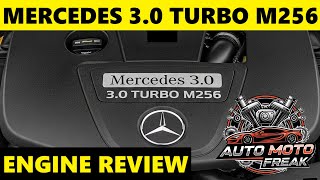
- Owner-Reported Oil Consumption: The most significant known issue is anecdotal reports of high oil consumption, which can be an early indicator of piston ring problems. This appears to be the primary concern for long-term M256 engine reliability. 🎬 Watch: A deep dive into M256 reliability and common failures.
- NHTSA Recall 24V-118: Affects some 2020-2023 GLE and GLS 450 models. A transmission software issue could cause the engine to stall during a specific downshift maneuver, leading to a loss of propulsion.
- NHTSA Recall 19V-605: On certain 2019 CLS models, the wiring for the electric coolant pump could chafe against the engine fan. This could cause the pump to fail, leading to engine overheating and a potential stall. Severe overheating can cause catastrophic piston and engine damage.
- Fuel System Recall (April 2022): A broad recall was issued for many Mercedes models, including those with the M256, to replace the fuel rail and injectors. Debris from production could cause a fuel leak over time.
- Ignition Coil Issues: A recall in Japan noted that some 2020 GLE models with the M256 engine could have faulty ignition coils, leading to misfires and reduced power.
Cost of Replacement
Replacing engine pistons is one of the most expensive repairs a vehicle can undergo due to the extensive labor involved. The engine must be removed from the vehicle and completely disassembled.
| Item | Estimated Cost |
|---|---|
| New OEM Piston (Single) | $500 - $1,100 |
| New Aftermarket Piston (Single) | Not widely available for this specific engine |
| Used OEM Piston with Rod | $150 - $300 |
| Shop Labor (Engine Teardown & Rebuild) | $6,000 - $12,000+ (estimating 40-60 hours at $150-$200/hr) |
| Total Job Cost (with new parts) | $10,000 - $20,000+ |
Warning: These costs are estimates. The total cost can be significantly higher when factoring in a full set of pistons, rings, bearings, gaskets, fluids, and any necessary machine shop work. A complete used engine replacement may be a more financially viable option.
Frequently Asked Questions (FAQ)
Can I replace just one bad piston in my M256 engine?
While technically possible, it is strongly discouraged. The labor to get to the pistons is immense. Replacing only one piston saves very little money and leaves you with other older pistons that may fail later. Pistons are also balanced as a set, and it's best practice to replace all of them, along with the piston rings, at the same time.
Is high oil consumption always a sign of bad pistons?
Not always, but it is a primary symptom. Other causes can include a faulty PCV (Positive Crankcase Ventilation) system, bad valve stem seals, or external oil leaks. However, in the M256 engine, owner reports frequently point towards piston rings as a concern for oil consumption. A compression test and a cylinder leak-down test can help confirm if the issue is with the pistons/rings.
How can I tell if my Mercedes has the M256 Inline-6 or the older V6 engine?
This is a critical check, as the parts are not interchangeable. The M256 is an inline-six (I6) engine, meaning all six cylinders are in a straight line. It was introduced starting in the 2018 model year for some vehicles. The older M276 engine is a V6. The easiest way to be certain is to check the vehicle's VIN with a dealership or an online VIN decoder. The M256 is also identifiable by its 48V mild-hybrid system, often marketed as 'EQ Boost'.
Can I prevent piston failure in my M256 engine?
While manufacturing defects can't be prevented, you can minimize wear by following a strict maintenance schedule. Use only Mercedes-Benz-approved synthetic oil (like MB 229.51, 229.52, etc.) and change it at the recommended intervals or sooner. Avoid aggressive driving when the engine is cold, and address any overheating or Check Engine Light issues immediately to prevent minor problems from causing major engine damage.
Helpful Videos
Technical Specifications
OEM Part Numbers: A2560300400 A2560300900 A2560302000
Engine: Mercedes-Benz M256 3.0L Inline-6 Turbocharged with EQ Boost
We Have This Part in Stock

The information in this article is provided for general reference and educational purposes only. Vehicle specifications, procedures, and part compatibility can vary by production date, trim level, and region. Always consult your vehicle's factory service manual and verify part numbers before purchasing or performing repairs. Safety-critical components such as airbags, seat belts, and braking systems should be installed by a qualified professional.
- MERCEDES-BENZ AMG GT:
- MERCEDES-BENZ ECLASS:
- MERCEDES-BENZ CLS:
- MERCEDES-BENZ GLE:
- MERCEDES-BENZ GLS:
- MERCEDES-BENZ S CLASS:
- 🎬 Helpful Videos
- 🛍️ Shop This Part
- Symptoms of Engine Piston Failure
- Excessive Oil Consumption
- Blue or Grey Exhaust Smoke
- Loss of Power and Poor Performance
- Engine Knocking or Pinging
- Check Engine Light and Misfire Codes
- Buying a Used Engine Piston: What to Look For
- Known Issues, Recalls, and TSBs
- Cost of Replacement
- Frequently Asked Questions (FAQ)
- 🎟️ Get 5% Off