

2017-2024 Audi & Porsche 3.0L EA839 Engine: Piston Rocking, Skirt Failure, and Noises Explained
This guide covers the known piston skirt and rocking issues in the 3.0L V6 engine found in the Audi S4, S5, A6, A7, A8, Q7, SQ5, and Porsche Cayenne, Panamera, and Macan.
- The primary issue is 'piston rocking' which causes skirt wear and can lead to cracks and engine failure. This can happen even on stock, well-maintained cars.
- Audi has issued a warranty extension for this specific 'piston skirt' issue to 8 years or 80,000 miles, which may cover the cost of repair.
- Key symptoms are a diesel-like 'clacking' noise (piston slap), loss of power, rough idle, and blue smoke from the exhaust.
- Repair is extremely expensive, requiring a full engine teardown or replacement. A used engine should be inspected with a borescope for cylinder scoring before purchase.
Primary Known Issue: Piston Rocking and Skirt Failure

The 3.0L single-turbo V6 engine, known as the EA839, is used across a wide range of 2017-2024 Audi and Porsche models. While most of these engines are reliable, a specific design vulnerability has been identified concerning the pistons. This issue is not necessarily caused by aggressive driving or tuning and can occur in completely stock vehicles.
The core problem is a condition called "piston rocking" or "piston slap." Due to design or clearance issues, the piston can tilt slightly side-to-side as it travels within the cylinder. This rocking motion causes uneven wear on the piston skirt, which is the lower part of the piston that helps stabilize it. Over time, this can lead to more serious problems:
- Piston Skirt Wear: The protective coating on the skirt wears away, leading to metal-on-metal contact with the cylinder wall.
- Cracked Pistons: The rocking motion creates uneven stress. Combined with small holes drilled into the piston for oil drainage that act as stress points, this can cause cracks to form, often near the oil control ring.
- Ringland Failure: A severe crack can cause a piece of the piston, particularly the area around the piston rings (the ringlands), to break off. This results in a complete loss of compression in that cylinder.
Pro Tip: Audi has released at least three revisions of the factory pistons to address durability concerns. This indicates an ongoing effort to resolve the issue in newer production vehicles.
Audi Warranty Extension for Piston Skirt Failure
In response to these issues, Audi of America has extended the factory warranty for the piston skirts on affected vehicles. The extended coverage is for 8 years or 80,000 miles from the vehicle's original in-service date, whichever comes first. This is a significant acknowledgment of the problem.
- This warranty extension is transferable to subsequent owners.
- If a dealer confirms the failure is due to a defect in the piston skirt, the diagnosis and repair will be covered at no cost.
- Owners who have already paid for this specific repair may be eligible for reimbursement from Audi.
This warranty extension applies to Audi models with the EA839 engine, including the S4, S5, SQ5, A6, A7, A8, and Q7. Porsche has not announced a similar official extension, despite using the same engine in the Cayenne, Panamera, and Macan.
Symptoms of a Failing Piston

A failing piston in the EA839 engine will present several distinct symptoms. It's important not to ignore them, as continued driving can lead to catastrophic engine failure.
Audible Noises
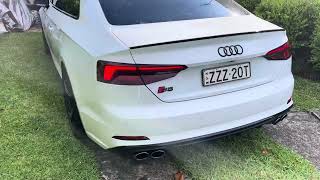
- Piston Slap: This is the most common sound. It's often described as a rhythmic "clack clack" or knocking noise, similar to a diesel engine. The noise is caused by the piston skirt hitting the cylinder wall. It may be louder when the engine is cold and can become more pronounced under light acceleration between 800-1500 RPM. 🎬 Watch: Hear the rhythmic clacking of a failed EA839 piston
- Misfire Sounds: As the piston fails and compression is lost, the engine may misfire, creating a sputtering or stumbling sound from the exhaust.
Performance Issues
- Loss of Power: The vehicle will feel noticeably sluggish and weak, especially during acceleration.
- Rough Idle: The engine will shake or vibrate more than usual when stopped or at idle.
- Engine Misfires: You may feel a jerking or hesitation as the engine struggles to fire correctly. This will often trigger a flashing Check Engine Light and store fault codes like P0300 (Random Misfire) or P0301-P0306 for a specific cylinder.
- Difficulty Starting: In severe cases where multiple cylinders have lost compression, the engine may crank but fail to start.
Visual Signs
- Blue or Gray Exhaust Smoke: A cracked piston or worn rings can allow engine oil to leak into the combustion chamber, where it gets burned. This produces a distinct blue-gray smoke from the exhaust, especially on startup or acceleration.
- Metal Particles in Oil: In advanced stages of failure, you may find fine, glitter-like metal particles in the engine oil and oil filter during an oil change. This is a sign of severe internal engine damage.
Related Known Issue: Rocker Arm Failure

It is critical to distinguish piston slap from another common issue on the EA839 engine: rocker arm failure. This problem was most common on 2018-2019 models but can affect other years as well. The rocker arms are part of the valvetrain, and their needle bearings can fail, causing a different type of engine noise.
- The Sound: Rocker arm failure typically produces a faster, higher-pitched "ticking" or "tapping" sound compared to the deeper "clack" of piston slap. 🎬 Listen: Compare these sounds to a healthy engine without issues
- Diagnosis: Both noises can be confusing. An experienced technician can often distinguish them, but a definitive diagnosis may require removing the valve covers to inspect the rocker arms or using a borescope to inspect the cylinder walls.
Warning: Both piston slap and rocker arm failure are serious. If you hear any persistent ticking, tapping, or knocking from your engine, it should be diagnosed by a professional immediately. Continuing to drive can turn a repairable issue into a complete engine replacement.
Buying a Used Engine Piston

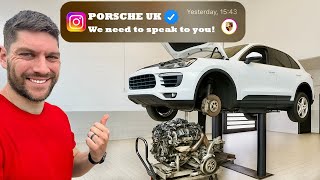
Because piston replacement is such a labor-intensive job, it's rare to replace just one. The job is most often done as a set during a full engine rebuild. 🎬 See this walkthrough: Rebuilding a failed Porsche EA839 engine If you are buying used parts, you are more likely to be purchasing a complete used engine rather than individual pistons.
Inspecting a Complete Used Engine
- Check Vehicle History: If possible, get the VIN of the donor vehicle. A 2021 or newer model is more likely to have updated pistons from the factory.
- Borescope Inspection: This is the most critical step. Use a borescope camera to inspect the cylinder walls through the spark plug holes. Look for any vertical scoring or scratches on the cylinder walls. Scored walls are a major red flag and mean the engine block is damaged.
- Oil Inspection: Check the oil for any metallic sheen or particles. Ask the seller to drain a small sample. Glitter in the oil means the engine has internal damage.
- Compression Test: A compression test will reveal the health of the pistons and rings. All cylinders should have strong, even compression readings.
- Warranty: Only buy a used engine from a reputable seller that offers a warranty. This provides protection in case a problem like piston slap develops shortly after installation.
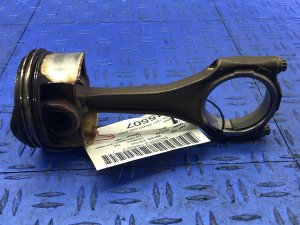
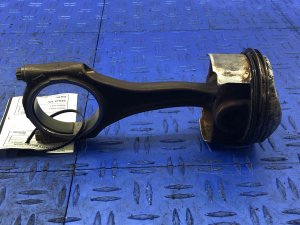
Inspecting Individual Used Pistons
Buying individual used pistons is risky and generally not recommended unless you are a professional engine builder. If you must, look for these signs:
- Skirt Scoring: Check the sides (skirts) of the piston for any vertical scratches or scuff marks. Any scoring means the piston is junk.
- Cracks: Carefully inspect the area around the oil ring grooves and the underside of the piston for any hairline cracks.
- Ring Lands: Ensure the metal lands between the ring grooves are intact and not chipped or broken.
Cost Breakdown for Piston Replacement

Piston replacement is one of the most expensive engine repairs due to the immense amount of labor required to completely disassemble the engine.
| Part or Service | Estimated Cost |
|---|---|
| New OEM Piston (Single) | $275 - $350 |
| New Aftermarket Piston Set (6) | $350 - $1,400 |
| Used OEM Engine (Complete) | $5,000 - $9,000+ |
| Remanufactured Engine (Complete) | $8,000 - $15,000+ |
| Shop Labor (Piston Replacement) | $5,000 - $10,000+ |
| Shop Labor (Engine Swap) | $2,500 - $4,500 |
Note: Costs are estimates and will vary based on location, shop, and the full extent of the damage. A full engine replacement can cost upwards of $20,000-$30,000 at a dealership.
Frequently Asked Questions (FAQ)
Is the piston skirt issue the same as the rocker arm failure?
No, they are two separate issues affecting the same EA839 engine. Piston skirt failure causes a deeper, diesel-like "clacking" sound and is related to the piston rocking in the cylinder. Rocker arm failure causes a faster, higher-pitched "ticking" sound and is related to failed bearings in the valvetrain. Both are serious and require immediate attention.
Will tuning my engine cause this piston problem?
Not necessarily. While increased power from tuning can put more stress on engine components, these piston failures have been reported in a significant number of completely stock, unmodified vehicles. The root cause appears to be a design or manufacturing vulnerability, not simply high performance. However, a tune will almost certainly cause a dealership to deny a warranty claim.
My car is over 80,000 miles. What are my options if I have piston slap?
If your vehicle is outside the 8-year/80,000-mile warranty extension, you will be responsible for the repair costs. The most common solutions are a complete engine rebuild with upgraded aftermarket pistons or swapping in a warrantied used engine. Both are very expensive repairs, often costing over $10,000. Some owners choose to sell the vehicle as-is rather than undertake the repair.
Can I prevent piston failure in my EA839 engine?
While you cannot change the piston's design, you can take steps to maximize engine life. Using high-quality fuel and adhering to strict oil change intervals (many experts recommend 5,000 miles, not the factory 10,000 miles) can help. Some owners also switch to a slightly thicker oil viscosity, like 5W-30 or 5W-40 (ensure it meets VW/Audi specifications), which may provide better lubrication and cushioning.
Which specific vehicles have this engine?
The 3.0L V6 EA839 engine is found in the 2018-2024 Audi S4, S5, and SQ5; 2019-2024 Audi A6, A7, and A8; 2020-2024 Audi Q7; 2019-2024 Porsche Cayenne; 2017-2020 Porsche Panamera; and 2019-2021 Porsche Macan S. Always verify your specific vehicle's engine before assuming it is affected.
Helpful Videos
![[EP.02] 경운기 소리의 정체?! 아우디 A8 EA839 피스톤 결함 정비기록](https://img.youtube.com/vi/uUGDhgJ02mw/mqdefault.jpg)
Technical Specifications
OEM Part Numbers: 06M107065AB 06M107066AB 06M107066AK 06M107100J 06M107065AD 06M107065AK
Engine: EA839 3.0L V6 Single Turbo. Stock Piston Bore Size: 84.5mm. Stock Compression Ratio: 11.2:1.
We Have This Part in Stock
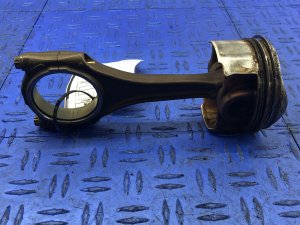
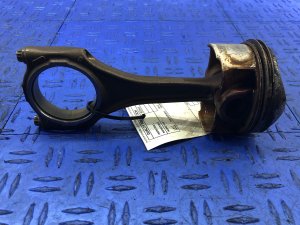
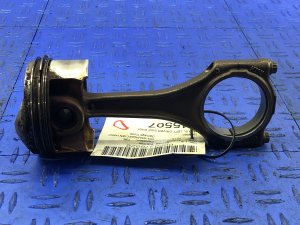
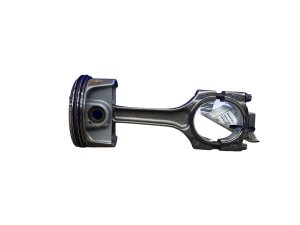

The information in this article is provided for general reference and educational purposes only. Vehicle specifications, procedures, and part compatibility can vary by production date, trim level, and region. Always consult your vehicle's factory service manual and verify part numbers before purchasing or performing repairs. Safety-critical components such as airbags, seat belts, and braking systems should be installed by a qualified professional.
- Audi A8:
- Porsche Cayenne:
- Audi S5:
- Porsche Panamera:
- Audi A6:
- Audi Q7:
- Audi S4:
- Porsche Macan:
- Audi A7:
- Audi SQ5:
- Audi Q8:
- 🎬 Helpful Videos
- 🛍️ Shop This Part
- Primary Known Issue: Piston Rocking and Skirt Failure
- Audi Warranty Extension for Piston Skirt Failure
- Symptoms of a Failing Piston
- Audible Noises
- Performance Issues
- Visual Signs
- Related Known Issue: Rocker Arm Failure
- Buying a Used Engine Piston
- Inspecting a Complete Used Engine
- Inspecting Individual Used Pistons
- Cost Breakdown for Piston Replacement
- Frequently Asked Questions (FAQ)
- 🎟️ Get 5% Off