

Audi & VW 3.0T/4.2L Piston Guide: Oil Consumption, Scoring & Replacement
Excessive oil consumption or engine knock in your Audi, VW, or Bentley often points to piston and ring failure; this guide covers diagnosis, replacement, and how to buy a quality used part.
- Pistons are bank-specific for left (driver side) and right (passenger side) banks; ordering the correct one is critical.
- The most common failure is excessive oil consumption caused by carbon buildup on the low-tension piston rings, which can lead to catastrophic cylinder scoring.
- Replacement is a major, engine-out repair (Difficulty 5/5) and is not a feasible DIY job for most mechanics.
- A carefully inspected used OEM piston is a reliable and cost-effective alternative to a very expensive new part, but must be checked for scoring.
Symptoms of a Failing Engine Piston

Piston problems can be catastrophic for an engine. Recognizing the early signs can help you address the issue before it leads to complete engine failure. Here are the most common symptoms:
- Excessive Oil Consumption: This is the most prevalent symptom for these engines. If you find yourself adding a quart of oil every 800-1,500 miles, it's a strong indicator that the piston rings are no longer sealing properly, allowing oil to enter the combustion chamber and burn away.
- Blue or Gray Exhaust Smoke: When oil burns in the combustion chamber, it creates a distinct blue- or gray-tinged smoke that exits the tailpipe. This is often most noticeable during acceleration.
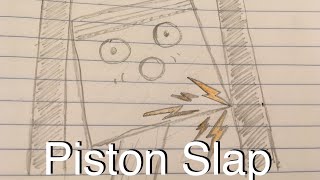
- Engine Knocking or Piston Slap: A sound often described as a hollow, metallic tapping or rattling can indicate a problem. "Piston slap" is a specific noise that occurs when a piston rocks side-to-side in the cylinder, and it's typically louder when the engine is cold and may quiet down as it warms up. 🎬 Watch: Hear what real piston slap sounds like. A more persistent, heavy knock could indicate a much more serious connecting rod bearing failure.
- Loss of Power and Poor Acceleration: Worn pistons and rings lead to a loss of compression. Without proper compression, the engine can't generate its full power, resulting in sluggish acceleration and a general feeling of being underpowered.
- Check Engine Light with Misfire Codes: A loss of compression in one or more cylinders can cause the engine to misfire. This will trigger the check engine light and store diagnostic trouble codes such as P0300 (Random/Multiple Cylinder Misfire) or P0301-P0308 (for specific cylinders).
Compatibility Warning: These engines use different, bank-specific pistons. The left and right cylinder banks require unique pistons. Ordering the wrong part is a common and very costly mistake. Always verify which bank you need before purchasing.
- For V6 Engines (3.0T): Bank 1 is the passenger side (cylinders 1-3). Bank 2 is the driver side (cylinders 4-6).
- For V8 Engines (4.2L): Bank 1 is the passenger side (cylinders 1-4). Bank 2 is the driver side (cylinders 5-8). 🎬 See this video for a deep dive into cylinder banks.
Known Issues: Oil Consumption & Cylinder Scoring

The primary reason for piston failure in many of the listed Audi, VW, and Bentley models, particularly those with the 3.0T Supercharged V6 and 4.2L V8 engines, is related to the piston rings. Over time, the original low-tension piston rings can get stuck due to carbon buildup. When the rings can no longer expand to seal against the cylinder wall, oil consumption skyrockets.
If this condition is ignored, the lack of proper lubrication and the scraping of a loose piston can lead to a more severe problem: cylinder bore scoring. This is when the piston skirt creates vertical scratches and gouges in the cylinder wall, permanently damaging the engine block. At this point, simply replacing the pistons is not enough; the entire engine often needs to be replaced or undergo extensive machine work. This issue was particularly noted in some 4.2L V8 engines.
Buying a Used Engine Piston: What to Inspect

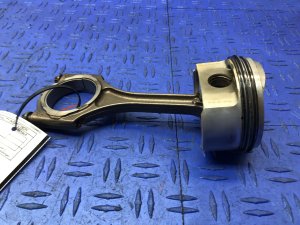
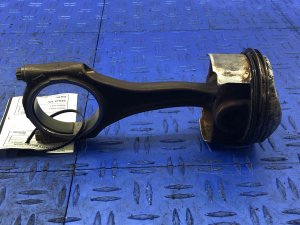
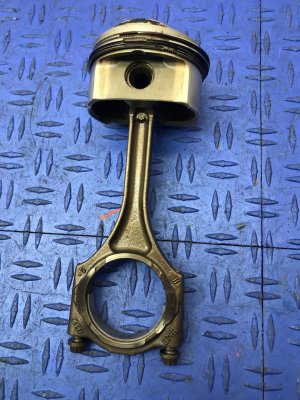
Because replacing a piston is such a labor-intensive job, it's crucial to start with a high-quality used OEM part. A thoroughly inspected used piston can provide the same performance and longevity as a new one for a fraction of the price. Here's what to check:
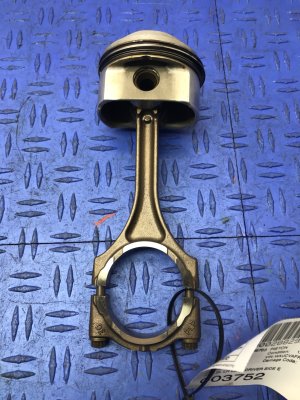
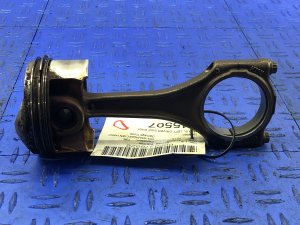
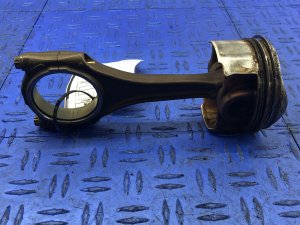
- Inspect the Piston Skirt: The skirt is the side of the piston. It should be smooth and free of any deep vertical scratches or gouges. This is the most critical area to check for signs of cylinder scoring. Minor scuffing might be acceptable, but deep grooves are a major red flag.
- Check the Piston Face: The top of the piston should be free of cracks, melting, or pitting, which could indicate severe detonation or overheating issues in the donor engine.
- Examine the Ring Lands: The ring lands are the small grooves where the piston rings sit. Ensure they are not cracked, chipped, or warped.
- Verify the Connecting Rod: If the piston comes with the connecting rod, check it for any signs of bending or discoloration from heat. The surface where the bearing sits should be perfectly smooth.
- Confirm Compatibility: Double-check the part number and, most importantly, confirm whether it is for the left or right cylinder bank. As noted, they are not interchangeable.
- Why Used OEM is a Smart Choice: A used OEM piston was manufactured by Audi/VW to their exact specifications for weight, material composition, and thermal expansion. Cheap aftermarket pistons may not be properly balanced or made from the correct alloy, which can lead to engine vibrations, premature wear, and catastrophic failure.
Replacement Difficulty and Cost
Replacing an engine piston is one of the most complex and labor-intensive repairs possible. It requires a complete engine teardown.
- Difficulty Rating: 5 out of 5
- DIY Feasibility: Not recommended for anyone without extensive engine rebuilding experience and specialized tools. This is an engine-out procedure.
Pro Tip: If one piston has failed due to oil consumption and ring issues, the others are likely in a similar condition. It is highly recommended to replace all pistons and rings for that engine bank, or for the entire engine, at the same time to avoid a repeat failure in the near future.
| Part/Service | Estimated Cost |
|---|---|
| New OEM Piston (Single) | $300 - $430 |
| New Aftermarket Piston Kit (Set of 6) | $450 - $1,900+ |
| Used OEM Piston (Single, with rod) | $75 - $150 |
| Shop Labor for Piston Replacement | $4,000 - $8,000+ (Engine rebuild labor) |
Note: Costs are estimates and can vary based on location, vehicle model, and the specific shop. In many cases of severe piston failure, replacing the entire engine with a good used unit is more cost-effective than a full rebuild.
OEM Part Numbers
This guide covers a range of pistons for different engines and cylinder banks. Always confirm the correct part number for your specific vehicle's VIN. Common part numbers include:
- 3.0T V6 Left Bank (Cylinders 4-6): 06E107065CJ, 06E107065CL, 06E107065CN, 06E107065DM
- 3.0T V6 Right Bank (Cylinders 1-3): 06E107066CJ, 06E107066CL, 06E107066CN, 06E107066DM
- 4.2L V8: 079107065CS, 079107066DC
Frequently Asked Questions (FAQ)
What is the main cause of piston failure in these Audi and VW engines?
The most common root cause is failure of the piston rings. Carbon buildup causes the rings to stick in their grooves, preventing them from sealing against the cylinder wall. This leads to excessive oil consumption, which can cause lubrication failure and ultimately piston and cylinder scoring.
Can I just replace the piston rings instead of the whole piston?
If the piston itself is in good condition (no scoring, cracks, or damaged ring lands), you can replace just the rings. However, since the labor to get to the piston is the same, and a used piston often comes as an assembly with its rod, it's often prudent to replace the entire unit if there is any doubt about the condition of the old piston.
How do I know if I need a piston for the left or right side of my engine?
For V6 engines like the 3.0T, the passenger side of the vehicle is Bank 1 (cylinders 1, 2, 3) and the driver's side is Bank 2 (cylinders 4, 5, 6). For V8s, the passenger side is Bank 1 (cylinders 1-4) and the driver's side is Bank 2 (cylinders 5-8). You must order the piston specific to the bank you are repairing.
Is there anything I can do to prevent piston ring problems?
Using high-quality engine oil that meets VW/Audi specifications and adhering to regular oil change intervals is the best prevention. Some owners have also reported success in reducing minor oil consumption by using engine flush products or performing a "piston soak" with a carbon cleaning solvent to free up stuck rings, though this is not a guaranteed fix for a heavily worn or damaged engine.
Helpful Videos
Technical Specifications
OEM Part Numbers: 06E107065CJ 06E107065CL 06E107065CN 06E107065DM 06E107065DS 06E107065EC 06E107065EE 06E107066CJ 06E107066CL 06E107066CN 06E107066DM 06E107066DS 06E107066EC 079107065CS 079107066DC
Bore Size: 84.5mm (Standard for 3.0T)
We Have This Part in Stock

The information in this article is provided for general reference and educational purposes only. Vehicle specifications, procedures, and part compatibility can vary by production date, trim level, and region. Always consult your vehicle's factory service manual and verify part numbers before purchasing or performing repairs. Safety-critical components such as airbags, seat belts, and braking systems should be installed by a qualified professional.
- Audi A8:
- Audi A6:
- Audi S5:
- Audi Q7:
- Volkswagen Touareg:
- Audi A7:
- Audi S4:
- Audi Q5:
- Bentley Continental:
- Volkswagen Phaeton: