

2018-2023 BMW B58 Oil Pump Guide: The Plastic Failure and All-Metal Upgrade
For owners of the BMW X5, X6, X7, 740i, and 840i, an inability to measure engine oil is a critical warning sign of impending oil pump failure.
- The primary issue is a plastic internal component in the oil pump on 2018-2022 B58 engines that cracks, leading to failure.
- The most common early warning sign is the vehicle's inability to complete an electronic engine oil level measurement.
- Replacement is a very labor-intensive and expensive job (8+ hours) requiring the front subframe to be removed.
- The only permanent fix is to install the updated all-metal oil pump, OEM part number 11418646454.
The Core Problem: A Critical Plastic Component

The primary reason for oil pump failure in 2018-2022 BMW models equipped with the B58 engine (often called the B58TU or Gen 2) is a design flaw. These models include the 2019-2023 BMW X5, 2020-2023 BMW X6, 2019-2022 BMW X7, 2018-2023 BMW 740i, and 2019-2025 BMW 840i. The original variable-displacement oil pump was built with a critical internal adjusting ring made of plastic.
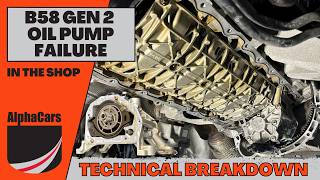
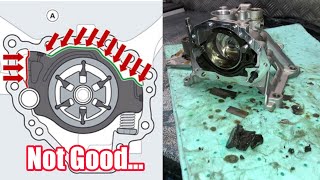
🎬 Watch: A deep dive into why this plastic component fails.Over time, repeated heat cycles cause this plastic component to become brittle and crack. This failure is often accelerated by very cold temperatures during engine startup or by using engine oil that is thicker than the manufacturer's 0W-20 recommendation. When this plastic ring fractures, the pump can no longer regulate oil pressure correctly. This can result in either dangerously low oil pressure or, in some cases, excessively high pressure, both of which can lead to severe engine damage. BMW later corrected this by releasing an updated oil pump, part number 11418646454, which uses all-metal internal components.
Symptoms of a Failing Oil Pump

Pay close attention to these warning signs. The first symptom is subtle, but the later ones indicate an emergency.
1. Inability to Measure Engine Oil Level
This is the most common and earliest specific indicator of this issue. Owners will find that the electronic oil level measurement in the iDrive system repeatedly fails or won't complete. 🎬 See a demonstration of this oil level measurement failure. This happens because the vehicle's computer (DME) requires stable oil pressure to take a reading; a failing pump creates erratic pressure, causing the test to abort. If you can only get a successful reading when the engine is cold but not after a long drive, it's a strong sign of a developing problem.
2. Low Oil Pressure Warning Light
If you see a red oil can symbol on your dashboard, it is a critical warning. It means the engine has lost adequate oil pressure. You should safely pull over and shut off the engine immediately to prevent catastrophic engine failure. Do not continue to drive.
3. Whining, Whirring, or Humming Noises
A failing oil pump can produce a noticeable whining or humming sound from the engine bay. This noise is caused by the worn or broken internal components of the pump struggling to operate and may be more noticeable on a cold start.
4. Engine Overheating
Engine oil is responsible for a significant portion of engine cooling. If the oil pump isn't circulating enough oil, friction will increase, and engine temperatures will rise, potentially leading to overheating.
Warning: Any symptom of low oil pressure is critical. Driving a vehicle with low oil pressure can lead to complete engine seizure and the need for a full engine replacement, a repair that can cost over $15,000.
Buying a Used Engine Oil Pump

For this specific part, buying a used component is not recommended unless you can be 100% certain it is the updated, all-metal version. The labor cost to replace this pump is extremely high, and installing a used pump of the older, failure-prone design is a significant risk.
- Verify the Part Number: The only safe pump to install is the updated OEM part number 11418646454. Do not install a used pump without confirming this number is on the part itself.
- Visual Inspection is Not Enough: The problematic plastic component is internal. You cannot tell the difference between the old and new style pumps from the outside.
- Risk vs. Reward: A used, older-style pump might cost a few hundred dollars less, but it carries the same failure risk as the part you are replacing. The $2,000+ in labor to do this job a second time far outweighs any initial savings.
- The Better Alternative: Given the critical nature of this part and the high labor cost, purchasing a new OEM pump (11418646454) is the most sensible investment. This ensures you have the corrected all-metal design and a 2-year manufacturer warranty.
Known Issues, TSBs, and Recalls
While there is no official safety recall for the plastic oil pump failure, the issue is widely documented in owner forums and by independent repair shops. Many owners have reported failures on 2019-2021 models, particularly the X5, X7, and 740i.
Separately, BMW issued a Delivery Stop/TSB (11 10 24) for some 2023-2025 models, including the X5, X6, and X7, because the oil pump mounting screws may not have been tightened to the correct torque at the factory. This requires the replacement of the oil pump. While this is a different root cause, it underscores the importance of correct installation procedures for this component.
Replacement Difficulty and Procedure

Replacing the oil pump on these B58-powered BMWs is a complex and labor-intensive job.
- Difficulty Rating: 5 out of 5 (Professional level).
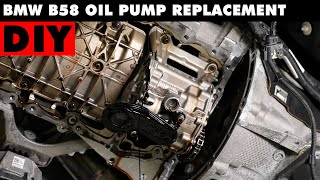
- Procedure Overview: The engine must be supported from above with an engine brace. The front subframe, which holds the suspension, steering rack, and front differential (on xDrive models), must be completely removed from the vehicle to gain access to the oil pan. Only then can the oil pan be removed to access and replace the internally mounted oil pump. 🎬 Watch: A step-by-step walkthrough of this complex replacement procedure.
- DIY Feasibility: This is not a recommended job for a DIY mechanic unless they have access to a vehicle lift, engine support brace, and extensive experience with major BMW repairs.
Cost Breakdown
The cost is primarily driven by the high amount of labor required.
| Item | Estimated Cost | Notes |
|---|---|---|
| New OEM Pump (P/N 11418646454) | $650 - $800 | This is for the updated, all-metal part. |
| New Aftermarket Pump | $400 - $600 | Availability is limited, and quality may vary. Sticking with OEM is strongly recommended for this part. |
| Used OEM Pump | $200 - $400 | Not recommended. High risk of receiving the older, failure-prone plastic version. |
| Shop Labor | $1,500 - $2,500+ | Labor at an independent shop. Dealer labor can be significantly higher, with total job costs reaching $5,000-$8,000. |
Frequently Asked Questions (FAQ)
Why can't my BMW measure its engine oil level?
The most likely reason on these models is that the failing oil pump is creating unstable oil pressure. The car's computer requires a steady pressure to perform the electronic measurement, so it aborts the test. This is a serious warning sign that the pump is failing.
Is it safe to drive if my oil pressure light is on?
No. A red oil pressure warning light means the engine is not receiving proper lubrication. You must pull over and shut off the engine as soon as it is safe to do so. Continuing to drive, even for a short distance, can cause immediate and catastrophic engine failure.
Is there a recall for the plastic oil pump?
As of early 2026, there is no official safety recall from BMW for this specific issue. Despite numerous owner complaints, the repair is typically only covered if the vehicle is under its original or an extended warranty.
Will using a different oil prevent this failure?
Using the correct oil is important, but it won't prevent the failure of a pump that already has the flawed plastic part. In fact, using a thicker oil than the recommended 0W-20 can put *more* strain on the plastic components and may accelerate failure. The only permanent solution is to replace the pump with the updated all-metal version.
Does this issue affect all B58 engines?
No, this specific failure is characteristic of the second-generation B58 engine (B58TU) produced from roughly 2018 to early 2022. Earlier Gen 1 B58 engines and later Gen 3 engines (from mid-2022 onwards) use different oil pump designs that do not have this specific plastic component issue.
Helpful Videos

Technical Specifications
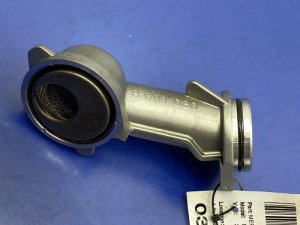
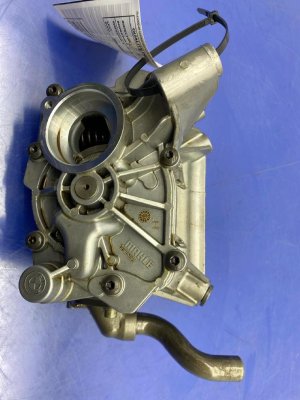
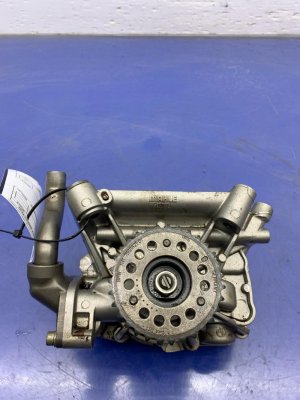
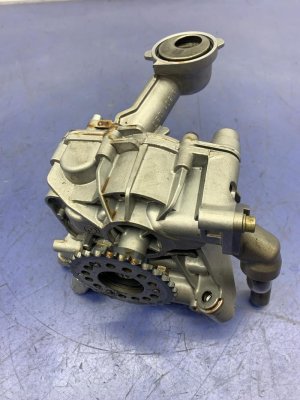
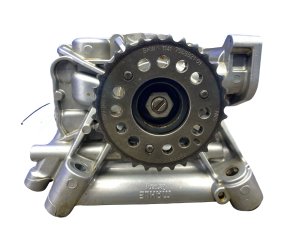
OEM Part Numbers: 11418646454
Fits B58TU (Gen 2) engines. This is the updated all-metal design, superseding the original version with plastic internal components.
We Have This Part in Stock


The information in this article is provided for general reference and educational purposes only. Vehicle specifications, procedures, and part compatibility can vary by production date, trim level, and region. Always consult your vehicle's factory service manual and verify part numbers before purchasing or performing repairs. Safety-critical components such as airbags, seat belts, and braking systems should be installed by a qualified professional.
- BMW X5:
- BMW X6:
- BMW X7:
- BMW 740i:
- BMW 840i:
- 🎬 Helpful Videos
- 🛍️ Shop This Part
- The Core Problem: A Critical Plastic Component
- Symptoms of a Failing Oil Pump
- 1. Inability to Measure Engine Oil Level
- 2. Low Oil Pressure Warning Light
- 3. Whining, Whirring, or Humming Noises
- 4. Engine Overheating
- Buying a Used Engine Oil Pump
- Known Issues, TSBs, and Recalls
- Replacement Difficulty and Procedure
- Cost Breakdown
- Frequently Asked Questions (FAQ)
- 🎟️ Get 5% Off