

Diagnosing Clunks & Vibrations: The 2015-2024 VW & Audi MQB Transmission Mount
This guide covers the common failure symptoms, replacement costs, and inspection tips for the driver-side transmission mount on the Audi A3, S3, TT and VW Golf, GTI, & Golf R.
- This guide refers to the Left (Driver Side) Transmission Mount, which commonly fails and causes clunking noises and vibrations.
- The bolts for this mount are single-use 'stretch' bolts and MUST be replaced with new ones during installation.
- A good used OEM mount is often a better choice for maintaining ride comfort than a new aftermarket part, which can increase cabin vibration.
- Replacement is a complex job requiring the removal of the battery, battery tray, and ECU to gain access.
Symptoms of a Failing Transmission Mount
When the driver-side transmission mount on your Audi or Volkswagen begins to fail, it will introduce noticeable sounds and vibrations into the cabin. Because this mount is a fluid-filled hydro mount, it can fail either by the rubber tearing or by the internal fluid leaking out, reducing its ability to dampen movement.
- Clunking or Knocking Noises: The most common symptom is a distinct 'clunk' or 'thud' sound. This is often heard when shifting gears (especially from Park to Drive or Reverse), accelerating hard, or braking suddenly. 🎬 See how a bad mount sounds during braking in this video. The noise is the sound of the transmission moving excessively and hitting its limits.
- Excessive Vibration: A worn mount cannot properly absorb drivetrain vibrations. You may feel excessive shaking through the cabin, floor, or steering wheel, particularly at idle or when the engine is under load.
- Rough Shifting: Gear changes may feel jerky or abrupt. As the mount wears, the transmission can shift out of its optimal alignment, which can affect shift quality and smoothness.
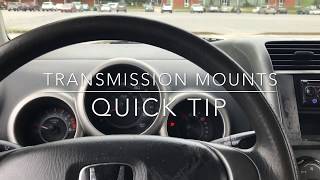
- Visible Engine Movement: If you have an assistant rev the engine gently while the car is in gear with the brakes held firmly, you may see the entire engine and transmission assembly rock back and forth more than it should. This is 🎬 Watch: A quick tip on how to check your mounts. a clear sign of a worn mount.
Known Issues, TSBs, and Recalls
There are no major recalls or Technical Service Bulletins (TSBs) from Audi or Volkswagen specifically for premature failure of this transmission mount. Failures are typically the result of normal wear and tear over time and mileage. The original hydro mounts can last over 100,000 miles, but their lifespan can be shortened by aggressive driving or aftermarket modifications that increase engine power.
Buying a Used Transmission Mount: What to Check
A high-quality, low-mileage used OEM mount can be an excellent value, often providing better comfort and longevity than a cheap new aftermarket part. Here’s what to inspect before buying:
Pro Tip: For these vehicles, a used OEM mount is often a better choice than a new, non-OEM part if you want to maintain the original ride quality. The factory hydro mount is specifically tuned to absorb vibrations from the 2.0L engine. Many aftermarket mounts use solid rubber or polyurethane, which can significantly increase cabin noise and vibration (often referred to as NVH, or Noise, Vibration, and Harshness).
- Inspect the Rubber: Carefully check all sides of the rubber for cracks, perishing, or tearing. Pay close attention to the areas where the rubber meets the metal housing.
- Check for Leaks: This is a fluid-filled hydro mount. Look for any dark, oily residue or 'black goo' on the mount's surface. This indicates the internal fluid has leaked out, and the mount is no longer effective.
- Examine the Housing: Check the aluminum body of the mount for any cracks, especially around the bolt holes. Ensure there is no significant corrosion or damage from a previous accident.
- Consider Mileage: Ask the seller for the mileage of the vehicle the part came from. A mount from a low-mileage vehicle (under 60,000 miles) is a much safer bet than a high-mileage one.
Replacement Overview & Difficulty
Replacing the driver-side transmission mount is a significant job that requires mechanical experience.
- Difficulty Rating: 4 out of 5 (Advanced DIY)
- Estimated Time: 2-3 hours
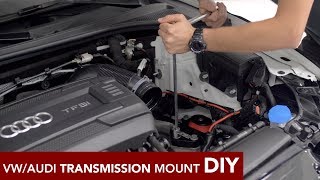
- DIY Feasibility: Feasible for an experienced home mechanic, but not recommended for beginners. 🎬 Follow this step-by-step DIY guide for the replacement process.
The process involves supporting the transmission from below with a floor jack and a block of wood. To access the mount, you must remove the airbox, battery, battery tray, and the vehicle's computer (ECU). The mount is then unbolted from the chassis and the transmission.
Warning: The bolts used to secure this mount are torque-to-yield, also known as 'stretch' bolts. They are designed to be used only once. You MUST use new bolts when installing the replacement mount to ensure it is secured safely. Reusing the old bolts can lead to them backing out or breaking, which could cause catastrophic damage.
Cost to Replace the Transmission Mount
| Part or Service | Estimated Cost | Notes |
|---|---|---|
| New OEM Part | $110 - $160 | From an Audi or Volkswagen dealership parts counter. |
| New Aftermarket Part | $50 - $120 | Price varies by brand. Performance-oriented polyurethane mounts can be more expensive. |
| Used OEM Part | $40 - $70 | From a reputable auto recycler or online marketplace. |
| Shop Labor Cost | $220 - $360 | Based on 2-3 hours of labor at an independent repair shop. |
| Total Professional Replacement | $340 - $500 | Using an OEM part at an independent shop. |
Frequently Asked Questions (FAQ)
Is this an engine mount or a transmission mount?
This specific part, located on the driver's side of the engine bay, is technically the transmission mount. The engine mount is on the passenger side. However, the terms are often used interchangeably, and many people refer to both as 'engine mounts'.
Can I drive with a bad transmission mount?
It is not recommended. While the vehicle may be drivable, a failed mount puts significant stress on the other mounts, driveshafts, exhaust components, and hoses. Continued driving can lead to more expensive failures. If the mount fails completely, the excessive movement could cause a loss of control or severe drivetrain damage.
Why do I have to replace the bolts? They look fine.
These vehicles use single-use 'stretch' bolts for critical components like mounts. They are designed to stretch slightly when torqued to a specific angle, which provides the correct clamping force. Once stretched, they are permanently deformed and will not hold the correct torque if reused, risking a catastrophic failure.
Will an aftermarket 'performance' mount make my car vibrate more?
Yes, almost certainly. Most performance mounts replace the soft, fluid-filled OEM rubber with hard polyurethane to reduce engine movement. This provides a more connected feel and better throttle response, but it also transmits far more engine vibration and noise into the cabin. If you value a comfortable, quiet ride, stick with an OEM or good used OEM mount.
Helpful Videos

Technical Specifications
OEM Part Numbers: 5Q0199555T 5Q0199555AD 5Q0199555BG 5Q0199555BJ
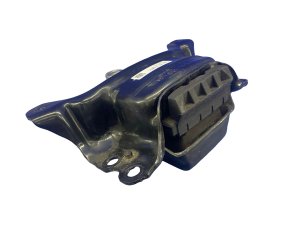
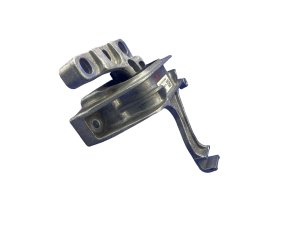
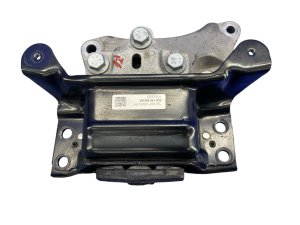
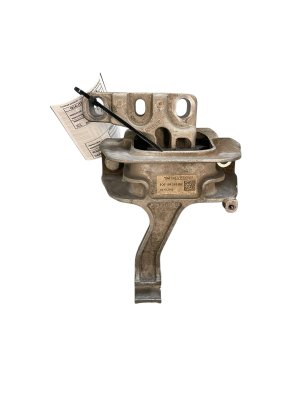
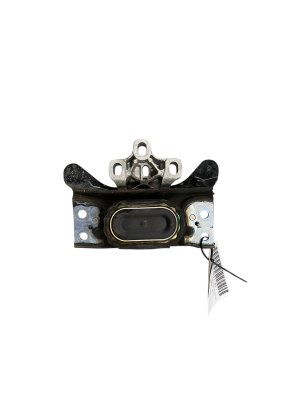
This is a fluid-filled (hydro) mount that connects the driver-side of the transmission to the vehicle's frame.
We Have This Part in Stock

The information in this article is provided for general reference and educational purposes only. Vehicle specifications, procedures, and part compatibility can vary by production date, trim level, and region. Always consult your vehicle's factory service manual and verify part numbers before purchasing or performing repairs. Safety-critical components such as airbags, seat belts, and braking systems should be installed by a qualified professional.
- Audi TT:
- Audi A3:
- Audi S3:
- Volkswagen Golf:
- Volkswagen Golf R:
- Volkswagen GTI: