

Diagnosing Failed Engine Mounts on 2015-2023 Audi A3, S3, TT & VW Golf
This guide explains the common clunks and vibrations caused by failed engine, transmission, and dogbone mounts and how to fix them.
- These vehicles have three main mounts: passenger side (engine), driver side (transmission), and a lower 'dogbone' mount. They often wear out together.
- The most common symptoms of failure are excessive vibration at idle and a loud 'clunk' when accelerating or shifting gears.
- Diagnosis involves a visual inspection for cracked rubber or fluid leaks, and a 'brake-torque' test to check for excessive engine movement.
- When replacing mounts, you must use new torque-to-yield (stretch) bolts, as the old ones are not reusable.
Understanding the Mount System in Your Audi or VW
The 2015-2020 Audi A3, 2015-2020 Audi S3, 2016-2023 Audi TT, and 2015-2019 Volkswagen Golf (including Golf R) share a similar engine and chassis design known as the MQB platform. For the 2.0L all-wheel-drive models, the drivetrain is held in place by three key mounts. It's common for owners to replace all three at the same time, as they wear at a similar rate.
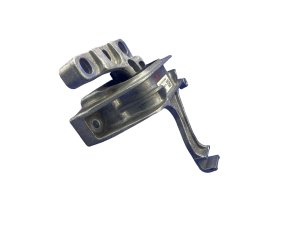
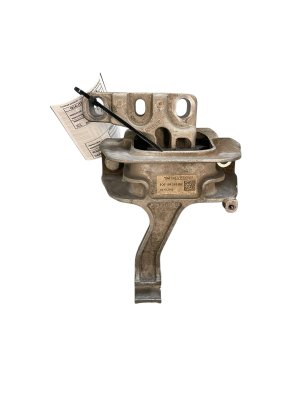
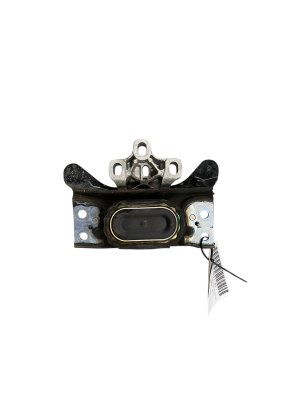
- Engine Mount (Passenger Side): This supports the engine's weight on the right side of the vehicle.
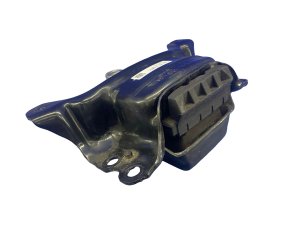
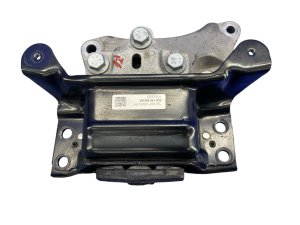
- Transmission Mount (Driver Side): This supports the transmission on the left side of the vehicle. This is the part most people mean when they refer to the 'driver side engine mount'.
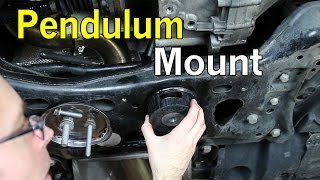
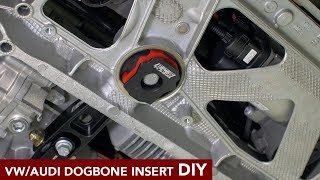
- Pendulum or 'Dogbone' Mount: This is a lower mount that connects the subframe to the bottom of the transmission. It's primary job is to control the fore-and-aft rocking motion of the engine during acceleration and deceleration.
Symptoms of a Failed Engine Mount
A failing mount will typically make itself known through new noises and vibrations. The most common symptoms include:
- Excessive Vibration at Idle: A noticeable vibration felt in the steering wheel, floor, or seats when the car is stopped in gear.
- Clunking or Thudding Noises: A distinct 'clunk' or 'thump' when you accelerate, decelerate, or shift gears (e.g., from Park to Drive). This is the sound of the engine assembly moving and hitting its limits.
- Rough Start-up and Shutdown: The engine may seem to shudder more than usual when you start it or turn it off.
- Visible Engine Movement: If you have a helper put the car in gear, hold the brake, and gently apply the throttle, you may see the engine lift or rock significantly more than an inch.
How to Diagnose a Bad Mount
You can often diagnose a bad mount with a few simple checks:
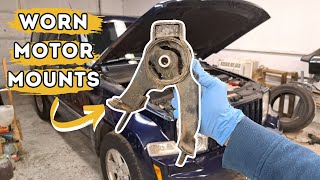
🎬 Watch: How to identify and locate failing engine mounts.- Visual Inspection: Look at the rubber portions of the upper engine and transmission mounts. Look for deep cracks, tearing, or separation of the rubber. These mounts are hydraulic, so look for dark, oily residue around the mount, which indicates the internal fluid has leaked out. A collapsed mount will have a much smaller gap between the metal housing and the vehicle's frame compared to a new one.
- Brake-Torque Test: With the hood open, have a helper sit in the car, hold the brake pedal firmly, and shift into Drive. When they briefly and gently apply the gas, watch the engine. If it lifts up violently, a mount is likely bad. Do the same in Reverse. Excessive movement in Drive often points to the passenger-side or lower mount, while movement in Reverse can point to the driver-side mount.
- Pry Bar Test: For the lower dogbone mount, you can use a pry bar to check for play in the rubber bushings. There should be very little movement. For the upper mounts, you can carefully use a floor jack and a block of wood under the oil pan or transmission to slightly lift the engine. If the cabin vibration disappears as you take the weight off the mount, the mount has failed internally.
Known Issues, TSBs, and Recalls
As of early 2026, there are no specific recalls or Technical Service Bulletins (TSBs) issued by Audi or Volkswagen directly addressing premature failure of the engine, transmission, or dogbone mounts on these models. Failures are typically due to age, mileage, and wear. However, several other recalls exist for these vehicles for issues like fuel pumps and rear springs, so it's always wise to check your VIN on the NHTSA website.
Pro Tip: The lower dogbone mount is the easiest to replace and often the first to show wear. Many owners report that simply replacing a worn dogbone mount or installing an aftermarket 'bushing insert' can dramatically improve the feeling of the drivetrain, reducing slop and sharpening throttle response.
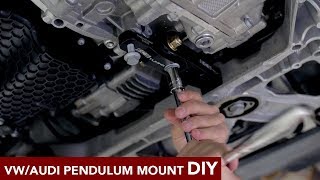
🎬 Watch: How to install a dogbone mount bushing insert.Buying a Used Engine Mount: What to Check
A low-mileage used OEM mount can be a smart purchase, often providing better performance and longevity than a cheap aftermarket alternative. The rubber compounds used by the original manufacturer are specifically designed for the vibration profile of your engine. Aftermarket parts can sometimes be too hard, leading to increased cabin vibration.
When inspecting a used mount, look for these red flags:
- Cracks or Tears: Flex the rubber by hand. Any visible cracks, splits, or tearing in the rubber means the part is no good.
- Fluid Leaks: Check for any signs of oily residue. A dirty or stained appearance around the rubber bellows indicates the hydraulic fluid has leaked out, and the mount's damping ability is gone.
- Sagging or Collapse: Compare the used mount to a picture of a new one. If the rubber part looks compressed or 'pancaked', it has failed and will not support the engine correctly.
- Corrosion or Damage: Inspect the aluminum or steel housing for any cracks, heavy corrosion, or stripped bolt threads.
For these vehicles, a used mount with under 60,000 miles that passes a thorough visual inspection is generally a safe and cost-effective option.
Replacement Overview and Difficulty
Replacing the mounts on these vehicles requires supporting the engine's weight. This is a critical safety step. Never attempt to remove a mount without a floor jack or engine support bar holding the drivetrain in place.
Transmission Mount (Driver Side)
- Difficulty: 3/5 (Moderate)
- Time: 2-3 hours
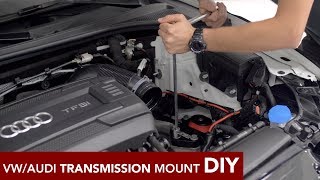
- Details: Access requires removing the airbox, battery, and battery tray. Once cleared, the bolts holding the mount to the chassis and transmission can be removed. The engine must be supported from below. 🎬 See this step-by-step transmission mount replacement walkthrough.
Engine Mount (Passenger Side)
- Difficulty: 3/5 (Moderate)
- Time: 1.5-2.5 hours
- Details: Access is easier than the driver's side. The coolant reservoir must be unbolted and moved aside. With the engine supported, the mount bolts can be accessed and the mount can be swapped.
Pendulum 'Dogbone' Mount (Lower)
- Difficulty: 1/5 (Easy)
- Time: 30-60 minutes
- Details: This is the simplest of the three. It is easily accessible from under the front of the car. Simply remove two or three large bolts, swap the mount, and reinstall the new bolts. The engine does not need to be supported for this procedure.
Warning: The bolts for these mounts are typically torque-to-yield (stretch) bolts. They are designed for one-time use and must be replaced whenever they are removed. Always use new bolts and tighten them to the manufacturer's specified torque sequence and angle.
Cost Comparison for Drivetrain Mounts
Prices can vary by location and supplier. The following table provides an estimated cost breakdown for each of the three main mounts.
| Part | New OEM | New Aftermarket | Used OEM | Shop Labor |
|---|---|---|---|---|
| Transmission Mount (Driver) | $100 - $150 | $75 - $110 | $40 - $70 | $220 - $325 |
| Engine Mount (Passenger) | $140 - $200 | $80 - $130 | $35 - $65 | $230 - $340 |
| Pendulum/Dogbone Mount | $160 - $185 | $25 - $80 | $50 - $90 | $75 - $150 |
Frequently Asked Questions (FAQ)
Can I drive with a bad engine mount?
You can, but it's not recommended for long. A failed mount puts extra stress on the other mounts, causing them to fail sooner. In severe cases, the engine movement can damage other components like exhaust pipes, coolant hoses, and driveshafts. It's best to get it replaced as soon as possible.
Should I replace all three mounts at once?
It is often a good idea. The mounts are all the same age and have been subjected to the same forces. If one has failed, the others are likely worn and will fail soon. Replacing them all at once saves you from having to do the job again in the near future.
Will an upgraded aftermarket mount make my car vibrate more?
Yes, often it will. Performance-oriented aftermarket mounts use stiffer polyurethane instead of soft rubber. This provides a more connected feel and reduces engine movement, but it also transmits more engine vibration into the cabin, especially at idle. For a daily-driven car, a new OEM or quality OEM-equivalent mount is usually the best choice for comfort.
Is the driver side mount an 'engine mount' or 'transmission mount'?
On these vehicles with transverse engines, the mount on the driver's side (left side) connects to the transmission housing. Therefore, it is technically a transmission mount. The mount on the passenger side (right side) connects to the engine block. However, many people refer to both as 'engine mounts'.
Helpful Videos
Technical Specifications
OEM Part Numbers: 5Q0199555BJ 5Q0199555T 5Q0199555BR 5Q0199262BK 5Q0199262BH 5Q0199262DD 5Q0199855AJ 5Q0199855AG 5Q0199855AF
The upper engine and transmission mounts are typically hydraulic (fluid-filled) to dampen vibration. The lower 'dogbone' mount uses solid rubber bushings. All mounting bolts are torque-to-yield and must be replaced after removal.
We Have This Part in Stock

The information in this article is provided for general reference and educational purposes only. Vehicle specifications, procedures, and part compatibility can vary by production date, trim level, and region. Always consult your vehicle's factory service manual and verify part numbers before purchasing or performing repairs. Safety-critical components such as airbags, seat belts, and braking systems should be installed by a qualified professional.
- Audi A3:
- Audi S3:
- Audi TT:
- Volkswagen Golf:
- 🎬 Helpful Videos
- 🛍️ Shop This Part
- Understanding the Mount System in Your Audi or VW
- Symptoms of a Failed Engine Mount
- How to Diagnose a Bad Mount
- Known Issues, TSBs, and Recalls
- Buying a Used Engine Mount: What to Check
- Replacement Overview and Difficulty
- Transmission Mount (Driver Side)
- Engine Mount (Passenger Side)
- Pendulum 'Dogbone' Mount (Lower)
- Cost Comparison for Drivetrain Mounts
- Frequently Asked Questions (FAQ)
- 🎟️ Get 5% Off