

2000-2004 Volvo S40 & V40 Intake Manifold: Solving Rough Idles and Lean Codes
This guide covers diagnosing, replacing, and finding a quality used intake manifold for your 1.9L turbocharged Volvo S40 or V40.
- The most common failure is a vacuum leak from a bad gasket or cracked manifold, causing a rough idle and a P0171 lean code.
- For 2004 models, check the VIN; this part only fits first-gen cars with 'VS' or 'VW' as the 4th and 5th digits.
- Before replacing the manifold, inspect the brake booster vacuum hose, as a recalled defect on 2004 models causes identical symptoms.
- When replacing the manifold, it is essential to use a new gasket and it is highly recommended to replace the fuel injector O-rings at the same time.
Common Symptoms of a Failing Intake Manifold

When the intake manifold on a 2000-2004 Volvo S40 or V40 fails, it's almost always due to a vacuum leak. This leak can come from a crack in the plastic body of the manifold itself or, more commonly, from a failed gasket between the manifold and the cylinder head. This allows unmetered air—air that the engine's computer doesn't know about—to enter the engine, leading to a number of distinct symptoms.
- Rough or Unstable Idle: The engine may idle erratically, surging up and down, or feeling like it's about to stall. This is often worse after the engine has warmed up.
- Check Engine Light: A vacuum leak will cause the engine to run lean (too much air, not enough fuel), triggering diagnostic trouble codes. The most common code is P0171 (System Too Lean, Bank 1). You may also see codes like P2279 (Intake Air System Leak).
- Audible Hissing or Whistling: You may hear a distinct hissing sound coming from the engine bay, especially at idle. This is the sound of air being sucked through a crack or bad gasket.
- Poor Performance and Fuel Economy: The incorrect air/fuel mixture can lead to hesitation during acceleration, reduced power, and a noticeable drop in gas mileage.
Important: On 2004 models, a safety recall (NHTSA #04V493000) was issued for a cracking non-return valve in the brake booster vacuum hose. A leak here can cause a rough idle and other symptoms identical to a bad intake manifold. Always inspect this hose before condemning the manifold.
Diagnosing the Problem

Before buying parts, it's crucial to confirm that the intake manifold or its gasket is the source of the leak. Here are the two most effective methods:
Method 1: The Smoke Test (Recommended)
A smoke test is the most reliable way to find a vacuum leak. A technician will connect a machine that fills the intake system with a harmless, visible smoke under low pressure. If there is a leak in the manifold body or at the gasket, smoke will pour out of the problem area, making it easy to pinpoint.
Method 2: The Carb Cleaner Test (DIY)
This method can be done at home but requires caution. With the engine running at idle, carefully spray short bursts of carburetor cleaner or starting fluid around the edge of the intake manifold where it meets the cylinder head. If the engine's idle suddenly smooths out or revs up, you've found your leak. The flammable spray is being sucked into the engine and burned, temporarily correcting the lean condition.
Warning: Carburetor cleaner and starting fluid are extremely flammable. Keep a fire extinguisher nearby and avoid spraying near hot exhaust components or ignition sources.
Buying a Used 2000-2004 S40 & V40 Intake Manifold

Because these manifolds are simple plastic components without moving parts, a used OEM manifold is an excellent, cost-effective alternative to expensive new parts. They are often more durable and guaranteed to fit better than cheap aftermarket replacements.
Compatibility Check: The 2004 Model Year Split
For the 2000-2003 model years, the intake manifold is consistent. However, the 2004 model year was a transition period. This part only fits the first-generation platform. You can identify it by checking the 4th and 5th digits of your Vehicle Identification Number (VIN). This manifold fits models with 'VS' or 'VW' in that position. Always verify this before purchasing.
Physical Inspection Checklist
When buying a used manifold, perform a thorough inspection:
- Check for Cracks: Carefully examine the entire plastic body, especially around the bolt holes and the seams where the runners join the main plenum. Hairline cracks can be hard to see but will cause significant leaks.
- Inspect the Mating Surface: Look at the surface that mounts against the cylinder head. It must be perfectly flat and free of any warping, deep scratches, or gouges. Any imperfection can prevent the new gasket from sealing properly.
- Verify All Ports are Intact: Check that all the small vacuum line ports and nipples are present and not broken off. These can become brittle with age and snap easily.
- Look for Heat Damage: Check for any signs of melting or discoloration, which could indicate a past engine fire or severe overheating.
Known Issues, Recalls, and Technical Service Bulletins (TSBs)

There are no official recalls or TSBs from Volvo specifically for a failing or cracking intake manifold on the 2000-2004 S40 and V40. However, as mentioned, a recall on the 2004 models for a brake booster vacuum hose can cause identical symptoms and should be investigated first.
Replacement Overview
Replacing the intake manifold is an involved job suitable for an experienced DIY mechanic. The main challenge is accessing the manifold, which requires removing several other components.
- Difficulty: 4 out of 5
- Estimated Time: 3-4 hours
- Procedure Highlights: The process involves disconnecting the battery, removing various electrical connectors and vacuum lines, detaching the fuel rail and injectors, and then unbolting the manifold itself.
Pro Tip: ALWAYS install a new intake manifold gasket. Never reuse the old one. Since you'll be removing the fuel rail, it is also a great time to replace the fuel injector O-rings to prevent future leaks.
Cost Comparison: S40 & V40 Intake Manifold
| Part Type | Estimated Cost |
|---|---|
| New OEM | $380 - $470 |
| New Aftermarket | $150 - $300 |
| Used OEM | $50 - $150 |
| Shop Labor | $300 - $450 |
Frequently Asked Questions (FAQ)
Can I drive my Volvo with a leaking intake manifold?
You can, but it's not recommended for long. The lean air/fuel mixture can cause poor performance, terrible fuel economy, and in the long term, potentially damage your catalytic converter from overheating.
Is the intake manifold the same for the S40 and V40?
Yes. For the 2000-2004 model years with the 1.9L turbo engine, the S40 (sedan) and V40 (wagon) use the exact same engine and intake manifold.
Will a bad intake manifold always cause a check engine light?
Almost always. A leak large enough to cause a noticeable running issue like a rough idle will definitely be detected by the engine's oxygen sensors and trigger a lean code like P0171.
Is it more likely the gasket failed or the manifold itself cracked?
Gasket failure is more common than the manifold cracking. The gaskets are subjected to constant temperature cycles and can become hard and brittle over time, losing their seal. However, a physical inspection after removal is the only way to be certain.
Technical Specifications
Compatible Vehicles:
- 2000-2004 Volvo S40
- 2000-2004 Volvo V40
Engine Application:
- 1.9L 4-Cylinder Turbocharged Gasoline Engine
OEM Part Numbers (Verified):
- 8627356
- 86273562
- 8631715
- 86317153
- 8631716
- 9471607
Technical Specifications
OEM Part Numbers: 8627356 86273562 8631715 86317153 8631716 9471607
Material: Plastic Composite Engine: 1.9L 4-Cylinder Turbo
We Have This Part in Stock


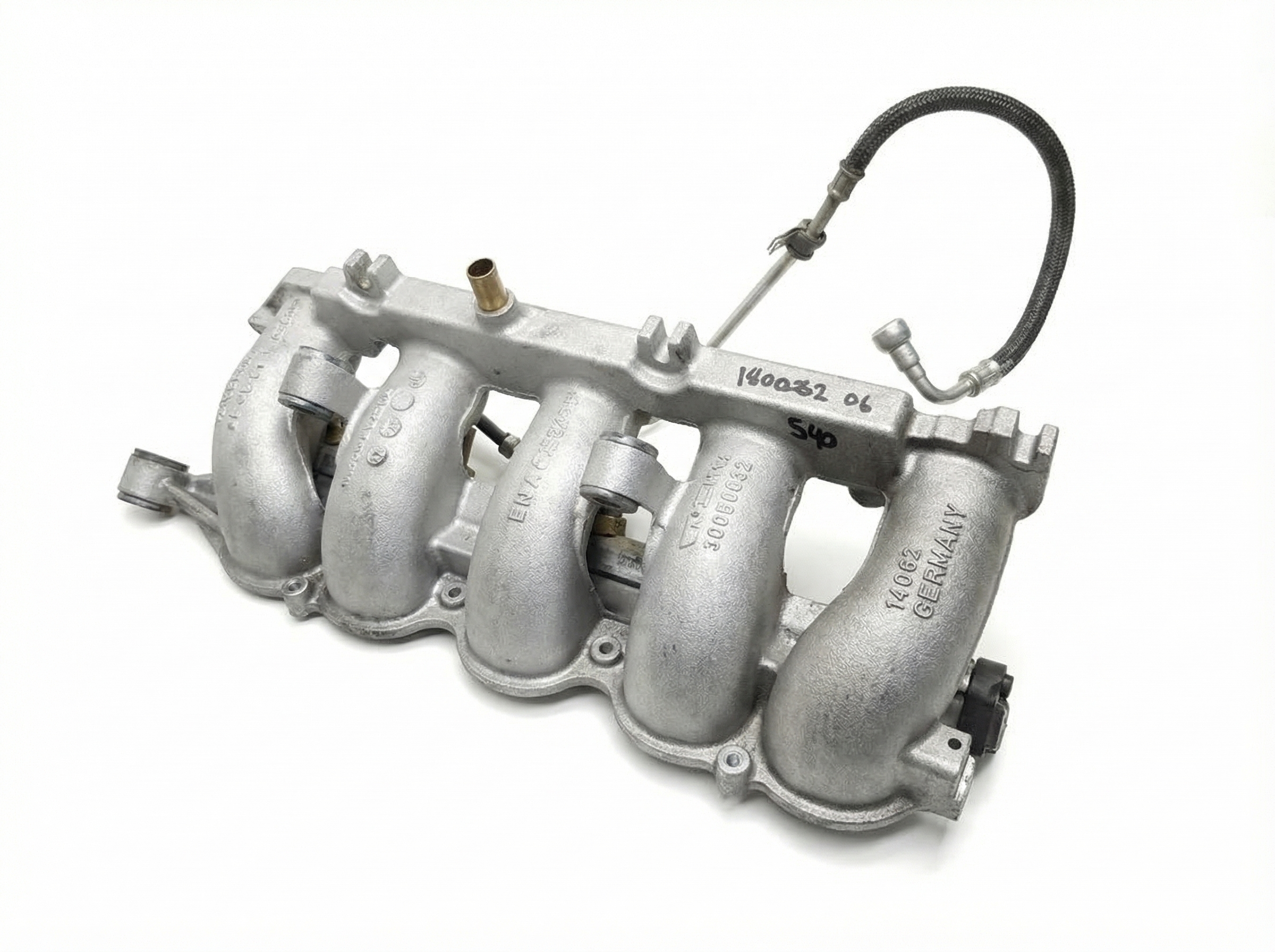


The information in this article is provided for general reference and educational purposes only. Vehicle specifications, procedures, and part compatibility can vary by production date, trim level, and region. Always consult your vehicle's factory service manual and verify part numbers before purchasing or performing repairs. Safety-critical components such as airbags, seat belts, and braking systems should be installed by a qualified professional.
- Volvo S40:
- Volvo V40:
- 🛍️ Shop This Part
- Common Symptoms of a Failing Intake Manifold
- Diagnosing the Problem
- Method 1: The Smoke Test (Recommended)
- Method 2: The Carb Cleaner Test (DIY)
- Buying a Used 2000-2004 S40 & V40 Intake Manifold
- Compatibility Check: The 2004 Model Year Split
- Physical Inspection Checklist
- Known Issues, Recalls, and Technical Service Bulletins (TSBs)
- Replacement Overview
- Cost Comparison: S40 & V40 Intake Manifold
- Frequently Asked Questions (FAQ)
- Technical Specifications
- 🎟️ Get 5% Off