

Ford Intake Manifold Guide (2004-2012): Vulcan 3.0L vs. Cyclone 3.5L/3.7L Issues
This guide clarifies the critical differences between the two distinct intake manifolds used on these vehicles, helping you diagnose failures and purchase the correct part.
- Crucially, you must first identify your engine: the 3.0L OHV 'Vulcan' (2004-07 Taurus/Sable) or the 3.5L/3.7L 'Cyclone' (all other listed vehicles). They use completely different manifolds.
- The 3.0L Vulcan's primary issue is coolant leaks from the intake gaskets, which can cause overheating.
- The 3.5L/3.7L Cyclone's main problem is the failure of the Intake Manifold Runner Control (IMRC) actuator, causing a Check Engine Light and poor performance.
- Replacing the rear IMRC actuator on the 3.5L engine is labor-intensive; it's wise to replace spark plugs and gaskets at the same time.
Critical: Two Different Engines, Two Different Manifolds

Warning: The vehicles listed use two completely different V6 engines with non-interchangeable intake manifolds. Before reading further or buying a part, you must identify your engine. Choosing the wrong part will result in wasted time and money.
- Group 1: 3.0L OHV 'Vulcan' V6. This older, iron-block pushrod engine is found in the 2004-2007 Ford Taurus and 2004-2005 Mercury Sable. Its intake manifold is known for coolant leaks from its gaskets.
- Group 2: 3.5L/3.7L DOHC 'Cyclone' V6. This modern, all-aluminum, non-turbo engine is in the 2007-2010 Ford Edge, 2009-2012 Ford Flex, 2010-2012 Ford Fusion (Sport), 2008-2012 Ford Taurus, 2008-2009 Ford Taurus X, 2009-2012 Lincoln MKS, 2010-2012 Lincoln MKT, 2007-2010 Lincoln MKX, and 2007-2012 Lincoln MKZ. Its primary failure is the Intake Manifold Runner Control (IMRC) system.
This guide is divided into two parts to address the unique issues of each manifold.
Part 1: 2004-2007 Taurus & Sable 3.0L OHV 'Vulcan' Intake Manifold

This intake manifold is specific to the 3.0L OHV Vulcan V6. It is a cast component with plastic elements that sits in the 'V' of the engine. A key design feature is that engine coolant flows through passages in the manifold and is sealed by gaskets. Over time, these gaskets are the most common point of failure.
Common Failure Symptoms (3.0L Vulcan)
- Coolant Leak: This is the most frequent symptom. You may notice the sweet smell of antifreeze, see puddles of orange or green fluid under the car, or have to top off your coolant reservoir frequently. The leak often comes from the intake manifold gaskets. 🎬 Watch: How to fix this common coolant leak
- Engine Overheating: A significant coolant leak will lead to low coolant levels and cause the engine to overheat, which can lead to severe engine damage if not addressed.
- Rough Idle and Misfires: A failed gasket can also cause a vacuum leak, where unmetered air enters the engine. This disrupts the air-fuel ratio, leading to a rough idle, hesitation, and potential misfire codes (e.g., P0300-P0306).
- Milky Engine Oil: In severe cases, a failed intake gasket can allow coolant to leak internally and mix with the engine oil. This will turn the oil a milky, coffee-like color and is visible on the dipstick or oil cap. This is a critical condition that can quickly destroy the engine.
How to Identify the 3.0L Vulcan vs. Duratec Engine
The 2004-2007 Taurus/Sable also offered a 3.0L DOHC 'Duratec' V6, which uses a completely different intake system. Here’s how to tell them apart:
- Engine Cover: The Vulcan engine is often uncovered or has a simple cover, while the Duratec will prominently say "DOHC 24-VALVE".
- VIN Number: The 8th digit of your VIN typically indicates the engine. For these models, 'U' or '2' usually signifies the Vulcan engine.
- Appearance: The Vulcan is an older pushrod (OHV) design and looks simpler, while the DOHC Duratec engine is physically larger and fills the engine bay more completely.
Part 2: 2007-2012 Cyclone 3.5L/3.7L V6 Intake Manifold

This modern plastic intake manifold is used on a wide range of Ford and Lincoln vehicles. Its most common problem is not with the manifold body itself, but with the integrated Intake Manifold Runner Control (IMRC) system. The IMRC system uses butterfly flaps inside the manifold runners to change the length of the airflow path, optimizing performance. These flaps are moved by an actuator (solenoid), which is prone to failure.
Common Failure Symptoms (3.5L/3.7L Cyclone)
- Check Engine Light: The most common sign is a Check Engine Light with codes like P2004, P2006, or P2008. These codes point to the IMRC system being stuck open, stuck closed, or having an electrical circuit fault.
- Reduced Engine Power & Hesitation: A malfunctioning IMRC system will cause a noticeable loss of power, especially at either low or high RPMs. The car may feel sluggish or hesitate during acceleration.
- Rough Idle: If the runner flaps are stuck in the wrong position for idle, the engine may run rough, shake, or even stall.
- Poor Fuel Economy: With the engine unable to optimize airflow, fuel efficiency will decrease.
Known Issues, TSBs, and Recalls
The IMRC actuator failure on the 3.5L/3.7L engine is a well-documented issue. The actuator is often located in a high-heat area, sometimes under the intake manifold itself, which leads to electrical failure of the component over time. While this is a common repair, there have been no major recalls for the intake manifold or IMRC system on most of these models. However, TSB #TSB-14-0091 was issued for some 2014 models, including the Flex, MKS, MKT, and Taurus, for a raw fuel odor that could be detected near the intake manifold.
Pro Tip: On the 3.5L V6, the IMRC actuator for Bank 1 (the firewall side) is located under the upper intake manifold. This makes replacement labor-intensive. If you are having this part replaced, it is highly recommended to also replace the spark plugs and intake gaskets at the same time to save on future labor costs.
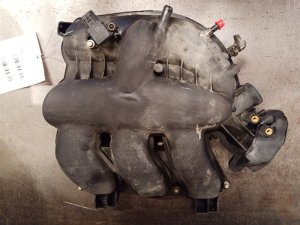
Buying a Used Engine Intake Manifold
A used OEM intake manifold can be a cost-effective solution, but careful inspection is key. Because these two manifolds are so different, the inspection process varies.
For the 3.0L Vulcan Manifold:
- Inspect for Cracks: Carefully check the plastic and cast sections for any hairline cracks, especially around the thermostat housing area and bolt holes.
- Check Coolant Passages: Look inside the coolant passages for signs of heavy corrosion or erosion. This can indicate the engine it came from had poor coolant maintenance.
- Gasket Surfaces: Ensure the gasket mating surfaces are flat and free of deep gouges or pitting. You will be using new gaskets, but a damaged surface will not seal properly.
For the 3.5L/3.7L Cyclone Manifold:
- Check the IMRC Linkage: The most important check. Manually move the external linkage for the runner flaps. It should move smoothly with no binding or excessive play. If it's disconnected, broken, or seized, the manifold is no good.
- Inspect for Cracks: Check the plastic body for any cracks, especially around the mounting points and throttle body connection.
- Verify Actuators are Included: Ensure the IMRC actuators (solenoids) are present. While you may need to replace them, it's better to have the original cores.
- Cleanliness: A manifold with heavy carbon or oil buildup inside may indicate an engine with other issues, like bad PCV or piston rings.
Cost Comparison
| Part Type | 3.0L Vulcan Manifold | 3.5L/3.7L Cyclone Manifold | Notes |
|---|---|---|---|
| New OEM | $350 - $500+ | $400 - $600+ | Often difficult to source for older models. |
| New Aftermarket | $150 - $250 | $180 - $300 | Brands like Dorman offer redesigned parts, sometimes with improvements like metal coolant crossovers for the Vulcan. |
| Used OEM | $75 - $150 | $100 - $200 | A good value if inspected carefully, especially for the Cyclone manifold where OEM quality of the plastic and runners is often superior. |
| Shop Labor | $250 - $400 | $450 - $750+ | Labor for the 3.5L is significantly higher due to the need to remove the upper intake to access the rear IMRC actuator. |
Replacement Difficulty

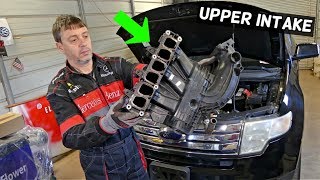
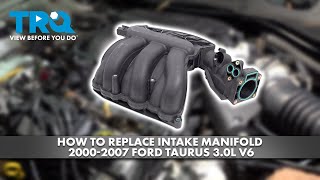
- 3.0L OHV Vulcan: 2/5 (Easy to Moderate). The intake manifold is relatively accessible. The main challenge is carefully cleaning the gasket surfaces and ensuring all connections are put back correctly. Estimated time is 2-4 hours for a DIY mechanic. 🎬 Watch: Step-by-step upper intake manifold removal guide
- 3.5L/3.7L DOHC Cyclone: 4/5 (Difficult). This is a more involved job, especially if replacing the rear IMRC actuator, as it requires removing the upper intake plenum. This is similar in difficulty to changing the rear bank of spark plugs. Estimated time is 4-6 hours. DIY is feasible for experienced mechanics, but novices should be cautious.
Frequently Asked Questions (FAQ)
Can I just replace the gaskets on my 3.0L Vulcan manifold?
Yes, in most cases, the failure is the gasket, not the manifold itself. A high-quality gasket set is often all that is needed for the repair. However, if the original plastic manifold has developed cracks, especially around the coolant crossover, the entire manifold should be replaced.
For the 3.5L engine, can I just replace the bad IMRC actuator instead of the whole manifold?
Yes. The IMRC actuators (solenoids) are available separately and are the most common failure point. You do not need to replace the entire manifold if only the actuator has failed. However, due to the high labor cost to access the rear actuator, it's wise to address other 'while you're in there' items.
Will a non-turbo 3.5L intake fit my EcoBoost (turbo) engine?
No. The intake manifolds for naturally aspirated (non-turbo) and EcoBoost (twin-turbo) engines are completely different and are not interchangeable. This guide only covers the non-turbo 3.5L and 3.7L engines.
My mechanic says the IMRC flaps are broken inside the manifold. What should I do?
If the internal butterfly flaps or the rod they attach to are broken, the entire intake manifold assembly must be replaced. In this case, a used OEM manifold that passes inspection is an excellent choice, as the OEM plastic and internal components are often built to a higher standard than some cheaper aftermarket alternatives.
Helpful Videos
Technical Specifications
OEM Part Numbers: 4F1E9424DA 4F1EDA 4F1Z-9424-CA 4F1Z9424CA 6F1E9424BA 6F1E9424BB 6F1EBA 6F1EBB 6F1Z-9424-BA 6F1Z9424BA 7T4E-9424-FE 7T4E-9K461-DA 7T4E-9K461-DB 7T4E-9K461-DC 7T4E-9K461-DD
Fitment is determined by engine type: 3.0L OHV Vulcan V6 or 3.5L/3.7L DOHC Cyclone V6 (naturally aspirated).
We Have This Part in Stock



The information in this article is provided for general reference and educational purposes only. Vehicle specifications, procedures, and part compatibility can vary by production date, trim level, and region. Always consult your vehicle's factory service manual and verify part numbers before purchasing or performing repairs. Safety-critical components such as airbags, seat belts, and braking systems should be installed by a qualified professional.
- Ford Taurus:
- MERCURY SABLE:
- FORD EDGE:
- Ford Flex:
- FORD FUSION:
- FORD TAURUS X:
- LINCOLN MKS:
- LINCOLN MKT:
- LINCOLN MKX:
- LINCOLN MKZ:
- 🎬 Helpful Videos
- 🛍️ Shop This Part
- Critical: Two Different Engines, Two Different Manifolds
- Part 1: 2004-2007 Taurus & Sable 3.0L OHV 'Vulcan' Intake Manifold
- Common Failure Symptoms (3.0L Vulcan)
- How to Identify the 3.0L Vulcan vs. Duratec Engine
- Part 2: 2007-2012 Cyclone 3.5L/3.7L V6 Intake Manifold
- Common Failure Symptoms (3.5L/3.7L Cyclone)
- Known Issues, TSBs, and Recalls
- Buying a Used Engine Intake Manifold
- For the 3.0L Vulcan Manifold:
- For the 3.5L/3.7L Cyclone Manifold:
- Cost Comparison
- Replacement Difficulty
- Frequently Asked Questions (FAQ)
- 🎟️ Get 5% Off