

Ford 3.5L EcoBoost Intake Manifold Leaks & Failures: 2013-2019 Explorer, Taurus, Flex & More
This guide covers the common failure symptoms, diagnostic procedures, and replacement costs for the plastic intake manifold on Ford's popular twin-turbo V6 engine.
- This intake manifold is ONLY for the 3.5L EcoBoost Twin-Turbo engine; it will not fit the naturally aspirated 3.5L or 3.7L V6.
- The most common failure is a crack in the plastic body or a bad gasket, causing a vacuum leak that triggers lean codes (P0171, P0174), a rough idle, and a hissing sound.
- When buying a used manifold, inspect it carefully for hairline cracks and warping on the mounting surfaces.
- ALWAYS use new gaskets when installing a replacement manifold; reusing old gaskets will guarantee a leak.
Symptoms of a Failing Intake Manifold
A problem with the intake manifold on the 3.5L EcoBoost engine can cause a range of issues, from subtle noises to a significant loss of power. Because the engine relies on precise, pressurized air, any leak can disrupt performance.
- Check Engine Light: This is often the first sign of a problem. A leak in the manifold allows unmetered air into the engine, creating a lean air-fuel ratio. This will typically trigger diagnostic trouble codes (DTCs) like P0171 (System Too Lean Bank 1) and P0174 (System Too Lean Bank 2). 🎬 Watch: How to diagnose P0171 and P0174 lean codes
- Hissing or Whistling Noise: A distinct hissing sound from the engine bay, especially at idle, is a classic sign of a vacuum leak. This is caused by air being sucked through a crack in the manifold's plastic body or a failed gasket.
- Rough Idle and Stalling: With an incorrect air-fuel mixture, the engine may run erratically, idle roughly, or even stall. This is because the unmetered air makes it difficult for the engine's computer to maintain stable combustion at low RPMs.
- Reduced Power and Poor Acceleration: A significant vacuum or boost leak will result in a noticeable loss of power, hesitation during acceleration, and poor turbocharger response. The engine cannot produce its rated power without the correct volume of pressurized air.
- Decreased Fuel Economy: The engine's computer will try to compensate for the lean condition by injecting more fuel, leading to a measurable drop in gas mileage.
Known Issues, Recalls, and Technical Service Bulletins (TSBs)
While there are no direct recalls for the intake manifold itself on these vehicles, its failure is a known issue. The problems are typically related to the plastic material becoming brittle over time from constant heat cycles.
- Cracked Manifold Body: The most common failure is the development of hairline cracks in the plastic, especially at seams or high-stress areas like bolt-down points. These cracks create vacuum and boost leaks.
- Gasket Failure: The gaskets that seal the manifold to the cylinder heads can become hard and compressed over time, losing their ability to seal properly.
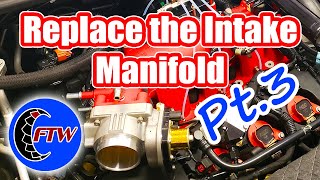
- Related TSBs: While not for the manifold itself, other TSBs require its removal. For example, TSBs related to cam phaser replacement (a common 3.5L EcoBoost issue) or high-pressure fuel pump replacement (TSB 19-2315) necessitate removing the intake manifold. This is an ideal time to inspect the manifold and replace it if any signs of wear are present. 🎬 Watch this step-by-step 3.5L EcoBoost intake manifold removal guide
- MAPT Sensor Failures (2018-2019): On 2018-2019 models, Ford issued TSB 19-2212 for a high failure rate of the Manifold Absolute Pressure and Temperature (MAPT) sensor located on the manifold. While this is a sensor issue, it's directly related to the manifold assembly.
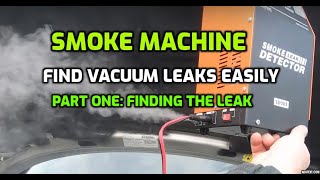
Pro Tip: A smoke test is the most effective way to diagnose a suspected intake leak. A technician will feed pressurized smoke into the intake system; if there is a crack or bad gasket, smoke will be visible escaping from the leak point.
🎬 See how to find vacuum leaks using a smoke machineBuying a Used Engine Intake Manifold
A used OEM intake manifold can be a cost-effective and reliable alternative to an expensive new part, provided you inspect it carefully. Given that new aftermarket versions can have fitment issues, a quality used OEM part is often a better choice.
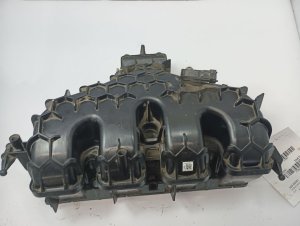
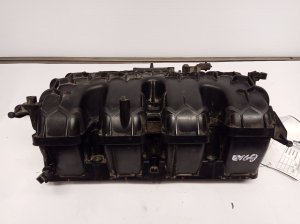
- Inspect for Cracks: This is the most critical check. Carefully examine the entire plastic body, paying close attention to the seams where the manifold was molded together and around all mounting bolt holes. Use a bright light and look for fine hairline cracks.
- Check for Warping: Lay a straightedge across the mounting flanges where the manifold bolts to the cylinder heads. There should be no significant gaps. A warped manifold will not seal correctly, even with new gaskets, leading to persistent leaks.
- Verify Threaded Inserts: The manifold has brass threaded inserts for mounting components like the fuel rail. Ensure all these inserts are present, secure, and not stripped or pulling out of the plastic.
- Confirm Compatibility: Double-check that the manifold is from a 3.5L EcoBoost (twin-turbo) engine, not the naturally aspirated 3.5L or 3.7L V6. They look similar but are not interchangeable. Match part numbers like DG1Z-9424-A or the engineering number DG1E-9424-AC to be certain.
Warning: ALWAYS install a used intake manifold with new gaskets. Never reuse old intake gaskets, as they are one-time-use and will not seal properly a second time.
Cost to Replace the Intake Manifold
The cost can vary based on your vehicle and local labor rates. The high-pressure fuel pump is located underneath the intake manifold, so some of the labor may overlap if you are performing both jobs.
| Part/Service | Estimated Cost |
|---|---|
| New OEM Manifold | $290 - $435 |
| New Aftermarket Manifold (Dorman) | $220 - $300 |
| Used OEM Manifold | $90 - $150 |
| Shop Labor | $300 - $500 |
Frequently Asked Questions (FAQ)
Can I drive my car with a leaking intake manifold?
For a minor leak, you can drive short distances, but you will experience rough running, poor fuel economy, and a Check Engine Light. It's not recommended to drive for an extended period, as the lean fuel condition can potentially cause long-term engine damage. You should get it repaired as soon as possible.
Is this the same part as the exhaust manifold?
No. The intake manifold distributes air *into* the engine's cylinders, while the exhaust manifolds collect hot exhaust gases *out* of the cylinders and send them to the turbochargers and exhaust system. They are on opposite sides of the engine and perform opposite functions.
What causes the plastic intake manifold to fail?
The primary cause of failure is age and heat cycles. The constant heating and cooling of the engine causes the composite plastic to become brittle over time, leading to cracks and warping.
Do I need to replace any other parts at the same time?
Yes, you must replace the intake manifold gaskets. It is also a good time to inspect and clean the throttle body and consider replacing the spark plugs if they are due. If your vehicle has high mileage, cleaning carbon buildup from the intake valves (a service known as walnut blasting) is also recommended since the manifold will be removed.
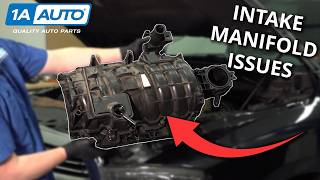
Helpful Videos


Technical Specifications
OEM Part Numbers: AA5E-9424-FA DG1E-9424-AA DG1E-9424-AB DG1E-9424-AC DG1E9424AA DG1E9424AB DG1E9424AC DG1Z-9424-A DG1Z9424A
Material: Composite Plastic. Engine Application: 3.5L EcoBoost Twin-Turbo V6 only.
We Have This Part in Stock




The information in this article is provided for general reference and educational purposes only. Vehicle specifications, procedures, and part compatibility can vary by production date, trim level, and region. Always consult your vehicle's factory service manual and verify part numbers before purchasing or performing repairs. Safety-critical components such as airbags, seat belts, and braking systems should be installed by a qualified professional.
- Ford Explorer:
- Ford Taurus:
- Ford Flex:
- Ford Police Interceptor Utility:
- Lincoln MKT:
- Ford Police Interceptor Sedan:
- Lincoln MKS: