

Ford 3.5L Intake Manifold (2014-2019): Leaks, IMRC Faults, and Why It Comes Off So Often
A deep dive into the upper intake manifold for the 3.5L non-turbo V6 found in the Explorer, Taurus, Edge, Flex, and more, covering common vacuum leaks and its role in other engine repairs.
- The most common failure is not the manifold itself, but the gasket underneath it, causing vacuum leaks, rough idle, and lean codes (P0171/P0174).
- This manifold must be removed to access other common failure items on the 3.5L V6, such as the rear VCT solenoids, making it a 'while you're in there' replacement part.
- This part is ONLY for the naturally aspirated (non-turbo) 3.5L/3.7L V6. It does not fit EcoBoost engines.
- When buying a used manifold, inspect it carefully for cracks, warped mating surfaces, and broken vacuum nipples. Always use a new gasket for installation.
Symptoms of a Failing Intake Manifold
A problem with the upper intake manifold on the 3.5L/3.7L V6 engine typically shows up as a vacuum leak or an issue with the Intake Manifold Runner Control (IMRC) system. Because the manifold itself is generally reliable, the most common failure is the gasket that seals it to the engine.
- Hissing or Whistling Noise: The most direct sign of a vacuum leak is a hissing sound coming from the top of the engine, especially at idle. This is the sound of unmetered air being sucked in through a bad gasket or a crack in the manifold's body.
- Rough Idle and Stalling: When extra air enters the engine, it throws off the precise air-fuel ratio, causing the engine to run rough, shake, or even stall when stopped.
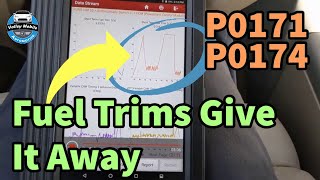
- Check Engine Light (P0171, P0174): A vacuum leak will cause the engine to run "lean" (too much air, not enough fuel). The engine's computer will detect this and trigger lean condition codes P0171 (Bank 1) and P0174 (Bank 2). 🎬 Watch: Diagnose P0171 and P0174 codes on a 3.5L engine
- Poor Performance and Fuel Economy: You may notice sluggish acceleration, hesitation, and a drop in gas mileage. This is because the engine is not running efficiently due to the incorrect air-fuel mixture or a malfunctioning IMRC system.
- IMRC-Specific Codes (P2004, P2005, P2007, P2008): The 3.5L Ti-VCT engine uses an Intake Manifold Runner Control system. If the actuator or linkage for this system fails, it can trigger codes like P2008, indicating an electrical fault in the control circuit. This often results in a loss of low-end torque.
Known Issues, TSBs, and Related Repairs
While there are no widespread recalls for the intake manifold itself on these vehicles, it is a part that mechanics frequently remove to perform other common repairs. This makes it a critical component to understand.
The "While You're In There" Part
On the transverse-mounted 3.5L and 3.7L V6 engines, access to the rear cylinder bank (Bank 1, located near the firewall) is extremely limited. To perform several common services on Bank 1, a technician must first remove the upper intake manifold. These services include:
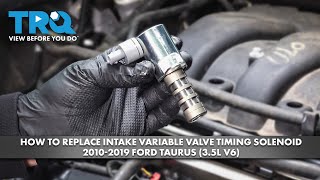
- Replacing VCT Solenoids: Sticking Variable Camshaft Timing (VCT) solenoids are a common cause of timing-related engine codes (like P0014, P0015, P0024). The solenoids for Bank 1 are located under the manifold. 🎬 Watch: How to replace the intake VVT solenoid
- Replacing Spark Plugs & Ignition Coils: While not always strictly necessary, many technicians remove the manifold to get better access to the rear three spark plugs.
- Replacing the Canister Purge Valve: This emissions component sits directly on the intake manifold and is a very common failure point on many Ford vehicles, often causing a P1450 code and difficulty starting after refueling. 🎬 See this step-by-step 3.5L purge valve replacement guide
Pro Tip: If you are having any of the above repairs done, it is the perfect time to install new intake manifold gaskets. The gaskets themselves are inexpensive, and you will already be paying for the labor to remove the manifold. Reusing old gaskets is a guaranteed recipe for a future vacuum leak.
Vehicle-Specific Compatibility Notes
- Ford Flex 2014: A part change occurred mid-way through the 2014 model year. If you own a 2014 Flex, it is essential to verify which intake manifold your vehicle requires using your VIN before purchasing. The part for vehicles built from 02/22/2014 onward is different from earlier models.
- Engine Type: This guide and the associated part numbers are exclusively for the naturally aspirated (non-turbo) 3.5L and 3.7L V6 engines. This part will NOT fit 3.5L EcoBoost (twin-turbo) models, which use a different intake system.
Buying a Used Engine Intake Manifold
Since new OEM manifolds are relatively affordable and there are few quality aftermarket options for the upper manifold, the choice is often between new OEM and used OEM. A used manifold can be a good value, but a thorough inspection is critical.
- Check for Cracks: Carefully inspect the entire plastic body for hairline cracks. Pay close attention to the seams where the manifold was molded together and around any bolt holes or mounting bosses.
- Inspect Mating Surfaces: Look at the flat surfaces where the manifold bolts to the engine. They must be perfectly flat and free of any warping or deep scratches. A part from an engine that severely overheated may be warped.
- Examine All Ports and Nipples: Check every vacuum port and nipple for cracks or breakage. These can become brittle with age and are easily damaged during removal from the donor vehicle.
- Check IMRC System: If there is any visible external linkage for the Intake Manifold Runner Control, make sure it moves freely and is not broken or disconnected.
- Avoid Oil-Caked Parts: While some oil residue from the PCV system is normal, avoid parts that are heavily caked in baked-on oil. This could indicate a poorly maintained donor vehicle and the oil can degrade the plastic over time.
Warning: Never reuse intake manifold gaskets. Always install a new set of gaskets when installing a new or used manifold to prevent vacuum leaks. The OEM part comes with a new gasket included.
Cost Comparison
The cost to replace the intake manifold or its gaskets can vary depending on whether you are just replacing gaskets or the entire manifold assembly.
| Part or Service | Estimated Cost |
|---|---|
| New OEM Manifold (Part # FT4Z-9424-B) | $85 - $130 |
| New Aftermarket Manifold | Not Widely Available (for upper) |
| Used OEM Manifold | $80 - $150 |
| Shop Labor to Replace | $250 - $450 |
| Total Professional Replacement (with new OEM part) | $335 - $580 |
Note: Labor costs reflect the standalone job. If the manifold is removed as part of another repair (like a VCT solenoid replacement), you should only pay for the cost of the new part/gaskets. Prices are estimates and may vary by location and shop.
Frequently Asked Questions (FAQ)
Can I drive with a leaking intake manifold gasket?
You can, but it's not recommended for long. A vacuum leak will cause a persistent rough idle, poor fuel economy, and hesitation. In some cases, it can cause the engine to stall unexpectedly, which can be a safety hazard in traffic.
My mechanic says I have codes P0171 and P0174. Is the intake manifold the cause?
It's a very common cause. These codes mean the engine is running too lean on both banks. A leaking intake manifold gasket is one of the few things that will affect both cylinder banks equally, allowing unmetered air to cause this lean condition. Other possibilities include a faulty MAF sensor or low fuel pressure, but a vacuum leak is a prime suspect.
What is the Intake Manifold Runner Control (IMRC) and why does it fail?
The IMRC is a system of butterfly valves inside the manifold that adjusts the length of the intake runners. This optimizes airflow for better torque at low RPM and more power at high RPM. The actuators that control these valves can fail due to heat and vibration, especially the one on the firewall side that is buried under the manifold. This can lead to a loss of power and a Check Engine Light.
Why is this part made of plastic? Isn't metal better?
Automakers use plastic for intake manifolds to save weight and reduce cost. Plastic also doesn't absorb engine heat as much as aluminum, which can help keep the incoming air cooler and denser, improving performance. While older plastic designs had issues, modern composite manifolds are very durable, though they can become brittle and crack after many years and heat cycles.
Helpful Videos

Technical Specifications
OEM Part Numbers: CT4Z-9424-C FT4E-9424-CD FT4E-9424-CF FT4E9424CD FT4E9424CF FT4Z-9424-B FT4Z9424B
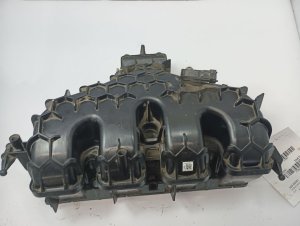
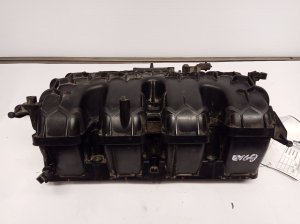
Material: Composite Plastic. Engine Application: 3.5L/3.7L Ti-VCT Cyclone V6 (Naturally Aspirated). Features: Integrated Intake Manifold Runner Control (IMRC) system. Gasket included with new OEM part.
We Have This Part in Stock





The information in this article is provided for general reference and educational purposes only. Vehicle specifications, procedures, and part compatibility can vary by production date, trim level, and region. Always consult your vehicle's factory service manual and verify part numbers before purchasing or performing repairs. Safety-critical components such as airbags, seat belts, and braking systems should be installed by a qualified professional.
- Ford Explorer:
- Ford Taurus:
- Ford Edge:
- Ford Flex:
- Ford Police Interceptor Utility:
- Ford Police Interceptor Sedan: