

2001-08 Escape, Tribute & Mariner Intake Manifold: V6 Gasket Leaks & I4 Runner Control Failure
This guide diagnoses the two most common intake manifold problems on these SUVs: vacuum leaks on the 3.0L V6 and failing runner controls on the 2.3L I4.
- The failure mode is engine-specific: 3.0L V6 models suffer from lower intake gasket vacuum leaks (codes P0171/P0174), while 2.3L I4 models suffer from internal IMRC flap failure (rattling noise, code P2004).
- When buying a used 2.3L manifold, physically check the IMRC actuator arm for smooth movement to ensure the internal flaps are not broken.
- For the 3.0L V6, the problem is almost always the lower gaskets, not the manifold itself. The repair requires removing the upper manifold to access them.
- Always use new gaskets during installation to prevent immediate vacuum leaks. Do not reuse old gaskets.
Engine-Specific Failures: 3.0L V6 vs. 2.3L I4
It is critical to understand that the Ford Escape, Mazda Tribute, and Mercury Mariner were offered with two primary engines during this period, and their intake manifolds fail in different ways. Before diagnosing or buying a part, you must identify which engine your vehicle has.
- 3.0L DOHC V6 (2001-2008): The most common failure is not the manifold itself, but the gaskets for the lower intake manifold. These gaskets degrade over time, causing major vacuum leaks.
- 2.3L 4-Cylinder (2005-2008): The most common failure is the internal Intake Manifold Runner Control (IMRC) system. The plastic flaps or the external actuator can break, causing rattling noises and performance loss.
Symptoms of a Failing Intake Manifold
While some symptoms are shared, others point specifically to one engine type.
Common Symptoms (Both Engines)
- Check Engine Light: This is often the first sign. Codes will vary based on the failure type.
- Rough or Unstable Idle: The engine may shake, idle erratically, or even stall at stops.
- Reduced Power and Acceleration: The vehicle will feel sluggish and unresponsive, especially when trying to accelerate.
- Poor Fuel Economy: An incorrect air-fuel mixture caused by a manifold issue will force the engine to use more gasoline.
3.0L V6 Specific Symptoms (Gasket Leak)
- Loud Hissing Sound: A distinct hissing or sucking noise from the engine bay at idle is a classic sign of a large vacuum leak.
- Lean Trouble Codes (P0171 & P0174): These codes are extremely common for this issue and indicate the engine is receiving too much unmetered air on both cylinder banks.
- Random Misfire Code (P0300): A severe vacuum leak can disrupt the air-fuel mixture enough to cause misfires across multiple cylinders.
- Symptoms are Worse When Cold: The leak may be more pronounced when the engine is cold and the gaskets have shrunk, sometimes improving slightly as the engine warms up and the parts expand.
2.3L I4 Specific Symptoms (IMRC Failure)
- Audible Ticking or Rattling Noise: A clear clicking or plastic rattling sound from the top of the engine at idle is the most definitive symptom. This noise is caused by broken IMRC flaps fluttering in the airflow. It may change or go away when you rev the engine.
- IMRC-Specific Trouble Codes: Look for codes like P2004 (Intake Manifold Runner Control Stuck Open), P2006 (Intake Manifold Runner Control Stuck Closed), or P2008 (Intake Manifold Runner Control Circuit/Open).
- Sluggish High-RPM Performance: If the runner flaps are stuck closed, the engine will feel starved for air and very weak at higher speeds.
Known Issues, Recalls, and Technical Service Bulletins (TSBs)
Safety Recall: Stuck Throttle on 3.0L V6 Models
Certain 2001-2008 Mazda Tribute and 2001-2004 Ford Escape models with the 3.0L V6 engine and cruise control were recalled due to inadequate clearance between the engine cover and the cruise control cable. This could cause the throttle to stick open, leading to unintended acceleration. Ensure this recall has been performed on any vehicle you own or are considering buying.
While the intake manifold gasket and IMRC issues are widely documented in repair forums and mechanic guides, there are no major TSBs or recalls specifically for these common failures. They are generally considered a wear-and-tear item. An unrelated recall for 2001-2004 models concerned the ABS control module, which could cause an engine compartment fire.
Buying a Used Engine Intake Manifold: What to Check
A used OEM manifold can be a cost-effective solution, especially for the 2.3L I4 where the entire assembly must be replaced. However, careful inspection is key to avoid buying a part with the same problem you're trying to fix.
Step 1: Verify Compatibility
- Engine Size is #1: A V6 manifold will not fit an I4 engine, and vice-versa. Double-check you are buying for a 3.0L V6 or a 2.3L I4.
- Check the VIN (2.3L I4 Models): For a 2005-2008 Ford Escape or Mercury Mariner, ensure the 8th digit of the vehicle's VIN is 'Z' to confirm it has the correct 2.3L engine for this manifold.
- Match Part Numbers: If possible, match the part number from your old manifold to the used one. Revisions exist, so look for crossover compatibility if the numbers don't match exactly. Common V6 lower manifold numbers include 3F1Z9424AC, and 2.3L I4 numbers include 5L8Z-9424-A.
Step 2: Physical Inspection Checklist
For a 2.3L 4-Cylinder Manifold:
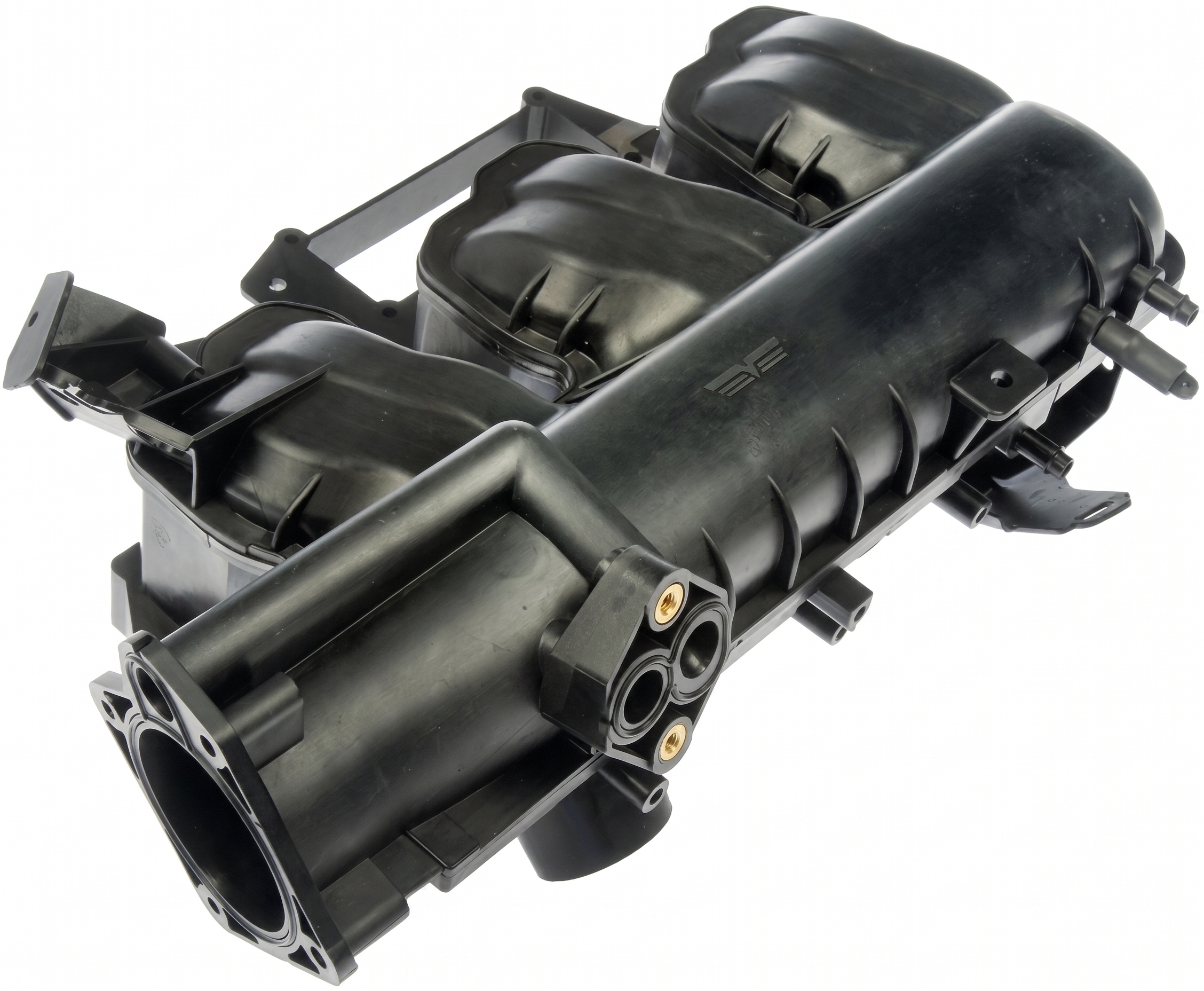
- ✅ Test the IMRC Actuator Arm: This is the most important check. Locate the small black actuator on the end of the manifold with a linkage arm. Gently try to move the arm by hand. It should move smoothly with some spring resistance and no gritty or binding feeling. If it feels loose, disconnected, or makes a rattling sound when you shake the manifold, the internal flaps are likely broken. Do not buy it.
- ✅ Inspect for Cracks: Carefully check the entire plastic body for hairline cracks, especially around the bolt holes and seams.
- ✅ Check Vacuum Ports: Ensure all the small vacuum nipples are intact and not cracked or broken off.
For a 3.0L V6 Manifold (Upper or Lower):
- ✅ Check Gasket Surfaces: The surfaces where the manifold meets the engine or the other manifold half must be perfectly flat and free of deep scratches, corrosion, or warping. Use a straightedge to check for flatness.
- ✅ Inspect for Cracks: Check the plastic upper manifold for any cracks, especially around the bolt bosses.
- ✅ Verify Fuel Crossover Tube (If Included): Some used manifolds come with the fuel rail. Ensure the crossover tube is not bent or damaged. Note that these tubes can vary by year, so it's often best to reuse your original fuel rail.
Pro Tip: A used manifold from a low-mileage, front-end collision vehicle is often a great choice. Avoid parts from engines that have overheated, as this can warp the plastic and metal components.
Replacement Overview & Difficulty
- Difficulty Rating: 3.5/5 (3.0L V6); 2.5/5 (2.3L I4)
- Estimated Time: 3-5 hours (3.0L V6); 2-3 hours (2.3L I4)
- DIY Feasible?: Yes, for an experienced DIYer with a good toolset. The V6 is more involved due to the two-piece design and the need to remove the upper manifold to access the lower gaskets.
The general process involves disconnecting the battery, removing the air intake ducting, unplugging numerous electrical connectors and vacuum lines, disconnecting the throttle and cruise control cables, and unbolting the fuel rail. On the V6, the upper manifold is removed to gain access to the lower manifold.
Warning: ALWAYS install new gaskets when replacing an intake manifold or its components. Reusing old, compressed gaskets is a guarantee of future vacuum leaks. Gasket sets are inexpensive and critical for a successful repair.
Torque Specifications:
Proper torque is critical to avoid cracking the plastic manifolds. These values can vary, so verifying with a specific repair manual for your exact year and model is highly recommended.
- 3.0L V6 Upper Manifold (Plastic): Approximately 89 in-lbs (10 Nm). Tighten in a spiral sequence starting from the center bolts and working outwards. DO NOT overtighten.
- 3.0L V6 Lower Manifold (Aluminum): This typically uses a two-stage process. Stage 1: Tighten to 11 ft-lbs (15 Nm). Stage 2: Tighten to 24 ft-lbs (32 Nm), following the correct sequence.
- 2.3L I4 Manifold (Plastic): Tighten bolts evenly in a center-out sequence to approximately 89 in-lbs (10 Nm).
Cost Comparison
Prices for the intake manifold assembly or required gaskets can vary significantly. Replacing only the gaskets on the 3.0L V6 is much cheaper than replacing the entire manifold on the 2.3L I4.
| Part/Service | Estimated Cost |
|---|---|
| New OEM Manifold Assembly | $120 - $210 |
| New Aftermarket Manifold (2.3L) | $150 - $220 |
| Used OEM Manifold Assembly | $75 - $150 |
| New Gasket Set Only (V6 or I4) | $20 - $50 |
| Shop Labor Cost (Gasket or Manifold Replacement) | $350 - $700 |
Frequently Asked Questions (FAQ)
On my 2.3L, can I just fix the broken IMRC flaps or actuator?
Generally, no. The IMRC flaps are built inside the sealed plastic manifold. While some aftermarket companies offer repair kits for the external linkage clips on other Ford models, for the Escape, Tribute, and Mariner, the standard and most reliable repair is to replace the entire intake manifold assembly. The actuator solenoid itself, if diagnosed as faulty, can sometimes be replaced separately.
What is the difference between the upper and lower intake manifold on the 3.0L V6?
The 3.0L V6 uses a two-piece design. The 'upper' manifold (also called the plenum) is a large plastic chamber that sits on top of the engine and connects to the throttle body. The 'lower' manifold is a metal casting that sits between the upper manifold and the engine's cylinder heads. The common vacuum leaks occur from the gaskets that seal the lower manifold to the heads. You must remove the upper manifold to access and replace the lower manifold gaskets.
Is a cheap aftermarket manifold as good as a used OEM one?
For this part, a high-quality used OEM manifold is often a better choice than a new, cheap aftermarket one. The OEM parts have known failure modes (IMRC flaps, gaskets) that you can inspect for. Some very low-cost aftermarket manifolds may have issues with fitment, plastic quality, or IMRC actuator longevity, potentially causing problems sooner than a good used original part. If buying aftermarket, stick to reputable brands like Dorman.
Do I need to do an 'idle relearn' procedure after replacing the manifold?
Yes. Because you will have disconnected the battery, the engine computer's Keep Alive Memory (KAM) will be cleared. After reassembly, you should perform an idle relearn procedure. This typically involves letting the engine warm up to operating temperature and then allowing it to idle in Park for at least one minute, followed by turning on the A/C and letting it idle for another minute to allow the computer to adjust to the new airflow characteristics and learn the correct idle strategy.
Technical Specifications
OEM Part Numbers: 5L8G9424AB 5L8G9424AC 5L8G9424AD 5L8Z9424A YF1E-9K461-BF YF1E-9K461-BG YF1Z-9424-BB YF1Z9424BA YF1Z9424BB YL8E9424CC YL8E9424CD YL8ECC YL8ECD YL8Z-9F792-GA YL8Z9424CA 3F1Z9424AC 5M6Z-9424-A 5M6Z-9424-AA
Fits 3.0L DOHC V6 or 2.3L DOHC I4 engines. V6 manifold is a two-piece (upper/lower) design. I4 manifold is a single-piece plastic design with internal Intake Manifold Runner Control (IMRC).
We Have This Part in Stock



The information in this article is provided for general reference and educational purposes only. Vehicle specifications, procedures, and part compatibility can vary by production date, trim level, and region. Always consult your vehicle's factory service manual and verify part numbers before purchasing or performing repairs. Safety-critical components such as airbags, seat belts, and braking systems should be installed by a qualified professional.
- Ford Escape:
- Mazda Tribute:
- Mercury Mariner:
- 🛍️ Shop This Part
- Engine-Specific Failures: 3.0L V6 vs. 2.3L I4
- Symptoms of a Failing Intake Manifold
- Common Symptoms (Both Engines)
- 3.0L V6 Specific Symptoms (Gasket Leak)
- 2.3L I4 Specific Symptoms (IMRC Failure)
- Known Issues, Recalls, and Technical Service Bulletins (TSBs)
- Buying a Used Engine Intake Manifold: What to Check
- Step 1: Verify Compatibility
- Step 2: Physical Inspection Checklist
- Replacement Overview & Difficulty
- Cost Comparison
- Frequently Asked Questions (FAQ)
- 🎟️ Get 5% Off