

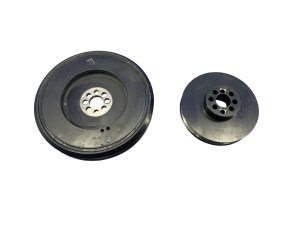
2008-2015 Audi R8 4.2L V8 Harmonic Balancer Pulley: Diagnosis and Replacement Guide
A complete reference for identifying, inspecting, and replacing the crankshaft harmonic balancer on the first-generation Audi R8 4.2L V8.
- This part is for the 4.2L V8 engine ONLY; the 5.2L V10 uses a different balancer.
- Harmonic balancer failure is NOT a common or widespread problem on the 2008-2015 Audi R8.
- Driving with a failed balancer is extremely risky and can lead to catastrophic engine damage.
- When replacing, it is critical to use a new crankshaft bolt and to replace the front main seal at the same time.
Understanding the R8 4.2L V8 Harmonic Balancer
The harmonic balancer on the 2008-2015 Audi R8 with the 4.2L V8 engine is a robust and generally reliable component. Unlike many vehicles where balancer failure is a common issue, extensive research of owner forums and technical bulletins shows this part is not a frequent failure point on the R8. However, like any rubber and metal component, it can degrade over time due to heat, age, and exposure to engine oil. Failure, though rare, can lead to serious issues, so recognizing the symptoms is key.
Pro Tip: This guide is specific to the 4.2L V8 engine. The 5.2L V10 engine uses a different harmonic balancer assembly.
Symptoms of a Failing Harmonic Balancer
A failing harmonic balancer will provide several warning signs. Addressing these symptoms early can prevent catastrophic failure, which could damage the crankshaft or other engine components.
- Unusual Engine Vibrations: The most common symptom is a new or worsening engine vibration that can be felt in the cabin, through the steering wheel, or in the floor. This vibration may change or become more noticeable at specific RPM ranges.
- Rattling or Knocking Noises: As the rubber bonding layer fails, the inner hub and outer ring can separate and make contact, creating a rattling or knocking sound from the front of the engine that increases with engine speed.
- Serpentine Belt Issues: You may hear chirping or squealing noises from the serpentine belt. This can happen if the outer ring of the balancer begins to wobble or walk off its hub, misaligning the belt. In severe cases, the belt may be repeatedly thrown off the pulleys.
- Visible Wobble: With the engine idling, you may be able to see the crankshaft pulley wobbling. A healthy balancer should spin perfectly true with no visible runout or side-to-side movement.
Known Issues, TSBs, and Recalls
As of mid-2024, there are no specific recalls or widespread Technical Service Bulletins (TSBs) issued by Audi for harmonic balancer failure on the 2008-2015 R8. Searches of the NHTSA database and prominent owner forums do not indicate this is a common problem. Some TSBs mention engine or transmission rattles, but these are typically related to the gearbox design and are considered normal characteristics of the vehicle.
Buying a Used Engine Harmonic Balancer Pulley
Given the high cost of a new OEM part, a used harmonic balancer from a low-mileage vehicle is a viable and cost-effective option, especially since this part is not known for frequent failures on the R8. When inspecting a used balancer, pay close attention to the following areas:
- Inspect the Rubber Insulator: This is the most critical step. Carefully examine the rubber ring between the inner hub and the outer pulley ring. Look for any signs of cracking, dry rot, bulging, or separation. Oil contamination can cause the rubber to swell and degrade, so check for a soft or gummy texture.
- Check for Separation: Place the balancer on a flat surface and try to move the outer ring by hand. There should be absolutely no play or movement between the outer ring and the inner hub. Any movement indicates the bond has failed.
- Examine the Pulley Grooves: Inspect the grooves for the serpentine belt. They should be clean and free of significant rust, damage, or embedded debris that could shred a new belt.
- Check the Keyway: The inner hub has a keyway that aligns it on the crankshaft. Ensure this slot is not damaged, worn, or deformed.
- Verify Part Numbers: Ensure the part number matches what is required for your 4.2L V8. Common part numbers are 079105251L and 079105253C.
Cost Breakdown
The cost to replace the harmonic balancer on an R8 can vary significantly based on the parts source and labor rates. The mid-engine design can make access more time-consuming than on a traditional front-engine car.
| Item | Estimated Cost | Notes |
|---|---|---|
| New OEM | $350 - $500 | Part numbers like 079105251L or its successor, 079105251AL. |
| New Aftermarket | Not Widely Available | Standard replacements are not common. High-performance options for the V10 exist but are over $1,000. |
| Used OEM | $25 - $75 | Readily available from auto recyclers. A cost-effective option given the part's general reliability. |
| Shop Labor | $450 - $900 | Estimated at 3-6 hours of labor. The R8's mid-engine layout increases complexity. |
Replacement Overview & Difficulty
Replacing the harmonic balancer on the R8 is a moderately difficult job best suited for experienced DIY mechanics or a professional technician.
- Difficulty Rating: 4 out of 5
- Key Steps: The general process involves gaining access to the front of the engine, removing the serpentine belt, using a special counter-hold tool to keep the crank from turning, and removing the main crankshaft bolt. A pulley puller is then required to safely remove the balancer from the crankshaft nose.
- Special Tools: A crankshaft counter-hold tool (like T10355A) and a harmonic balancer puller/installer kit are required. Attempting to remove the balancer without the correct puller can damage it.
- Important: The main crankshaft bolt is a single-use, torque-to-yield bolt and MUST be replaced with a new one. It also requires a very high torque setting, followed by an additional angle-tightening procedure.
Warning: Never use a hammer to install a harmonic balancer or use the crank bolt to draw it on. This can damage the balancer and, more critically, the engine's main thrust bearing, leading to catastrophic engine failure.
Frequently Asked Questions (FAQ)
Can I drive my R8 with a bad harmonic balancer?
No. Driving with a failing harmonic balancer is not recommended. If the outer ring separates, it can cause the serpentine belt to fail, leading to a loss of power steering and alternator function (battery charging). In a worst-case scenario, the vibrations can damage the crankshaft or main bearings, resulting in a complete engine failure.
Is this the same part for the R8 V8 and V10?
No, the harmonic balancers are different. The part numbers covered in this guide (079105251L, 079105253C) are for the 4.2L V8 engine only. The 5.2L V10 uses a different part number.
Why is a used OEM balancer a good option for the R8?
Because this part is not a common failure item on the R8, a used part from a reputable recycler is a smart choice. It offers the original Audi quality and fitment at a fraction of the price of a new part. Just be sure to inspect the rubber condition carefully before purchasing.
Should I replace the front crankshaft seal at the same time?
Yes, it is highly recommended. The harmonic balancer must be removed to access the front crankshaft seal (also called the main seal). Replacing this inexpensive seal while the balancer is off is excellent preventative maintenance and can prevent a future oil leak.
Technical Specifications
OEM Part Numbers: 079105251L 079105253C 079105251AL
Fits 2008-2015 Audi R8 with 4.2L V8 engine. Elastomer-bonded construction.
We Have This Part in Stock

The information in this article is provided for general reference and educational purposes only. Vehicle specifications, procedures, and part compatibility can vary by production date, trim level, and region. Always consult your vehicle's factory service manual and verify part numbers before purchasing or performing repairs. Safety-critical components such as airbags, seat belts, and braking systems should be installed by a qualified professional.
- Audi R8: