

Eclipse, Galant, Sebring & Stratus 2.4L Harmonic Balancer: Diagnosing Wobble, Vibrations, and Failure
This guide covers the common failure symptoms, replacement costs, and inspection points for the shared engine harmonic balancer on these Mitsubishi-built platforms.
- This part ONLY fits the 2.4L 4-cylinder engine in these vehicles, and for the Sebring and Stratus, it is for COUPE models ONLY.
- Failure is most often caused by the rubber ring cracking or separating. Key symptoms are engine vibration and a visible wobble from the main crank pulley.
- When buying a used part, carefully inspect the rubber for cracks, bulging, or oil saturation. A good used OEM part is often more reliable than a cheap new aftermarket one.
- Replacement requires special tools, including a specific puller and an installer, and the center bolt is torqued to 98 ft-lbs.
Vehicle Fitment: A Critical Warning
Compatibility Warning: This harmonic balancer fits the 2.4L SOHC 4-cylinder (4G64) engine ONLY. It does NOT fit V6 models.
For the 2001-2005 Chrysler Sebring and 2001-2005 Dodge Stratus, this part fits COUPE models ONLY. It will not fit the Sedan or Convertible body styles. The coupes were built by Mitsubishi on the same platform as the Eclipse and share its engine and drivetrain, while the sedans and convertibles were built by Chrysler and are completely different vehicles.
Symptoms of a Failing Harmonic Balancer
A failing harmonic balancer can cause a range of symptoms, from minor annoyances to problems that can lead to catastrophic engine damage. Because it is made of rubber and metal, the most common failure is the rubber bond breaking down.
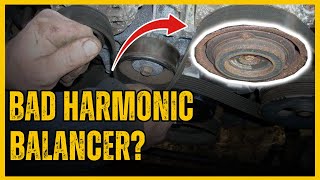
🎬 Watch: 5 common signs your harmonic balancer is failing- Engine Vibration: The most common symptom is a new or unusual vibration felt throughout the car, especially when the engine is idling. In severe cases on the 4G64 engine, this vibration can be extreme enough to break other engine brackets and components.
- Visible Wobble: If you can safely observe the main pulley at the front of the engine while it's running, a failing balancer will often have a noticeable wobble. Do not continue to run the engine if the wobble is severe.
- Chirping or Squealing Noises: As the balancer fails, it can misalign the accessory drive belts, causing them to squeal or chirp. You might also hear a rattling or knocking sound as the metal rings begin to separate.
- Separated Pulley: In a total failure, the outer ring of the balancer can separate completely from the inner hub. If this happens while driving, it will cause an immediate loss of all belt-driven accessories, including the alternator (loss of battery charging), water pump (engine will overheat), and power steering.
- Timing Mark Issues: The outer ring of the balancer often has timing marks used for engine service. If the ring slips on the rubber, these marks will become inaccurate, making it impossible to set ignition timing correctly.
Buying a Used Engine Harmonic Balancer
For this specific part, a high-quality used OEM balancer can be a better choice than a cheap, new aftermarket part. The quality of the rubber compound and the bonding process are critical for longevity, and OEM parts are made to a higher standard than many budget replacements. Here’s what to inspect before buying a used unit:
- Inspect the Rubber Ring: This is the most important check. Look for any signs of cracking, dry rot, or bulging in the rubber between the inner hub and outer ring. The rubber should be smooth and flush with the metal surfaces, not squeezed out or missing chunks.
- Check for Oil Contamination: A common cause of failure is a leaking front crankshaft seal, which soaks the rubber in oil and causes it to break down. If the used balancer is coated in old oil, be extra critical of the rubber's condition.
- Look for Separation: Try to twist the outer ring and inner hub by hand. There should be absolutely no movement between them. Check the front and back sides for any gaps forming between the rubber and metal.
- Examine the Keyway: Look at the slot on the inside of the hub. It should have clean, sharp edges. If the keyway is damaged, rounded, or cracked, the part is junk and should not be used.
- Check the Pulley Grooves: The grooves for the serpentine belt should be clean and free of major damage or corrosion that could shred the belt.
Pro Tip: If you're buying a used engine, always plan on replacing the harmonic balancer or at least inspecting it very carefully. A failure on a freshly installed engine can be devastating.
Replacement Information
Replacing the harmonic balancer on these 2.4L engines is a moderately difficult job that requires special tools. The main challenges are breaking loose the very tight center crankshaft bolt and safely pulling the balancer off the crankshaft without causing damage.
- Difficulty Rating: 4 out of 5
- Estimated Time: 2-3 hours
- DIY Feasible: Yes, for experienced mechanics with the right tools.
Required Tools & Procedures
A special puller is required to remove the balancer. For these Chrysler/Mitsubishi models, a three-jaw puller that hooks into the openings on the pulley is often used. An installer tool is also needed to press the new balancer back on. Do not use the crank bolt to draw the balancer on, as this can strip the threads in the crankshaft.
The crankshaft must be held stationary to remove and torque the center bolt. Mechanics often use a special chain wrench or a homemade tool that bolts to the pulley face and rests against the car's frame. Some may use the trick of resting a long breaker bar on the ground and bumping the starter, but this can be risky if not done correctly.
Simplified Replacement Steps:
- Disconnect the battery.
- Raise the front of the vehicle and remove the passenger-side front wheel and inner fender splash shield.
- Loosen the tensioners and remove the accessory drive belts (power steering/alternator/AC).
- Use a special tool or method to hold the crankshaft pulley stationary and break the center bolt loose. This bolt is extremely tight.
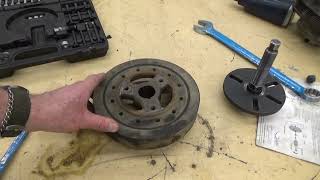
- Use a three-jaw puller to slowly and evenly remove the harmonic balancer from the crankshaft. 🎬 See how to remove a Mitsubishi harmonic balancer
- Apply a small amount of grease to the crankshaft snout and the new balancer's seal surface to prevent damage to the front main seal.
- Use a harmonic balancer installer tool to press the new balancer onto the crankshaft until it is fully seated. 🎬 Watch: Proper removal and installation techniques for harmonic balancers
- Install the center crankshaft bolt and torque it to specification. The torque spec for the 4G64 engine's crankshaft pulley bolt is 98 ft-lbs.
- Reinstall the belts, splash shield, and wheel.
Cost of Replacement
The cost to replace the harmonic balancer can vary significantly based on the parts you choose and whether you do the work yourself.
| Part/Service | Estimated Cost |
|---|---|
| New OEM (Mitsubishi Part # MD376056) | $240 - $355 |
| New Aftermarket | $40 - $120 |
| Used OEM | $50 - $90 |
| Shop Labor | $250 - $450 (2-3 hours) |
Known Issues, Recalls, or TSBs
There are no official recalls or Technical Service Bulletins (TSBs) from Mitsubishi or Chrysler specifically for harmonic balancer failure on these vehicles. However, failure of the rubber element due to age, heat, and oil exposure is a well-documented wear-and-tear issue.
A safety recall (NHTSA Campaign ID: 15V338) was issued for the 2000-2005 Eclipse, 2001-2005 Sebring Coupe, and 2001-2005 Stratus Coupe, but it relates to the passenger-side sun visor and is not related to the engine.
Frequently Asked Questions (FAQ)
Can I drive with a bad harmonic balancer?
It is not recommended. If the balancer is just starting to make noise or has a very slight wobble, you might be able to drive it short distances. However, if it fails completely, the belts will come off, causing a loss of power steering, overheating, and a dead battery, leaving you stranded. A separating balancer can also send metal parts flying, damaging other components in the engine bay.
Is this the same part for a Sebring Sedan or Convertible?
No. The Chrysler Sebring and Dodge Stratus sedans and convertibles are completely different vehicles from the coupes. They do not use this 2.4L Mitsubishi engine or this harmonic balancer. This part is ONLY for the coupe models.
Why is my new aftermarket balancer already failing?
Some low-cost aftermarket balancers use inferior rubber compounds or a less durable press-fit construction instead of a bonded design. These can fail much more quickly than an OEM part, especially on engines that see high mileage or have existing oil leaks. This is why a good-condition used OEM part is often a more reliable choice than a new, non-reputable aftermarket part.
Do I need to replace the front crankshaft seal at the same time?
It is highly recommended. You have to remove the balancer to access the seal, so replacing it at the same time is cheap insurance. A leaking front seal is a primary cause of balancer failure because the oil degrades the rubber. Replacing the seal costs only a few dollars and adds minimal labor to the job.
Helpful Videos
Technical Specifications
OEM Part Numbers: MD376056 MD349501 MD363576 MD376055
Engine: 2.4L SOHC 4-Cylinder (4G64). Pulley Design: 4-bolt pattern, 5-groove serpentine belt design. Crankshaft Bolt Torque: 98 ft-lbs (133 N-m).
We Have This Part in Stock



The information in this article is provided for general reference and educational purposes only. Vehicle specifications, procedures, and part compatibility can vary by production date, trim level, and region. Always consult your vehicle's factory service manual and verify part numbers before purchasing or performing repairs. Safety-critical components such as airbags, seat belts, and braking systems should be installed by a qualified professional.
- Mitsubishi Eclipse:
- Chrysler Sebring:
- Mitsubishi Galant:
- Dodge Stratus:
- 🎬 Helpful Videos
- 🛍️ Shop This Part
- Vehicle Fitment: A Critical Warning
- Symptoms of a Failing Harmonic Balancer
- Buying a Used Engine Harmonic Balancer
- Replacement Information
- Required Tools & Procedures
- Simplified Replacement Steps:
- Cost of Replacement
- Known Issues, Recalls, or TSBs
- Frequently Asked Questions (FAQ)
- 🎟️ Get 5% Off