

1995 Mazda 626 & 1999 Protege Harmonic Balancer: Wobbles, Noises, and Replacement Guide
Diagnose and replace the failure-prone harmonic balancer on your 1.8L or 2.0L Mazda engine before it causes serious damage.
- The most common failure is the rubber ring cracking and separating, causing a visible wobble and engine vibration.
- Do not drive with a bad balancer; if it separates completely, it can cause loss of power steering and charging, and the flying metal ring can cause major damage.
- Replacement requires special tools: a harmonic balancer puller and a crankshaft holding tool to manage the extremely tight center bolt.
- When buying used, the condition of the rubber is paramount. Reject any part with cracks, bulging, or signs of separation.
Symptoms of a Failing Harmonic Balancer
A failing harmonic balancer on the 1995 Mazda 626 or 1999 Mazda Protege will give several distinct warning signs. Because this part can cause severe damage if it fails completely, it's important to address these symptoms immediately.
1. Engine Vibration
The most common symptom is a new or unusual vibration felt in the cabin, through the steering wheel, or in the floor. As the rubber element inside the balancer degrades, it can no longer absorb the engine's vibrations effectively. This shaking may be most noticeable at idle or at certain engine speeds.
2. Visible Wobble
With the engine running, you may be able to see the balancer wobbling as it spins. The outer ring of the pulley should spin perfectly true. Any noticeable wobble indicates that the rubber has deteriorated and the balancer is beginning to separate.
Warning: Be extremely careful when observing the engine bay while the engine is running. Keep hands, hair, and loose clothing away from all moving parts, especially the belts and pulleys.
3. Unusual Noises
A variety of noises can point to a bad balancer. You might hear a rattling, thumping, or knocking sound as the separated metal rings make contact. You may also hear a loud squealing or chirping sound from the accessory belts if the wobbling pulley is causing them to slip or become misaligned.
4. Separated Pulley
In advanced stages of failure, you can visually inspect the balancer (with the engine off) and see that the rubber layer is cracked, bulging, or missing chunks. You may even see a clear gap where the outer ring has physically separated from the inner hub. Oil leaks from the front crankshaft seal can accelerate this process by contaminating and weakening the rubber.
Known Issues, TSBs, and Recalls
Searches of the National Highway Traffic Safety Administration (NHTSA) database show no specific recalls or Technical Service Bulletins (TSBs) for the harmonic balancer on the 1995 Mazda 626 or 1999 Mazda Protege. While some general TSBs exist for engine rattling noises on the Protege, they are not explicitly linked to the balancer. The primary cause of failure for this part is simply age, heat, and wear causing the rubber damping element to break down.
Pro Tip: The 1.8L (FP-DE) and 2.0L (FS-DE) engines in these Mazdas were also used in some Ford models, such as the Ford Escort ZX2. This is why some OEM part numbers may cross-reference to Ford. However, for guaranteed fitment, it is best to use the Mazda part numbers.
Buying a Used Engine Harmonic Balancer
For a part like this, a high-quality used OEM balancer can be a better choice than a cheap, new aftermarket part. The rubber compounds used by the original manufacturer are often more durable. Here’s what to check before buying a used part:
- Inspect the Rubber Ring: This is the most critical step. The rubber ring between the inner hub and outer ring must be in excellent condition. Reject any balancer with visible cracks, dry rot, bulging, or chunks of rubber missing.
- Check for Separation: Try to twist the inner hub and outer ring by hand. There should be absolutely no movement between them. Any play means the bond has failed.
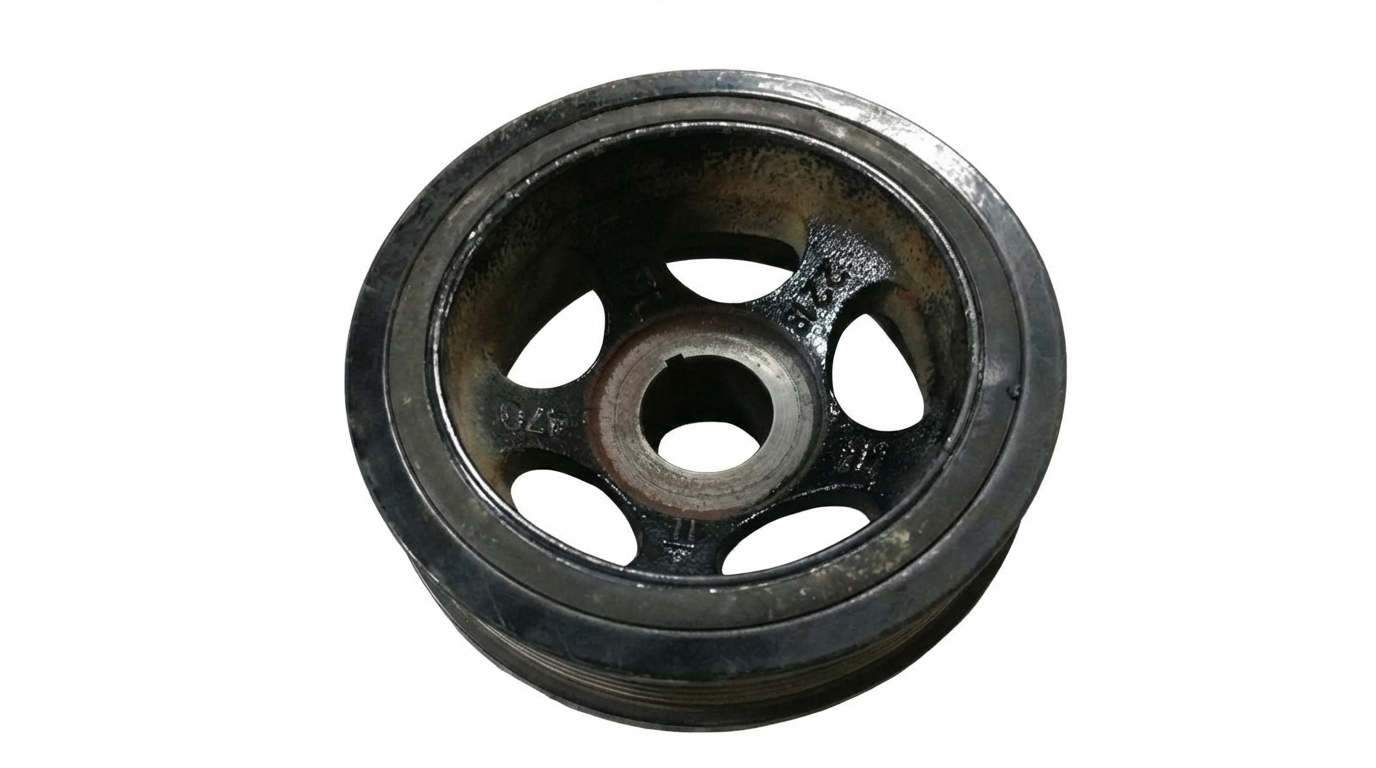
- Examine the Pulley Grooves: The grooves for the serpentine belt should be clean and free of major damage or corrosion. Ensure it is a 4-groove pulley to match your vehicle's requirements.
- Inspect the Keyway: Look at the bore in the center of the hub. The small slot, called a keyway, must be sharp and undamaged. A damaged keyway can prevent the balancer from seating correctly on the crankshaft.
- Check for Flatness: Lay the balancer on a perfectly flat surface to check for any warping or bending, which could indicate it was damaged during removal or from a previous engine event.
Replacement Information
Replacing the harmonic balancer is a moderately difficult job that requires special tools.
- Difficulty Rating: 4 out of 5
- Estimated Time: 1.5 - 2.5 hours
- DIY Feasible: Yes, for experienced mechanics with the right tools.
The most difficult part of the job is removing the central crankshaft bolt, which is torqued extremely tight. You will typically need a powerful impact wrench or a special crankshaft pulley holding tool to prevent the engine from turning while you use a long breaker bar. Once the bolt is out, a dedicated harmonic balancer puller is required to safely remove the balancer from the crankshaft snout. Do not try to pry it off, as this can damage the balancer, the crankshaft, or the engine block.
| Part Type | Estimated Cost |
|---|---|
| New OEM (Mazda) | $130 - $195 |
| New Aftermarket | $30 - $140 |
| Used OEM | $40 - $75 |
| Shop Labor | $180 - $300 |
Frequently Asked Questions (FAQ)
Can I drive my car with a bad harmonic balancer?
It is strongly recommended not to. If the outer ring separates, it can be thrown at high speed, damaging other components like the radiator or engine block. It will also cause the accessory belts to come off, resulting in an immediate loss of power steering and the alternator's ability to charge the battery, which will quickly leave you stranded.
Is a crankshaft pulley the same as a harmonic balancer?
Yes, for these vehicles, the terms are used interchangeably. The part is a single assembly that serves as both the pulley for the accessory belts and the vibration damper for the crankshaft.
Do I need a special tool to replace the harmonic balancer?
Yes. You will need a harmonic balancer puller to remove the old part and likely a crankshaft holding tool to loosen and tighten the main bolt. Attempting the job without these tools can lead to component damage.
Why did my harmonic balancer fail?
Failure is almost always due to the natural aging of the rubber component. Over many years and heat cycles, the rubber becomes hard, brittle, and cracks, losing its ability to absorb vibrations and hold the two metal rings together. Oil leaks from the front crank seal can also soak the rubber and cause it to fail prematurely.
Part Numbers and Specifications
This balancer fits the 1.8L and 2.0L 4-cylinder engines in the specified vehicles. Always verify the part number and specifications before purchasing.
| Specification | Value |
|---|---|
| OEM Part Numbers (Mazda) | FSB8-11-400, FSH9-11-400 |
| Engine Fitment | 1.8L (FP-DE), 2.0L (FS-DE) 4-Cylinder |
| Belt Type | 4-Groove Serpentine |
Technical Specifications
OEM Part Numbers: FSB8-11-400 FSH9-11-400
Fits 1.8L/2.0L 4-cylinder DOHC engines. Uses a 4-groove serpentine belt.
We Have This Part in Stock


The information in this article is provided for general reference and educational purposes only. Vehicle specifications, procedures, and part compatibility can vary by production date, trim level, and region. Always consult your vehicle's factory service manual and verify part numbers before purchasing or performing repairs. Safety-critical components such as airbags, seat belts, and braking systems should be installed by a qualified professional.
- Mazda 626:
- Mazda Protege:
- 🛍️ Shop This Part
- Symptoms of a Failing Harmonic Balancer
- 1. Engine Vibration
- 2. Visible Wobble
- 3. Unusual Noises
- 4. Separated Pulley
- Known Issues, TSBs, and Recalls
- Buying a Used Engine Harmonic Balancer
- Replacement Information
- Frequently Asked Questions (FAQ)
- Part Numbers and Specifications
- 🎟️ Get 5% Off