

1990-1992 Ford Probe 3.0L V6 Harmonic Balancer: Vibration, Wobble, and Replacement Guide
This guide covers the common failure symptoms, replacement costs, and critical inspection points for the harmonic balancer on 1990-1992 Ford Probes with the 3.0L V6 Vulcan engine.
- This harmonic balancer is ONLY for the 1990-1992 Ford Probe equipped with the 3.0L V6 Vulcan engine. It will not fit 2.2L or 2.5L models.
- The most common failure symptoms are engine vibration, a visible wobble from the pulley, and knocking or squealing noises.
- Do not drive if you suspect the balancer is failing. A complete separation can cause catastrophic damage to other engine components.
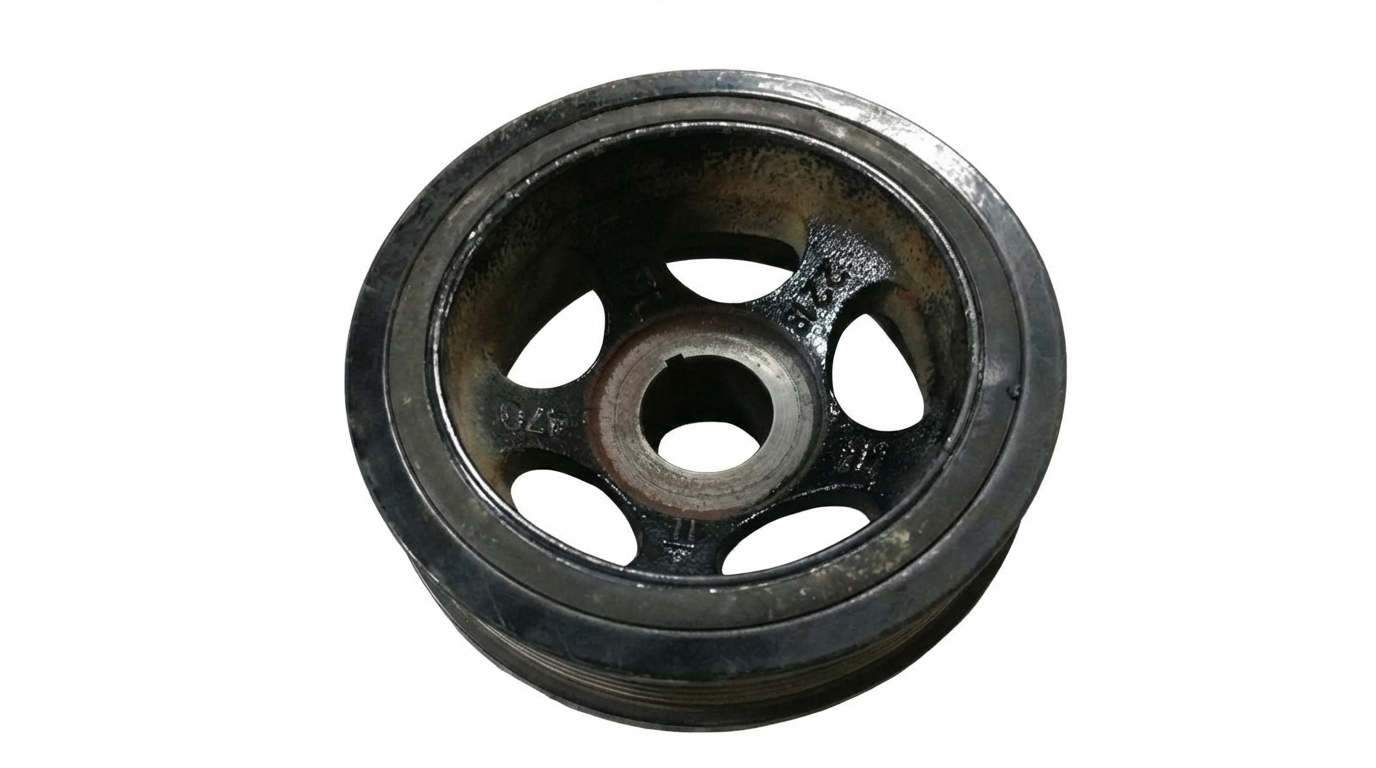
- When buying a used balancer, the most important check is the condition of the rubber ring; it must be free of cracks, bulges, or signs of separation.
Symptoms of a Failing Harmonic Balancer
A failing harmonic balancer can cause a range of symptoms, from unusual noises to serious engine performance issues. Because it is connected to so many critical systems, it's important to diagnose a failure early.
1. Engine Vibration
The most common symptom of a bad harmonic balancer is a noticeable increase in engine vibration. Since the balancer's primary job is to absorb vibrations, its failure means those vibrations are transferred through the engine and into the car's frame. You might feel this as a rhythmic shaking in the steering wheel, floor, or seats, especially at idle.
2. Wobbling Pulley
A quick visual inspection while the engine is running (use extreme caution) can reveal a wobbling balancer. As the rubber insulator between the inner hub and outer ring deteriorates, the two pieces can begin to separate, causing the entire assembly to wobble as it spins. This is a major red flag indicating imminent failure.
3. Knocking or Squealing Noises
A failing balancer can produce several different sounds. You might hear a knocking or rattling sound that changes with engine speed, which can be mistaken for a more serious internal engine problem. If the balancer wobbles, it can misalign the accessory belts, causing a loud squealing or chirping sound. Sometimes, the automatic belt tensioner will make a clicking noise as it tries to compensate for the wobbling pulley.
4. Visible Damage
With the engine off, you can inspect the balancer for signs of wear. Look for cracks, chunks of missing rubber, or any sign that the outer ring has started to separate from the inner hub. On some failed units, you can see the rubber bulging or squeezing out from between the metal rings. Forum users have reported seeing small, crumb-sized pieces of rubber on or around the balancer as a sign of failure.
5. Timing Mark Issues & Poor Performance
The outer ring of the balancer has timing marks used to set the engine's ignition timing. If the rubber fails and the outer ring slips, these marks will no longer be accurate. This can lead to incorrect ignition timing, causing rough idling, poor acceleration, reduced power, and even engine stalling.
Warning: A complete failure of the harmonic balancer is dangerous. The outer ring can separate from the hub and be thrown at high speed, damaging the radiator, belts, hoses, and other components in the engine bay. If you suspect your balancer is failing, it should be addressed immediately.
Known Issues for 1990-1992 Ford Probe 3.0L V6
While there are no specific recalls or Technical Service Bulletins (TSBs) directly addressing the harmonic balancer on the 1990-1992 Ford Probe, the 3.0L Vulcan V6 engine it uses has some known characteristics. The harmonic balancer on these engines is a standard elastomer design, which is known to wear out over time as the rubber degrades from heat and exposure to oil. The most critical issue for this specific vehicle is ensuring you have the correct part, as only the balancer for the 3.0L V6 will fit.
Buying a Used Engine Harmonic Balancer
A used OEM harmonic balancer can be a reliable and cost-effective option, but careful inspection is key. Here’s what to look for:
- Check the Rubber: This is the most critical inspection point. The rubber ring between the inner hub and outer ring should be free of cracks, bulges, and missing chunks. It should not look dry-rotted or excessively hard. Gently try to press a fingernail into it; it should have a slight give but not be soft or gummy.
- Inspect for Separation: Look closely at the bond between the rubber and the metal rings on both the front and back. There should be no gaps or signs that the outer ring has started to pull away from the rubber.
- Verify Timing Marks: Ensure the timing marks on the outer ring are clear and legible. Check for any evidence that the outer ring has slipped. A tell-tale sign is a clean or fresh line in the grime where the ring has moved from its original position.
- Check the Keyway: Inspect the keyway slot on the inner hub. It should be sharp and free of damage or deformation. A damaged keyway indicates the balancer may have been loose on the crankshaft.
- Look for Hammer Marks: Never buy a balancer that shows signs of being hammered on. Hammering can damage the internal rubber structure and lead to premature failure. Look for dents or flattened areas on the front or back of the hub.
- Confirm Part Number: The verified OEM part number for this application is F12Z-6316-A. Always verify compatibility for the 1990-1992 Ford Probe with the 3.0L V6 engine. This part will NOT fit the 2.2L 4-cylinder or later 2.5L V6 models.
Pro Tip: When comparing a used OEM balancer to a new aftermarket one, consider the quality of the rubber. OEM balancers often use higher-quality rubber compounds designed for longevity. A low-mileage used OEM part can often be a better choice than a cheap, new aftermarket part with unproven durability.
Cost Comparison
| Part Type | Estimated Cost |
|---|---|
| New OEM (F12Z-6316-A) | $150 - $250 (if available) |
| New Aftermarket (Dorman, etc.) | $45 - $80 |
| Used OEM | $30 - $75 |
| Shop Labor for Replacement | $150 - $300 |
Replacement Overview
Replacing the harmonic balancer on a 1990-1992 Ford Probe 3.0L is a moderately difficult job. The main challenge is the tight space and the force required to remove the old balancer and install the new one.
Difficulty: 4 out of 5
Estimated Time: 2-4 hours
Based on owner experiences shared in forums, the passenger-side frame rail is very close to the balancer, making removal difficult. The process typically involves:
- Safely supporting the engine.
- Removing the passenger-side motor mount.
- Lowering the engine slightly to gain clearance.
- Removing the serpentine belts.
- Using a large breaker bar or impact wrench to remove the main crankshaft bolt.
- Using a dedicated harmonic balancer puller tool to remove the balancer from the crankshaft.
- Using a harmonic balancer installer tool to press the new balancer on. 🎬 Watch: Step-by-step guide on using a puller and installer tool Never use a hammer to install the new balancer.
Due to the need for special tools (puller/installer) and the difficulty of working in the tight space, this job can be challenging for a novice DIY mechanic.
Frequently Asked Questions (FAQ)
Will this harmonic balancer fit my Probe GT?
No. This part is ONLY for the LX models equipped with the 3.0L V6 Vulcan engine. The Ford Probe GT models from 1990-1992 used a 2.2L Turbo 4-cylinder engine, which uses a different harmonic balancer.
What happens if the outer ring slips?
If the outer ring slips, the timing marks will become inaccurate, making it impossible to correctly set ignition timing. This can cause poor engine performance, rough idle, and potentially a no-start condition if it slips far enough. It also means the balancer is no longer properly balanced, which will cause harmful vibrations.
Do I need a special tool to replace the harmonic balancer?
Yes. You will need a harmonic balancer puller to safely remove the old unit and a harmonic balancer installer to press the new one onto the crankshaft without causing damage. Attempting to pry or hammer the balancer can damage the balancer, the crankshaft, or the engine's thrust bearings.
Can I drive with a bad harmonic balancer?
It is not recommended. A wobbling or noisy balancer is a sign of impending failure. If it fails completely while driving, the outer ring can fly off and destroy other components like the radiator, belts, and hoses, potentially leaving you stranded and facing a much more expensive repair.
Helpful Videos

Technical Specifications
OEM Part Numbers: F12Z-6316-A F12Z6316A
Construction: Two-piece steel with a bonded rubber insulator. Pulley Type: Integrated serpentine belt pulley. Engine Fitment: Ford 3.0L V6 Vulcan Engine.
We Have This Part in Stock

The information in this article is provided for general reference and educational purposes only. Vehicle specifications, procedures, and part compatibility can vary by production date, trim level, and region. Always consult your vehicle's factory service manual and verify part numbers before purchasing or performing repairs. Safety-critical components such as airbags, seat belts, and braking systems should be installed by a qualified professional.
- Ford Probe:
- 🎬 Helpful Videos
- 🛍️ Shop This Part
- Symptoms of a Failing Harmonic Balancer
- 1. Engine Vibration
- 2. Wobbling Pulley
- 3. Knocking or Squealing Noises
- 4. Visible Damage
- 5. Timing Mark Issues & Poor Performance
- Known Issues for 1990-1992 Ford Probe 3.0L V6
- Buying a Used Engine Harmonic Balancer
- Cost Comparison
- Replacement Overview
- Frequently Asked Questions (FAQ)
- 🎟️ Get 5% Off