

2003-2004 Kia Spectra 1.8L Cylinder Head: A Guide to Overheating, Warpage, and Replacement
This guide covers the common causes of cylinder head failure in the 2003-2004 Kia Spectra, how to diagnose the problem, and what to inspect when purchasing a used replacement.
- The primary cause of cylinder head failure on the 1.8L Spectra is engine overheating, which warps the aluminum head.
- When buying a used cylinder head, it is absolutely critical to check it for warpage using a straightedge and feeler gauge before installation.
- This part only fits the 2003-2004 Kia Spectra with the 1.8L DOHC engine. The correct OEM part number is K220Z-10090.
- Replacement is a professional-level job that requires replacing the head bolts (one-time use), head gasket, timing belt, and water pump at the same time.
Symptoms of a Failing Cylinder Head
A failing cylinder head on a 2003-2004 Kia Spectra almost always produces severe and noticeable symptoms. These issues typically stem from the head warping due to overheating, or from a crack developing, which compromises the seal between the cylinder head and the engine block. The symptoms are often identical to those of a blown head gasket, because a warped head is a primary cause of head gasket failure.
- Engine Overheating: This is the most common cause and symptom. A warped or cracked head can allow hot combustion gases to leak into the cooling system, overwhelming it and causing the temperature gauge to spike.
- White Smoke from Exhaust: A crack or failed gasket seal can let coolant leak into the combustion chamber, where it is burned off and exits the tailpipe as sweet-smelling white steam.
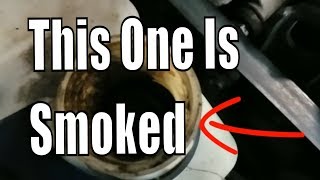
- Milky or Frothy Engine Oil: If you check the oil dipstick or oil filler cap and see a milky, light-brown substance that looks like a coffee milkshake, it's a classic sign that coolant is mixing with your engine oil. This is catastrophic for the engine's bearings and internal components.
- Unexplained Coolant Loss: The cooling system may lose coolant rapidly with no visible external leaks. The coolant is being consumed inside the engine.
- Rough Idle and Engine Misfires: A compromised seal leads to a loss of compression in one or more cylinders. This will cause the engine to run poorly, shake at idle, and may trigger a Check Engine Light with misfire codes like P0300, P0301, P0302, P0303, or P0304.
- Bubbling in Coolant Reservoir: With the engine running, you may see a steady stream of bubbles in the coolant overflow tank. This is a sign that combustion gases are being forced into the cooling system.
Known Issues, Recalls, and TSBs
The 1.8L DOHC engine (engine code: T8D) in the 2003-2004 Spectra is a design based on the Mazda BP engine. While generally considered a decent engine for its time, its aluminum construction makes the cylinder head particularly vulnerable to warping if the engine overheats. The most common cause of cylinder head failure is a cooling system problem, such as a bad thermostat, leaking radiator, or failed water pump, that leads to an overheating event.
Compatibility Warning: This cylinder head is specific to the 1.8L DOHC engine used in the 2003-2004 Kia Spectra. It will not fit models equipped with the 2.0L engine that became more common in later years.
Recalls and Technical Service Bulletins (TSBs)
There are no specific recalls or TSBs from the National Highway Traffic Safety Administration (NHTSA) for cylinder head failure on the 2003-2004 Kia Spectra. However, Kia has issued warranty extension programs for other models experiencing coolant leaks from the head gasket area, which indicates a known pattern of this type of failure under certain conditions.
There is one major safety recall (NHTSA Campaign ID: 11V256000) for 2004-2007 Spectras sold in states with heavy road salt use. This recall addresses fuel tank straps that can corrode and break, potentially allowing the fuel tank to fall. This issue is unrelated to the engine but is an important safety check for any owner.
Buying a Used 2003-2004 Spectra Cylinder Head: A Buyer's Guide
A used OEM cylinder head from a low-mileage vehicle can be an excellent, cost-effective solution, often proving more reliable than a cheap aftermarket casting. However, careful inspection is absolutely critical before purchase. A faulty used head will fail just like your old one.
Physical Inspection Checklist
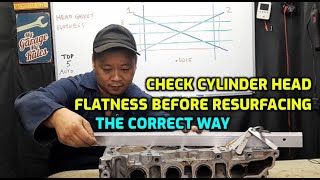
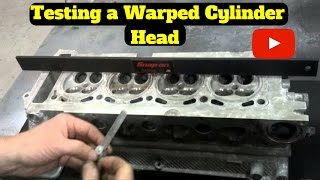
- Check for Warpage (Most Important): Lay a precision straightedge across the mating surface of the head. Check it lengthwise, crosswise, and diagonally from corner to corner. Try to slide a feeler gauge under the straightedge. Most manufacturers specify a maximum warpage of 0.002 to 0.004 inches. If you can fit a 0.004-inch feeler gauge under the straightedge at any point, the head is too warped and must be resurfaced by a machine shop or rejected. 🎬 See how to properly check for head warpage and flatness.
- Inspect for Cracks: Clean the head thoroughly and look for hairline cracks. Pay close attention to the areas between the valve seats and around the spark plug holes, as this is where they most commonly form. For a definitive check, a machine shop can perform a pressure test or magnaflux/dye penetrant test to find cracks invisible to the naked eye.
- Examine Camshaft Journals: If the head includes camshafts, inspect the surfaces where the cams ride. Look for deep scoring or scratches that you can catch with a fingernail. Minor scuffs are often acceptable, but deep grooves indicate lubrication problems.
- Check for Previous Repairs: Look for signs that the head has been resurfaced before. Sometimes this is indicated by a very shiny, freshly machined surface. While not necessarily a deal-breaker, a head that has been machined multiple times may have issues with geometry and compression ratio.
- Verify Part & Casting Numbers: The correct OEM part number for the complete assembly is K220Z-10090, which supersedes earlier numbers like 22110-2Y100. You may also find casting numbers on the head itself, such as K2N5 or K247, which can help confirm compatibility.
Replacement Overview and Difficulty
- Difficulty Rating: 5 out of 5 (Professional Level)
- DIY Feasible: No, not for beginners. This is a complex, labor-intensive job.
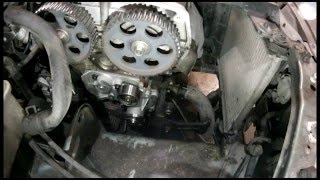
Replacing a cylinder head is one of the most involved repairs on a vehicle. It requires partial disassembly of the top half of the engine, including the intake and exhaust manifolds, timing belt, and numerous other components. Special tools are required, including a precision torque wrench and an angle gauge, as the head bolts are torque-to-yield (TTY) and must be tightened in a specific sequence and to a specific angle.
Pro Tip: When replacing the cylinder head, it is essential to also replace the head gasket (Part No. 22311-2Y100), head bolts (they are one-time use), timing belt, and water pump. Failure to replace these related items can lead to a repeat failure of the new head.
Cost Comparison
The cost to fix a failed cylinder head can vary dramatically based on the parts chosen and labor rates. A professional repair is expensive due to the high labor time.
| Part/Service | Estimated Cost | Notes |
|---|---|---|
| New OEM Cylinder Head | $900 - $1,300+ | Often a special-order part from a Kia dealer. |
| Remanufactured Cylinder Head | $450 - $700 | A used head that has been professionally cleaned, inspected, and resurfaced. A common choice. |
| Used OEM Cylinder Head | $150 - $450 | Price varies by condition, mileage, and whether it includes camshafts. |
| Shop Labor | $1,100 - $1,700 | Labor costs are high, typically 9-12 hours for this job. |
| Total Professional Repair | $2,900 - $3,800+ | Using a remanufactured head and including related parts like gaskets and fluids. |
Frequently Asked Questions (FAQ)
Do I have to get a used cylinder head resurfaced?
It is highly recommended. Even if a used head passes a straightedge test, having a machine shop perform a light resurfacing ensures a perfectly flat mating surface for the new head gasket, which is critical for a long-lasting seal. The cost is minimal compared to the labor of doing the job twice.
What is the main cause of cylinder head failure on the 2003-2004 Spectra?
The single most common cause is engine overheating. A failure in the cooling system (like a bad thermostat, water pump, or radiator leak) raises engine temperatures beyond what the aluminum head can tolerate, causing it to warp.
Can I just replace the head gasket and not the cylinder head?
Only if the cylinder head is confirmed to be perfectly flat and free of cracks. If you replace only the gasket but the head is warped, the new gasket will fail in a very short time. The head must be inspected and measured any time it is removed.
Are the cylinder head bolts reusable?
No. The 1.8L T8D engine uses torque-to-yield (TTY) head bolts. These bolts are designed to permanently stretch when tightened. They cannot maintain the correct clamping force if reused and will likely break or cause the new head gasket to fail. Always install a new set of head bolts.
Helpful Videos
Technical Specifications
OEM Part Numbers: K220Z-10090 22110-2Y100 22100-2Y100
Engine: 1.8L DOHC 'T8D' 4-Cylinder. Material: Aluminum Alloy. Head Bolt Type: Torque-to-Yield (TTY) - Not Reusable.
We Have This Part in Stock


The information in this article is provided for general reference and educational purposes only. Vehicle specifications, procedures, and part compatibility can vary by production date, trim level, and region. Always consult your vehicle's factory service manual and verify part numbers before purchasing or performing repairs. Safety-critical components such as airbags, seat belts, and braking systems should be installed by a qualified professional.
- Kia Spectra:
- 🎬 Helpful Videos
- 🛍️ Shop This Part
- Symptoms of a Failing Cylinder Head
- Known Issues, Recalls, and TSBs
- Recalls and Technical Service Bulletins (TSBs)
- Buying a Used 2003-2004 Spectra Cylinder Head: A Buyer's Guide
- Physical Inspection Checklist
- Replacement Overview and Difficulty
- Cost Comparison
- Frequently Asked Questions (FAQ)
- 🎟️ Get 5% Off