

Ford 3.5L V6 Cylinder Head Failure: 2007-2012 Edge, Flex, Taurus, MKX & More
A deep dive into the common causes of cylinder head failure in these vehicles, often linked to the internal water pump design, and what to look for when buying a used part.
- Cylinder head failure in these vehicles is most often caused by engine overheating due to the failure of the internal, timing-chain-driven water pump.
- Symptoms are severe: white exhaust smoke, milky engine oil, overheating, and rough running. Do not continue to drive the vehicle if these symptoms appear.
- This guide is for the 3.5L naturally aspirated (non-turbo) V6 ONLY. The 3.5L EcoBoost (turbo) engine uses different cylinder heads.
- When buying a used head, it is critical to have it professionally checked for warping and cracks before installation to avoid repeating this very expensive repair.
Compatibility Warning: Naturally Aspirated vs. EcoBoost Engines

Important: This guide covers the cylinder head for the 3.5L naturally aspirated (non-turbo) V6 engine, also known as the Cyclone V6. This engine was standard on the 2008-2009 Ford Taurus, 2007-2008 Ford Edge, 2007-2009 Lincoln MKZ, 2007-2008 Lincoln MKX, 2009-2012 Ford Flex, 2009-2012 Lincoln MKS, 2008-2009 Mercury Sable, and 2008-2009 Ford Taurus X.
Some later models, like the Ford Flex, Lincoln MKS, and Ford Taurus SHO (Super High Output), offered a 3.5L EcoBoost (twin-turbo) engine. The EcoBoost engine uses different cylinder heads. The part numbers in this guide are for the naturally aspirated engine only. Always verify your engine type before ordering a replacement part.
The Root Cause: Internal Water Pump Failure

While a cylinder head can fail for many reasons, on these specific Ford, Lincoln, and Mercury models, the most common cause is severe engine overheating. This overheating is often triggered by a failure of the engine's internal water pump. Unlike most engines where the water pump is an external part driven by a belt, the pump on the transverse 3.5L V6 is located inside the engine and is driven by the timing chain.
When the water pump's internal seal or bearing fails, two things can happen:
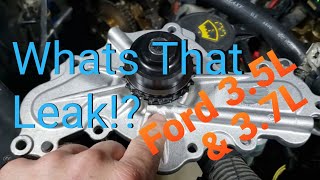
- External Leak: Coolant may escape through a 'weep hole' and drip down the side of the engine, often visible below the alternator. 🎬 Watch: How to spot a leaking internal water pump This is the best-case scenario, as it provides a clear warning sign.
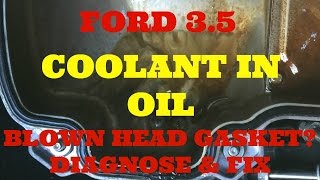
- Internal Leak: Coolant can leak directly into the engine's oil pan, mixing with the engine oil. This is catastrophic. Coolant contaminates the oil, destroying its ability to lubricate moving parts. This quickly leads to widespread engine damage, including warped or cracked cylinder heads.
Because of this design, a failing water pump that is not addressed immediately is the primary killer of these engines and a direct cause of cylinder head damage.
Symptoms of a Failing Cylinder Head

A cracked or warped cylinder head will cause a breach between the combustion chamber, the cooling system, and the oil passages. The symptoms are often severe and should not be ignored.
- Engine Overheating: This is the most common symptom. A compromised head or gasket allows hot combustion gases to enter the cooling system, overwhelming it and causing the temperature gauge to spike.
- White Smoke from Exhaust: If the crack allows coolant to leak into the combustion chamber, it will be turned into steam and exit the tailpipe as thick, white smoke with a sweet smell.
- Unexplained Coolant Loss: You may find yourself constantly refilling the coolant reservoir, but you can't find an external leak. The coolant is being consumed inside the engine.
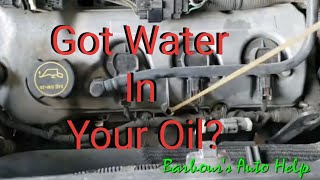
- Milky, Foamy Engine Oil: This is a critical sign that coolant is mixing with your oil. If you check the oil dipstick or oil filler cap and see a substance that looks like a chocolate milkshake, 🎬 See what coolant-contaminated engine oil looks like it indicates a major internal failure.
- Poor Engine Performance: A cracked head can cause a loss of compression in one or more cylinders. This results in a rough idle, engine misfires, and a significant loss of power.
- Bubbling in Radiator or Coolant Reservoir: With the engine running, you may see bubbles in the coolant reservoir. This is caused by combustion gases being forced into the cooling system.
- Check Engine Light: Misfire codes (like P0300, P0301-P0306) are common when a cylinder head fails.
Buying a Used Engine Cylinder Head: What to Check

A used OEM cylinder head can be a cost-effective solution, but careful inspection is critical. A faulty used head will lead to a repeat of a very expensive repair. Here’s what to inspect before you buy:
- Check for Flatness (Warping): This is the most important check. Lay a certified straight edge across the head's mating surface (the flat, machined side that meets the engine block). Try to slide a feeler gauge under the straight edge. Check diagonally, lengthwise, and across several points. If you can fit a feeler gauge thicker than 0.003-0.004 inches, the head is likely warped and will need to be resurfaced by a machine shop.
- Inspect for Cracks: Look very closely for hairline cracks, especially in the areas between the valve seats and around the spark plug holes. These are high-stress areas. A professional machine shop will use dye penetrant or pressure testing to find cracks that are invisible to the naked eye.
- Examine Valve Seats: Look for any signs of pitting, burning, or excessive wear on the valve seats. Damaged seats will not seal properly and will require a valve job.
- Check Camshaft Journals and Caps: If the head includes camshafts, inspect the bearing surfaces for scoring or deep scratches. This could indicate the previous engine suffered from oil starvation.
- Verify Casting and Part Numbers: Ensure the casting numbers on the head match what is required for your specific vehicle and engine. The heads for the naturally aspirated 3.5L are different from the 3.5L EcoBoost.
- Ask About the Donor Vehicle: Inquire about the mileage and history of the vehicle the head came from. Was it in a collision, or did it suffer from engine failure? A head from a front-end collision vehicle is often a better bet than one from an engine that overheated.
Pro Tip: Even if a used cylinder head looks perfect, it is highly recommended to have it professionally inspected and pressure tested by a qualified automotive machine shop before installation. They can also resurface it to ensure a perfectly flat mating surface, which is crucial for the new head gasket to seal correctly.
Recalls and Technical Service Bulletins (TSBs)
There are no specific recalls for cylinder head failure on these vehicles. However, several related recalls and TSBs exist:
- Airbag Recalls: Numerous recalls were issued for driver and passenger airbag inflators across most of these models.
- Fuel Tank Corrosion Recall (2007-2008 Edge/MKX): For vehicles in salt-belt states, a recall (NHTSA 14V597000) was issued for fuel tanks that could rust and leak.
- Cooling System TSBs: Ford has issued bulletins regarding issues with the original Motorcraft Orange coolant, which could form deposits and clog radiators or heater cores. TSB 21-2038 recommends flushing the system and switching to the newer Motorcraft Yellow coolant to prevent these issues. Maintaining a clean cooling system is vital to prevent the overheating that kills these cylinder heads.
Cost of Replacement
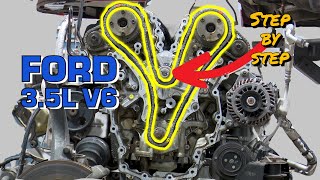
Replacing a cylinder head is one of the most labor-intensive repairs possible. The entire top half of the engine, including the timing cover, timing chains, and intake/exhaust manifolds, must be removed. 🎬 Watch: Step-by-step cylinder head removal and replacement Given the known water pump issue, it is standard practice to replace the water pump and timing chain components at the same time.
| Part/Service | Estimated Cost |
|---|---|
| New OEM Cylinder Head | $800 - $1,200 (per head, part only) |
| Remanufactured Cylinder Head | $600 - $1,000 (per head, part only) |
| Used OEM Cylinder Head | $250 - $500 (per head, part only) |
| Shop Labor | $2,500 - $4,000+ |
| Related Parts (Gaskets, Bolts, Water Pump, etc.) | $500 - $800 |
| Total Job Cost | $3,500 - $6,000+ |
Frequently Asked Questions (FAQ)
Can I drive with a cracked cylinder head?
No. Driving with a cracked cylinder head can lead to catastrophic engine failure. If coolant is mixing with the oil, you will destroy the engine's bearings in a very short time. If the engine is severely overheating, you risk warping or cracking more components, turning a costly repair into a complete engine replacement.
Is it worth repairing a cracked cylinder head on one of these vehicles?
It depends on the overall condition and value of the vehicle. A cylinder head replacement can cost between $3,500 and $6,000. If the vehicle is otherwise in good shape and has reasonable mileage, the repair can be worthwhile. However, if the engine has high mileage or the internal water pump failure caused extensive damage, replacing the entire engine with a used unit may be more cost-effective.
Should I replace both cylinder heads at the same time?
While not strictly required, it is often recommended. The labor to access one cylinder head is nearly the same as the labor to access both. If the engine suffered a severe overheating event, the second head may be warped or stressed as well. Replacing both at the same time provides peace of mind and prevents having to do the same massive job twice.
What is the difference between Bank 1 (Right) and Bank 2 (Left)?
In these front-wheel-drive-based platforms, Bank 1 (Right) is the cylinder bank closer to the firewall (the wall between the engine and the passenger cabin). Bank 2 (Left) is the cylinder bank closer to the radiator. The cylinder heads are specific to each bank and are not interchangeable.
Helpful Videos
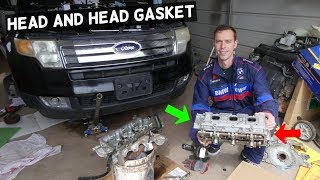
Technical Specifications
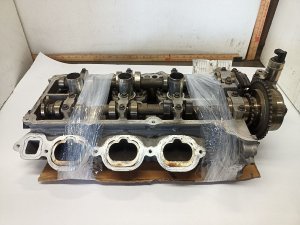
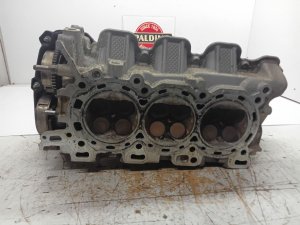
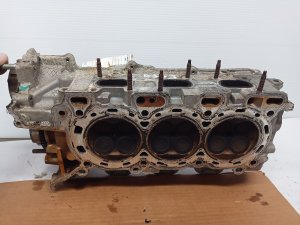
OEM Part Numbers: 7T4E6F093AA 7T4E6F093AB 7T4Z6049A 7T4Z6049B 9T4Z6049A
Engine: 3.5L DOHC Naturally Aspirated V6 (Ford Cyclone). Bank 1 is the Right/Passenger side (firewall side). Bank 2 is the Left/Driver side (radiator side).
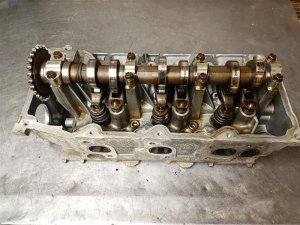
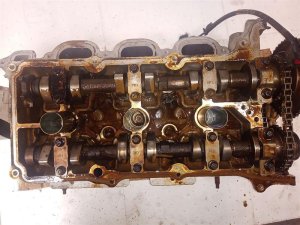
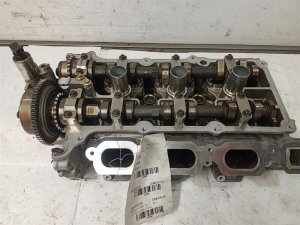
We Have This Part in Stock

The information in this article is provided for general reference and educational purposes only. Vehicle specifications, procedures, and part compatibility can vary by production date, trim level, and region. Always consult your vehicle's factory service manual and verify part numbers before purchasing or performing repairs. Safety-critical components such as airbags, seat belts, and braking systems should be installed by a qualified professional.
- Ford Taurus:
- Ford Edge:
- Lincoln MKZ:
- Lincoln MKX:
- Ford Flex:
- Lincoln MKS:
- Mercury Sable:
- Ford Taurus X:
- 🎬 Helpful Videos
- 🛍️ Shop This Part
- Compatibility Warning: Naturally Aspirated vs. EcoBoost Engines
- The Root Cause: Internal Water Pump Failure
- Symptoms of a Failing Cylinder Head
- Buying a Used Engine Cylinder Head: What to Check
- Recalls and Technical Service Bulletins (TSBs)
- Cost of Replacement
- Frequently Asked Questions (FAQ)
- 🎟️ Get 5% Off