

Ford & Lincoln 2.0L EcoBoost Cylinder Head Failure: Coolant Leaks, Misfires & TSBs (2012-2018)
This guide covers the widespread coolant intrusion issue in 2.0L EcoBoost engines, a problem often caused by a design flaw that requires more than just a cylinder head replacement.
- The root cause is often a design flaw in the engine block causing coolant to leak into the cylinders, not just a bad head or gasket.
- Key symptoms are unexplained coolant loss, white exhaust smoke on startup, and engine misfires with codes like P0302 or P0303.
- Ford's official fix (TSB 19-2346) is a complete engine replacement, as a new head on a bad block won't solve the issue.
- If buying a used head, it is absolutely mandatory to have it professionally pressure tested and checked for warpage before installation.
The Real Problem: Coolant Intrusion From a Flawed Engine Block

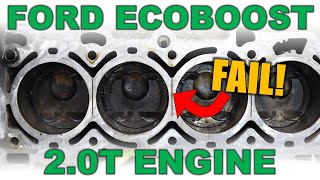
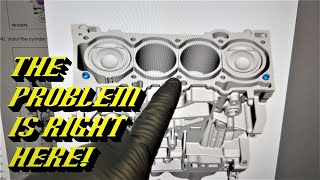
Critical Warning: While this article is about the cylinder head, the most common cause of major engine failure in these 2.0L EcoBoost engines is often a flaw in the engine block itself, not the cylinder head. A design issue allows coolant to leak into the cylinders, especially between cylinders #2 and #3. This is frequently misdiagnosed as a simple blown head gasket. Ford's official repair procedure for this issue, outlined in Technical Service Bulletin (TSB) 19-2346, is a complete long block engine replacement because a new cylinder head on a faulty block will not solve the problem. Before buying a cylinder head, you must confirm the engine block is not the source of the leak.
Vehicles Affected by 2.0L EcoBoost Coolant Intrusion

This guide applies to the 2.0L Turbocharged EcoBoost engine (often identified by the 8th digit of the VIN being '9') in the following North American market vehicles. It does not apply to Hybrid, diesel, or other engine sizes.
- 2012-2013 FORD EXPLORER
- 2013-2017 FORD TAURUS
- 2012-2013 FORD EDGE
- 2013-2013 LINCOLN MKT
- 2013-2016 LINCOLN MKZ
- 2013-2013 FORD ESCAPE
- 2013-2016 FORD FUSION
- 2013-2014 FORD FOCUS (including ST models)
- 2014-2018 FORD SPECIAL SERVICE POLICE SEDAN
Symptoms of a Failing Cylinder Head or Coolant Intrusion

The signs of internal coolant leakage start subtly but can lead to catastrophic engine failure. If you experience these symptoms, stop driving the vehicle immediately to prevent further damage.
1. Unexplained Coolant Loss
The first and most common sign is a slowly dropping coolant level in the overflow reservoir, but you can't find any visible leaks, drips, or puddles under the car. You may find yourself needing to top off the coolant every few hundred miles.
2. White, Sweet-Smelling Exhaust Smoke
When coolant leaks into a cylinder, it is vaporized during combustion and exits the tailpipe as thick, white steam. This is most noticeable on a cold start after the vehicle has been sitting overnight, allowing coolant to pool in the cylinder.
3. Engine Misfires and Rough Running
Coolant in the cylinder will foul the spark plug and prevent proper combustion, causing the engine to misfire, shake, or run poorly. This is often accompanied by a flashing or solid Check Engine Light. Common diagnostic trouble codes (DTCs) include:
- P0300: Random/Multiple Cylinder Misfire Detected
- P0301, P0302, P0303, P0304: Misfire Detected in a specific cylinder (Cylinders 2 and 3 are most common for this issue)
- P0316: Misfire Detected on Startup (First 1000 Revolutions)
4. Engine Overheating
As coolant is lost or hot combustion gases are forced into the cooling system, the engine can no longer maintain its proper operating temperature. This may trigger overheat-related codes like P0217, P1285, or P1299.
5. Milky Engine Oil
In cases of a severe crack or gasket failure, coolant can mix directly with the engine oil. This creates a milky, frothy, 'chocolate milk' substance that can be seen on the oil dipstick or under the oil filler cap. This indicates a critical failure that requires immediate engine shutdown.
Diagnosis and TSB Information

Ford has issued several Technical Service Bulletins regarding this problem. The most relevant is TSB 19-2346, which superseded earlier versions. It covers some 2015-2018 Edge and 2017-2019 Fusion, MKZ, Escape, and MKC models. 🎬 Watch: Learn more about the Ford TSB and engine block flaw However, the underlying engine design flaw exists in the earlier models listed in this guide as well, which is why they are included in class-action lawsuits concerning this exact issue.
A technician will diagnose this issue by:
- Verifying coolant loss.
- Pressure testing the cooling system. A loss of more than 4 PSI over 5 hours is a sign of a leak.
- Checking for DTCs related to misfires or overheating.
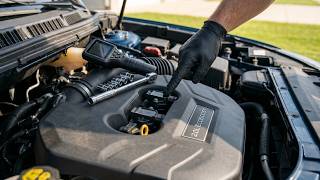
- Using a borescope camera through the spark plug holes to visually inspect for coolant inside the cylinders. 🎬 Watch: How to check for coolant intrusion using a borescope
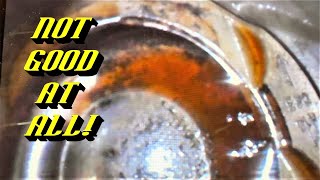
If coolant is found in the cylinders, the TSB recommends a complete long block engine replacement.
Buying a Used Engine Cylinder Head: A Buyer's Guide
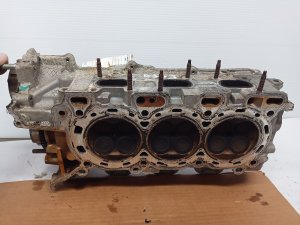
If you and your mechanic have definitively ruled out a cracked engine block and confirmed the fault is only in the cylinder head, a quality used OEM head can be a cost-effective solution. However, careful inspection is mandatory.
Pro Tip: A used OEM cylinder head is often a better choice than a cheap, new aftermarket part. OEM castings have consistent quality control, while some aftermarket heads can have casting flaws, improper hardness, or machine work that leads to premature failure.
What to Inspect Before You Buy
- Demand a Professional Inspection: Do not buy a used cylinder head unless it has been professionally cleaned and inspected by a machine shop.
- Pressure Testing: The head MUST be pressure tested. This involves sealing the coolant passages and applying air pressure to see if it holds. This is the only way to reliably detect hairline cracks that are invisible to the naked eye.
- Check for Warpage: The mating surface must be perfectly flat to seal against the engine block. A machine shop will check this with a precision straight edge and feeler gauges. Any head that is warped beyond service limits must be resurfaced (milled).
- Visual Crack Inspection: Even with a pressure test, visually inspect the surface, especially the areas between the valve seats and around the spark plug holes, which are common crack locations.
- Camshaft Journals: Inspect the surfaces where the camshafts ride. Look for deep scoring, gouges, or signs of heat damage from oil starvation.
Compatibility Check
Always verify you are buying a head for the 2.0L EcoBoost Turbo engine. It will not fit the 2.0L non-turbo, hybrid models, or any other engine size. The surest way to confirm is to match the casting number (e.g., 'CJ5E-6090') from your old head to the new one. When in doubt, provide the seller with your vehicle's VIN.
Replacement Difficulty & Cost
Installation Difficulty: 5 out of 5 (Expert Level)
This is not a DIY job for a beginner or intermediate mechanic. Replacement is a complex, time-consuming process that requires special tools for engine timing, dealing with torque-to-yield (TTY) head bolts that must be replaced, and extensive disassembly of the engine. 🎬 Watch: See a complete teardown of a failed 2.0L EcoBoost On many of these transverse-engine vehicles, accessing the engine may require lowering the subframe.
- Estimated Time: 12-15 hours
- DIY Feasible: No
Cost Comparison
These prices are estimates and can vary by location and supplier. The primary repair for this issue is often a full engine replacement, which is significantly more expensive.
| Part Type | Estimated Cost |
|---|---|
| New OEM Cylinder Head | $750 - $1,100 |
| Remanufactured Cylinder Head | $500 - $950 |
| Used OEM Cylinder Head | $200 - $500 |
| Shop Labor (Head Replacement Only) | $1,800 - $2,900 |
Note: The prices above are for the cylinder head only. A complete long block engine replacement, as recommended by Ford's TSB, can cost between $4,000 and $7,000 for parts and labor.
Frequently Asked Questions (FAQ)
Can't I just replace the head gasket?
If the leak is caused by the known engine block flaw or a cracked cylinder head, a new head gasket will not fix the problem and will fail again quickly. The root cause of the leak must be identified and repaired.
Do I need to have a used cylinder head resurfaced?
Yes, it is highly recommended. Any used cylinder head should be taken to a machine shop to be checked for flatness and resurfaced if necessary to ensure a perfect seal. Skipping this step is a major cause of repeat failures.
Why does Ford recommend replacing the whole engine?
Ford's internal data showed the root cause was often a defect in the engine block casting that could not be repaired. Replacing the entire long block with an updated design was the only way to guarantee a permanent fix for the coolant intrusion issue.
Is this the same problem as the 1.5L or 1.6L EcoBoost engines?
Yes and no. The 1.5L and 1.6L EcoBoost engines also suffer from a similar coolant intrusion problem due to their open-deck block design, but the specific TSBs and affected years may differ. The failure mode, however, is nearly identical.
Helpful Videos

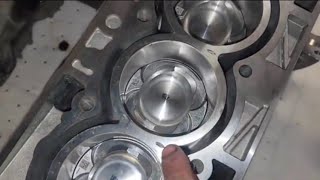
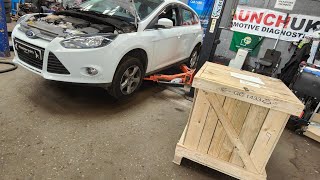
Technical Specifications
OEM Part Numbers: AG9E6A268AA AG9E6A268AB AG9Z6250A BB5Z6250B CJ5E6090 CJ5E6C032AA CJ5E6C032AB CJ5EAA CJ5EAB CJ5Z6049B CJ5Z6049C RFCJ5E-6090-FB
Fits 2.0L DOHC Turbocharged EcoBoost engines only. Engine code is typically identified by the 8th digit of the VIN being '9'. Casting numbers may include CJ5E, CJ5E-6090, or similar.
We Have This Part in Stock
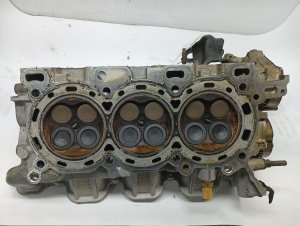


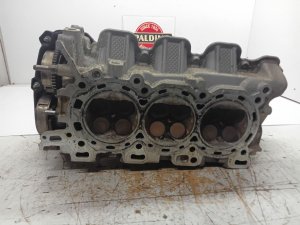


The information in this article is provided for general reference and educational purposes only. Vehicle specifications, procedures, and part compatibility can vary by production date, trim level, and region. Always consult your vehicle's factory service manual and verify part numbers before purchasing or performing repairs. Safety-critical components such as airbags, seat belts, and braking systems should be installed by a qualified professional.
- FORD EXPLORER:
- FORD TAURUS:
- FORD EDGE:
- LINCOLN MKT:
- LINCOLN MKZ:
- FORD ESCAPE:
- FORD FUSION:
- FORD FOCUS:
- FORD SPECIAL SERVICE POLICE SEDAN:
- 🎬 Helpful Videos
- 🛍️ Shop This Part
- The Real Problem: Coolant Intrusion From a Flawed Engine Block
- Vehicles Affected by 2.0L EcoBoost Coolant Intrusion
- Symptoms of a Failing Cylinder Head or Coolant Intrusion
- 1. Unexplained Coolant Loss
- 2. White, Sweet-Smelling Exhaust Smoke
- 3. Engine Misfires and Rough Running
- 4. Engine Overheating
- 5. Milky Engine Oil
- Diagnosis and TSB Information
- Buying a Used Engine Cylinder Head: A Buyer's Guide
- What to Inspect Before You Buy
- Compatibility Check
- Replacement Difficulty & Cost
- Cost Comparison
- Frequently Asked Questions (FAQ)
- 🎟️ Get 5% Off