

Ford & Mazda 3.0L V6 Cylinder Head: Overheating, Ticking, & Compatibility Guide (2000-2017)
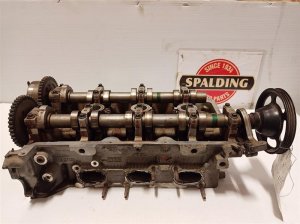
This guide covers the common failure points, symptoms, and critical compatibility details for the 3.0L DOHC Duratec V6 cylinder heads used across a wide range of Ford, Mazda, and Mercury vehicles.
- This cylinder head is ONLY for the 3.0L DOHC 24-valve Duratec V6, not the 3.0L OHV Vulcan V6.
- Primary symptoms of failure are overheating, milky oil, and white exhaust smoke. Stop driving immediately if these occur.
- When buying used, you MUST check for cracks and warpage with a straightedge. A professional inspection is highly recommended.
- A ticking noise from the left cylinder head is a known issue addressed by a TSB, often related to camshaft caps, not necessarily a cracked head.
Vehicle & Engine Compatibility: The 3.0L DOHC Duratec V6

This guide focuses on the cylinder heads for the 3.0L DOHC (Dual Overhead Cam) 24-valve Duratec V6 engine. This engine was used in a wide variety of Ford, Mazda, and Mercury vehicles. It is crucial to distinguish this engine from the 3.0L OHV (Overhead Valve) 12-valve "Vulcan" V6, which was also used in some Taurus and Sable models. The cylinder heads are not interchangeable between the DOHC Duratec and OHV Vulcan engines.
Vehicles that used the 3.0L DOHC Duratec V6 covered by this guide include:
- 2001-2012 Ford Escape
- 2001-2011 Mazda Tribute (Note: The Tribute was not sold in North America for the 2007 model year)
- 2000-2007 Ford Taurus (VIN 'S' indicates DOHC engine)
- 2000-2005 Mercury Sable (VIN 'S' indicates DOHC engine)
- 2005-2011 Mercury Mariner
- 2006-2012 Ford Fusion
- 2002-2006 Mazda MPV
Compatibility Warning: The initial vehicle list provided for this part may be overly broad. Later model years of the Ford Edge, Explorer, Focus, and Taurus (approx. 2013+) primarily used different engines like the 2.0L EcoBoost, 3.5L Duratec, or 3.7L Cyclone. This cylinder head will not fit those engines. Always verify your vehicle has the 3.0L DOHC Duratec V6 before ordering.
Key Compatibility Distinctions
Not all 3.0L Duratec cylinder heads are the same. Pay close attention to these details:
- Front vs. Rear Head: On a V6 engine, there are two cylinder heads. One is for the front bank of cylinders (Bank 2, closer to the radiator) and one is for the rear bank (Bank 1, closer to the firewall). They are often different and not interchangeable.
- Water Pump Drive: Some versions of the 3.0L Duratec have the water pump driven by the exhaust camshaft. This is a critical design feature that affects cylinder head compatibility. Ensure the replacement head matches your engine's water pump configuration.
- Production Date Breaks: For some models, like the 2006 Ford Fusion and Mazda Tribute, there are mid-year production changes. A TSB for a ticking noise, for example, applies to Tribute vehicles built between Jan 17, 2006, and May 31, 2007. Always check for production date-specific parts.
Symptoms of a Failing Cylinder Head

Cylinder head failure can manifest in several ways, from subtle performance issues to catastrophic engine damage. Here are the most common symptoms:
- Engine Overheating: This is the most common and serious symptom. A cracked head or failed head gasket can allow coolant to leak out or combustion gases to enter the cooling system, reducing its effectiveness. Many owners report overheating specifically at highway speeds or when going uphill.
- White Smoke from Exhaust: Sweet-smelling white smoke (steam) from the tailpipe indicates that coolant is leaking into the combustion chambers and being burned off with the fuel.
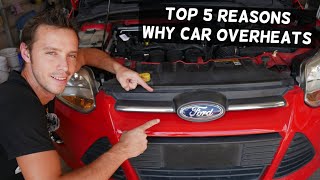
- Milky or Foamy Engine Oil: If the oil on your dipstick looks like a chocolate milkshake, it's a clear sign that coolant is mixing with the oil due to an internal crack or a blown head gasket. Stop driving immediately if you see this. 🎬 Watch: How to diagnose a blown head gasket
- Unexplained Coolant Loss: You find yourself constantly topping off the coolant reservoir, but see no visible leaks on the ground. The coolant is likely being lost internally.
- Bubbling in Radiator or Coolant Reservoir: With the engine running, visible bubbles in the coolant can be a sign of exhaust gases being forced into the cooling system through a crack in the head or a failed head gasket.
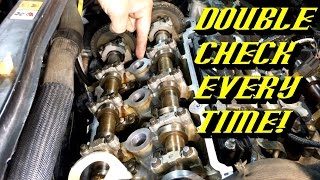
- Engine Misfires & Check Engine Light: Coolant fouling a spark plug can cause a persistent misfire, triggering codes like P0300, P0301-P0306. Misfires can also be an early warning sign of loosening camshaft caps, a known issue on this engine. 🎬 Watch: How to inspect Duratec camshaft caps
- Ticking Noise from Engine: A ticking noise from the top of the engine, especially when warm, can indicate a problem with the valvetrain. Ford and Mazda issued a Technical Service Bulletin (TSB 01-012/08) for a ticking noise from the left cylinder head on some 3.0L engines, caused by the camshaft caps.
Known Issues, TSBs, and Recalls

Technical Service Bulletins (TSBs)
- TSB 01-012/08 (Mazda) / Related Ford TSBs: Addresses a ticking noise from the left bank cylinder head at normal operating temperature on some 2001-2008 Tribute, Mazda6, and MPV models with the 3.0L engine. The fix involves a specific procedure to re-torque the exhaust camshaft caps.
- TSB 03-16-1 (Ford): While not directly a cylinder head TSB, it's highly relevant. It identifies leaking intake manifold gaskets as the primary cause for lean codes (P0171/P0174) on the 3.0L Duratec. Since the intake manifold bolts to the cylinder heads, this is a common related repair.
- TSB 05-15-7 (Ford): Issued for some 2003-2005 models for misfire codes (P0300-P0306) caused by radio frequency interference from the ignition coils, requiring a new coil design.
Recalls
While most recalls for these vehicles pertain to other systems, some are relevant to engine cooling and fire risk. Note that these recalls do not specifically replace the cylinder head but address related components.
- NHTSA Campaign 12V431000 (Ford Recall 12S39): Affects some 2013 Ford Escape models with the 1.6L engine (not the 3.0L V6). A cylinder head cup plug could dislodge, causing a significant coolant leak and fire risk. While for a different engine, it highlights the importance of the cylinder head in the cooling system.
- NHTSA Campaign 13V584000 (Ford Recall 13S12): Also for the 1.6L Escape engine, this recall addresses localized overheating of the cylinder head which could cause it to crack, leak oil, and result in a fire.
Buying a Used Engine Cylinder Head
A used OEM cylinder head can be a cost-effective and reliable alternative to expensive new or questionably-sourced aftermarket parts. However, careful inspection is critical.
Physical Inspection Checklist
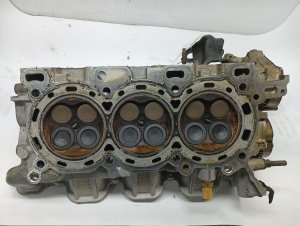
- Check for Cracks: This is the most important check. Inspect the entire head meticulously, especially between the valve seats, around spark plug holes, and near exhaust ports. These are high-stress areas prone to cracking from overheating. A professional machine shop can perform a dye penetrant or magnetic particle inspection to find cracks invisible to the naked eye.
- Check for Warping: An overheated engine can cause the cylinder head to warp. Lay a certified straightedge across the deck surface (the flat part that mates with the engine block) in several directions (lengthwise, crosswise, and diagonally). Try to slide a feeler gauge under the straightedge. Generally, a gap of more than 0.003-0.004 inches is unacceptable and means the head must be resurfaced or replaced.
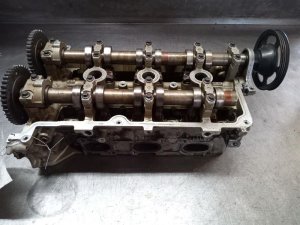
- Inspect Camshaft Journals and Caps: On these DOHC engines, the camshafts ride in journals machined into the head. Check these surfaces and the corresponding cam caps for scoring, gouges, or signs of heat damage from oil starvation. Ensure all cam caps are present and appear to be the original matched set.
- Examine Valve Seats: Look for signs of valve seat recession, where the valve seat sinks into the cylinder head. This is a known issue on some Duratec engines and can cause misfires and loss of compression.
- Verify Casting Numbers: Match the casting number on the used head to your original head to help ensure compatibility. Casting numbers can be found on the exterior of the head.
Pro Tip: When buying a used cylinder head, it's always a good practice to have it inspected and pressure tested by a reputable automotive machine shop before installation. They can verify it's not cracked or warped and can resurface it if needed, ensuring a good seal with the new head gasket.
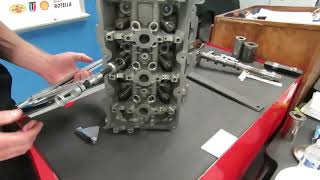
🎬 Watch: 3.0L Duratec cylinder head machine shop serviceInstallation and Repair Costs
Replacing a cylinder head is a major, labor-intensive repair. It is considered a difficult job for a DIY mechanic due to the complexity and need for special tools.
| Item | Estimated Cost |
|---|---|
| New OEM Cylinder Head | $700 - $1,100+ (per head) |
| New Aftermarket Cylinder Head | $450 - $800 (per head) |
| Remanufactured Cylinder Head | $500 - $750 (per head, plus core charge) |
| Used OEM Cylinder Head | $150 - $400 (per head) |
| Shop Labor | $1,500 - $2,500+ |
| Total Job Cost (Shop) | $2,000 - $4,900+ |
Costs are estimates and will vary based on location, vehicle, and the specific parts needed. Labor often takes 10-15+ hours.
Frequently Asked Questions (FAQ)
Can I drive with a bad cylinder head?
It is strongly recommended not to. Driving with a cracked or warped cylinder head can lead to severe and irreversible engine damage. If coolant is mixing with oil, you risk destroying the engine's bearings. If the engine is overheating, you risk warping the engine block itself, turning a costly repair into a complete engine replacement.
Is it better to repair my cylinder head or replace it?
It depends on the damage. If the head is only slightly warped, it can often be resurfaced (milled) by a machine shop. However, if the head is cracked, especially in a critical area, replacement is usually the only reliable option. Given the cost of labor to remove the head, it's often more cost-effective to install a known-good used or remanufactured head rather than attempting a complex repair on the original.
My engine is ticking. Is it the cylinder head?
It could be. A common issue on the 3.0L Duratec is a ticking noise caused by the camshaft caps on the cylinder head. This was common enough that Mazda and Ford issued service bulletins. The noise can also be caused by collapsed lifters (hydraulic lash adjusters). It's important to diagnose the source of the tick accurately before assuming major head work is needed.
Do I need to replace both cylinder heads if only one is bad?
You don't always have to, but it's often recommended. The labor to replace one head is nearly the same as replacing both. Since both heads have been subjected to the same mileage and conditions, the 'good' head may not be far behind the failed one. If the engine severely overheated, it's very likely both heads are warped and should be addressed at the same time.
Helpful Videos
Technical Specifications
OEM Part Numbers: 1L8Z-6049-AA 2L8Z-6049-AA 2S7Z-6049-AA 3L8Z-6049-BA 5F9Z-6049-AA AL8Z-6049-A 6E5Z-6049-B 6E5Z-6049-A 8E5Z-6049-B 8E5Z-6049-A
Engine: 3.0L DOHC 24-Valve Duratec V6. Note: Specific casting numbers and features (e.g., for cam-driven water pump) must be matched to the original part.
We Have This Part in Stock



The information in this article is provided for general reference and educational purposes only. Vehicle specifications, procedures, and part compatibility can vary by production date, trim level, and region. Always consult your vehicle's factory service manual and verify part numbers before purchasing or performing repairs. Safety-critical components such as airbags, seat belts, and braking systems should be installed by a qualified professional.
- Ford Escape:
- Mazda Tribute:
- FORD TAURUS:
- Mercury Mariner:
- Mercury Sable:
- FORD FUSION:
- MAZDA MPV:
- FORD EDGE:
- FORD EXPLORER:
- FORD FOCUS:
- FORD SPECIAL SERVICE POLICE SEDAN:
- LINCOLN MKT:
- LINCOLN MKZ:
- Mazda 6:
- Mercury Milan:
- 🎬 Helpful Videos
- 🛍️ Shop This Part
- Vehicle & Engine Compatibility: The 3.0L DOHC Duratec V6
- Key Compatibility Distinctions
- Symptoms of a Failing Cylinder Head
- Known Issues, TSBs, and Recalls
- Technical Service Bulletins (TSBs)
- Recalls
- Buying a Used Engine Cylinder Head
- Physical Inspection Checklist
- Installation and Repair Costs
- Frequently Asked Questions (FAQ)
- 🎟️ Get 5% Off