

Audi 3.0L TDI Cylinder Head Failures: A Guide for A6, A7, Q5 & Q7 (2011-2016)
This guide covers the common failure symptoms, diagnostic procedures, and what to look for when buying a used replacement right-side cylinder head for your diesel Audi.
- This right-side cylinder head is ONLY for the 3.0L V6 TDI (Diesel) engine in these specific Audi models; it will not fit gasoline engines.
- Cylinder head failure is almost always caused by engine overheating. The root cause of the overheating must be fixed along with the head itself.
- Buying a used cylinder head requires professional inspection. It MUST be checked for warpage with a straightedge and pressure tested for cracks before installation.
- Replacement is an expert-level job (5/5 difficulty). New, one-time-use head bolts are mandatory for a successful repair.
Symptoms of a Failing Cylinder Head

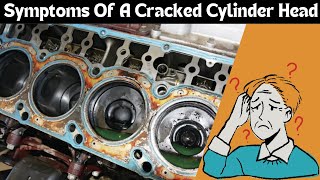
Cylinder head failure is often misdiagnosed as a simple blown head gasket, but the symptoms are very similar because both issues involve a breach between the combustion chamber, oil passages, and coolant passages. The primary cause of failure is almost always engine overheating, which can warp or crack the aluminum casting. Owners of the 2012-2016 Audi A6, 2012-2016 Audi A7, 2014-2016 Audi Q5, or 2011-2012 Audi Q7 with the 3.0L TDI engine should watch for these signs:
- Engine Overheating: This is the most common symptom. A crack or warp can allow hot combustion gases to enter the cooling system, overwhelming it and causing the temperature gauge to rise.
- White Smoke from Exhaust: If coolant leaks into the combustion chamber, it will be turned into steam and exit the tailpipe as thick, white smoke with a distinctively sweet smell.
- Milky or Sludgy Engine Oil: Check the oil dipstick and the underside of the oil filler cap. A creamy, light-brown or milky substance indicates that coolant has mixed with the engine oil, which can lead to catastrophic engine damage due to poor lubrication. 🎬 Watch: What happens when coolant mixes with oil
- Unexplained Coolant Loss: If you are constantly adding coolant but can't find an external leak, it may be leaking internally into a cylinder or the oil system through a compromised head or gasket.
- Poor Engine Performance or Misfires: A loss of compression from a crack in the combustion chamber can cause the engine to run rough, misfire, or lose power.
- Bubbling in Coolant Reservoir: With the engine running, look for bubbles in the coolant expansion tank. This is a sign that combustion gases are being forced into the cooling system.
Known Issues, TSBs, and Recalls

While the Audi 3.0L TDI is generally considered a robust engine, no specific widespread factory defect is known to cause cylinder head failure on the 2011-2016 Audi A6, A7, Q5, and Q7. Failures are typically secondary, resulting from other issues that cause overheating, such as a failed water pump, thermostat, or coolant leak.
The most significant event for these vehicles was the "Dieselgate" emissions scandal. Numerous recalls and service campaigns (such as 23V2, 23V4, 23V5, 23R8, and 23Z8) were issued to update engine and transmission software and, in some cases, replace emissions-related hardware. While these recalls did not directly address the cylinder head, they did result in an Extended Emissions Warranty for many vehicles. In some documented cases, subsequent major engine failures have been covered under this extended warranty. It is crucial to check with an Audi dealer to see if your vehicle's VIN has an active extended warranty that might cover a related engine failure.
A Technical Service Bulletin (TSB) for some 3.0L engines mentions DTCs P0491 and P0492, related to carbon buildup in the secondary air ports within the cylinder heads, but this is a separate issue from a cracked or warped head.
Warning: This is the right (passenger side) cylinder head for 3.0L V6 DIESEL (TDI) engines only. It will not fit any gasoline engines (e.g., 3.0T Supercharged). Always verify your engine type before ordering.
Buying a Used Audi 3.0L TDI Cylinder Head: A Buyer's Checklist

A used OEM cylinder head can be an excellent value, but careful inspection is critical. A damaged or warped head will fail again, wasting significant time and money. Here’s what to check before you buy:
- Verify Compatibility: Double-check the part number and confirm it is for the right (passenger) side of a 3.0L TDI engine for your specific vehicle (A6, A7, Q5, or Q7).
- Thorough Visual Inspection: Look for any visible cracks, especially in common stress areas like between the valve seats or around injector bores. Check for signs of previous repairs, like welding marks.
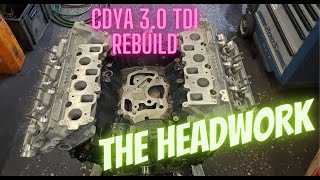
- Check for Warping: This is the most critical step. The head's mating surface must be perfectly flat to seal correctly. Use a precision straightedge and a feeler gauge to check the surface from multiple angles (end-to-end, across, and corner-to-corner). Generally, warpage should not exceed 0.003-0.004 inches. Any used head should be professionally checked and likely resurfaced (milled) by a machine shop before installation. 🎬 See this 3.0 TDI cylinder head rebuild process
- Professional Testing: The best way to ensure a used head is good is to have it professionally tested. Ask the seller if the head has been pressure tested (to find coolant leaks) and magnafluxed or dye-penetrant tested (to find microscopic cracks). Purchase from a reputable recycler who guarantees their heads have been tested.
- Valvetrain Condition: Inspect the camshafts, lifters, and valve seats for scoring, pitting, or excessive wear. While these can be replaced, it adds to the overall cost.
Pro Tip: Always take a used cylinder head to a qualified automotive machine shop for cleaning, inspection, and resurfacing before you attempt to install it. This is a mandatory step for a successful repair.
Cost Comparison
| Part Type | Estimated Cost | Notes |
|---|---|---|
| New OEM | $2,500 - $4,000+ | Highest cost, ordered from an Audi dealership. |
| New Aftermarket | $1,200 - $2,000 | Availability can be limited. Quality may vary compared to OEM castings. |
| Remanufactured OEM | $1,000 - $1,800 | A good option. A used head that has been professionally cleaned, inspected, resurfaced, and rebuilt with new seals and often new valves/guides. |
| Used OEM | $400 - $800 | Best value, but requires professional inspection and machine work before installation. |
| Shop Labor | $1,800 - $2,500+ | This is a very labor-intensive job, often requiring 15-20+ hours of work. |
Installation Difficulty & Procedure
- Difficulty Rating: 5 out of 5 (Expert level)
- DIY Feasible: No. This repair is not recommended for DIY mechanics. It requires extensive engine disassembly, special tools for timing the engine, and precise torque procedures.
Replacing the cylinder head is a major undertaking. The process involves removing the intake and exhaust manifolds, fuel system components, timing chain covers, and the timing chain itself. 🎬 Watch: Step-by-step 3.0 TDI timing chain service After the new or refurbished head is installed, the engine's timing must be perfectly reset.
Crucial Replacement Parts:
- Head Gasket: Never reuse a head gasket.
- Cylinder Head Bolts: These are torque-to-yield (TTY) or "stretch" bolts and are strictly one-time use. They must be replaced. A new set is required for reassembly.
- Seals and Gaskets: All related seals, such as valve cover gaskets, intake and exhaust manifold gaskets, and injector seals, should be replaced.
Frequently Asked Questions (FAQ)
Can I drive my Audi with a cracked cylinder head?
No. Driving with a cracked or warped cylinder head is not recommended. Doing so can lead to severe and irreversible engine damage, such as wiped-out bearings from coolant-contaminated oil or a seized engine from overheating.
Is it better to replace the cylinder head or the entire engine?
This depends on the extent of the damage. If the failure was caught early and only the head is damaged, replacing the head is more cost-effective. However, if the engine was severely overheated or run with coolant in the oil, the bottom end (pistons, bearings, crankshaft) may also be damaged. In that case, a complete used or remanufactured engine is often the better long-term solution.
Do I have to replace the head bolts?
Yes, absolutely. The cylinder head bolts on the Audi 3.0L TDI engine are torque-to-yield (TTY), meaning they are designed to permanently stretch when tightened. They cannot provide the correct clamping force if reused and will likely break or cause the new head gasket to fail.
What causes the cylinder head to fail on these TDI engines?
The most common cause of cylinder head failure is engine overheating. This can be triggered by a variety of issues, including a leaking radiator, a faulty water pump, a stuck thermostat, or a loss of coolant from another component. The extreme heat causes the aluminum cylinder head to warp or crack.
Helpful Videos


Technical Specifications
OEM Part Numbers: 059103064FG 059103064FL 059103064GH 059103064GJ 059103064GL 059103064HH 059103064JD 059103064JK 059103064MJ 059103064MK 059103264
Material: Aluminum Alloy. Fits Right (Passenger) Side, Cylinders 1-3. For 3.0L V6 TDI Diesel Engines.
We Have This Part in Stock



The information in this article is provided for general reference and educational purposes only. Vehicle specifications, procedures, and part compatibility can vary by production date, trim level, and region. Always consult your vehicle's factory service manual and verify part numbers before purchasing or performing repairs. Safety-critical components such as airbags, seat belts, and braking systems should be installed by a qualified professional.
- Audi A6:
- Audi A7:
- Audi Q5:
- Audi Q7: