

Audi 2.0T EA888 Gen3 Crankshaft (2013-2022): Failure Symptoms, Costs & Used Buying Advice
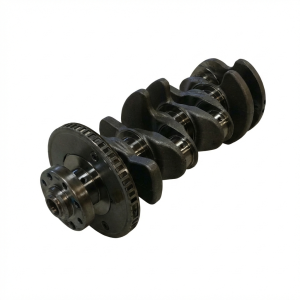
This guide covers the crankshaft for the popular EA888 Gen3 engine found in the Audi Q7, A6, A4, Q5, and more, focusing on failure diagnosis and how to buy a good used part.
- Crankshaft failure is almost always a result of oil starvation or a timing chain issue, not a defect in the crank itself.
- Symptoms include deep engine knocking, metal in the oil, and low oil pressure warnings. These must be addressed immediately.
- Replacement is a 5/5 difficulty, engine-out job. It is often more cost-effective to replace the entire engine with a used unit.
- When buying a used crankshaft, it must be inspected for scoring, discoloration, and cracks (ideally via magnafluxing).
Symptoms of Engine Crankshaft Failure


A failing crankshaft is a critical issue that can lead to catastrophic engine failure. Unlike a sensor that can be easily replaced, crankshaft failure often means the engine has suffered serious internal damage. Pay close attention to these warning signs.
1. Deep Engine Knocking or Rumbling (Rod Knock)
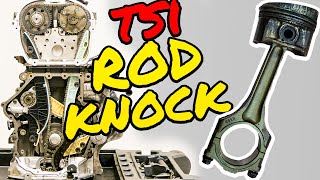
This is the most common and serious symptom. It's a heavy, metallic knocking sound coming from deep within the engine. The noise is often described as a 'rod knock' and is caused by worn-out connecting rod bearings, which create excessive clearance between the connecting rod and the crankshaft journal. The sound will increase in frequency and volume with engine RPM. This is not a light ticking; it's a loud, rhythmic hammering that signals immediate danger.
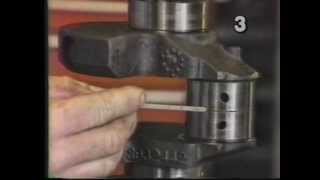
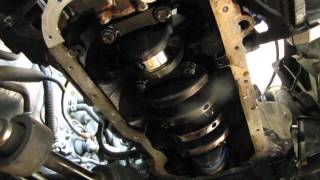
🎬 Watch: See a teardown of what causes engine rod knock.2. Metal Shavings in Engine Oil
When you change your oil, inspect it for metallic particles. A glittery or metallic sheen in the used oil is a major red flag. These are tiny bits of the bearings or the crankshaft itself that have been ground away. Cutting open the oil filter and inspecting the paper element is a good way to catch this. If you see metal, the engine has significant internal wear.
3. Low or Fluctuating Oil Pressure
Worn crankshaft main bearings or rod bearings create extra space that the oil pump can't properly pressurize. This will often trigger the oil pressure warning light on your dashboard, especially at low RPMs or when the engine is warm and the oil is thinner. While other issues can cause low oil pressure, it's a key symptom when combined with engine noise.
4. Severe Engine Vibration
A damaged or bent crankshaft will throw the engine's rotating assembly out of balance, causing a noticeable vibration that gets worse as engine speed increases. This can feel like a severe misfire but is often more constant and directly tied to RPM.
5. Engine Seizure or Failure to Turn Over
In the worst-case scenario, a failed bearing can cause the crankshaft to seize, completely locking up the engine. The engine will not crank or turn over at all. This represents a total mechanical failure, and a complete engine rebuild or replacement is the only solution.
Buying a Used Engine Crankshaft: What to Check

Because replacing a crankshaft is such a labor-intensive job, buying a good, inspected used OEM crankshaft is often a smart financial choice over a questionable aftermarket part. Here’s what to look for to ensure you get a quality part.
Pro Tip: A used crankshaft should always come from a reputable recycler who can tell you the mileage and history of the donor vehicle. A crank from a vehicle that suffered a collision is often a better bet than one from an engine that failed due to internal issues.
Physical Inspection Checklist:
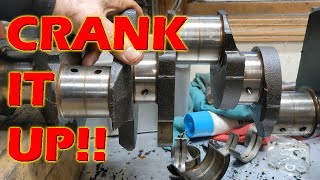
- Journal Surfaces: The most critical area. Run your fingernail across all the main and rod bearing journals (the smooth, polished surfaces). You should not be able to feel any grooves, scratches, or ridges. The surfaces should be perfectly smooth and uniform. 🎬 Watch: How to spot a bad core when inspecting crankshafts.
- Discoloration: Look for blue or dark brown spots on the journals. This is a sign of overheating due to oil starvation, which can compromise the hardness of the steel and lead to premature failure.
- Cracks: Visually inspect the entire crankshaft, paying close attention to the fillet radii—the curved transitions between the journals and the counterweights. This is where stress cracks often form. For a truly reliable inspection, the crankshaft should be tested by a machine shop using magnetic particle inspection (magnafluxing), which makes tiny, invisible cracks visible under UV light.
- Straightness (Runout): A bent crankshaft is useless. While a full check requires V-blocks and a dial indicator at a machine shop, you can do a basic check by ensuring it came from a running engine with no signs of catastrophic failure. Any reputable seller should guarantee the part is straight.
- Keyway and Threads: Check the keyway at the front of the crank (for the timing gear/sprocket) and the threads for the main crank bolt. They should be clean and undamaged.
Known Issues for the EA888 Gen3 Engine (2013-2022)
The crankshaft itself is a robust component in the EA888 Gen3 engine. Failures are rare and almost always a consequence of another problem, not a defect in the crankshaft itself. The vehicles covered by this guide (2016-2021 Audi Q7, 2015-2021 Audi A6/A7, 2013-2021 Audi Q5, 2015-2018 Audi A1, 2014-2020 Audi A3/S3, 2013-2022 Audi A4, 2013-2019 Audi A5, 2015-2021 Audi Q3) all share this engine platform.
Timing Chain Tensioner Failure
This is a well-documented issue, particularly in earlier Gen3 models. A failing tensioner can allow the timing chain to stretch or jump a tooth. This desynchronizes the crankshaft and camshafts, which can cause the pistons to hit the valves, leading to catastrophic engine damage. A rattling noise on cold starts is a key warning sign. 🎬 See this walkthrough on replacing a timing chain on Audi engines. This can trigger diagnostic trouble code P0016 (Crankshaft/Camshaft Position Correlation).
Oil Consumption & PCV Valve Failure
Many EA888 engines are known to consume oil. This can be caused by piston ring issues or a failed PCV (Positive Crankcase Ventilation) valve. If the oil level drops too low, it can lead to oil starvation, which will quickly destroy the crankshaft bearings and the crankshaft itself. A failed PCV valve can also cause the rear main seal on the crankshaft to leak.
Crank Walk (Rare)
A very rare issue known as 'crank walk' can occur, where the crankshaft moves back and forth excessively. This is caused by the failure of the thrust washer on the center main bearing. It has been reported more frequently on cars with manual transmissions and heavy-duty aftermarket clutches, which puts more axial load on the crankshaft when the clutch is depressed. Since most of the Audi models listed are equipped with automatic or DSG transmissions, this is an extremely unlikely issue.
Recalls and TSBs
While there are no specific recalls for crankshaft failure on these models, several related recalls and Technical Service Bulletins (TSBs) exist. For example, some 2020-2021 Audi Q7 models were recalled for a fuel pump issue that could cause the engine to stall. An older TSB for early EA888 engines addressed oil consumption by replacing the front crankshaft seal, PCV valve, and updating engine software. Always check for open recalls on your specific vehicle's VIN.
Cost Comparison for Crankshaft Replacement

Crankshaft replacement is one of the most expensive engine repairs because the entire engine must be removed and disassembled. Labor costs make up the majority of the expense.
| Part/Service | Estimated Cost |
|---|---|
| New OEM Crankshaft | $1,100 - $1,500 |
| New Aftermarket Crankshaft | $350 - $600 |
| Used OEM Crankshaft | $300 - $650 |
| Remanufactured OEM Crankshaft | $500 - $800+ (dependent on machine shop services) |
| Shop Labor for Replacement | $2,500 - $4,500+ |
| Total Job Cost (Used OEM Part) | $2,800 - $5,150+ |
| Total Job Cost (New OEM Part) | $3,600 - $6,000+ |
Note: Given the high labor cost, it is often more economical to replace the entire engine with a used, low-mileage unit rather than paying a shop to replace only the crankshaft. A used EA888 Gen3 engine can range from $2,500 to $4,500.
Frequently Asked Questions (FAQ)
Can I replace just the crankshaft bearings?
If the crankshaft journals are not scored or damaged, it is sometimes possible to replace just the bearings. However, this is still a full engine-out procedure. If the bearings failed due to oil starvation, it's highly likely the crankshaft itself is also damaged. It must be professionally measured and inspected to be sure.
What is the difference between this 06L105101D crankshaft and others?
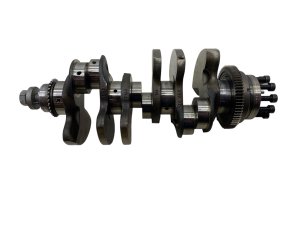
This specific part number, 06L105101D, is for the higher-power versions of the EA888 Gen3 engine. It is found in models like the Audi S3 and performance-oriented 2.0T models. It's crucial to match the part number or verify compatibility with your engine code (e.g., CJX, CYM, CNC, etc.) before purchasing.
Is an aftermarket crankshaft a good idea?
For a standard repair, a quality used OEM crankshaft is often a better choice than a new, cheap aftermarket one. The OEM part has known material quality and precise manufacturing tolerances. High-performance forged aftermarket cranks are available for engine builds but are much more expensive and unnecessary for a stock repair.
What other parts should I replace at the same time?
If you are replacing the crankshaft, you are essentially rebuilding the engine. At a minimum, you must replace all crankshaft bearings (main and rod), the rear main seal, the front crankshaft seal, and the timing chain with its tensioners and guides. It is also highly recommended to replace the piston rings, oil pump, and have the cylinders honed by a machine shop.
Helpful Videos
Technical Specifications
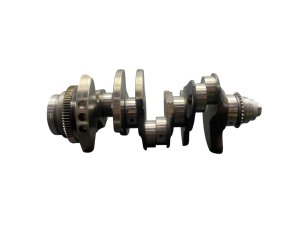
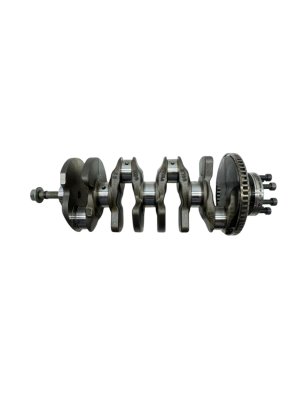
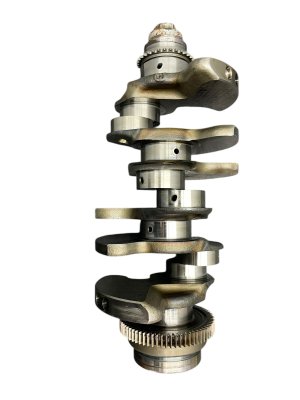
OEM Part Numbers: 06L105101D
Fits VW/Audi 2.0L TSI/TFSI EA888 Gen3 high-power engines. Compatible with engine codes such as CJX, CYF, DHH, DJH, CNC, CYM, CYR, and others.
We Have This Part in Stock

The information in this article is provided for general reference and educational purposes only. Vehicle specifications, procedures, and part compatibility can vary by production date, trim level, and region. Always consult your vehicle's factory service manual and verify part numbers before purchasing or performing repairs. Safety-critical components such as airbags, seat belts, and braking systems should be installed by a qualified professional.
- Audi Q7:
- Audi A6:
- Audi A7:
- Audi Q5:
- Audi A1:
- Audi A3:
- Audi A4:
- Audi A5:
- Audi Q3:
- Audi S3:
- Audi TT:
- Seat Leon:
- Skoda Octavia:
- Skoda Superb:
- Volkswagen Arteon:
- Volkswagen Beetle:
- Volkswagen Golf:
- Volkswagen Passat:
- Volkswagen Tiguan:
- 🎬 Helpful Videos
- 🛍️ Shop This Part
- Symptoms of Engine Crankshaft Failure
- 1. Deep Engine Knocking or Rumbling (Rod Knock)
- 2. Metal Shavings in Engine Oil
- 3. Low or Fluctuating Oil Pressure
- 4. Severe Engine Vibration
- 5. Engine Seizure or Failure to Turn Over
- Buying a Used Engine Crankshaft: What to Check
- Physical Inspection Checklist:
- Known Issues for the EA888 Gen3 Engine (2013-2022)
- Timing Chain Tensioner Failure
- Oil Consumption & PCV Valve Failure
- Crank Walk (Rare)
- Recalls and TSBs
- Cost Comparison for Crankshaft Replacement
- Frequently Asked Questions (FAQ)
- 🎟️ Get 5% Off