

1998-2005 Porsche 911 (996) Coolant Return Pipes: A Guide to Leaks and Replacement
This guide covers the common failure points, symptoms, and replacement of the engine coolant return pipes on the Porsche 911 996 generation.
- These plastic/metal return pipes are a common failure point on 996 Carreras, distinct from the 'glued-in' pipe issue on Turbo/GT3 models.
- Failure is caused by age and heat cycles making the material brittle, leading to cracks and coolant leaks.
- A sudden failure can cause rapid coolant loss and lead to critical engine overheating and damage.
- Replacement is moderately difficult for DIYers mainly because the cooling system requires a special vacuum tool for proper bleeding to prevent air pockets.
Identifying the Correct Part
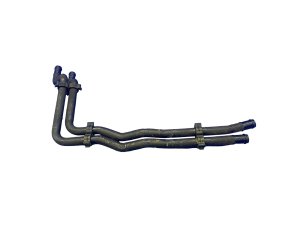
The cooling system on the 1998-2005 Porsche 911 (996) is a frequent source of maintenance issues. This article focuses on the set of two engine coolant return pipes, commonly identified by OEM part numbers 99610631200 and 99610632200. These are rigid pipes, often made of plastic or metal, that are known to become brittle and crack with age. It is important to distinguish these from the flexible rubber hoses throughout the system and from the infamous 'glued' coolant fittings that are a major concern on the Turbo, GT2, and GT3 models with the Mezger engine. The failure of these return pipes is a common issue on standard Carrera models.
Symptoms of Failure
A failing coolant return pipe will almost always result in a coolant leak. Because these pipes are located deep in the engine bay, the signs may not be immediately obvious.
- Coolant Smell: The most common first symptom is a distinct, sweet smell of antifreeze after the car has been driven and is hot. This smell is caused by coolant leaking onto hot engine or exhaust components and evaporating.
- Visible Leaks or Puddles: You may notice puddles of pink or green fluid on the ground under the engine area. Leaks can be slow at first, appearing as drips or white/pink crusty residue on the engine block or underbody panels near the rear of the car.
- Low Coolant Warning Light: A persistent or recurring low coolant warning on the instrument cluster is a strong indicator of a leak somewhere in the system. You may find yourself needing to top off the coolant reservoir frequently.
- Engine Overheating: In the case of a sudden, large crack, the pipe can fail catastrophically, leading to rapid coolant loss. This will cause the engine temperature to rise quickly, potentially leading to severe engine damage if the car is not shut off immediately.
Warning: Never drive a Porsche 911 that is overheating. The aluminum engine is highly susceptible to damage from excessive heat, which can lead to warped cylinder heads or catastrophic engine failure.
Buying a Used Engine Coolant Return Hose
Given the high cost of new OEM parts, a quality used OEM part can be a smart value. However, since these pipes are a known failure item due to age and heat degradation, careful inspection is critical.
What to Check Before You Buy
- Verify Part Numbers: Ensure you are buying the correct set. The primary part numbers are 99610631200 and 99610632200. Always confirm fitment for your specific model year and transmission type, as there can be minor variations.
- Inspect for Cracks: This is the most important check. Carefully examine the entire surface of both pipes, paying extremely close attention to the ends, flanges, and any seams. Look for hairline cracks, which can be difficult to see. A small crack under pressure will become a significant leak.
- Check for Brittleness: The plastic used in these components becomes hard and brittle over time. Avoid any parts that look chalky, faded, or feel excessively hard. A good used part should still have some minor flexibility and not feel like it would snap if stressed.
- Examine Mounting Points: Ensure all mounting tabs and connection points are intact and free of damage. Broken tabs can prevent a secure fit, leading to stress and premature failure.
- Ask About the Donor Vehicle: If possible, find out the mileage and age of the car the part came from. A part from a newer, lower-mileage vehicle is always preferable, as it has experienced fewer heat cycles.
Cost Comparison
Prices can vary based on supplier and condition. The following is an estimated breakdown:
| Part Type | Estimated Cost |
|---|---|
| New OEM (Set of 2) | $250 - $400 |
| New Aftermarket | Not commonly available |
| Used OEM (Set of 2) | $75 - $150 |
| Shop Labor | $300 - $600 |
Replacement Difficulty and Procedure
Replacing the engine coolant return pipes is a moderately difficult job for a DIY mechanic.
- Difficulty Rating: 4 out of 5
- Estimated Time: 2.5 - 4 hours
- DIY Feasible: Yes, for experienced mechanics with the right tools.
The primary challenge is not the replacement of the pipes themselves, but the process of draining, refilling, and properly bleeding the cooling system. The 996 has a very long and complex cooling system that is notoriously difficult to bleed of air pockets. Air trapped in the system can cause overheating even after the leak is fixed.
Pro Tip: Professional shops and experienced DIYers use a vacuum lift tool (such as the UView Airlift 550000) to evacuate all air from the cooling system and draw in new coolant. Attempting to bleed the system without this tool is difficult and often unsuccessful. Renting or purchasing one is highly recommended for this job.
The basic steps involve draining the coolant, removing the engine airbox for access, detaching the old pipes, installing the new ones, and then performing the critical vacuum-fill and bleed procedure.
Frequently Asked Questions (FAQ)
Are these the coolant pipes that need to be 'pinned' or 'welded'?
No. The infamous pinning or welding procedure applies to the metal coolant pipe fittings that are epoxied into the engine block on Porsche 911 Turbo, GT2, and GT3 models. Those can fail catastrophically and require engine removal to fix. The return pipes discussed here are a separate, more common wear item on standard Carrera models that can be replaced with the engine in the car.
Should I replace just the one leaking pipe or both?
It is highly recommended to replace both pipes as a set. They are the same age and have been exposed to the same number of heat cycles. If one has failed due to age, the other is likely to fail soon. Replacing both at the same time saves you from having to do the labor-intensive coolant drain and bleed procedure again in the near future.
What type of coolant should I use in my Porsche 996?
You should use a Porsche-approved G40 (or equivalent) phosphate-free, silicate-based antifreeze. The official Porsche coolant is pink in color. Using the wrong type of coolant can lead to corrosion and damage to the cooling system components.
Can I just use screw-type hose clamps instead of the factory spring clamps?
While some people do, it is generally recommended to use new, OEM-style spring clamps. These clamps are designed to apply constant tension as the plastic and rubber components expand and contract with heat, maintaining a better seal over time compared to worm-gear clamps which can loosen.
Technical Specifications
OEM Part Numbers: 99610631200 99610632200 99610632272
Set of two rigid coolant pipes located in the engine bay.
We Have This Part in Stock

The information in this article is provided for general reference and educational purposes only. Vehicle specifications, procedures, and part compatibility can vary by production date, trim level, and region. Always consult your vehicle's factory service manual and verify part numbers before purchasing or performing repairs. Safety-critical components such as airbags, seat belts, and braking systems should be installed by a qualified professional.
- Porsche 911: