

2012-2019 Toyota Prius C Inverter Coolant Reservoir: A Guide to Leaks, Warnings, and Replacement
This guide explains the function of the separate hybrid inverter coolant reservoir, common failure symptoms, and the critical bleeding procedure required after replacement.
- This reservoir is for the hybrid inverter, NOT the engine. They are two separate cooling systems.
- A failing reservoir can cause the 'Check Hybrid System' light and potentially catastrophic damage to the inverter if ignored.
- After replacement, you MUST bleed air from the system by repeatedly cycling the car to 'Ready' mode to run the electric pump.
- To ensure compatibility, confirm the 7th and 8th digits of your VIN are 'B3' when buying a used part.
Symptoms of a Failing Inverter Coolant Reservoir


A problem with the inverter coolant reservoir or its associated system will typically trigger dashboard warnings related to the hybrid powertrain. Be aware of these specific signs:
- "Check Hybrid System" Warning Light: This is the most common indicator of a problem with the inverter cooling system. An empty or low reservoir can cause the inverter to overheat, triggering this warning.
- Visible Coolant Leaks: The plastic reservoir can develop cracks from age and heat cycles, leading to leaks. You may see pink, crusty residue (dried Toyota coolant) on or below the tank, or find puddles of pink fluid on the ground under the passenger side of the front bumper.
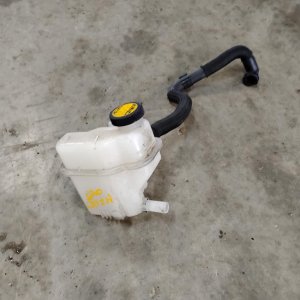
- Low Coolant Level: The most obvious sign is a low or empty coolant level in the small, clear plastic tank located on the passenger side of the engine bay. Do not confuse this with the larger engine coolant reservoir. 🎬 Watch: How to locate and fill your Prius C reservoir
- Limp Mode: In some cases, the vehicle may enter a reduced power state, often called 'limp mode,' to protect the hybrid components from damage when a cooling issue is detected.
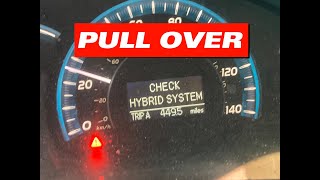
- Diagnostic Trouble Codes (DTCs): A scan tool may reveal codes related to the inverter cooling system. Common codes include P0A93 (Inverter Cooling System Performance) and P0C73 (Motor Electronics Coolant Pump "A" Control Performance). 🎬 See how a failing cooling system triggers hybrid system warnings
Warning: This reservoir is for the hybrid inverter system, NOT the gasoline engine. They are two separate systems. Topping off the wrong tank will not solve an inverter cooling problem.
Known Issues, Recalls, and TSBs

While there are no specific recalls for the inverter coolant reservoir itself, Toyota has issued recalls for related components on certain model years.
- Safety Recall K0K (2018-2019 Models): Toyota recalled some 2018-2019 Prius C vehicles for a potential failure within the DC-DC converter. While not a reservoir issue, it highlights the sensitivity of the hybrid electronics. An improperly functioning cooling system could potentially contribute to the stress on these components.
No Technical Service Bulletins (TSBs) directly addressing the failure of the inverter coolant reservoir for this vehicle were found in public databases. Most issues are related to age-related plastic degradation and cracking, or leaks from hose connections.
Buying a Used Inverter Coolant Reservoir
A used OEM reservoir is often a reliable and cost-effective alternative to a new part, especially when compared to questionable aftermarket options. Here’s what to inspect before you buy:
- Check for Cracks: Carefully inspect the entire reservoir, paying close attention to the seams, mounting tabs, and the hose connection nipples at the bottom. These are the most common areas for hairline cracks to form. Flex the part slightly in your hands to reveal any hidden fractures.
- Inspect for Discoloration: While some yellowing from age is normal, avoid reservoirs that are dark brown, brittle, or show signs of extreme heat stress.
- Verify Part Numbers: The original part number is G92A0-52010, which was later superseded by G92A0-52011. Both will fit correctly.
- Ensure Cap is Included: Make sure the sale includes the original cap and that its rubber seal is pliable and not cracked or hardened.
- Confirm Vehicle Compatibility: This reservoir is specific to the Prius C submodel. To ensure it fits your vehicle, verify that the 7th and 8th digits of your car's VIN are 'B3'. This detail is often noted by reputable sellers of recycled parts.
Pro Tip: Avoid cheap aftermarket reservoirs for this part. Some aftermarket brands (like Dorman 603-807) have poor reviews and may even be incorrectly cataloged for different vehicles, leading to fitment problems. A quality used OEM part is generally a safer choice.
Cost Comparison
| Part Type | Estimated Cost |
|---|---|
| New OEM (Toyota) | $80 - $110 |
| New Aftermarket | $50 - $70 |
| Used OEM | $40 - $65 |
| Shop Labor | $120 - $240 |
Replacement Guide & Bleeding Procedure

Replacing the inverter coolant reservoir has a difficulty rating of 3 out of 5. While the unbolting is straightforward, the tight access and critical bleeding procedure add to the complexity.
Estimated Time: 1.5 hours
Replacement Steps:
- Gain Access: The reservoir is located on the passenger side of the engine bay. To reach it, you will likely need to remove the air filter box assembly and the main fuse/relay box.
- Drain Coolant: It's best to drain the inverter coolant before removal to minimize spills. The drain plug is a 10mm hex bolt located on the hybrid transaxle. Alternatively, you can clamp the hose leading to the reservoir and use a pump to empty the tank.
- Remove Reservoir: Disconnect the coolant hose from the bottom of the tank. Unbolt the 10mm bolts holding the reservoir bracket to the body and carefully lift it out.
- Install New Reservoir: Installation is the reverse of removal. Secure the new reservoir, re-attach the hose, and reinstall the airbox and fuse box.
Critical Bleeding Procedure:
You MUST bleed the air out of the system to prevent the inverter water pump from running dry and to ensure the inverter stays cool. Failure to do this can cause severe damage.
- Fill the new reservoir to the 'FULL' line with Toyota Super Long Life Pink Coolant. Do not use any other type.
- Get in the car, press the brake pedal, and push the POWER button to put the car in 'Ready' mode. You only need to leave it on for 5-10 seconds. This runs the electric inverter water pump and circulates the coolant.
- Turn the car off. The coolant level in the reservoir will have dropped significantly as fluid filled the system.
- Top off the reservoir back to the 'FULL' line.
- Repeat steps 2-4 three to five times, or until the coolant level remains stable after cycling the power.
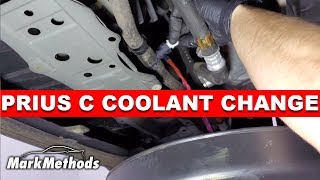
- Once the level is stable, install the cap, take the car for a short drive, and re-check the level one last time, 🎬 Watch: A complete DIY guide to changing and bleeding coolant topping off if necessary.
Frequently Asked Questions (FAQ)
Is this the same as the engine coolant reservoir?
No. The Prius C has two separate cooling systems. This smaller reservoir is only for the hybrid inverter. The engine coolant reservoir is a different, larger tank.
What kind of coolant does the Prius C inverter use?
The inverter cooling system uses the same coolant as the engine: Toyota Super Long Life Antifreeze/Coolant (pink, 50/50 pre-diluted). Do not mix it with other colors or types of coolant.
Can I drive with a leaking inverter coolant reservoir?
It is not recommended. A low coolant level can cause the hybrid inverter to overheat, which can lead to the car shutting down or entering a low-power limp mode. Continuing to drive could cause thousands of dollars in damage to the inverter or other hybrid components.
Do I need a special tool to bleed the cooling system?
While professional technicians may use a scan tool like Toyota's Techstream to activate the inverter water pump, it is not required. You can successfully bleed the system by cycling the car's power to 'Ready' mode for a few seconds at a time to run the pump, as described in the replacement guide.
Helpful Videos


Technical Specifications
OEM Part Numbers: G92A052010 G92A052011
Coolant Type: Toyota Super Long Life Coolant (Pink). Inverter System Capacity: Approx. 1.7 US quarts (1.6 liters).
We Have This Part in Stock

The information in this article is provided for general reference and educational purposes only. Vehicle specifications, procedures, and part compatibility can vary by production date, trim level, and region. Always consult your vehicle's factory service manual and verify part numbers before purchasing or performing repairs. Safety-critical components such as airbags, seat belts, and braking systems should be installed by a qualified professional.
- Toyota Prius C:
- 🎬 Helpful Videos
- 🛍️ Shop This Part
- Symptoms of a Failing Inverter Coolant Reservoir
- Known Issues, Recalls, and TSBs
- Buying a Used Inverter Coolant Reservoir
- Cost Comparison
- Replacement Guide & Bleeding Procedure
- Replacement Steps:
- Critical Bleeding Procedure:
- Frequently Asked Questions (FAQ)
- 🎟️ Get 5% Off