

1999-2003 Saab 9-5 3.0L V6 Coolant Reservoir: A Guide to Cracks, Leaks, and Replacement
This guide covers diagnosing, replacing, and inspecting the failure-prone coolant expansion tank specific to the 3.0L V6 engine in 1999-2003 Saab 9-5 models.
- This reservoir is ONLY for the 3.0L V6 engine; it is not interchangeable with the 4-cylinder version.
- The most common failure is cracking along the plastic seams, leading to coolant leaks and potential overheating.
- When buying a used part, meticulously inspect for hairline cracks, especially around the main seam.
- A faulty reservoir cap can also cause coolant loss, so it's wise to inspect or replace it at the same time.
- Ignoring a leaking reservoir can lead to critical engine damage from overheating.
Critical Warning: 3.0L V6 vs. 4-Cylinder Engines
Compatibility Warning: The coolant expansion tank for the 1999-2003 Saab 9-5 is engine-specific. This article and the part numbers listed are ONLY for models equipped with the 3.0L V6 engine. The reservoir for the 4-cylinder (2.0L and 2.3L) engines is a different part and will not fit. Always verify your engine type before purchasing.
The most common part number for the 3.0L V6 reservoir is 90499767. The part number for the 4-cylinder reservoir is typically 90499749 or 4575684.
Symptoms of a Failing Coolant Reservoir
A failing coolant reservoir can lead to serious engine problems if ignored. Here are the most common signs that your tank needs attention:
- Low Coolant Warning Light: The most obvious sign is the "Check Coolant Level" message on your dashboard's SID (Saab Information Display). This is triggered by a level sensor inside the reservoir.
- Visible Coolant Leaks: You may see puddles of green, yellow, or orange fluid under the front passenger side of the car. The tank itself might have visible wet spots or stains, especially around the seams and hose connections.
- Sweet Smell: The distinct, sweet smell of engine coolant is a strong indicator of a leak in the system. You may notice this smell outside the car or even coming through the vents.
- Engine Overheating: A cracked tank can't hold pressure, which lowers the boiling point of your coolant. This can cause the engine to run hotter than normal or overheat completely, especially in traffic or hot weather.
- Cracked or Yellowed Plastic: Over thousands of heat cycles, the plastic of the tank becomes brittle, yellow, and prone to cracking. The most common failure point is along the molded seams.
Known Issues and Common Failure Points
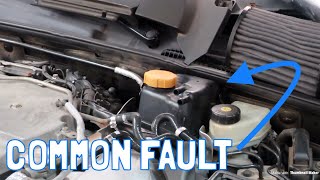
The plastic coolant expansion tank on the 3.0L V6 Saab 9-5 is a well-known weak point. Constant exposure to high temperatures and pressure fluctuations causes the plastic to degrade. The primary failure is the development of hairline cracks, most often along the main seam where the two halves of the tank are joined. These cracks start as slow seeps and can progress to a complete failure, quickly emptying the cooling system and risking severe engine damage from overheating.
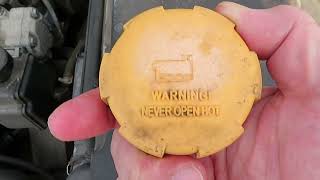
The reservoir cap can also be a source of problems. A faulty cap that can no longer hold the specified pressure will allow coolant to escape through the overflow tube, leading to a gradual loss of coolant. In some cases, cheap aftermarket caps can even break apart during removal.
🎬 Watch: Why to avoid cheap aftermarket reservoir capsPro Tip: When replacing the reservoir, it's also a good idea to inspect the small coolant hoses connected to it. After many years, these hoses can become hard and brittle, and may crack when being removed or reinstalled.
Buying a Used Engine Coolant Reservoir
A high-quality, used OEM reservoir can be a smart, cost-effective alternative to expensive new parts, especially when compared to cheap aftermarket versions that may have questionable quality. Here’s what to look for when buying a used one:
- Thoroughly Inspect for Cracks: Carefully examine the entire tank, paying extremely close attention to the seams. Bend and flex the tank slightly to reveal any hidden hairline cracks.
- Check for Discoloration: While some yellowing is normal with age, avoid tanks that are dark brown, opaque, or feel excessively brittle to the touch. This indicates the plastic is degraded and likely to fail soon.
- Examine Hose Nipples: Make sure the inlet and outlet nipples are not cracked, chipped, or deformed.
- Inspect the Level Sensor: The reservoir includes an integrated coolant level sensor. Check that the electrical connector pins are clean, straight, and free of corrosion.
- Verify the Part Number: Double-check that you are buying part number 90499767 or a compatible superseded number for your V6 model. Do not purchase a tank from a 4-cylinder car.
Replacement Guide
Replacing the coolant reservoir is a straightforward job that most DIY mechanics can complete in under an hour.
- Safety First: Only work on the cooling system when the engine is completely cool. The system is pressurized and the coolant can be extremely hot.
- Release Pressure: Slowly open the cap on the expansion tank to release any residual pressure, then close it again.
- Access the Tank: On some models, you may need to remove the battery to gain sufficient access to the tank and its hoses.
- Drain the Tank: Place a suitable container underneath the tank. You can either use a fluid extractor to empty the tank from the top or carefully disconnect the lower hose to drain the coolant. Using hose pinch-off pliers can help minimize spillage.
- Disconnect Hoses and Sensor: Unplug the electrical connector for the coolant level sensor. Then, release the clamps and remove the hoses from the tank.
- Remove the Tank: The tank is typically held in place by a bracket and clips. It may require a firm pull forward (towards the front of the car) or towards the engine to release it.
- Install the New Tank: Installation is the reverse of removal. Ensure the tank is securely seated in its mounts. Reconnect the hoses and the level sensor. It's a good practice to apply a contact cleaner to the sensor connector. 🎬 Watch: Step-by-step V6 coolant tank replacement walkthrough
- Refill and Bleed: Fill the new tank to the 'MAX' line with a 50/50 mix of the correct coolant and distilled water. Start the engine with the heater on high and let it run until the radiator fan comes on. Switch off the engine, let it cool, and top up the coolant level as needed.
Cost Comparison
| Part Source | Estimated Cost |
|---|---|
| New Genuine OEM | $60 - $95 |
| New Aftermarket | $35 - $60 |
| Used OEM | $35 - $60 |
| Shop Labor | $85 - $130 |
Technical Specifications & Part Numbers
| Engine Coolant Reservoir - 1999-2003 Saab 9-5 (3.0L V6) | |
|---|---|
| Engine Fitment | 3.0L V6 (B308E) |
| OEM Part Numbers | 90499767, 4575692 |
| Associated Parts | Reservoir Cap (P/N: 90500007, 4395513) |
| Features | Includes integrated coolant level sensor |
Frequently Asked Questions (FAQ)
Can I repair a cracked coolant reservoir?
It is not recommended. Due to the constant pressure and temperature changes within the cooling system, epoxies and plastic welds are very unlikely to provide a reliable, long-term repair. Replacement is the only safe and effective solution.
Can I use the coolant tank from a 4-cylinder Saab 9-5 on my 3.0L V6?
No. The tanks have different shapes, mounting points, and hose connections. They are not interchangeable. You must use the specific reservoir designed for the V6 engine.
My coolant light is on, but the tank is full. What's wrong?
This usually indicates a problem with the coolant level sensor, which is integrated into the bottom of the reservoir. The sensor may have failed, or the float inside may be stuck. If you are certain the coolant level is correct, the reservoir (including the sensor) will likely need to be replaced.
What type of coolant should I use in my 1999-2003 Saab 9-5?
You should use a phosphate-free coolant, typically a G12 (pink/red) or a universal extended-life coolant that meets the vehicle's specifications. Always mix it 50/50 with distilled water. Do not use conventional green coolant, as it can cause issues with the system's components.
Are there any recalls for the coolant reservoir?
As of mid-2026, there are no specific NHTSA recalls for the engine coolant reservoir on 1999-2003 Saab 9-5 vehicles.
Helpful Videos

Technical Specifications
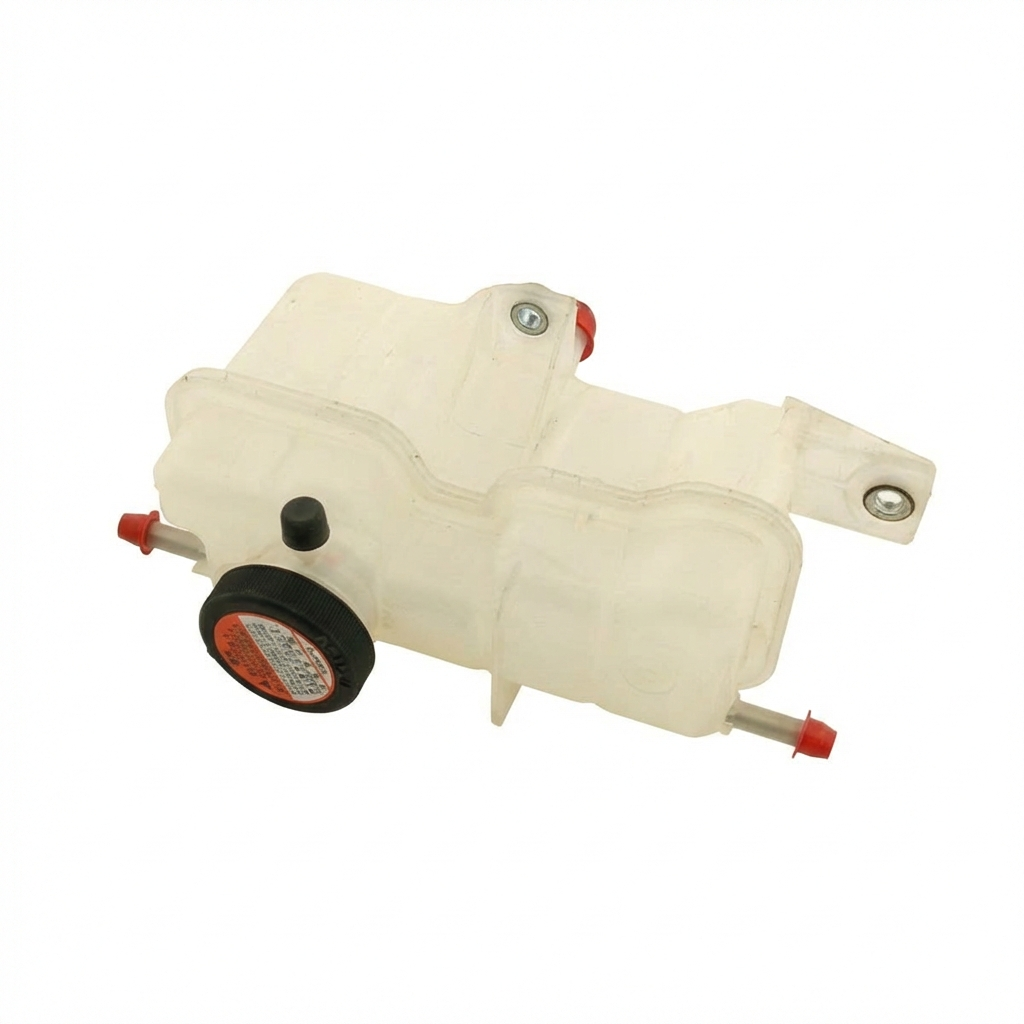
OEM Part Numbers: 90499767 4575692
Material: Plastic, Includes: Integrated Coolant Level Sensor
We Have This Part in Stock

The information in this article is provided for general reference and educational purposes only. Vehicle specifications, procedures, and part compatibility can vary by production date, trim level, and region. Always consult your vehicle's factory service manual and verify part numbers before purchasing or performing repairs. Safety-critical components such as airbags, seat belts, and braking systems should be installed by a qualified professional.
- Saab 9-5:
- 🎬 Helpful Videos
- 🛍️ Shop This Part
- Critical Warning: 3.0L V6 vs. 4-Cylinder Engines
- Symptoms of a Failing Coolant Reservoir
- Known Issues and Common Failure Points
- Buying a Used Engine Coolant Reservoir
- Replacement Guide
- Cost Comparison
- Technical Specifications & Part Numbers
- Frequently Asked Questions (FAQ)
- 🎟️ Get 5% Off