

2020-2024 Defender Coolant System Guide: Leaks, Warnings, and Reservoir Issues
Diagnose the common causes of low coolant warnings on your Defender, from mystery leaks and faulty sensors to a cracked reservoir.
- A 'Low Coolant' warning on a 2020-2024 Defender may be caused by a loose sensor, not a leak. Check TSB LTB01413NAS1 before assuming a major issue.
- This single reservoir part number fits the 2.0L, 3.0L, and 5.0L engines, contrary to some database information.
- Many 'mystery' coolant leaks on these vehicles are not from the reservoir but from other known weak points like turbo coolant lines and auxiliary radiators.
- Models with the 2.0L PHEV engine are subject to a safety recall (N785) for a coolant elbow that can rupture and cause a fire.
Symptoms of a Failing Coolant Reservoir

A problem with the coolant reservoir or the greater cooling system will make itself known in several ways. Some symptoms point directly to a cracked tank, while others are more general to the cooling system.
- Low Coolant Warning Light: An amber warning message on the instrument cluster is often the first sign of a problem. This can indicate a genuine leak or, on these specific models, a sensor issue.
- Visible Coolant Leaks: Puddles of brightly colored fluid (pink or orange for the Defender) on the ground under the engine bay are a clear sign of a leak. If the reservoir itself is the culprit, you may see wet spots or white, crusty residue on the tank body, especially around seams and hose connections.
- Sweet Smell: Engine coolant (antifreeze) has a distinct, sweet odor. If you smell this around the vehicle, especially after a drive, it's a strong indicator of a coolant leak, even if you can't see it. The coolant may be dripping onto hot engine or exhaust parts and evaporating.
- Engine Overheating: If the temperature gauge climbs into the red or you see steam coming from under the hood, the cooling system is not working correctly. A significant coolant leak from any source, including the reservoir, can lead to overheating, which poses a risk of severe engine damage.
Known Issues for 2020-2024 Defender

While the coolant reservoir itself is not a frequent failure point, the 2020-2024 Defender is known for several cooling system issues that can cause identical symptoms, such as low coolant warnings and leaks.
Technical Service Bulletin LTB01413NAS1: False Low Coolant Warning
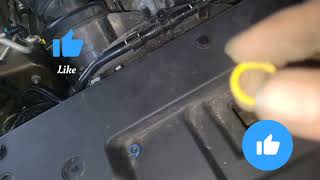
Many owners have experienced a persistent amber 'Low Coolant' warning message on the dashboard, even when the coolant level in the reservoir is full. According to Land Rover Technical Service Bulletin (TSB) LTB01413NAS1, this is often caused by a loose engine coolant level sensor at the bottom of the reservoir. The official fix involves removing the tank and securing the sensor with two cable ties to ensure it stays fully seated. This should be the first check for anyone experiencing a low coolant light without any visible fluid loss.
🎬 Watch: A quick check for the low coolant light issue.Common "Mystery" Leaks
A frequent complaint among Defender owners is a recurring need to top off the coolant and a noticeable coolant smell, but with no obvious drips on the garage floor. These small leaks often occur in places where the coolant evaporates before it can puddle. Based on owner forums and service advisor reports, common culprits include:
- O-rings on turbocharger coolant lines
- Auxiliary radiators, particularly on the driver's side
- The water pump
- Various hose connections, including those to the thermostat housing 🎬 See this video for identifying common Defender coolant leaks.
Recall N785: 2.0L PHEV Engine Fire Risk
Safety Warning: Land Rover issued a safety recall (N785) for certain Defender models equipped with the Ingenium I4 2.0L Petrol Plug-in Hybrid (PHEV) engine. A potential failure of the coolant pump drive belt can cause the engine to overheat rapidly. This can rupture a plastic coolant elbow, leaking coolant directly onto the hot turbocharger heatshield, which may lead to an engine compartment fire. Owners of affected vehicles should contact a dealer to have the recall work performed, which involves replacing the engine coolant elbow and a related pipe.
Buying a Used 2020-2024 Defender Coolant Reservoir

A used OEM (Original Equipment Manufacturer) reservoir is an excellent, cost-effective replacement. Because the plastic and sensor are designed by Land Rover, fit and function are guaranteed. Aftermarket tanks can be made from lower-grade plastic that becomes brittle more quickly and may use sensors that are not calibrated correctly for the Defender's system.
Inspection Checklist:
- Check for Cracks: Carefully inspect the entire tank, paying close attention to the seams where the top and bottom halves are joined, as well as the hose connection points (inlets/outlets). Hairline cracks are the most common failure mode.
- Look for Discoloration: A healthy tank is a semi-translucent white. A tank that is yellowed or brownish has been subjected to excessive heat cycles and is becoming brittle. Avoid these.
- Verify Part Numbers: The most common part numbers are L8B2-8A080 and L8B2-8A080-AH. Ensure the part you are buying matches. Many superseded numbers also exist, such as LR140364, LR155015, and LR160416.
- Inspect the Sensor Port: Make sure the area where the coolant level sensor mounts at the bottom of the tank is not damaged. This is especially important given the TSB regarding loose sensors.
- Confirm Cap and Sensor are Included: Check if the sale includes the reservoir cap and the level sensor. Often, these are transferred from the old unit, but getting a complete assembly can save time.
Replacement Overview & Difficulty
- Difficulty Rating: 2 out of 5
- Estimated Time: 1 - 1.5 hours
- DIY Feasible: Yes
Replacing the coolant reservoir is a straightforward job for a DIYer with basic tools. The tank is located in the engine bay and is easily accessible.
General Steps:
- Allow the engine to cool completely. Never open a hot cooling system.
- Use a turkey baster or fluid extractor to remove as much coolant as possible from the reservoir to minimize spillage.
- Disconnect the electrical connector for the coolant level sensor at the bottom of the tank.
- Using pliers, release the clamps on the coolant hoses attached to the tank and slide them off. Be prepared for some coolant to drain out.
- Remove the bolts or nuts securing the reservoir to the vehicle frame and lift it out.
- Install the new reservoir, reconnecting the mounting bolts, hoses, and sensor.
- Refill the reservoir to the 'MAX' line with the correct coolant.
- Bleed the system. This is the most critical step. Start the engine with the reservoir cap off and the heater on high to circulate coolant and purge any air pockets. Top off the coolant as the level drops. Once the engine reaches operating temperature and no more bubbles appear, replace the cap. 🎬 Watch: How to properly flush and refill your coolant.
Pro Tip: Before installing the new tank, take a moment to secure the new level sensor with a cable tie as described in TSB LTB01413NAS1 to prevent future false warnings.
Cost of Replacement: New vs. Used
Prices can vary by supplier and condition. The following is an estimated breakdown for the North American market.
| Part Type | Estimated Cost |
|---|---|
| New OEM | $95 - $150 |
| New Aftermarket | $45 - $80 |
| Used OEM | $70 - $135 |
| Shop Labor | $120 - $250 |
Frequently Asked Questions (FAQ)
Why does my 'Low Coolant' light come on when the tank is full?
This is a known issue addressed by Land Rover TSB LTB01413NAS1. It is likely caused by a loose coolant level sensor at the bottom of the reservoir, not an actual low coolant level. The fix involves securing the sensor more firmly to the tank.
Does this coolant reservoir fit all 2020-2024 Defender engines?
Yes, despite some initial information suggesting otherwise, parts listings confirm that the same primary reservoir (part numbers like L8B2-8A080-AH and its successors) is used for the 2.0L 4-cylinder, 3.0L 6-cylinder, and 5.0L V8 engines in the North American market.
Can I drive my Defender with a coolant leak?
No. Driving with a known coolant leak is not recommended. A small leak can worsen suddenly, leading to rapid coolant loss, engine overheating, and potentially catastrophic engine damage like a blown head gasket, which can cost thousands to repair.
What type of coolant does the 2020-2024 Defender use?
Land Rover specifies an ethylene glycol-based coolant, typically pink or orange in color. It is critical to use the correct type to prevent corrosion and ensure proper cooling system performance. Always consult your owner's manual or the dealership for the exact specification.
Helpful Videos


Technical Specifications
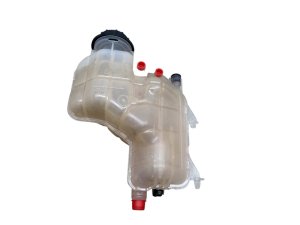
OEM Part Numbers: L8B2-8A080 L8B2-8A080-AH 104123753 LR131384 LR140364 LR154592 LR155015 LR160416 LR166954
Material: Plastic. Includes port for coolant level sensor. Includes cap.
We Have This Part in Stock


The information in this article is provided for general reference and educational purposes only. Vehicle specifications, procedures, and part compatibility can vary by production date, trim level, and region. Always consult your vehicle's factory service manual and verify part numbers before purchasing or performing repairs. Safety-critical components such as airbags, seat belts, and braking systems should be installed by a qualified professional.
- Land Rover Defender:
- 🎬 Helpful Videos
- 🛍️ Shop This Part
- Symptoms of a Failing Coolant Reservoir
- Known Issues for 2020-2024 Defender
- Technical Service Bulletin LTB01413NAS1: False Low Coolant Warning
- Common "Mystery" Leaks
- Recall N785: 2.0L PHEV Engine Fire Risk
- Buying a Used 2020-2024 Defender Coolant Reservoir
- Inspection Checklist:
- Replacement Overview & Difficulty
- Cost of Replacement: New vs. Used
- Frequently Asked Questions (FAQ)
- 🎟️ Get 5% Off