

2017-2023 McLaren 720S Coolant Pipe and Hose Failure: A Buyer's Guide
Coolant leaks are a known issue on the 720S, often stemming from simple hose clamps and pipes that can lead to catastrophic engine damage if ignored.
- Coolant leaks are a known weakness on the 720S, often caused by failing factory hose clamps and heat-cycled rubber hoses.
- Ignoring a coolant leak can lead to catastrophic engine failure with repair costs exceeding $20,000.
- When replacing any coolant hose or pipe, it is critical to upgrade the factory crimp clamps to high-quality worm-gear or T-bolt style clamps.
- Properly refilling the system requires a vacuum-fill tool to prevent airlocks, which can cause overheating even after the leak is fixed.
Symptoms of a Failing Coolant Pipe Assembly
The McLaren 720S typically gives clear warning signs of a cooling system problem. Ignoring these can turn a relatively minor repair into a multi-thousand-dollar engine replacement. Be alert for any of the following symptoms:
- Low Coolant Warning Light: A message on the dashboard is the most direct indicator that the system is losing fluid.
- Sweet Smell: A distinct, sweet odor of ethylene glycol (coolant) in the engine bay or around the car after a drive is a tell-tale sign of a leak.
- Visible Leaks or Puddles: Small drips or larger puddles of colored fluid (McLaren coolant is often blue or green) under the vehicle are a serious indicator of a breach in the system.
- Steam from Engine Bay: What may look like smoke pouring from the rear of the car is often steam from coolant spraying onto hot engine components. This indicates a significant leak that requires immediate attention.
- White or Crystalline Residue: As coolant leaks and evaporates, it can leave behind a white, crusty residue on hoses, fittings, or other engine parts.
- Rising Temperature Gauge: If you notice the engine temperature climbing higher than normal, especially under load, it could mean the cooling system is compromised and can no longer dissipate heat effectively.
Known Issues, TSBs, and Recalls
While the 720S itself does not have a specific recall for its main engine coolant pipes, cooling system issues are a known characteristic across the McLaren lineup. The high-output M840T engine generates immense heat, placing significant stress on all cooling components.
Weak Hose Clamps
A widely discussed weak point in the McLaren cooling system is the factory hose clamps. These single-use, crimp-style clamps can lose tension over time with repeated heat cycles, leading to weeping or even complete hose separation. One owner reported a coolant hose coming off entirely just seven days into ownership, resulting in a massive steam cloud. Many owners and independent shops proactively replace these with high-quality stainless steel worm-gear or T-bolt clamps as a preventative measure.
Service Bulletins and a Related Recall
McLaren has issued several service bulletins (called Service Callbacks or Knowledge Articles) related to cooling hoses on the 720S, including:
- SCB_14_L_001: Addresses an issue with the Water Charge Air Cooler (WCAC) hose and CCV pipe.
- SCB_14_L_002: Pertains to the WCAC pipe and its relation to an HVAC pipe.
- SCB_14_L_003: A rework for a potential clash with the clutch cooler hose.
Most notably, the related 2019-2020 McLaren 600LT was subject to NHTSA Recall 23V-484. This recall addressed a joint between a radiator hose and the temperature sensor housing that could leak due to heat and pressure cycling during high-performance driving. The identified safety risk was coolant leaking into the engine bay, which could cause a fire. The fix involved replacing the joint with a new constant pressure clamp, acknowledging a design weakness in the original clamping method. This issue highlights the vulnerability of these connections under stress, a condition also applicable to the 720S.
Warning: Never ignore cooling system warnings. Running a 720S low on coolant can cause the aluminum cylinder heads to warp, turning a potentially simple hose repair into a catastrophic engine failure costing over $20,000.
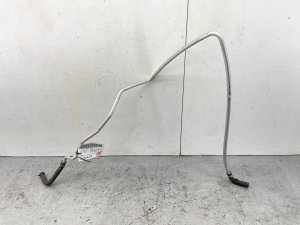
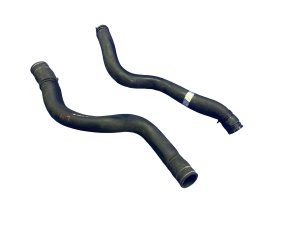
Buying a Used Engine Coolant Pipe Assembly
Given the high cost of new OEM parts, a quality used coolant pipe assembly is an excellent value. However, careful inspection is critical to ensure you're getting a reliable part.
What to Inspect Before Buying
- Inspect All Rubber Hoses: Squeeze the rubber sections of the assembly. They should feel firm but pliable. Look for any signs of cracking, bulging, sponginess, or hardening. Pay close attention to the ends where they connect to metal pipes.
- Check Metal Pipes for Corrosion: Examine the aluminum or steel pipes for any signs of heavy oxidation, pitting, or physical damage like dents or kinks that could restrict flow. Check for white residue, which indicates a past leak.
- Verify Hose Ends and Fittings: Look closely at the connection points. Ensure there are no cracks in any plastic fittings and that the metal ends are not bent or deformed. This is where leaks often start.
- Confirm Part Numbers: If possible, match the part number from your old pipe to the used one. A known part number for a coolant hose is 14L0010CP. Compatibility is key, as McLaren's modular design can lead to subtle variations.
Pro Tip: When replacing a coolant pipe or hose, it is highly recommended to also replace the hose clamps with new, high-quality stainless steel worm-gear clamps. Do not reuse the original factory crimp clamps, as they are a known failure point.
Installation Overview
- Difficulty: 3 out of 5. The job is feasible for an experienced DIY mechanic but requires patience and the right tools.
- DIY Feasible: Yes.
- Key Steps: The process involves draining the cooling system, removing undertrays and wheel arch liners for access, releasing the old clamps, and swapping the pipe assembly.
- Critical Task - Refilling: The most critical part of the job is refilling and bleeding the cooling system. To avoid air pockets that can cause overheating, a vacuum-fill tool is strongly recommended. This tool pulls a vacuum on the entire system, ensuring that no air is trapped when new coolant is introduced.
Cost Comparison
Prices for McLaren parts are high, making used OEM a very attractive option. Aftermarket support is mostly limited to performance upgrades like silicone hose kits rather than direct replacement assemblies.
| Part Type | Estimated Cost |
|---|---|
| New OEM Assembly | $800 - $2,500+ (Varies greatly by specific pipe; a single lower radiator hose can be over $300) |
| New Aftermarket (Silicone Hose Kit) | $1,000 - $2,000 |
| Used OEM Assembly | $200 - $700 |
| Shop Labor | $600 - $1,200 (for a single pipe/hose replacement) |
Frequently Asked Questions (FAQ)
Can I just top off the coolant and keep driving?
This is extremely risky. While it might seem like a temporary fix, a coolant leak will only get worse. Continuing to drive risks sudden, massive coolant loss, which can lead to immediate overheating and catastrophic engine damage.
Why are aftermarket silicone hoses a popular upgrade?
Aftermarket silicone hoses offer greater durability and higher temperature resistance compared to the stock rubber hoses. They are less prone to cracking and degradation from heat cycles, and often come with a higher burst pressure rating, providing an extra margin of safety for a high-performance car like the 720S.
Do I need a special tool to replace the coolant hoses?
While most of the job can be done with standard mechanic's tools, a vacuum coolant refiller is essential for doing the job correctly and safely. It prevents airlocks in the complex cooling system, which are difficult to bleed out manually and can cause engine damage. A tool for removing the original crimp-style clamps is also helpful.
Is a coolant leak on a 720S covered by warranty?
If the vehicle is still under its original factory warranty, a failure of a coolant pipe or hose should be a covered repair. However, for vehicles outside of the warranty period, the repair cost will be the owner's responsibility. Always check with a McLaren dealer for warranty eligibility.
Technical Specifications
OEM Part Numbers: 14L0010CP 14G0019CP
System uses McLaren Xstream G64 or Mobil G48 antifreeze coolant.
We Have This Part in Stock

The information in this article is provided for general reference and educational purposes only. Vehicle specifications, procedures, and part compatibility can vary by production date, trim level, and region. Always consult your vehicle's factory service manual and verify part numbers before purchasing or performing repairs. Safety-critical components such as airbags, seat belts, and braking systems should be installed by a qualified professional.
- McLaren 720S:
- 🛍️ Shop This Part
- Symptoms of a Failing Coolant Pipe Assembly
- Known Issues, TSBs, and Recalls
- Weak Hose Clamps
- Service Bulletins and a Related Recall
- Buying a Used Engine Coolant Pipe Assembly
- What to Inspect Before Buying
- Installation Overview
- Cost Comparison
- Frequently Asked Questions (FAQ)
- 🎟️ Get 5% Off