

2008-2009 Toyota Tundra ECM: VIN Programming and Immobilizer Sync are Mandatory
Replacing the engine computer in your Tundra requires precise part number matching and a mandatory security relearn to avoid a no-start condition.
- A replacement ECM for a 2008-2009 Tundra MUST be programmed to your truck's VIN and synchronized with the immobilizer system; the engine will not start otherwise.
- You must match the part number on your original ECM exactly. Different numbers are not interchangeable.
- This is not a plug-and-play or DIY-friendly repair due to the need for specialized programming tools like Toyota Techstream.
- Before replacing the ECM for a P0606 code, investigate other potential causes like faulty oxygen sensors to avoid unnecessary expense.
Symptoms of a Failing 2008-2009 Tundra ECM

A failing Engine Control Module can create a wide range of confusing and intermittent issues. Because it controls so many systems, the symptoms can often be mistaken for other problems. Be aware of these common warning signs:
- Check Engine Light: The most common symptom is an illuminated Check Engine Light. Codes pointing to internal processor failure (like P0606) are a strong indicator, but this code can also be falsely triggered by other issues. 🎬 Watch: How to diagnose and fix a P0606 code
- No Start or Intermittent Stalling: The engine may crank but refuse to start. A failing module can also cause the engine to stall unexpectedly while driving. In some cases, there may be no communication with the ECM via an OBD-II scanner.
- Poor Engine Performance: You may experience a noticeable loss of power, rough idling, engine stuttering, or misfires. This happens when the ECM cannot correctly manage the air-fuel mixture or ignition timing.
- Reduced Fuel Economy: A sudden and significant drop in gas mileage can occur if the ECM is commanding an incorrect fuel mixture.
- Transmission Shifting Problems: The ECM sends data to the transmission control module. A faulty ECM can lead to hard, erratic, or delayed shifting.
- Communication Failures with Other Components: Sometimes, a failing ECM is preceded by a failure in another component that shorts out a 5-volt reference line, causing the ECM to lose communication. Forum users have reported that shorted secondary air injection valves or a bad power steering sensor can mimic a dead ECM.
Known Issues, Recalls, and TSBs
As of this writing, there are no specific recalls for the Engine Control Module on 2008-2009 Toyota Tundras according to NHTSA data. However, Toyota has issued numerous Technical Service Bulletins (TSBs) for these model years, with 220 for 2008 and 177 for 2009. While most do not directly relate to ECM failure, some involve software updates (reflashing) to address other vehicle issues. For example, LSC F0A for 2012-2014 models involved an ECM software update to prevent a Diagnostic Trouble Code related to the air switching valve. This shows that ECM software is a key part of vehicle maintenance.
Pro Tip: Before condemning the ECM, especially for a P0606 code, thoroughly diagnose any other fault codes first. On many Toyotas, a faulty oxygen sensor is known to trigger a false P0606 code. Fixing the sensor may resolve the issue without needing a costly ECM replacement.
Buying a Used 2008-2009 Tundra ECM: What You MUST Know

This is the most critical section for anyone buying a used ECM. Failure to follow these guidelines will result in a part that does not work.
1. Match the Part Number EXACTLY
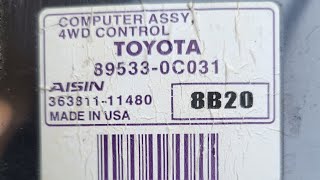
You must match the OEM part number on your original ECM to the letter. There are many different ECMs for this generation of Tundra, specific to engine size, drivetrain (2WD/4WD), and other options. Even if an ECM looks identical, if the part number is different, it will not work correctly. The part number is printed on a label on the outside of the module's case.
2. VIN Programming is NOT Optional
A used ECM cannot be simply swapped into your truck. The module is programmed with the original vehicle's Vehicle Identification Number (VIN). When installed in a new vehicle, this mismatched VIN will prevent the ECM from communicating with the other modules in your truck, specifically the immobilizer system. The result is a crank-no-start condition. The replacement ECM must be programmed with your truck's VIN.
3. Immobilizer Synchronization is Required
After the ECM is installed and the VIN is programmed, the anti-theft immobilizer system must be synchronized or 'relearned' to recognize the new module. Without this step, the security system will prevent the engine from starting. 🎬 See: Why your Toyota won't start after swapping the ECM This procedure requires specialized tools like Toyota's Techstream software or can sometimes be performed by a well-equipped automotive locksmith. Some forum users have mentioned a manual relearn procedure involving shorting pins on the OBD-II port, but for these specific years, using professional software is the most reliable method.
ECM Replacement and Programming

The physical replacement of the ECM is relatively straightforward, but the electronic programming is complex.
- Location: The ECM is typically located inside the cabin, often behind the glove box on the passenger side. You will need to remove the glove box and surrounding trim panels to access it.
- Physical Swap: Disconnect the vehicle's battery. Unplug the electrical connectors from the old ECM, unbolt it from its mounting bracket, and install the new module in its place. 🎬 Watch: Step-by-step Gen 2 Tundra ECM replacement walkthrough Reconnect the connectors and the battery.
- Programming and Synchronization: This is the crucial step that cannot be skipped. The vehicle must be taken to a Toyota dealership or a qualified independent shop with the proper tools (like Toyota Techstream) to program the ECM to the vehicle's VIN and synchronize it with the immobilizer system. Many mobile mechanics and automotive locksmiths also have this capability. This is not a DIY-friendly job for the average home mechanic due to the specialized software required.
Warning: Do not attempt to start the vehicle after swapping the ECM until it has been programmed. You will trigger anti-theft codes (like B2799) that can complicate the programming process.
Cost to Replace a 2008-2009 Tundra ECM
The cost can vary significantly based on the path you choose. Prices are estimates and can change based on location and availability.
| Part/Service | Estimated Cost | Notes |
|---|---|---|
| New OEM ECM | $840 - $1,300+ | Purchased from a Toyota dealership. |
| Used OEM ECM | $60 - $250 | Price from online marketplaces and salvage yards. Ensure you match the part number exactly. |
| Remanufactured/Repaired ECM | $150 - $400 | Services that repair your existing unit or sell pre-programmed units. |
| Shop Labor (Physical Swap) | $100 - $200 | Typically 1-1.5 hours of labor. |
| Programming & Synchronization | $150 - $400 | This is a separate charge from the physical installation, often billed by dealerships, locksmiths, or specialty shops. |
Frequently Asked Questions (FAQ)
Can I just plug in a used ECM and drive?
No. A used ECM must be programmed with your truck's VIN and synchronized with the immobilizer security system. Without these steps, the engine will crank but will not start.
Can a locksmith program the new ECM?
Yes, many modern automotive locksmiths have the tools and software required to program a replacement ECM and sync the immobilizer, often for less than a dealership. However, you should confirm they have the capability for your specific year and model before hiring them.
Where is the ECM located on a 2008-2009 Tundra?
The ECM is located inside the vehicle's cabin, on the passenger side, behind the glove box assembly. You will need to remove the glove box to access the module and its connectors.
My mechanic says I have code P0606. Do I need a new ECM?
Not necessarily. While P0606 means 'ECM Processor Failure,' on many Toyota vehicles this code can be triggered by a faulty oxygen (O2) sensor or its wiring. It is highly recommended to diagnose and repair any and all other trouble codes before replacing the ECM, as it could save you from an unnecessary and expensive repair.
Helpful Videos
Technical Specifications
OEM Part Numbers: TN275300-4590 89661-0CB90 89661-0CB91 89661-0CB92 89661-0CD00 89661-0CD01 89661-0CD02 89661-0CD03 89661-0CB40 89661-0CC20 89661-0CB81 89661-0CC11 89661-0CD11 89661-0CC12
Location: Inside the cabin, behind the glove box on the passenger side.
We Have This Part in Stock



The information in this article is provided for general reference and educational purposes only. Vehicle specifications, procedures, and part compatibility can vary by production date, trim level, and region. Always consult your vehicle's factory service manual and verify part numbers before purchasing or performing repairs. Safety-critical components such as airbags, seat belts, and braking systems should be installed by a qualified professional.
- Toyota Tundra:
- 🎬 Helpful Videos
- 🛍️ Shop This Part
- Symptoms of a Failing 2008-2009 Tundra ECM
- Known Issues, Recalls, and TSBs
- Buying a Used 2008-2009 Tundra ECM: What You MUST Know
- 1. Match the Part Number EXACTLY
- 2. VIN Programming is NOT Optional
- 3. Immobilizer Synchronization is Required
- ECM Replacement and Programming
- Cost to Replace a 2008-2009 Tundra ECM
- Frequently Asked Questions (FAQ)
- 🎟️ Get 5% Off