

2003-2004 Toyota Corolla ECM: Your Guide to Fixing Harsh Shifting and Stalling
This guide covers the common Engine Control Module (ECM) failures causing transmission problems and no-start issues in the 2003-2004 Corolla, and how to correctly diagnose and replace it.
- The most common sign of ECM failure in a 2003-2004 Corolla is a harsh, banging shift from 1st to 2nd gear, often with code P2716.
- You MUST match the part number exactly (89661-0Z09x). This part is for 1.8L automatic transmission models only.
- The car will NOT start after replacement until the immobilizer is reset. This can be done by a professional or via a DIY method involving shorting two pins on the OBD-II port for 30-40 minutes.
- A used OEM module is a cost-effective repair, but be sure to verify compatibility and inspect the connector pins before purchase.
Is Your 2003-2004 Corolla Shifting Harshly or Stalling? The ECM is a Likely Culprit

One of the most widely reported problems for the 2003-2004 Toyota Corolla with an automatic transmission is a sudden and violent shift, especially between first and second gear. This is often accompanied by a Check Engine Light. While these symptoms might seem like a major transmission failure, the root cause is frequently a faulty Engine Control Module (ECM). Internal failures within the ECM's circuitry can disrupt the signals sent to the transmission's solenoids, leading to incorrect shifting behavior. Other common symptoms of ECM failure include unexpected engine stalling or an engine that cranks but refuses to start.
Symptoms of a Failing ECM

A bad engine computer can cause a variety of issues. Pay close attention to these common signs:
- Harsh or Erratic Shifting: The most common symptom is a severe jerk or bang when the automatic transmission shifts, particularly from 1st to 2nd gear. This may also be accompanied by transmission-related trouble codes.
- Engine Stalling: The engine may stall unexpectedly while driving, which can create a serious safety hazard due to the loss of power steering and brakes.
- No-Start Condition: You may find that the engine cranks over normally but will not start. This can be caused by the ECM failing to control the fuel injectors or ignition system.
- Check Engine Light: An illuminated Check Engine Light is a definite sign of a problem. Codes specific to internal ECM failure are a strong indicator.
Common Diagnostic Trouble Codes (DTCs)
- P2716: This code for "Pressure Control Solenoid 'D' Performance/Stuck Off" is very commonly associated with the harsh shifting issue in these Corollas and often points to a faulty ECM rather than the solenoid itself. 🎬 Watch: Diagnostic breakdown of the P2716 code and TSB
- P0601, P0606, P0607: These are generic codes that indicate an internal memory or processor error within the control module. If you see one of these, the ECM has almost certainly failed.
- P1607: On this Corolla, this code points to an ECM internal malfunction that often results in a no-start condition.
Warning: Do not confuse the Engine Control Module (ECM) with the Supplemental Restraint System (SRS) ECU. Several recalls were issued for the 2003-2004 Corolla's SRS ECU, which controls the airbags. These recalls do not pertain to the engine and transmission-related problems caused by the ECM.
Buying a Used Engine Control Module (ECM)

When purchasing a replacement ECM, compatibility is everything. A used OEM unit from a reputable source is often a reliable and cost-effective choice compared to an expensive new dealer part.
- Match the Part Number Exactly: Your original ECM will have a Toyota part number printed on the label. It must be one of the 89661-0Z09x series (e.g., 89661-0Z090, 89661-0Z091, etc.). The Denso manufacturer number is TN275000-6651. This ECM is only for 1.8L models with an automatic transmission. It will not work for manual transmission cars or the high-performance XRS model.
- Inspect the Connectors: Before buying, carefully inspect the photos of the unit. The pins in the electrical connectors should be straight, clean, and free of any corrosion or green residue, which indicates water damage.
- Why Choose Used OEM?: A used original Toyota ECM is often more reliable than a new, unbranded aftermarket part. Since the primary failure is electronic, a used unit from a vehicle that did not experience this issue can provide many more years of service for a fraction of the cost of a new one.
Programming and Installation: This is Critical

You cannot simply swap the ECM and drive away. The ECM is part of the vehicle's anti-theft system (immobilizer) and must be synchronized with your existing keys. Failure to do this will result in a no-start condition.
Immobilizer Reset Options:
- Professional Programming: A Toyota dealership or an automotive locksmith can use a diagnostic tool like Toyota's Techstream software to register the replacement ECM to your vehicle's keys.
- Pre-Programmed or Cloned Unit: Many online vendors sell refurbished ECMs that are either pre-programmed to your car's Vehicle Identification Number (VIN) or cloned from your original unit. For cloning, you typically have to send your old ECM to the company so they can transfer the immobilizer data.
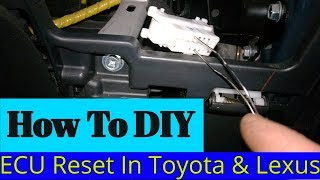
- DIY Immobilizer Reset (The "Paperclip Method"): A well-documented procedure for many Toyotas of this era allows you to reset the immobilizer yourself. After installing the replacement ECM, you use a jumper wire or paperclip to connect pins 4 and 13 of the OBD-II port (located under the dashboard). You then turn the ignition key to the 'ON' position and leave it for approximately 30-40 minutes. During this time, the security light may flash as the ECM learns your key's transponder code. After the time has passed, turn the key off, remove the jumper wire, and the car should start. 🎬 Watch: How to perform the paperclip immobilizer reset
Pro Tip: Programming the immobilizer for the key to *start the car* is different from programming the remote *key fob* for locking and unlocking the doors. The key fob has its own simple DIY programming sequence involving a series of key insertions and door opening/closing.
Step-by-Step Replacement Guide
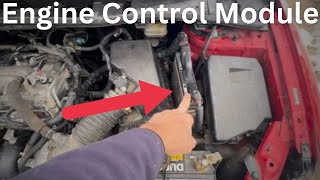
The ECM is located behind the glove compartment. The replacement process is straightforward for a DIY mechanic.
- Disconnect the Battery: Always disconnect the negative terminal of the battery before working on any electronic components.
- Access the ECM: Open the glove compartment. You may need to remove a screw or press in the sides to release the stops, allowing the glove box to drop down completely.
- Locate the ECM: You will see the metal ECM mounted behind the glove box area.
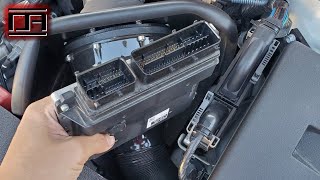
- Disconnect and Remove: Unplug the electrical harnesses connected to the ECM. They have release tabs that need to be pressed. Then, unbolt the mounting screws or nuts (typically 10mm) holding the ECM in its bracket.
- Install the New Unit: Bolt the replacement ECM into place, reconnect the electrical harnesses securely, and re-install the glove box. 🎬 See this step-by-step ECM replacement walkthrough
- Perform Immobilizer Reset: Reconnect the battery and perform one of the programming/reset procedures described above.
Replacement Cost Comparison
| Part Type | Estimated Cost |
|---|---|
| New OEM (Dealer) | $680 - $900+ |
| Remanufactured / Pre-Programmed | $270 - $450 |
| Used OEM (Salvage) | $45 - $150 |
| Shop Labor for Installation & Programming | $150 - $300 |
Frequently Asked Questions (FAQ)
Do I absolutely have to match the part number 89661-0Z09x?
Yes. While other ECMs might look identical, the internal software and hardware are specific to the engine, transmission, and features of your vehicle. Using the wrong part number can result in poor performance, system incompatibilities, or a no-start condition. Always match the part number exactly.
Will my car start immediately after I install the replacement ECM?
No. The replacement ECM is not synchronized with your car's anti-theft immobilizer system. The engine will crank but will not start until you perform an immobilizer reset procedure, either with a professional scan tool or the DIY 30-minute paperclip method.
Can a locksmith program the new ECM instead of the dealer?
Yes, most professional automotive locksmiths have the necessary diagnostic tools to program or sync a replacement Toyota ECM to your vehicle's existing keys, often at a lower cost than a dealership.
Could my harsh shifting be caused by something other than the ECM?
While the ECM is the most common cause of the severe 1-2 shift in these Corollas, other possibilities include a failing shift solenoid within the transmission, old or low transmission fluid, or a faulty throttle position sensor. However, if the harsh shifting is paired with code P2716, the ECM is the primary suspect.
Helpful Videos

Technical Specifications
OEM Part Numbers: 89661-0Z090 89661-0Z091 89661-0Z092 89661-0Z093 896610Z090 896610Z091 896610Z092 896610Z093
Manufacturer: Denso (Part TN275000-6651). Fits 2003-2004 Toyota Corolla with 1.8L (1ZZ-FE) engine and automatic transmission. Not compatible with XRS models.
We Have This Part in Stock



The information in this article is provided for general reference and educational purposes only. Vehicle specifications, procedures, and part compatibility can vary by production date, trim level, and region. Always consult your vehicle's factory service manual and verify part numbers before purchasing or performing repairs. Safety-critical components such as airbags, seat belts, and braking systems should be installed by a qualified professional.
- Toyota Corolla:
- 🎬 Helpful Videos
- 🛍️ Shop This Part
- Is Your 2003-2004 Corolla Shifting Harshly or Stalling? The ECM is a Likely Culprit
- Symptoms of a Failing ECM
- Common Diagnostic Trouble Codes (DTCs)
- Buying a Used Engine Control Module (ECM)
- Programming and Installation: This is Critical
- Immobilizer Reset Options:
- Step-by-Step Replacement Guide
- Replacement Cost Comparison
- Frequently Asked Questions (FAQ)
- 🎟️ Get 5% Off