

2010-2011 Toyota Avalon ECM: Solving No-Start Issues and Programming a Used Module
This guide covers common failure symptoms, critical part number differences, and the mandatory programming required when replacing the Engine Control Module in your 2010-2011 Avalon.
- A replacement ECM MUST be programmed to the vehicle's immobilizer system; the car will not start until this is done.
- There was a mid-year part change in 2011. You must match the OEM part number from your original ECM to ensure compatibility.
- An ECM software update (re-flash) may be available to fix a false P0456 EVAP code and was part of a recall to add a brake-override system.
- Buying a used OEM module can save hundreds of dollars, but you must factor in the cost and logistics of programming.
Symptoms of a Failing ECM in a 2010-2011 Avalon

A failing Engine Control Module can cause a wide range of confusing and intermittent issues. Because the ECM controls so many different systems, symptoms can often be mistaken for other problems like bad sensors or failing ignition coils. Look for these common signs of ECM failure:
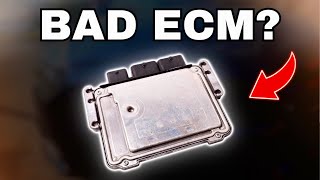
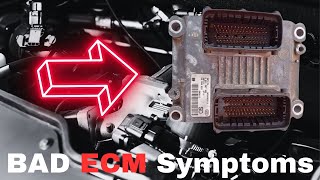
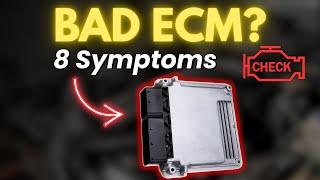
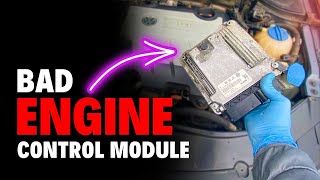
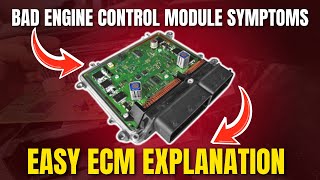
🎬 Watch: Learn more about bad ECM symptoms- Check Engine Light: An illuminated Check Engine Light is one of the most common symptoms. Codes may point to a specific sensor circuit, but if replacing the sensor doesn't fix the issue, the ECM's internal driver for that sensor might be faulty. Codes specifically pointing to internal processor failure include P0606 and P0607.
- Engine Won't Start: This is a critical symptom. The car may crank but fail to start because the ECM is not firing the ignition coils or fuel injectors. In other cases, it may not crank at all if the immobilizer system doesn't recognize the key.
- Poor Engine Performance: You might experience engine stumbling, misfires (which can trigger codes P0300-P0306), hesitation on acceleration, rough idling, or sudden power loss.
- Reduced Fuel Economy: If you notice a sudden, significant drop in your gas mileage, a faulty ECM could be sending incorrect signals to the fuel injectors, causing the engine to run too rich.
- Transmission Shifting Problems: The ECM works with the transmission controller. A failing ECM can cause harsh shifting, delayed shifting, or the transmission getting stuck in one gear.
- Difficult Start After Battery Disconnect: Toyota issued a technical tip (T-TT-0362-15) for the 2011 Avalon noting that the vehicle may be difficult to start or have a very low, rough idle after the battery is disconnected. This happens because the ECM's idle memory is lost and indicates a sensitive but not necessarily failed module.
Known Issues, Recalls, and Technical Service Bulletins (TSBs)

While the ECM itself has not been the subject of a failure-related recall, it is involved in several important service campaigns for the 2010-2011 Avalon.
Safety Recall: Unintended Acceleration and Brake Override
During the 2009-2011 Toyota recalls for potential unintended acceleration caused by sticking accelerator pedals or floor mat interference, a key remedy involved the ECM. Dealers were instructed to install a brake-override system by reprogramming the ECM software. This new logic automatically reduces engine power if the brake and accelerator pedals are pressed at the same time. When buying a used ECM, it's not always possible to know if it has this updated software, but it's a known update for these vehicles.
TSB for False EVAP Leak Code (P0456)
Toyota released TSB T-SB-0042-12 for some 2009-2011 Avalon models that could trigger a Check Engine Light with code P0456 (Evaporative Emission Control System Leak Detected - Very Small Leak) even when no leak exists. The fix is not to replace parts, but to recalibrate (re-flash) the ECM with updated software to make the diagnostic logic less sensitive. This is a prime example of an issue that seems like a mechanical problem but is actually solved by an ECM software update.
Compatibility Warning: A critical mid-year change affects 2011 models. The ECM for an early 2011 Avalon is different from a late 2011 Avalon. Always match the OEM part number from your original module.
Buying a Used 2010-2011 Avalon Engine Control Module

Buying a used OEM ECM is a cost-effective solution, but careful verification is essential to avoid compatibility problems. Given the mandatory programming, you must get the correct part for your specific vehicle.
1. Verify Your Part Number (CRITICAL)
There was a significant change in the ECM part number during the 2011 model year. You must physically inspect your car's original ECM and match the part number exactly.
- 2010 to Early 2011 Models: These vehicles typically use part numbers 89661-07510, 89661-07511, or the latest revision, 89661-07512. These three numbers are generally interchangeable with each other, with 89661-07512 being the newest replacement.
- Late 2011 Models: Vehicles manufactured later in the model year use different ECMs, such as 89661-07570 or 89661-07571.
Installing an early-style ECM in a late-2011 vehicle (or vice-versa) will not work. The part number is printed on a label on the outside of the metal ECM case.
2. Inspect the Used Module
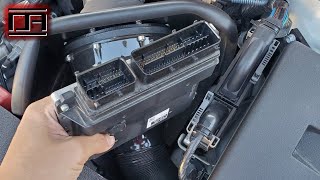
When your used part arrives, check for physical damage. Look for bent pins in the connectors, signs of water intrusion (corrosion or water marks on the case), or evidence that the case has been opened, which could indicate a failed repair attempt.
Programming and Installation

Warning: A replacement ECM, whether new or used, must be programmed to your vehicle. The engine will not start until the immobilizer system is reset and your keys are registered to the replacement ECM. Because the car will be immobilized after the swap, you must plan to have it programmed on-site or have the vehicle towed to a shop.
Does the ECM Need to be Programmed?
Yes, programming is mandatory. The ECM is a security component tied to your Avalon's anti-theft immobilizer system. When you install a replacement module, the immobilizer sees a mismatch and prevents the engine from starting to prevent theft. The programming process involves two main steps: writing your vehicle's VIN to the module and registering your existing keys to it.
Who Can Program the Replacement ECM?
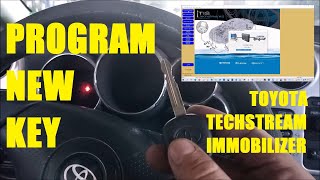
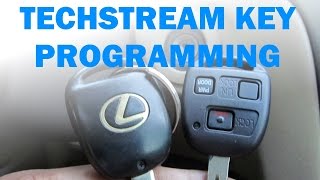
- Toyota Dealerships: Dealers have the tools and expertise to program a replacement ECM using Toyota's Techstream software. This is the most reliable, but often most expensive, option. Be sure to call ahead and confirm they are willing to install and program a customer-supplied used part.
- Independent Repair Shops: Many independent shops that specialize in Toyota/Lexus vehicles have Techstream or equivalent professional diagnostic tools and can perform the programming.
- Online "Plug-and-Play" Services: Some online retailers sell used or remanufactured ECMs that are pre-programmed to your car's VIN before they are shipped. They may also include a simple OBD-II tool and instructions to complete the key registration process yourself, which can save you a trip to the dealer.
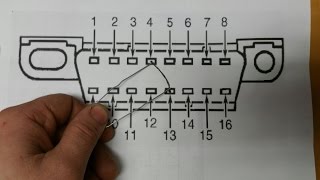
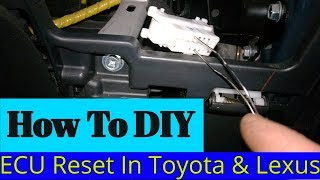
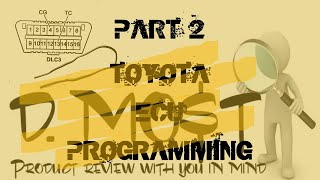
- DIY Method (Advanced): For some Toyota models of this era, a manual immobilizer reset procedure exists. It involves using a wire to short two specific pins (typically pin 4 and pin 13) of the OBD-II diagnostic port for about 30 minutes with the ignition on. This forces the ECM into a key-learning mode. This method should be performed with extreme caution and is only recommended for advanced DIY mechanics who have verified the procedure for their specific vehicle. 🎬 Watch: How to program a Toyota ECU using a paperclip
Replacement Cost Comparison
The cost to replace the ECM can vary dramatically depending on the part source and labor rates.
| Part Source | Estimated Cost | Notes |
|---|---|---|
| New OEM | $800 - $1,200 | Purchased from a Toyota dealership. Does not include programming. |
| Used OEM | $50 - $150 | Significant savings, but requires sourcing the exact part number and arranging for programming. |
| Remanufactured | $200 - $400 | Often includes pre-programming to your VIN, potentially offering a "plug-and-play" solution. |
| Shop Labor & Programming | $200 - $400 | Typically 1-2 hours of labor, including physical installation and the key registration/programming procedure. |
Frequently Asked Questions (FAQ)
Can I drive my Avalon with a failing ECM?
It is not recommended. If the ECM is failing, you risk the engine stalling in traffic, which is a serious safety hazard. If the car won't start, it is completely immobilized. Driving should be avoided until the issue is properly diagnosed and repaired.
Do I need to match the part number exactly?
Yes, this is absolutely critical, especially for 2011 models. Toyota used different ECMs in early-production and late-production 2011 Avalons. Using the wrong part number will result in a no-start condition or other system malfunctions. The superseded part numbers (e.g., 89661-07510 and 89661-07511) can be replaced by the latest version (89661-07512).
Will an ECM from a Camry or Sienna with the same engine work?
No. Even if the engine is the same (2GR-FE V6), the ECM is programmed with specific software for the Avalon's unique features, weight, and transmission tuning. You must use an ECM with a part number designated for a 2010-2011 Toyota Avalon.
My car runs rough after I replaced the battery. Is my ECM bad?
Not necessarily. It's common for the Avalon to have a rough or low idle immediately after the battery has been disconnected or replaced. This is because the ECM has lost its learned idle settings. In most cases, driving the car for 10-15 minutes will allow the ECM to relearn and the idle should return to normal.
Helpful Videos


Technical Specifications
OEM Part Numbers: 8966107510 8966107511 8966107512 8966107570 8966107571
The ECM for the 2010-2011 Toyota Avalon is specific to the vehicle and its 2GR-FE 3.5L V6 engine. It controls fuel, ignition, emissions, and transmission functions. Software calibration is specific to the model year and production date.
We Have This Part in Stock


The information in this article is provided for general reference and educational purposes only. Vehicle specifications, procedures, and part compatibility can vary by production date, trim level, and region. Always consult your vehicle's factory service manual and verify part numbers before purchasing or performing repairs. Safety-critical components such as airbags, seat belts, and braking systems should be installed by a qualified professional.
- Toyota Avalon:
- 🎬 Helpful Videos
- 🛍️ Shop This Part
- Symptoms of a Failing ECM in a 2010-2011 Avalon
- Known Issues, Recalls, and Technical Service Bulletins (TSBs)
- Safety Recall: Unintended Acceleration and Brake Override
- TSB for False EVAP Leak Code (P0456)
- Buying a Used 2010-2011 Avalon Engine Control Module
- 1. Verify Your Part Number (CRITICAL)
- 2. Inspect the Used Module
- Programming and Installation
- Does the ECM Need to be Programmed?
- Who Can Program the Replacement ECM?
- Replacement Cost Comparison
- Frequently Asked Questions (FAQ)
- 🎟️ Get 5% Off