

2006 Subaru Legacy & Outback ECM: Solving No-Start Issues After Replacement
This guide covers the critical immobilizer programming, symptoms, and replacement costs for the Engine Control Module in your 2006 Subaru Legacy or Outback.
- A replacement ECM for a 2006 Legacy or Outback is NOT plug-and-play and requires programming to the car's immobilizer system.
- The vehicle will crank but not start after installing a replacement ECM until it has been programmed by a dealer or a mail-in cloning service.
- You must match your original part number. The correct numbers are 22611AK42A, 22611AK42B, 22611AK42C, or 22611AK42D.
- This specific ECM fits 2.5L non-turbo models with an automatic transmission only for both the Legacy and Outback.
Symptoms of a Failing ECM in a 2006 Subaru Legacy or Outback

A faulty Engine Control Module can create a wide range of confusing and intermittent issues. Because the ECM controls so many parts of the engine, its failure can mimic other problems, making diagnosis tricky. If your 2006 Legacy or Outback is experiencing the following, the ECM could be the culprit.
- Check Engine Light: A constant or intermittent check engine light is one of the most common signs. Codes may point to specific sensors, but if replacing the sensors doesn't fix the issue, the ECM itself might be misinterpreting the data.
- Engine Performance Problems: You might notice reduced power, poor acceleration, hesitation, or stuttering. This can happen if the ECM isn't correctly managing the air-fuel mixture or ignition timing.
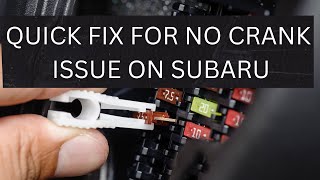
- No-Start or Cranks-But-No-Start: This is a critical symptom. The engine may turn over but never fire 🎬 See this quick fix for a Subaru no-crank issue up, or it may not crank at all. This can be caused by the ECM failing to activate the fuel pump or spark plugs.
- Rough Idle and Stalling: An unstable idle that jumps up and down, or an engine that stalls unexpectedly at stoplights, can point to an ECM that is failing to manage idle speed correctly.
- Poor Fuel Economy: If you notice a sudden and significant drop in your gas mileage, it could be because a faulty ECM is commanding the injectors to deliver too much fuel.
- Automatic Transmission Issues: In some cases, a bad ECM can send incorrect data to the Transmission Control Module (TCM), leading to harsh shifting or other transmission-related problems.
Known Issues, TSBs, and Recalls
While there are no major recalls specifically for the ECM on the 2006 Subaru Legacy and Outback, Subaru has issued Technical Service Bulletins (TSBs) that involve reprogramming the module.
- TSB #WVM-23: This service campaign involved reprogramming the ECM on certain models to improve the management of the catalytic converter and prevent it from degrading prematurely, which could otherwise trigger a check engine light.
This history of software updates shows that the ECM's programming is critical to the long-term health of other vehicle components.
Warning: A replacement ECM for a 2006 Subaru Legacy or Outback is NOT plug-and-play. It must be electronically synchronized to your vehicle's immobilizer system.
Programming and Immobilizer Requirements

This is the most important part of replacing the ECM in your 2006 Subaru. These vehicles have a sophisticated anti-theft system where the ECM, the Body Integrated Unit (BIU), and the instrument cluster are all electronically linked. If you install a used or new ECM without programming, the components will not recognize each other, and the immobilizer will prevent the engine from starting. The engine will crank, but it will not get fuel or spark.
You have two primary options to correctly install a replacement ECM:
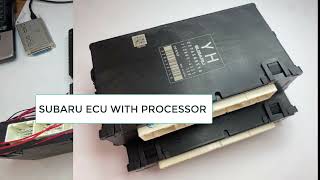
- Cloning Service (Recommended for DIY): This involves sending your original ECM and the replacement (used) ECM to a specialized service. They will read the immobilizer and VIN data from your original module and write it onto the replacement unit. This process, called "cloning," makes the replacement 🎬 Watch: How to read and write Subaru ECU data ECM a plug-and-play part, as it now contains all the security information from your original unit. This is often the most straightforward and cost-effective solution.
- Dealer or Specialist Programming: A Subaru dealership or a well-equipped independent shop with a J2534 pass-thru device and a subscription to Subaru's software can program the replacement ECM to the vehicle. They will perform an "immobilizer sync" to teach the car to accept the new module. Be aware that many dealers are unwilling or unable to program a used ECM, and may insist on you purchasing a brand new one from them.
An independent locksmith is generally not equipped to perform this specific immobilizer synchronization procedure, as it requires dealer-level tools and software.
Replacement Overview
The physical replacement of the ECM is relatively simple and can be done by a DIY mechanic with basic tools.
- Location: The ECM is located in the passenger-side footwell, underneath the carpet and a protective metal plate.
- Procedure:
- Disconnect the negative battery terminal.
- Pull back the carpet on the passenger side floor to expose the metal ECM cover.
- Remove the 10mm bolts or nuts holding the cover and the ECM bracket in place.
- Carefully unplug the wiring harness connectors from the ECM.
- Install the new (pre-cloned) ECM, reconnect the harnesses, and reinstall the bracket and cover.
- Reconnect the battery.
Pro Tip: When accessing the ECM, check the area for any signs of moisture. The ECM is located near the A/C drain, and a clog could potentially cause water to leak onto the module, leading to corrosion and failure.
Buying a Used Engine Control Module

Purchasing a used OEM ECM is a great way to save money, but you must be careful to get the right part and understand the process.
- Match the Part Number Exactly: Your 2006 Legacy or Outback 2.5L non-turbo with an automatic transmission uses part numbers 22611AK42A, 22611AK42B, 22611AK42C, or 22611AK42D. These are interchangeable, with the later letters representing newer revisions. Do not install an ECM with a different part number.
- Physical Inspection: When you receive the used part, inspect the case for any signs of damage or being pried open. Check the connector pins to ensure they are straight and free of corrosion.
- Plan for Programming: Do not install the used ECM until you have a plan for programming. Either arrange for a cloning service beforehand or confirm that your local dealer or specialist will program a used module for you.
- Why Used OEM is a Good Choice: For electronic modules like this, a used original equipment (OEM) part is often more reliable than a new, cheap aftermarket alternative. The OEM units were designed and tested specifically for your vehicle's systems.
Cost Comparison
| Part Type | Estimated Cost |
|---|---|
| New OEM | $680 - $1000 |
| Used OEM | $40 - $110 |
| Remanufactured / Cloned | $270 - $350 (includes programming service) |
| Shop Labor (Physical Swap) | $100 - $200 |
| Shop Labor (Programming) | $150 - $300 |
Frequently Asked Questions (FAQ)
Can I drive my car with a bad ECM?
It is not recommended. If the ECM is failing, it can cause the engine to stall at any time, which is a major safety hazard. If the ECM has failed completely, the car will not start at all.
Does the VIN or mileage need to match on the replacement ECM?
No, because the data will be transferred. If you use a cloning service, they will write your car's original VIN and security data to the replacement module. If a dealer programs it, their tool will sync the new module to your car's existing VIN and security system.
Will a used ECM from a 2006 Legacy work in my 2006 Outback?
Yes, as long as all other specifications match. The critical factors are the model year (2006), engine (2.5L non-turbo), transmission (automatic), and the part number (22611AK42x). The Legacy and Outback of this year share the same platform and electronics for this configuration.
What OBD-II codes point to a bad ECM?
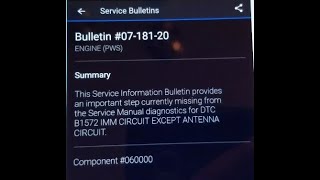
While many codes can be symptoms, codes that specifically mention an internal control module error are a strong sign. For Subaru, immobilizer-related codes like P1572 (Immobilizer Circuit Failure) or P1573 🎬 Watch: Troubleshooting Subaru immobilizer code B1572 can appear if the ECM is not communicating correctly with the security system. However, it's more common for a failing ECM to cause a cascade of other codes for sensors that are actually working fine.
Helpful Videos
Technical Specifications
OEM Part Numbers: 22611AK42A 22611AK42B 22611AK42C 22611AK42D
Fits 2006 Subaru Legacy and 2006 Subaru Outback with 2.5L non-turbo engine and automatic transmission. Compatible with Federal and Canada emissions systems.
We Have This Part in Stock



The information in this article is provided for general reference and educational purposes only. Vehicle specifications, procedures, and part compatibility can vary by production date, trim level, and region. Always consult your vehicle's factory service manual and verify part numbers before purchasing or performing repairs. Safety-critical components such as airbags, seat belts, and braking systems should be installed by a qualified professional.
- Subaru Legacy:
- Subaru Outback: