

1991-92 Eclipse, Talon & Laser ECM: Diagnosing and Solving Capacitor Failure
Your definitive guide to the infamous leaking capacitors in the engine computer for the 1991-1992 Mitsubishi Eclipse, 1991 Eagle Talon, and 1991 Plymouth Laser.
- The #1 cause of failure is leaking internal capacitors, which is an almost certain event on original, unrepaired units.
- This ECM is PLUG-AND-PLAY. It does NOT require any programming, flashing, or VIN matching to work in your car.
- Symptoms are often intermittent and can include random stalling, no-start, a fishy smell, and clicking from the dash.
- When buying a used or remanufactured unit, always demand to see clear photos of the internal circuit board to check for corrosion or bad repairs.
The Inevitable Failure: Leaking Capacitors
The single most common and well-documented problem with the original ECM in the 1991-1992 Eclipse, Talon, and Laser is the failure of its internal electrolytic capacitors. Due to age and countless heat cycles inside the dashboard, these components leak an acidic fluid called electrolyte. This fluid is highly corrosive and eats away at the copper traces and components on the ECM's printed circuit board, leading to short circuits and a wide range of bizarre, intermittent problems. If your vehicle still has its original ECM, it is not a matter of if it will fail from leaking capacitors, but when.
Symptoms of a Failing ECM
A failing ECM due to capacitor leakage can cause a frustrating variety of symptoms that may come and go. Because the ECM controls nearly every aspect of the engine, the signs of failure can be misleading and often mimic other problems.
Starting and Stalling Issues
- No-Start or Hard Starting: The engine cranks but refuses to start, or only starts after many attempts.
- Random Stalling: The engine shuts off unexpectedly while driving, sometimes with the Check Engine Light coming on right as it dies.
- Engine Won't Start, But Boost Gauge is at Zero: On turbo models, if the boost gauge doesn't move at all when you turn the key on, it's a strong sign the ECM is not powering up.
Unusual Sounds and Smells
- Rapid Clicking/Chattering: A fast clicking sound from under the dash is often the fuel pump relay being rapidly cycled on and off by a malfunctioning ECM.
- Fishy or Rotten Seafood Smell: This distinct and unpleasant odor coming from the center console area is the smell of the leaking electrolyte from the capacitors.
Poor Drivability
- Erratic or surging idle.
- Engine hesitation, misfires, or stuttering under acceleration.
- Sudden loss of power that may correct itself.
- Poor fuel economy.
How to Diagnose a Bad ECM
Diagnosing a bad ECM on these cars involves two main steps: a physical inspection and checking for trouble codes.
Step 1: Physical Inspection (The Most Important Step)
The most definitive way to confirm a bad ECM is to remove it and inspect the internal circuit board. The ECM is located in the center console, behind the radio and climate controls.
- Disconnect the negative battery terminal.
- Remove the carpeted kick panels on both the driver and passenger sides of the center console. They are typically held by a few screws.
- You will see the metal case of the ECM. It is held in by three or four 10mm bolts.
- Unplug the three large yellow wiring harness connectors from the ECM and remove it from the vehicle.
- Once removed, open the metal case by removing the screws on the top and bottom covers.
- Carefully inspect the circuit board, paying close attention to the area around the three large cylindrical capacitors. Look for a dark, crusty residue on the board, green or black corrosion on component legs, or any areas that look burnt or discolored. A fishy smell is also a dead giveaway.
Pro Tip: Even if a capacitor looks fine, it can still be bad. Any sign of leakage or corrosion on the board is confirmation that the ECM needs to be repaired or replaced.
Step 2: Reading OBD-I Trouble Codes
These vehicles use a pre-OBD-II diagnostic system. You can retrieve codes without a scanner using an analog voltmeter or a simple 12V LED.
- Locate the 12-pin diagnostic connector. It's usually attached to the fuse box under the driver's side dashboard, near your left foot.
- Connect the positive lead of your voltmeter or LED to pin #1 (top right) and the negative lead to pin #12 (bottom left, a ground).
- Turn the ignition key to the 'ON' position (do not start the engine).
- The voltmeter needle will sweep or the LED will flash to indicate codes. Long sweeps/flashes represent the 'tens' digit, and short sweeps/flashes represent the 'ones' digit. For example, four long flashes followed by three short flashes is Code 43.
Common codes related to capacitor failure include:
- Code 11: Engine Control Unit (ECU) Failure.
- Code 43: EGR (California models) - This code often appears falsely when the ECM is failing due to capacitor leakage.
- Code 44: Ignition Coil - Like Code 43, this can also be a phantom code caused by a faulty ECM.
Warning: A complete lack of a Check Engine Light when you first turn the key on, or an inability to get any codes, often points directly to a dead ECM that isn't powering up at all.
Buying a Used Engine Control Module (ECM)
Since new OEM units are no longer available, your options are a used OEM, a remanufactured unit, or a repair service. Here’s what you need to know when buying.
Compatibility is Crucial
This specific ECM, part number MD165530 (or Mitsubishi Electric part number E2T36574), fits a very narrow range of vehicles: 1991-1992 Mitsubishi Eclipse, 1991 Eagle Talon, and 1991 Plymouth Laser models equipped with the 2.0L Turbo engine, a Front-Wheel Drive (FWD) Automatic Transmission, and California Emissions. You must match the part number exactly. An ECM from an AWD, manual transmission, or federal emissions car will not work correctly.
NO Programming Required
This is the most important takeaway for buyers. ECMs for these 1991-1992 vehicles are plug-and-play. They do not need to be programmed, flashed, or matched to your vehicle's VIN. There is no immobilizer or anti-theft system to worry about. If a seller of a 'remanufactured' unit asks for your VIN, it is likely only to confirm they are sending you the correct part number for your application.
What to Inspect on a Used ECM
- Demand Internal Photos: Never buy a used or 'remanufactured' ECM for these cars without seeing clear, high-quality pictures of the internal circuit board. If a seller won't open the case, walk away.
- Look for Cleanliness: The board should be clean, with no dark, sticky residue or green/white corrosion, especially around the capacitors.
- Check the Capacitors: A properly 'remanufactured' unit will have three new capacitors. Check the solder work to ensure it is clean and professional.
- Avoid Damaged Boards: Look for burnt spots, lifted copper traces, or messy-looking previous repair attempts (sometimes called 'spaghetti wires'). A board with significant corrosion damage may not be reliable even after being repaired.
Cost Comparison
| Part Source | Estimated Cost | Notes |
|---|---|---|
| New OEM | Not Available | This part has been discontinued by Mitsubishi. |
| Remanufactured | $150 - $300 | Typically a used OEM unit with new capacitors installed and the board cleaned. Warranty is common. |
| Used OEM (Untouched) | $75 - $150 | High risk. Assumed to have original, failing capacitors. Should be professionally re-capped before installation. |
| Repair Service | $100 - $200 | You send your original ECM to be repaired. A good option if board damage is minimal. |
| Shop Labor (Replacement) | $75 - $150 | Typically 0.5 to 1.0 hour of labor to swap the unit. |
Frequently Asked Questions (FAQ)
Does the MD165530 ECM need to be programmed to my car?
No. All 1991-1992 Eclipse, Talon, and Laser ECMs are plug-and-play. They do not contain any vehicle-specific programming or anti-theft information and do not need to be matched to your VIN.
What is the main cause of failure for these ECMs?
The primary cause of failure is leaking electrolytic capacitors. Over time, they leak a corrosive fluid that damages the circuit board, causing shorts and erratic behavior.
Can I drive my car with a failing ECM?
It is not recommended. A failing ECM can cause the engine to stall at any time, including at high speeds or in traffic, which is a major safety risk. It can also leave you stranded with a no-start condition.
Can I just replace the capacitors myself?
If you are experienced with soldering on electronic circuit boards, you can replace the capacitors yourself. However, if the leaking electrolyte has already damaged the copper traces on the board, the repair can be much more complex and may require professional service.
Are there any recalls for this ECM?
No, there have been no official NHTSA recalls issued for the engine control module itself on these vehicles. The capacitor failure is considered an age-related wear-and-tear issue.
Technical Specifications
OEM Part Numbers: MD165530 E2T36574
Application: 2.0L Turbo Engine, Front-Wheel Drive (FWD), Automatic Transmission, California Emissions.
We Have This Part in Stock
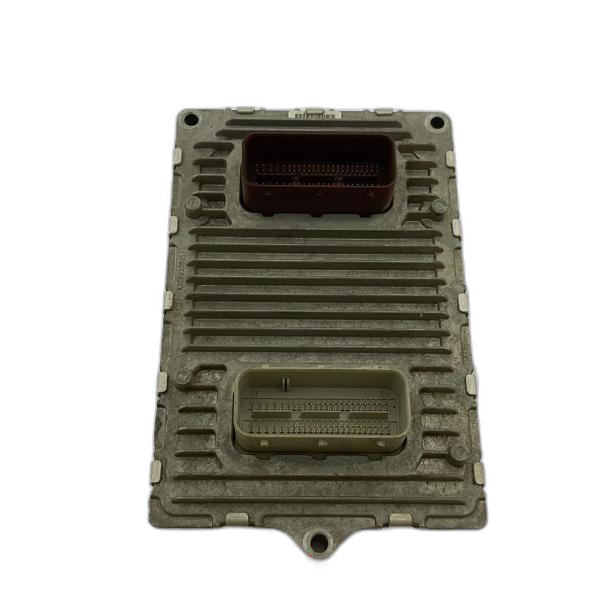

The information in this article is provided for general reference and educational purposes only. Vehicle specifications, procedures, and part compatibility can vary by production date, trim level, and region. Always consult your vehicle's factory service manual and verify part numbers before purchasing or performing repairs. Safety-critical components such as airbags, seat belts, and braking systems should be installed by a qualified professional.
- Mitsubishi Eclipse:
- Eagle Talon:
- Plymouth Laser:
- 🛍️ Shop This Part
- The Inevitable Failure: Leaking Capacitors
- Symptoms of a Failing ECM
- Starting and Stalling Issues
- Unusual Sounds and Smells
- Poor Drivability
- How to Diagnose a Bad ECM
- Step 1: Physical Inspection (The Most Important Step)
- Step 2: Reading OBD-I Trouble Codes
- Buying a Used Engine Control Module (ECM)
- Compatibility is Crucial
- NO Programming Required
- What to Inspect on a Used ECM
- Cost Comparison
- Frequently Asked Questions (FAQ)
- 🎟️ Get 5% Off