

2011-2012 Ford Flex & Lincoln MKT ECM: Guide to Failures, Part Numbers, and Programming
This in-depth guide covers the common failures, symptoms, and mandatory programming requirements for the 3.5L EcoBoost Engine Control Module in your 2011-2012 Ford Flex or Lincoln MKT.
- Programming is mandatory. This ECM is not plug-and-play and requires VIN programming and a PATS key relearn, or the engine will not start.
- This part is ONLY for the 3.5L EcoBoost (turbocharged) engine. It is not interchangeable with the standard 3.5L V6.
- A common cause of ECM failure is a shorted ignition coil. If you have codes P0351-P0356, you must replace all six coils and plugs when you replace the ECM.
- Always match the OEM part number from your original module's sticker to ensure compatibility.
Symptoms of a Failing ECM in a 2011-2012 Flex or MKT
A failing Engine Control Module can create a wide variety of symptoms that can be difficult to diagnose, as they often mimic other problems. Be aware of multiple, seemingly unrelated issues happening at once, which can point toward the ECM as the root cause.
- Check Engine Light: The most common symptom is an illuminated Malfunction Indicator Lamp (MIL) or check engine light. The light may stay on constantly, and the codes may return immediately after being cleared.
- Engine Stalling or No-Start: The engine may stall unexpectedly while driving or fail to start at all. This can be intermittent. A complete no-start can occur if the ECM fails to power the fuel pump or send signals to the ignition system.
- Severe Engine Misfires: Rough idling, hesitation, and misfiring during acceleration can be caused by the ECM failing to properly control the ignition coils or fuel injectors.
- Drastic Drop in Performance or Fuel Economy: You may notice a sudden loss of power, poor acceleration, or a significant decrease in MPG as the ECM loses its ability to efficiently manage the engine.
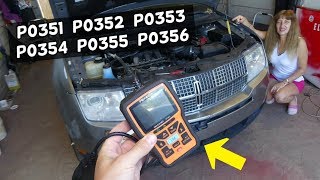
- Ignition Coil Driver Fault Codes (P0351-P0356): These codes are a strong indicator of a specific and common ECM failure in these vehicles. A shorted ignition coil can damage the internal circuit (driver) within the ECM that controls it.
- Communication Codes (U-codes): If a diagnostic scan tool cannot communicate with the ECM, or if you see codes like U0100 (Lost Communication With ECM/PCM), it points to a major problem with the module itself or its power/ground wiring.
- Internal ECM Malfunction Codes: Codes such as P1608 may specifically indicate an internal fault within the module.
Known Issues, Recalls, and Technical Service Bulletins (TSBs)
While there are no widespread recalls specifically for the Engine Control Module on the 2011-2012 Ford Flex and Lincoln MKT, there are critical related issues to be aware of.
Ignition Coil Failure Causing ECM Damage
The most significant known issue for these vehicles is internal ECM failure caused by a short-circuited ignition coil. The electrical feedback from a failing coil can permanently damage the corresponding driver circuit inside the ECM.
Warning: If you are replacing the ECM due to ignition coil circuit codes (P0351, P0352, P0353, P0354, P0355, or P0356), you MUST replace all six ignition coils and all six spark plugs at the same time. Failure to do so will likely cause the new or used replacement ECM to fail immediately in the exact same way.
Recall 15S18: Power Steering Control Module (PSCM)
Many owners find information about recall 15S18 and confuse it with an ECM issue. This recall is for the Power Steering Control Module (PSCM), not the Engine Control Module (ECM). The recall addresses a problem where the electric power steering assist can suddenly fail, making the vehicle difficult to steer. While this is a serious issue that should be addressed, it is unrelated to the engine's computer.
Buying a Used Engine Control Module
A used OEM module is an excellent, cost-effective alternative to an expensive new unit. An original Ford part is often more reliable than a new aftermarket module, which can have software or compatibility issues. Here’s what you need to know to buy the right part.
1. Match the Part Number EXACTLY
This is the most important rule. The part number is printed on a sticker on the outside of the ECM case. While some numbers supersede others, the safest approach is to find a used module with a number that is an exact match to your original. The initial part numbers may start with AA8A or BA8A, while later service parts may start with BA8Z.
2. Verify the Engine and Drivetrain
This ECM is only for models equipped with the 3.5L EcoBoost (Turbocharged) V6 engine. It will not work with the naturally aspirated 3.5L V6. Ensure the donor vehicle had the same engine.
3. Inspect the Module
Before purchasing, carefully inspect the used ECM. Look for:
- No Corrosion: Check the aluminum case and, more importantly, the electrical connector pins for any signs of white or green corrosion.
- Intact Connectors: Ensure the pins are straight and not bent or broken.
- No Physical Damage: Avoid any units with dents, cracks, or signs that the case has been pried open.
Programming and Installation Requirements
Warning: This is NOT a plug-and-play part. The ECM must be professionally programmed to your vehicle after installation. If you install a new or used ECM without programming, the vehicle's anti-theft system (PATS) will activate, and the engine will not start.
The programming process involves two main steps:
- VIN Programming (Flashing): A technician uses a diagnostic tool to load your car's unique 17-digit Vehicle Identification Number (VIN) into the replacement ECM. This ensures the module has the correct software and calibration files for your vehicle's specific options.
- PATS Key Relearn: The Passive Anti-Theft System (PATS) links the ECM to your ignition keys. After the ECM is installed, the keys must be electronically relearned to the new module. If this is not done, the ECM will not allow the engine to start, believing it is being stolen.
Who Can Program the ECM?
- Ford/Lincoln Dealerships: Any dealer can perform the programming.
- Qualified Independent Shops: Many independent mechanics who specialize in Ford vehicles have the necessary tools, such as the Ford IDS or FDRS software and a J2534 pass-thru device. You should call ahead to confirm they can program a replacement Ford ECM.
- Automotive Locksmiths: Some advanced automotive locksmiths have the tools to perform the PATS key relearn portion of the job.
- Mail-In Services: Some companies offer mail-in services where you send them your original and replacement ECMs. They can clone the data from your old module to the new one. The risk is that if your original ECM's software was corrupted, that corruption will be transferred to the replacement unit.
ECM Location and Replacement
On the 2011-2012 Ford Flex and Lincoln MKT, the ECM is located in the engine compartment, under the plastic cowl panel at the base of the passenger side of the windshield.
Physical replacement involves these general steps:
🎬 Watch: How to remove the Engine Control Module- Disconnect the battery.
- Remove the windshield wiper arms.
- Remove the plastic push pins holding the cowl panel in place and remove the panel.
- The ECM will be visible. Disconnect the large electrical connectors. These have locking levers that must be released.
- Unbolt the ECM from its mounting bracket and remove it.
- Installation is the reverse of removal.
Pro Tip: While replacing the module is straightforward, the vehicle will be immobilized until it is programmed. You will need to either have a mobile technician or locksmith come to you, or have the vehicle towed to a shop for programming after the new part is installed.
Cost Comparison for ECM Replacement
The total cost includes the part, installation labor, and separate programming fees. Prices are estimates and can vary by location and supplier.
| Part or Service | Estimated Cost |
|---|---|
| New OEM ECM | $800 - $1,300 |
| Remanufactured ECM | $250 - $500 |
| Used OEM ECM | $75 - $200 |
| Shop Labor (Installation) | $100 - $200 |
| Shop Labor (Programming) | $150 - $400 |
Frequently Asked Questions (FAQ)
Can I install the ECM myself and then drive to the dealer for programming?
No. Once you install the unprogrammed ECM, the vehicle's anti-theft system will engage, and the engine will not start. You will need to have the vehicle towed or have a mobile service program it on-site.
Does a used ECM need to be from the exact same year and model?
Not necessarily, but it's the safest way. The critical factor is an exact match of the OEM part number on the sticker and ensuring it came from a vehicle with the 3.5L EcoBoost engine. A 2011 Flex ECM could work in a 2012 MKT if the part numbers match.
My mechanic says the ECM is bad. What should I check first?
Before spending money on a replacement ECM, always check the basics. Ensure the battery is fully charged and the terminals are clean. Inspect the ECM's wiring connectors for corrosion or damage. A bad ground wire or poor connection can mimic the symptoms of a failed ECM. True internal ECM failure is less common than these simpler electrical issues.
Will replacing the ECM affect my vehicle's mileage (odometer)?
No. On the Ford Flex and Lincoln MKT, the primary odometer reading is stored in the instrument cluster, not the ECM. Replacing the ECM will not change the mileage displayed on your dashboard.
Helpful Videos


Technical Specifications
OEM Part Numbers: AA8Z-12A650-YB BA8A-12A650-LA BA8A-12A650-LB BA8A-12A650-LC BA8A-12A650-LD BA8A12A650LA BA8A12A650LB BA8A12A650LC BA8A12A650LD BA8Z-12A650-LA BA8Z-12A650-LB BA8Z-12A650-LC BA8Z-12A650-LD BA8Z12A650LD
Engine: 3.5L DOHC Twin-Turbocharged V6 (EcoBoost) only.
We Have This Part in Stock


The information in this article is provided for general reference and educational purposes only. Vehicle specifications, procedures, and part compatibility can vary by production date, trim level, and region. Always consult your vehicle's factory service manual and verify part numbers before purchasing or performing repairs. Safety-critical components such as airbags, seat belts, and braking systems should be installed by a qualified professional.
- Lincoln MKT:
- Ford Flex:
- 🎬 Helpful Videos
- 🛍️ Shop This Part
- Symptoms of a Failing ECM in a 2011-2012 Flex or MKT
- Known Issues, Recalls, and Technical Service Bulletins (TSBs)
- Ignition Coil Failure Causing ECM Damage
- Recall 15S18: Power Steering Control Module (PSCM)
- Buying a Used Engine Control Module
- 1. Match the Part Number EXACTLY
- 2. Verify the Engine and Drivetrain
- 3. Inspect the Module
- Programming and Installation Requirements
- Who Can Program the ECM?
- ECM Location and Replacement
- Cost Comparison for ECM Replacement
- Frequently Asked Questions (FAQ)
- 🎟️ Get 5% Off