

Lexus V8 Injector Driver Failure: LS460, LS600h, GS460 & IS F Misfire Guide
Diagnose and fix rough running, misfires, and injector circuit codes (P0201-P0208) on your Lexus V8 by understanding this critical, plug-and-play fuel system module.
- This is a plug-and-play Injector Driver Module, NOT the main ECM, and requires no programming.
- Failure causes specific injector circuit codes (P0201-P0208) and a rough, misfiring engine.
- You can diagnose a bad module by swapping the two identical units on the intake manifold and seeing if the fault code moves to the other cylinder bank.
- Buying a used OEM module is a highly effective and budget-friendly repair strategy.
Symptoms of a Failing Injector Driver Module


When an injector driver module begins to fail, the symptoms are often distinct and point directly to a fuel delivery problem on one or more cylinders. Because the main computer loses its ability to control specific injectors, the engine's performance suffers immediately.
- Check Engine Light: This is the most common symptom. The module will trigger specific Diagnostic Trouble Codes (DTCs) related to the injector circuits it controls.
- Rough Idle and Engine Vibration: With one or more cylinders not receiving fuel correctly, the engine will run unevenly, causing a noticeable shake or rough idle.
- Engine Misfires: You may feel the engine stumble or hesitate during acceleration. In severe cases, the check engine light may flash, indicating an active misfire that could damage the catalytic converter.
- VSC and Traction Control Lights: On these Lexus models, a significant engine fault will often trigger the Vehicle Stability Control (VSC) and traction control warning lights as a safety measure.
- Reduced Power and Fuel Economy: The engine will not be operating efficiently, leading to a clear loss of power and a drop in gas mileage.
Common OBD-II Trouble Codes
The most definitive sign of a faulty injector driver module is a set of specific trouble codes. These codes indicate an electrical fault in the circuit between the driver and the injector itself.
- P0201, P0202, P0203, P0204, P0205, P0206, P0207, P0208: These codes correspond to "Injector Circuit/Open" for cylinders 1 through 8 respectively. For example, P0201 points to a problem in the cylinder 1 injector circuit. 🎬 Watch: How to diagnose and fix a P0205 code
- P0300, P0301, P0302, etc.: While not a direct code for the driver, you will often see random (P0300) or cylinder-specific (P0301, P0302, etc.) misfire codes alongside the injector circuit codes.
Diagnosing the Injector Driver Module
Diagnosing this module is straightforward thanks to the engine's dual-module design. The V8 engines in these Lexus models use two identical, interchangeable injector driver modules, one for each bank of cylinders. This allows for a simple and effective diagnostic test.
Pro Tip: The easiest way to confirm a faulty injector driver is to swap the two modules. If you have an injector circuit code for a cylinder on Bank 1 (e.g., P0201, P0203, P0205, P0207), simply swap the driver module from Bank 1 with the one from Bank 2. Clear the codes and run the engine. If the fault code moves to a cylinder on Bank 2 (e.g., P0202, P0204, P0206, P0208), you have confirmed the module itself is the problem.
🎬 See this step-by-step P0301 and P0201 misfire diagnosticBefore replacing the module, it's also wise to inspect the wiring and connectors. In some cases, oil leaks or debris in the engine valley (under the intake manifold) can cause connectors to become brittle or short out, mimicking a module failure.
Programming and Installation Requirements
This module is a direct-fit, plug-and-play component. It does NOT require any programming, flashing, or calibration after installation. The vehicle's main ECM retains all the logic, and this driver module simply executes its commands. This makes a used module an excellent, cost-effective repair option, as no dealer visit is required for software setup.
Buying a Used Injector Driver Module
Purchasing a used OEM injector driver is a smart way to save a significant amount of money on this repair. Because they do not require programming, they can be swapped directly. Here's what to look for:
- Match the Part Number: Ensure the part number on the used module is an exact match for your original one. The most common part number is 89871-50010.
- Inspect the Connectors: The plastic connectors and pins are the most critical areas. Look for any signs of corrosion, cracking, or heat damage. A module with clean, intact pins is essential.
- Check for Physical Damage: Inspect the housing for any cracks or signs of being dropped. While durable, the internal electronics can be sensitive to impact.
- Source from a Reputable Seller: Buy from a seller who offers a warranty and has good reviews. This provides protection in case you receive a defective part.
Related TSBs and Recalls
While there are no widespread recalls specifically for the injector driver module, these vehicles have been subject to other related fuel system campaigns. It's important to distinguish these from a faulty driver module.
- Hesitation on Acceleration (TSB L-SB-0033-08): Some early LS460 and LS600h models exhibited a hesitation that was addressed by a recalibration of the main ECM, not the injector driver.
- Fuel Pump Recall (NHTSA 20V-012): A large recall was issued for failing fuel pumps that could cause the engine to stall. This is unrelated to the injector driver but can cause similar symptoms like rough running.
- Fuel Rail Corrosion (SSC 9LA): An early service campaign was launched to replace aluminum fuel rails that could corrode when using certain ethanol fuels, potentially causing a fuel leak.
Estimated Replacement Cost
The cost to replace an injector driver module is significantly lower when using a recycled OEM part. The primary labor involves removing the upper intake manifold to access the modules.
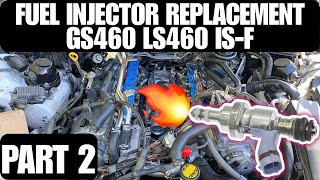
🎬 Watch: DIY intake manifold removal and injector replacement| Part/Service | Estimated Cost |
|---|---|
| New OEM Module | $500 - $1350 |
| Used OEM Module | $50 - $150 |
| Shop Labor | $250 - $450 |
| Total (with Used Part) | $300 - $600 |
Frequently Asked Questions (FAQ)
Is this the main computer (ECM/ECU) for my Lexus?
No. This is a separate module specifically for controlling the direct fuel injectors. It receives commands from the main Engine Control Module (ECM), but it is not the ECM itself.
Does a replacement injector driver need to be programmed?
No. This part is plug-and-play and does not require any special programming or dealer visit after installation.
Where are the injector driver modules located?
There are two injector driver modules located on top of the engine, mounted to the intake manifold, sitting in the valley between the cylinder heads.
Can I replace just one module?
Yes. You only need to replace the specific module that has failed. Since they are identical, you can swap their positions to confirm which one is bad before ordering a replacement.
Can a bad injector driver damage my engine?
While it won't cause immediate catastrophic damage, driving for an extended period with a misfire can overheat and destroy the catalytic converter, which is a very expensive repair. It's best to address the issue promptly.
Helpful Videos

Technical Specifications
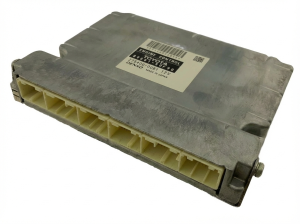
OEM Part Numbers: 89871-50010 8987150010
Controls high-pressure direct fuel injectors for one bank of cylinders. Two identical modules are used per vehicle.
We Have This Part in Stock





The information in this article is provided for general reference and educational purposes only. Vehicle specifications, procedures, and part compatibility can vary by production date, trim level, and region. Always consult your vehicle's factory service manual and verify part numbers before purchasing or performing repairs. Safety-critical components such as airbags, seat belts, and braking systems should be installed by a qualified professional.
- Lexus LS460:
- Lexus LS600h:
- Lexus GS460:
- Lexus IS F:
- 🎬 Helpful Videos
- 🛍️ Shop This Part
- Symptoms of a Failing Injector Driver Module
- Common OBD-II Trouble Codes
- Diagnosing the Injector Driver Module
- Programming and Installation Requirements
- Buying a Used Injector Driver Module
- Related TSBs and Recalls
- Estimated Replacement Cost
- Frequently Asked Questions (FAQ)
- 🎟️ Get 5% Off