

2016-2017 Jeep Cherokee & Chrysler 200 2.4L ECM: A Guide to Failure, Recalls, and Replacement
This guide covers the common failures, recalls, and critical programming requirements for the Engine Control Module (ECM) in the 2016-2017 Jeep Cherokee and Chrysler 200 with the 2.4L engine.
- A replacement ECM MUST be programmed to your vehicle's VIN to function; otherwise, the immobilizer will prevent the car from starting.
- A major safety recall (NHTSA 18V-332) exists for a software flaw that can prevent the cruise control from disengaging. The fix is a free dealer software update.
- For 2.4L models, the recall update requires flashing both the ECM and the Transmission Control Module (TCM) to avoid shifting problems.
- Symptoms of a bad ECM include stalling, no-start, poor performance, and multiple warning lights. However, always check fuses and relays first.
Important Safety Recall: Cruise Control Software Flaw

Before diagnosing a faulty ECM, be aware of a major safety recall affecting these vehicles. FCA issued recall U63 for the Jeep Cherokee and U59 for the Chrysler 200 (NHTSA Campaign ID: 18V-332) for a software defect. This flaw could prevent the cruise control from disengaging, potentially causing the vehicle to maintain speed or accelerate without driver input, increasing the risk of a crash.
The fix is a free software update performed by any Chrysler, Jeep, or Dodge dealer. Owners are advised to stop using cruise control until this update has been performed.
Important for 2.4L Engines: The recall procedure specifies that when the Powertrain Control Module (PCM) is reprogrammed, the Transmission Control Module (TCM) must also be updated. Failure to update both can result in poor transmission shift quality.
Symptoms of a Failing ECM

When the ECM itself begins to fail, it can cause a wide range of confusing and severe symptoms. Because the ECM controls so many systems, failure can manifest in many ways.
- Engine Will Not Start or Crank: The vehicle may be completely dead, or it may crank but refuse to start. This is one of the most common signs of a total ECM failure.
- Engine Stalling: The engine may stall intermittently while driving, sometimes without warning. This can be extremely dangerous, especially at high speeds.
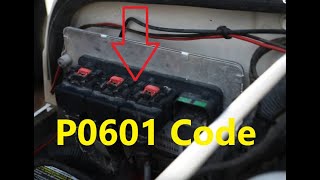
- Check Engine Light: A persistent Check Engine Light is a definite sign of a problem. Codes related to ECM internal failures (like P0601, P0606) 🎬 Watch: Understanding and fixing the P0601 internal memory error or loss of communication with other modules (U-codes) are strong indicators.
- Poor Engine Performance: You may notice a sudden drop in fuel economy, rough idling, hesitation during acceleration, or a general lack of power.
- Erratic Transmission Shifting: Since the ECM works with the TCM, a failing module can cause harsh shifts, getting stuck in gear, or other transmission-related problems.
- Multiple Unrelated Warning Lights: An ECM failure can cause a cascade of communication errors, leading to various warning lights (ABS, traction control, etc.) appearing on the dashboard simultaneously.
Buying a Used Engine Control Module (ECM)

Given the high cost of a new OEM module, a used ECM is a cost-effective option. However, you cannot simply swap one from another vehicle and expect it to work. Follow these steps to ensure a successful replacement.
1. Match the Part Number
The most critical step is to match the part number. The OEM part number is printed on a sticker on the module itself. While several part numbers may be compatible, they often fall under a specific 'hardware code'. For example, part number 68258531AA was superseded by 68258531AB, but both are often interchangeable. When searching, focus on the main hardware family numbers like 68258531 or 68342093. Always confirm with the seller that the used part is compatible with your vehicle's year, model, and 2.4L engine.
2. Physical Inspection
When you receive the used module, inspect it carefully. Look for any signs of physical damage, such as a cracked case or bent pins on the connectors. Check for any evidence of water intrusion or corrosion, which can destroy the delicate internal circuits.
3. The Golden Rule: Programming is Required
A used ECM will not start your car without being programmed to your vehicle's Vehicle Identification Number (VIN). This is not an optional step. These vehicles are equipped with a Sentry Key Immobilizer Module (SKIM) for theft prevention. If the VIN in the ECM does not match the VIN stored in the immobilizer and other vehicle modules, the system will assume the car is being stolen and will prevent the engine from starting.
Programming Options:
- Dealer Programming: Any FCA dealership can program a used ECM to your vehicle, but this is often the most expensive option.
- Mail-In Programming Services: Many online companies allow you to mail in your original ECM and the replacement used ECM. They will clone the necessary data or program the replacement with your car's VIN, making it plug-and-play when you get it back.
- Pre-Programmed Modules: Some retailers sell used or remanufactured ECMs that are pre-programmed to your VIN before they are shipped to you. You provide your VIN at the time of purchase. This is often the easiest solution for DIY replacement.
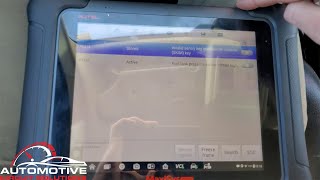
- Independent Repair Shops: Some well-equipped independent shops have advanced diagnostic tools (like high-end Autel or Snap-on scanners) that can perform the VIN-writing function. However, not all shops have this capability, so you must ask specifically. 🎬 See how to program a used PCM for any Chrysler vehicle
Replacement Location and Procedure

Physically replacing the ECM is straightforward. The labor difficulty is low, but the electronic programming requirement makes the overall job more complex.
- 2016-2017 Chrysler 200: The ECM is located in the engine bay on the passenger's side, near the battery and fuse box.
- 2016-2017 Jeep Cherokee: The ECM is also in the engine bay, typically mounted to the side.
The replacement process generally involves:
- Disconnecting the vehicle's battery.
- Unplugging the large electrical connectors from the ECM. These usually have a locking tab or lever that must be released first.
- Unscrewing the three or four bolts that hold the ECM to its mounting bracket.
- Installing the new module and reconnecting everything in reverse order.
Pro Tip: Before assuming your ECM is bad, check the simple things first. Inspect the ECM-related fuses and relays in the under-hood fuse box (also called the Power Distribution Center). A bad relay can mimic a dead ECM and is a much cheaper and easier fix.
Cost Comparison for ECM Replacement
| Part Type | Estimated Cost | Notes |
|---|---|---|
| New OEM | $400 - $800 + Core | Purchased from a dealership. Does not include programming cost. |
| Remanufactured / Pre-Programmed | $250 - $450 | Often sold online and programmed to your VIN before shipping. |
| Used OEM (Part Only) | $50 - $150 | Requires separate programming. Sourced from a salvage vehicle. |
| Shop Labor (Physical Swap) | $85 - $130 | This is for the physical installation only. |
| Programming Labor | $100 - $250 | Cost for a dealer or independent shop to program the module. |
Frequently Asked Questions (FAQ)
Can I drive my car with a failing ECM?
It is not recommended. If the ECM is causing the engine to stall, it is unsafe to drive. If it is causing poor performance or a check engine light, you risk damaging other components like the catalytic converter. It is best to have the vehicle towed for repair.
What's the difference between an ECM, PCM, and ECU?
The terms are often used interchangeably. ECM (Engine Control Module) and ECU (Engine Control Unit) typically refer to the computer managing the engine. PCM (Powertrain Control Module) is a more modern term for a module that controls both the engine and the transmission. For these vehicles, you will see the part listed as both ECM and PCM.
Will a used ECM show the wrong mileage on my odometer?
No. The vehicle's mileage is typically stored in the instrument cluster or Body Control Module (BCM), not the ECM. Swapping the ECM should not affect your odometer reading.
My mechanic says my TIPM is bad. Is that the same as the ECM?
No. The TIPM (Totally Integrated Power Module), also called the fuse box or Power Distribution Center, is a separate part. It distributes electrical power to the entire vehicle. While a faulty TIPM can cause symptoms like stalling or no-start that seem like an ECM issue, it is a different component.
Helpful Videos
Technical Specifications
OEM Part Numbers: 68258531AA 68258531AB 68342093AA P68258531AA P68258531AB 68250525AD 68292111AI 68309909AE
Fits 2016-2017 Jeep Cherokee and 2016-2017 Chrysler 200 models equipped with the 2.4L I4 MultiAir engine and an automatic transmission.
We Have This Part in Stock



The information in this article is provided for general reference and educational purposes only. Vehicle specifications, procedures, and part compatibility can vary by production date, trim level, and region. Always consult your vehicle's factory service manual and verify part numbers before purchasing or performing repairs. Safety-critical components such as airbags, seat belts, and braking systems should be installed by a qualified professional.
- Jeep Cherokee:
- Chrysler 200:
- 🎬 Helpful Videos
- 🛍️ Shop This Part
- Important Safety Recall: Cruise Control Software Flaw
- Symptoms of a Failing ECM
- Buying a Used Engine Control Module (ECM)
- 1. Match the Part Number
- 2. Physical Inspection
- 3. The Golden Rule: Programming is Required
- Replacement Location and Procedure
- Cost Comparison for ECM Replacement
- Frequently Asked Questions (FAQ)
- 🎟️ Get 5% Off