

2015-2017 Hyundai Sonata 2.4L ECM: Programming, Compatibility, and Engine Failure Warnings
This in-depth guide covers the critical programming requirements, compatibility warnings, and the ECM's role in monitoring for major engine failures in the 2015-2017 Hyundai Sonata.
- A replacement ECM must be programmed to your vehicle's VIN. The easiest solution is buying a 'plug-and-play' unit pre-programmed by the seller.
- A P1326 trouble code and limp mode is a specific warning from the ECM that the engine may be experiencing a critical bearing failure and needs immediate inspection.
- This ECM is only for 2.4L Sonatas with a conventional keyed ignition, not for push-button start models.
- A used OEM module that is properly programmed is a reliable and much more affordable alternative to a new part from the dealer.
Critical Compatibility Warnings

Warning: This guide and the part numbers listed apply ONLY to 2015-2017 Hyundai Sonata models equipped with the 2.4L engine and a traditional keyed ignition system. This module is NOT compatible with vehicles that have a keyless push-button start system. The wiring and immobilizer systems are different. Installing the wrong module will result in a no-start condition.
Symptoms of a Failing ECM

A failing ECM can cause a wide range of problems, from subtle issues to a car that won't start at all. Diagnosing a bad ECM can be tricky, as its symptoms often mimic other failed components like sensors or wiring.
- Check Engine Light: This is the most common symptom. Codes may point to a specific sensor, but if replacing the sensor doesn't fix the issue, the ECM could be the root cause. A code like P0601 indicates an internal memory error within the module itself.
- Engine Stalling or Misfiring: The engine may stall unexpectedly, run rough, or misfire because the ECM is not correctly managing fuel and spark.
- Car Will Not Start: The ECM controls the signals for fuel and spark. If it fails completely, the engine may crank but will not start.
- Poor Performance and Fuel Economy: You may notice a sudden drop in gas mileage or a feeling that the car is sluggish and lacks power.
- Erratic Shifting: The ECM sends data to the Transmission Control Module (TCM). Incorrect data can cause rough or delayed gear shifts.
Special Case: P1326 and Engine Protection Mode
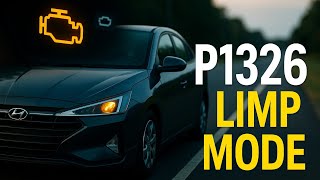
One of the most important trouble codes for this specific vehicle is P1326. Due to widespread issues with connecting rod bearing wear in the Theta II 2.4L engine, Hyundai released a software update for the ECM (Service Campaign 953) to monitor for vibrations that indicate this failure is beginning. If these vibrations are detected, the ECM will trigger the P1326 code, the check engine light will flash continuously, and the vehicle will be forced into 'Engine Protection Mode' (limp mode). In this mode, acceleration is slow and engine RPMs are limited to around 1800-2000 RPM to prevent catastrophic engine damage. If you have a P1326 code, it is a serious warning that your engine may be experiencing a significant internal failure and requires immediate inspection by a qualified technician.
🎬 Watch: Understanding the P1326 code and limp mode symptoms.Known Issues, Recalls, and Technical Service Bulletins (TSBs)

The ECM for this Sonata is directly involved in the vehicle's most significant known issue.
- Service Campaign 953 (TSBs 18-01-027, 20-01-006H): This product improvement campaign updated the ECM software to detect abnormal engine bearing noise associated with the Theta II engine failures. This update is what enables the ECM to trigger the P1326 code and enter limp mode.
- Recall 209: While not a recall on the ECM itself, this safety recall addresses the premature connecting rod bearing wear that can lead to engine seizure and fires. The ECM's role, via Campaign 953, is to provide an early warning for this exact problem.
- TSB 19-FL-003H: This bulletin details the official procedure for programming a new ECM/PCM with the vehicle's VIN using the dealer's diagnostic tool.
- Recall 210 (NHTSA 21V749000): This recall is for the Smart Junction Box (SJB), not the ECM. It addresses a software issue that could cause the turn signals to activate in the opposite direction intended.
ECM Programming and Replacement

This is the most important part of replacing this module. A replacement ECM, whether new or used, MUST be programmed to your vehicle's unique Vehicle Identification Number (VIN). If this step is skipped, the car will not run correctly and will display a Check Engine Light with a DTC P0630 (VIN Not Programmed or Mismatch). Once a VIN is written to a module, it cannot be overwritten or removed.
You have three main options for replacement:
- New ECM from a Hyundai Dealer: This is the most expensive option. The dealer will supply a new module and use their proprietary GDS-Mobile diagnostic tool to program it to your car.
- Used 'Plug-and-Play' ECM from an Online Retailer: Many online sellers offer used or remanufactured ECMs that are pre-programmed to your vehicle before they are shipped. You provide your VIN when ordering, and they clone your original module's data or flash the replacement unit, making it 'plug-and-play'. This is often the best balance of cost and convenience for DIY or independent shop installation.
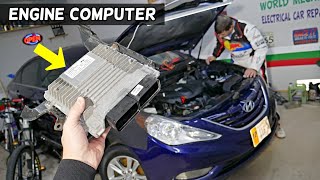
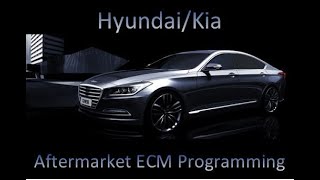
- Blank Used ECM + Independent Programming: It is possible to buy a used ECM from a salvage yard, but it will not work until it is programmed. Most Hyundai dealers will refuse to program a used part you provide. You would need to find a specialized independent shop that has a J-2534 pass-thru device and an active Hyundai technical subscription, or use a mail-in programming service. 🎬 Watch: How to program an aftermarket ECM for your Hyundai.
Buying a Used Engine Control Module (ECM)
A used OEM ECM is an excellent, cost-effective alternative to a new dealer part. Because these are electronic components without moving parts, a unit from a low-mileage vehicle is just as reliable as a new one, provided it is programmed correctly.
- Verify Compatibility: Double-check that the module is from a 2015-2017 Sonata with a 2.4L engine and a keyed ignition. Do not trust that it will work for a push-button start model.
- Part Numbers: The OEM part numbers for this module include 39101-2GGK0, 39111-2GGK0, 39111-2GGK1, 39111-2GGK2, 39111-2GGK3, and 39111-2GGK4. Later numbers in the sequence often represent factory updates. The key is ensuring the seller guarantees it is for your specific vehicle configuration.
- Choose a 'Plug-and-Play' Service: The easiest and safest way to buy a used ECM is from a seller who provides VIN programming before shipping. This eliminates the biggest hurdle of the replacement process.
- Physical Inspection: When you receive the part, inspect the case for any signs of physical damage or water intrusion. Check the connector pins to ensure they are straight and free of corrosion.
Cost Breakdown
Prices can vary based on your location and the supplier. Here are typical cost ranges:
| Part/Service | Estimated Cost |
|---|---|
| New OEM ECM (from dealer) | $1,100 - $1,300 |
| Remanufactured / Used OEM (Pre-Programmed) | $200 - $450 |
| Shop Labor (Physical Swap) | $100 - $150 |
| Shop Labor (Programming, if needed) | $150 - $250 |
Frequently Asked Questions (FAQ)
Does this ECM have to be programmed?
Yes, absolutely. The replacement module must be programmed with your car's VIN to communicate with the other systems in the vehicle, including the immobilizer. Failure to do so will result in a P0630 trouble code and the car will not operate correctly.
My car is in 'limp mode' with a flashing check engine light and a P1326 code. Is my ECM bad?
Not necessarily. The ECM is likely doing its job correctly. The P1326 code means the ECM's special monitoring software has detected vibrations consistent with engine bearing failure. You should have your engine inspected immediately by a professional; the ECM is warning you of a serious mechanical problem.
Can I just swap in a used ECM from another Sonata at a junkyard?
No. An ECM from another car is programmed to that car's VIN and immobilizer system. It will not start or run your vehicle. You must either buy a 'plug-and-play' unit that has been pre-programmed to your VIN or have the blank used unit programmed by a specialist.
Will a Hyundai dealer program a used ECM for me?
It is highly unlikely. Most dealerships will only program new parts that they supply. This policy is to avoid issues with potentially faulty used parts. If you buy a used ECM, you will likely need to use a specialized independent shop or a mail-in programming service.
What's the difference between an ECM, ECU, and PCM?
The terms are often used interchangeably. ECU stands for Engine Control Unit, ECM for Engine Control Module, and PCM for Powertrain Control Module. PCM is often the most accurate term as this single module typically controls both the engine and the automatic transmission. However, for this vehicle, all three terms refer to the same part.
Helpful Videos
Technical Specifications
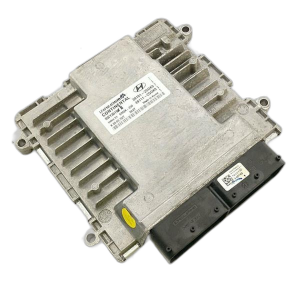
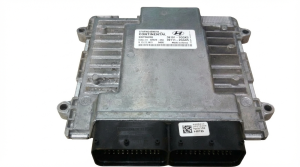
OEM Part Numbers: 39101-2GGK0 39111-2GGK0 39111-2GGK1 39111-2GGK2 39111-2GGK3 39111-2GGK4
For 2.4L GDI Engine with conventional keyed ignition. Not compatible with push-button start.
We Have This Part in Stock



The information in this article is provided for general reference and educational purposes only. Vehicle specifications, procedures, and part compatibility can vary by production date, trim level, and region. Always consult your vehicle's factory service manual and verify part numbers before purchasing or performing repairs. Safety-critical components such as airbags, seat belts, and braking systems should be installed by a qualified professional.
- Hyundai Sonata:
- 🎬 Helpful Videos
- 🛍️ Shop This Part
- Critical Compatibility Warnings
- Symptoms of a Failing ECM
- Special Case: P1326 and Engine Protection Mode
- Known Issues, Recalls, and Technical Service Bulletins (TSBs)
- ECM Programming and Replacement
- Buying a Used Engine Control Module (ECM)
- Cost Breakdown
- Frequently Asked Questions (FAQ)
- 🎟️ Get 5% Off