

2014-2016 Hyundai Elantra ECM: Programming, Part Numbers, and Limp Mode Issues
This guide covers the mandatory programming, critical part number matching, and known software updates for the 2014-2016 Hyundai Elantra Engine Control Module.
- A replacement ECM MUST be programmed to your car's VIN by a dealer or qualified shop to bypass the immobilizer.
- You must match the part number AND the vehicle's build location (Korea-built vs. US-built). These parts are not interchangeable.
- A known ECM software update for the knock sensor (Campaign 966) can cause the car to enter limp mode, which may be misdiagnosed as a failed ECM.
- Buying a used OEM module that is pre-programmed to your VIN is often the most cost-effective and reliable repair strategy.
Symptoms of a Failing ECM

A problem with the Engine Control Module can cause a wide range of issues, from a simple warning light to the vehicle not starting at all. Because the ECM controls so many systems, symptoms can sometimes be mistaken for other component failures. Always perform a thorough diagnosis before replacing the module.
- Check Engine Light: This is often the first and most obvious sign. A constant or flashing check engine light indicates the ECM has detected a fault in its system or with a sensor it monitors.
- Engine Will Not Start: The most common symptom of a complete ECM failure. The engine may crank over but will not start because the ECM is not commanding the fuel injectors and ignition coils to fire. 🎬 Watch: Troubleshooting a Hyundai Elantra that cranks but won't start. In some cases, it may be a no-crank, no-start condition.
- Stalling or Misfiring: The engine may stall intermittently, run rough, or misfire. This can happen if the ECM is providing incorrect fuel or spark commands.
- Poor Engine Performance: A noticeable loss of power, poor acceleration, and a sudden drop in fuel economy can all point to an ECM that is not managing the engine correctly.
- Erratic Transmission Shifting: The ECM communicates with the Transmission Control Module (TCM). Faulty data from the ECM can cause harsh or delayed shifting in automatic transmissions.
- Associated Trouble Codes: Codes related to internal module failure (P0600-P060A), lost communication with other modules (U0100), or multiple unrelated circuit codes can point to a bad ECM.
Warning: Before condemning the ECM, check the battery, alternator, and all power and ground connections. A weak battery or poor connection can cause symptoms that mimic ECM failure.
Buying a Used Engine Control Module (ECM)

Purchasing a used OEM ECM is a cost-effective solution, but it requires careful attention to detail to ensure you get the right part. Unlike a simple mechanical part, compatibility is about more than just physical fitment.
Part Number and Compatibility are CRITICAL
This is the most important step. An ECM from another Elantra will not work unless it is the exact correct part for your specific vehicle configuration. You must verify several key details:
- Part Number: The OEM part number on your original ECM must match the one you are buying. The known OEM part numbers for this specific configuration are 39101-2EMB4, 39101-2EMB5, and 39101-2EMB6. These numbers often supersede each other, but they all correspond to the same vehicle type.
- Build Location: The 2014-2016 Elantra was built in both Korea and the US (Alabama). This ECM fits Korea-built models only. You can find your vehicle's build location on the VIN sticker in the driver's door jamb. US-built models use different ECMs (often with part numbers like 39101-2EML#).
- Engine & Transmission: This guide and these part numbers are for models with the 1.8L engine and an automatic transmission.
- Emissions System: These part numbers are for vehicles with Federal emissions. Vehicles sold in California or other states that follow CARB standards may have a different SULEV-rated ECM.
- Immobilizer: These ECMs are for vehicles equipped with a factory anti-theft immobilizer system.
When inspecting a used ECM, check for any physical damage, especially corrosion on the pins or cracks in the casing. Water intrusion is a common cause of failure, so any signs of moisture or rust are a major red flag.
Programming and Immobilizer Requirements

Warning: A replacement ECM, whether new or used, will not start the car until it is programmed to your vehicle's VIN. This is not optional.
The ECM is linked to the car's immobilizer system. When you install a different ECM, it does not recognize your existing keys, and the anti-theft system will prevent the engine from starting. The replacement ECM must be electronically "introduced" to the car.
- Who can program it? A Hyundai dealership is the most reliable option. However, many independent repair shops and some automotive locksmiths have the necessary professional scan tools (like an Autel MaxiSYS or similar) to perform the programming.
- Can I do it myself? Not without a professional-grade diagnostic tool that costs thousands of dollars. This is not a simple DIY task like a battery reset.
- Plug-and-Play Option: Some online sellers offer a service where they pre-program a used ECM to your VIN before shipping it to you. This makes the installation "plug-and-play," with no additional programming needed. You must provide your exact VIN when ordering.
Known Issues, Recalls, and Technical Service Bulletins (TSBs)
While there are no direct recalls for the ECM itself on these models, there are important software updates and related campaigns you should be aware of.
- Service Campaign 966 (TSB 21-01-023H-4): 🎬 Watch: How the Knock Sensor Detection System triggers limp mode. This is a critical software update for the ECM. It enhances the knock sensor's ability to detect abnormal engine bearing noise, a known issue with some Hyundai engines. If the sensor detects a potential problem, it will put the vehicle into "Engine Protection Mode" (limp mode), limiting RPMs and speed. Some owners have reported their vehicle getting stuck in limp mode after this update, which can be misdiagnosed as a failed ECM.
- TSB 17-01-052: For 2011-2016 Elantras with the 1.8L engine and SULEV (Super Ultra Low Emission Vehicle) certification, Hyundai issued an ECM update to revise the fuel volume control logic.
- ABS Recall (NHTSA 23V-651000): While not an ECM issue, it's important to note that 2011-2015 Elantras were recalled because the ABS module could leak brake fluid internally, creating an electrical short and fire risk. Owners were advised to park outside until the repair was completed.
Cost Comparison
The cost to replace an ECM can vary dramatically based on the source of the part and labor rates.
| Part Source | Estimated Cost (Part Only) |
|---|---|
| New OEM (Dealer) | $1,200 - $1,750 |
| Remanufactured / Pre-Programmed | $200 - $450 |
| Used OEM (Salvage) | $50 - $150 |
Labor Costs:
- Physical Replacement: The physical swap is simple. The ECM is in the engine bay and held by a few bolts. A shop may charge 0.5-1.0 hours of labor, typically $70 - $150.
- Programming: If the module is not pre-programmed, expect to pay for 1-1.5 hours of labor for programming, typically $150 - $250.
Frequently Asked Questions (FAQ)
Can I just swap the ECM from another 2015 Elantra?
No. Even if the donor car is identical, the ECM is tied to the original car's VIN and immobilizer. It will not start your car until it is professionally reprogrammed to match your vehicle's VIN and keys.
Where is the ECM located on a 2014-2016 Elantra?
The ECM is located in the engine compartment. The replacement procedure involves disconnecting the battery, unplugging the electrical connectors from the module, and removing the mounting bolts that secure it to the chassis. 🎬 See this walkthrough on how to physically replace the ECU. In some cases, the battery may need to be removed to gain access.
My car is in limp mode. Is it a bad ECM?
Not necessarily. On these Elantras, a common cause for limp mode is the knock sensor software update (Service Campaign 966). If the highly sensitive system detects what it thinks is engine noise, it will trigger limp mode to protect the engine. This should be professionally diagnosed before replacing the ECM.
What's the difference between a Korea-built and US-built Elantra ECM?
They use different, incompatible hardware and software. You must use an ECM that matches your vehicle's country of origin, which is listed on the sticker in the driver's door jamb. The part numbers for Korea-built models (39101-2EMB#) are different from US-built models (39101-2EML#).
Helpful Videos


Technical Specifications
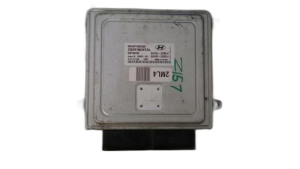
OEM Part Numbers: 391012EMB4 391012EMB5 391012EMB6
Fits 2014-2016 Hyundai Elantra Sedans with 1.8L engine, Automatic Transmission, Federal Emissions, Korea-built, and equipped with an immobilizer.
We Have This Part in Stock



The information in this article is provided for general reference and educational purposes only. Vehicle specifications, procedures, and part compatibility can vary by production date, trim level, and region. Always consult your vehicle's factory service manual and verify part numbers before purchasing or performing repairs. Safety-critical components such as airbags, seat belts, and braking systems should be installed by a qualified professional.
- Hyundai Elantra:
- 🎬 Helpful Videos
- 🛍️ Shop This Part
- Symptoms of a Failing ECM
- Buying a Used Engine Control Module (ECM)
- Part Number and Compatibility are CRITICAL
- Programming and Immobilizer Requirements
- Known Issues, Recalls, and Technical Service Bulletins (TSBs)
- Cost Comparison
- Frequently Asked Questions (FAQ)
- 🎟️ Get 5% Off