

2003-2004 Honda Pilot ECM: Solving No-Starts, VSA Lights, and Programming Headaches
This guide covers the critical details of diagnosing, replacing, and programming the Engine Control Module for your 2003-2004 Honda Pilot, including the all-important immobilizer and emissions matching.
- A replacement ECM MUST be programmed to the vehicle's immobilizer system to start the car. This requires a dealer, a capable locksmith, or a mail-in cloning service.
- You MUST match the emissions type. Check the under-hood sticker to see if your Pilot is Federal or California emissions and buy an ECM with a matching part number series.
- Common symptoms include a no-start condition, or the Check Engine Light and VSA light coming on together, often putting the car in a low-power 'limp mode'.
- Buying a used OEM ECM and using a mail-in cloning service is the most cost-effective repair method for a DIYer, avoiding expensive dealer programming.
Symptoms of a Failing 2003-2004 Honda Pilot ECM
A failing ECM can manifest in many ways, from a simple light on the dash to a vehicle that won't start at all. Because the ECM controls so many different systems, its failure symptoms can often be mistaken for other problems.
- Check Engine Light: This is the most common symptom. The ECM will illuminate the Check Engine Light if it detects a fault in its own circuits or in a sensor it monitors. Common ECM-specific codes include P0600 through P0606, which indicate internal communication or memory errors.
- Engine Will Not Start: A completely dead ECM or one that has lost its programming with the immobilizer system will prevent the engine from starting. You may notice the engine cranks but never fires up.
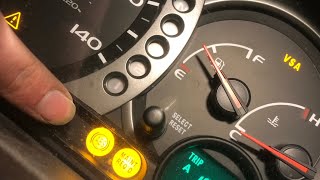
- VSA Light and Limp Mode: On many Hondas, an engine performance issue detected by the ECM will also trigger the Vehicle Stability Assist (VSA) light. The vehicle may enter a "limp mode," where acceleration is severely limited for safety. If your Check Engine Light and VSA light come on together, a faulty ECM is a possible cause. 🎬 Watch this guide to diagnosing Honda ABS and VSA lights.
- Stalling or Misfiring: The engine may stall unexpectedly while driving or run very poorly. This can be due to the ECM failing to send the correct signals for spark or fuel delivery.
- Poor Fuel Economy and Performance: You might notice a sudden drop in gas mileage or a general lack of power and sluggish acceleration.
- Erratic Shifting: The ECM shares data with the transmission control module. A faulty ECM can send bad data, leading to harsh or delayed gear shifts.
Diagnosing the Problem: Is It Really the ECM?
Before condemning the ECM, it's important to rule out other, more common issues. A weak battery, bad alternator, corroded ground wires, or faulty sensors can all mimic ECM failure. A professional diagnosis is recommended, but here are some key steps:
- Scan for Codes: Use an OBD-II scanner to read the trouble codes. Codes specifically in the P06xx range point towards a computer failure. However, a bad ECM can sometimes cause false codes for good sensors.
- Check Power and Grounds: Ensure the battery is fully charged and the terminals are clean. Inspect the main engine and chassis ground straps for corrosion or damage.
- The "Key On" Test: A quick check is to turn the key to the 'ON' (II) position without starting the engine. The Check Engine Light should illuminate. If it does not light up at all, this can indicate a problem with the ECM itself or its power supply.
Buying a Used ECM for Your 2003-2004 Pilot: The Definitive Guide
Buying a used OEM ECM is a cost-effective way to get your Pilot back on the road, but you must get the right part. A new OEM unit can cost over $1,400, while a used one is often less than $150.
Warning: The single most important factor when buying a used ECM is matching the emissions system. An ECM from a California Emissions vehicle will NOT work in a Federal Emissions vehicle, and vice-versa.
CRITICAL: Federal vs. California Emissions
You must determine which emissions system your Pilot has. This is not based on where you live, but how the vehicle was manufactured. To check, open the hood and look for the "Vehicle Emission Control Information" sticker. It is usually on the underside of the hood, the radiator support, or the air filter box.
- If the sticker says the vehicle conforms to "U.S. EPA Regulations," you have a Federal emissions vehicle.
- If the sticker says the vehicle conforms to "U.S. EPA and California Regulations," you have a California emissions vehicle.
Matching Part Numbers
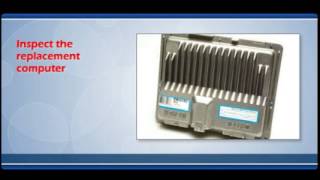
Once you know your emissions type, match the part number. The part number is printed clearly on the ECM's case. While there can be several compatible numbers due to updates, it's safest to match your original number.
| Emissions Type | Known Part Numbers | Superseded By |
|---|---|---|
| Federal / Canada | 37820-PVF-A51, 37820-PVF-A53, 37820-PVF-A54 | 37820-PVF-315, 37820-PVF-405 |
| California (CARB) | 37820-PVF-L51, 37820-PVF-L52, 37820-PVF-L53, 37820-PVF-L54 | 37820-PVF-316, 37820-PVF-406 |
Physical Inspection Checklist
When your used ECM arrives, inspect it carefully before installation:
- Check for Corrosion: Look at the connector pins. They should be clean and straight. Green or white crusty residue indicates corrosion, possibly from water damage.
- Look for Water Stains: Inspect the metal case for any signs of water lines or rust, particularly around the seams. Water leaking from a bad windshield seal or cowl can drip onto the ECM.
- Pry Marks or Damage: The case should be sealed and free of pry marks. If it looks like it has been opened, it may have been tampered with or improperly repaired.
The #1 Most Important Step: Programming and Immobilizer Syncing
You cannot simply swap the ECM and start the car. The ECM is part of the vehicle's anti-theft immobilizer system. The ECM, immobilizer control unit, and the transponder chip in your ignition key must all be synchronized. When you install a different ECM, this sync is broken, and the car will not start. You have three main options to resolve this:
- Honda Dealer: Any Honda dealership can program the replacement ECM to your vehicle and keys using their proprietary HDS software. This is the most straightforward but often most expensive option.
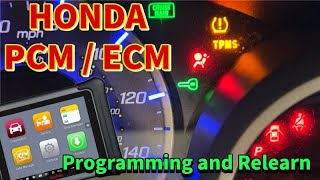
- Automotive Locksmith / Independent Shop: Many modern locksmiths and independent repair shops have advanced scan tools (like an Autel IM508 or similar) that can perform the "Replace ECM/PCM" function for Hondas. This is often cheaper than the dealer. Call ahead to confirm they have this capability 🎬 See how a used Honda ECM is programmed using Autel. for your specific vehicle.
- Mail-in Cloning Service: For DIYers, this is often the best choice. You mail your original ECM and the replacement (used) ECM to a specialized service. They extract the immobilizer data from your original module and "clone" it onto the replacement. When you get it back, it is truly plug-and-play, requiring no further programming.
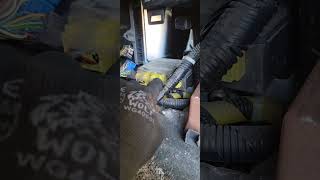
Pro Tip: The ECM is located behind the center console, mounted vertically to the firewall. It is accessed by removing plastic trim panels in both the driver and passenger footwells. It is held in by 10mm bolts.
🎬 Watch this quick walkthrough on locating and removing the ECM.Known Issues, Recalls, and TSBs
While there are no recalls specifically for the ECM on the 2003-2004 Pilot, there are related issues to be aware of:
- Ignition Switch Interlock Recall (NHTSA #12V573000): A major safety recall was issued for a faulty ignition switch that could allow the key to be removed when not in Park, creating a rollaway risk. While not an ECM issue, it involves the vehicle's core electrical system.
- EGR System TSB (Honda TSB #05-026): A bulletin was issued for issues with the EGR valve or ports causing engine hesitation or surging, which could be misdiagnosed as an ECM problem.
ECM Replacement Cost Breakdown
Costs can vary significantly based on the path you choose. A used part with DIY labor and a mail-in cloning service is by far the most economical option.
| Item | Estimated Cost |
|---|---|
| New OEM Part (Dealer) | $1,400 - $1,500 |
| Remanufactured Part | $300 - $500 |
| Used OEM Part | $50 - $150 |
| Shop Labor (Installation & Programming) | $200 - $400 |
| Mail-in Cloning Service | $100 - $250 |
Frequently Asked Questions (FAQ)
Can I drive my Pilot with a bad ECM?
It is not recommended. If the ECM is causing stalling or putting the vehicle into a low-power limp mode, it is unsafe to drive. If the only symptom is a Check Engine Light but the car drives normally, you might be able to drive it to a repair shop, but you risk causing further damage or stalling unexpectedly.
Do I need to match the VIN number on the ECM?
No, you do not need to find an ECM from a vehicle with a matching VIN. The critical factors are the part number and the emissions type (Federal vs. California). The VIN will be programmed into the replacement ECM during the immobilizer syncing process by the dealer or a locksmith.
Will a bad ECM cause transmission problems?
Yes, it's possible. The ECM communicates directly with the transmission control module (TCM). If the ECM sends incorrect data about engine speed or load, it can cause poor shifting performance, leading you to believe the transmission is failing when the root cause is the engine computer.
What's the difference between an ECM, ECU, and PCM?
For this Honda Pilot, the terms are largely interchangeable. ECM (Engine Control Module) and ECU (Engine Control Unit) mean the same thing. PCM (Powertrain Control Module) is a term for a module that controls both the engine and the automatic transmission. On this vehicle, the single box you are replacing is often called all three, but ECM is the most common term.
Helpful Videos
Technical Specifications
OEM Part Numbers: 37820-PVF-A51 37820-PVF-A53 37820-PVF-A54 37820-PVF-315 37820-PVF-405 37820-PVF-L51 37820-PVF-L52 37820-PVF-L53 37820-PVF-L54 37820-PVF-316 37820-PVF-406
Location: Center dash, mounted to firewall, accessible from driver and passenger footwells.
We Have This Part in Stock



The information in this article is provided for general reference and educational purposes only. Vehicle specifications, procedures, and part compatibility can vary by production date, trim level, and region. Always consult your vehicle's factory service manual and verify part numbers before purchasing or performing repairs. Safety-critical components such as airbags, seat belts, and braking systems should be installed by a qualified professional.
- Honda Pilot:
- 🎬 Helpful Videos
- 🛍️ Shop This Part
- Symptoms of a Failing 2003-2004 Honda Pilot ECM
- Diagnosing the Problem: Is It Really the ECM?
- Buying a Used ECM for Your 2003-2004 Pilot: The Definitive Guide
- CRITICAL: Federal vs. California Emissions
- Matching Part Numbers
- Physical Inspection Checklist
- The #1 Most Important Step: Programming and Immobilizer Syncing
- Known Issues, Recalls, and TSBs
- ECM Replacement Cost Breakdown
- Frequently Asked Questions (FAQ)
- 🎟️ Get 5% Off