

2012-2013 Honda Civic ECM: Why Programming is Mandatory for Replacement
A complete guide to replacing the Engine Control Module in your 2012-2013 Civic, covering the critical immobilizer programming, part number matching, and cost.
- A replacement ECM MUST be programmed to your vehicle's VIN and keys by a dealer or qualified shop; the car will not start without this step.
- You must match the part number AND the emissions type (Federal/Canada vs. California PZEV). Using the wrong one will cause issues.
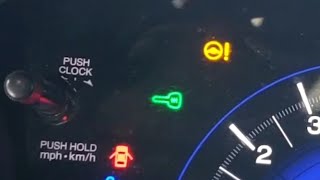
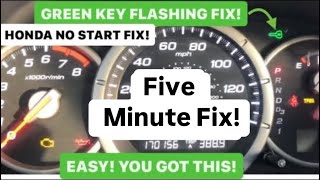
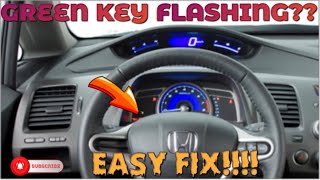
- A blinking green key light on the dashboard is the primary symptom of an immobilizer/ECM programming issue.
- Common failure symptoms include a no-start condition, random stalling, a check engine light with codes like P0601-P0605, and poor engine performance.
Symptoms of a Failing 2012-2013 Civic ECM

A faulty ECM can cause a variety of symptoms, as it controls nearly every aspect of the engine's operation. Often, these symptoms can be mistaken for other problems, like a bad sensor or fuel pump. If you've replaced other parts and the problem persists, the ECM might be the culprit.
- Check Engine Light: This is the most common symptom. The ECM will store trouble codes when it detects a problem with its own circuits or the systems it controls. Common codes for internal ECM failure include P0600 through P0605. You may also see codes for sensors that are actually working correctly, which can be a sign the ECM is misinterpreting the data.
- Engine Will Not Start: The car may crank but refuse to start. This happens because the ECM is not telling the fuel pump to engage or the spark plugs to fire.
- Blinking Green Key Light: If you see a green light shaped like a key flashing on your dashboard, it means the immobilizer system is active and does not recognize your key. This is a classic sign of an ECM that has been replaced but not programmed, or a failure in the communication between the key, immobilizer, and ECM.
- Engine Stalling or Misfiring: The engine may stall unexpectedly while driving or run very roughly. This can be due to the ECM failing to provide the correct fuel and spark commands at the right time.
- Poor Performance and Fuel Economy: You might notice a sudden drop in gas mileage or a feeling that the car is sluggish and lacks power. This can happen if the ECM is running a default 'limp mode' program or providing an incorrect air-fuel mixture.
- Transmission Shifting Problems: Since the PCM also controls the automatic transmission, a failure can lead to harsh, erratic, or delayed shifting.
The #1 Most Important Step: ECM Programming and Immobilizer Syncing

You cannot simply swap a used ECM into your 2012-2013 Civic and expect it to work. The vehicle has a sophisticated anti-theft system called an immobilizer. The ECM, the immobilizer control unit, and a small transponder chip inside your key are all electronically linked. For the engine to start, all three components must perform a successful digital 'handshake' to verify that a legitimate key is being used.
When you install a replacement ECM, its stored information will not match your car's keys or immobilizer module, and the car will not start. The replacement ECM must be professionally programmed to your vehicle's specific VIN and then synchronized with your existing keys.
Warning: This is not a DIY-friendly procedure. A replacement ECM, whether new or used, absolutely requires programming with specialized tools to function. There is no manual workaround for the immobilizer system.
Who Can Program the ECM?
- Honda Dealerships: This is the most reliable option. They have the official Honda Diagnostic System (HDS) software required to perform the programming correctly.
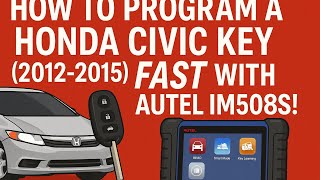
- Independent Repair Shops: Many professional shops have advanced diagnostic tools, like Autel or Launch scanners, 🎬 See how a technician uses an Autel tool to program keys. that are capable of programming Honda ECMs and keys. Always call ahead to confirm they have this specific capability.
- Automotive Locksmiths: Some mobile locksmiths specialize in automotive key and computer programming and can perform this service.
- Mail-In Services: Some companies allow you to mail in your original ECM and the replacement unit. They will clone the immobilizer data from your old module to the new one, making it a 'plug-and-play' installation when you get it back.
Known Issues, Recalls, and Technical Service Bulletins (TSBs)

While there have been no major safety recalls specifically for the ECM on these Civics, Honda has issued several software updates and a related emissions recall.
- Emissions Recall for PZEV Models (TSB 19-106): This is a critical update for 2012 Civic models with California (PZEV) emissions. An improper software calibration could cause the vehicle to exceed emissions standards. Dealers will update the PCM software free of charge. This bulletin supersedes a previous one (17-023).
- Engine Misfire Warranty Extension: Honda extended the powertrain warranty to 8 years/unlimited miles for certain vehicles experiencing misfires (DTCs P0301-P0304) due to piston ring issues. While not an ECM fault, the repair procedure sometimes involves a PCM software update.
- DTC P0101 or P2176 (TSB 13-038): For some 2013 Civics, the check engine light may come on with codes P0101 (MAF Sensor) or P2176 (Throttle Actuator). The fix is a PCM software update.
Pro Tip: Before replacing your ECM, it's always a good idea to have a Honda dealer check if your vehicle has any pending software updates. Sometimes, a simple reflash can solve performance or communication issues that mimic a failing ECM.
Buying a Used 2012-2013 Civic ECM: What to Look For

A used OEM ECM is an excellent, cost-effective alternative to a brand-new unit, provided you buy the correct part and have it programmed. Here’s what to check:
- Match the Part Number EXACTLY: The most critical step is to match the part number on the replacement ECM to your original one. The part number is printed on a sticker on the module's case and typically starts with '37820-R1A-...' or '37820-R1Y-...'. While some numbers are interchangeable, an exact match is the safest bet.
- Verify Emissions Compatibility (Federal vs. California): This is a major trap. 2012-2013 Civics were built with two different emissions systems: Federal/Canada and California PZEV (Partial Zero-Emission Vehicle). These systems use different ECMs that are NOT interchangeable. Installing a Federal ECM in a California-spec car (or vice-versa) will cause it to run poorly and fail emissions tests. Check the Vehicle Emission Control Information (VECI) sticker under the hood to confirm which system your car has.
- Physical Inspection: When you receive the used ECM, inspect it carefully. Look for any signs of water damage, heavy corrosion on the pins, or pry marks on the case that suggest it has been opened. A good used part should be clean and undamaged.
- Source from a Reputable Seller: Buy from a seller that offers a warranty and has good reviews. This gives you protection in case you receive a defective part.
Replacement Cost Comparison
The cost of replacing an ECM can vary significantly based on the part source and labor rates. Remember to factor in the mandatory programming cost.
| Item | Estimated Cost |
|---|---|
| New OEM ECM | $650 - $970 |
| Remanufactured / Pre-Programmed ECM | $350 - $500 |
| Used OEM ECM | $50 - $150 |
| Shop Labor (Physical Swap) | $100 - $200 |
| Shop Labor (Programming) | $150 - $300 |
| Total Estimated Job Cost (with Used Part) | $300 - $650 |
Frequently Asked Questions (FAQ)
Can I drive my Civic with a bad ECM?
It is not recommended. Depending on the failure, you could experience sudden stalling, which is dangerous in traffic. If the car is in 'limp mode,' performance will be severely limited. If the car won't start, you won't be able to drive it at all.
How do I know if my Civic is a Federal or California (PZEV) emissions model?
Look for the Vehicle Emission Control Information (VECI) sticker in the engine bay, usually on the underside of the hood. It will clearly state whether the vehicle conforms to U.S. EPA (Federal) or California (PZEV) regulations.
Where is the ECM located on a 2012-2013 Honda Civic?
The ECM is located in the passenger-side footwell, behind a plastic kick panel to the right of the glove box area.
Will replacing the ECM fix my check engine light?
Only if the ECM itself is the cause of the light. It's crucial to have the codes properly diagnosed first. The check engine light could be triggered by a simple faulty sensor, and replacing the expensive ECM would not fix the problem.
Helpful Videos
Technical Specifications
OEM Part Numbers: 37820-R1A-A54 37820-R1A-A55 37820-R1A-A56 37820-R1A-A57 37820-R1A-A58 37820-R1A-A59 37820-R1A-A64 37820-R1Y-L57 37820-R1Y-L74 37820-R1Z-A52
Module requires programming and synchronization with the vehicle's immobilizer system using Honda HDS or equivalent J2534-compliant diagnostic tool.
We Have This Part in Stock



The information in this article is provided for general reference and educational purposes only. Vehicle specifications, procedures, and part compatibility can vary by production date, trim level, and region. Always consult your vehicle's factory service manual and verify part numbers before purchasing or performing repairs. Safety-critical components such as airbags, seat belts, and braking systems should be installed by a qualified professional.
- Honda Civic:
- 🎬 Helpful Videos
- 🛍️ Shop This Part
- Symptoms of a Failing 2012-2013 Civic ECM
- The #1 Most Important Step: ECM Programming and Immobilizer Syncing
- Who Can Program the ECM?
- Known Issues, Recalls, and Technical Service Bulletins (TSBs)
- Buying a Used 2012-2013 Civic ECM: What to Look For
- Replacement Cost Comparison
- Frequently Asked Questions (FAQ)
- 🎟️ Get 5% Off