

2002-2003 Ford Ranger & Mazda B3000 ECM: Solving Crank-No-Start and PATS Anti-Theft Issues
This guide explains why replacing the Engine Control Module in your 2002-2003 Ranger or B3000 requires mandatory anti-theft programming to avoid a no-start condition.
- A replacement ECM MUST be programmed to the truck's PATS anti-theft system, or the engine will not start.
- The part number on the replacement module must match the original part number exactly to ensure compatibility.
- The most common symptom of an unprogrammed ECM is the engine cranking but not starting, accompanied by a rapidly flashing theft light.
- An automotive locksmith is often a more affordable and convenient option than a dealership for PATS programming.
Symptoms of a Failing ECM

An ECM failure can be difficult to diagnose because its symptoms often mimic other problems. However, if you experience several of the following issues, the ECM may be the culprit.
- Crank-No-Start Condition: The engine turns over but will not fire up. If this happens immediately after installing a replacement ECM, it is almost certainly an anti-theft system issue.
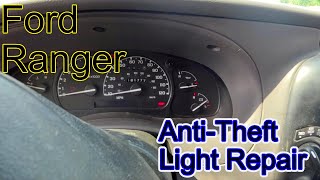
- Flashing Theft Light: A rapidly flashing anti-theft light on the dashboard while trying to start the engine is the classic sign that the PATS system is not recognizing the key or ECM. 🎬 Watch: Troubleshooting a flashing anti-theft light and code 14
- Engine Stalling or Misfiring: The engine may stall intermittently, run rough, or misfire on one or more cylinders. A flashing Check Engine Light while driving indicates a severe misfire that can damage other components.
- Multiple Unrelated DTCs: The ECM may store numerous, seemingly unrelated Diagnostic Trouble Codes (DTCs). For example, you might see codes for sensors you've already replaced.
- Communication Errors: A diagnostic scan tool may be unable to communicate with the ECM, or you may see communication-related codes (U-codes).
- Poor Fuel Economy and Performance: If the ECM's internal logic fails, it can result in incorrect fuel and timing calculations, leading to a noticeable drop in power and efficiency.
Diagnosing the ECM

Before condemning the ECM, it's crucial to rule out other possibilities. A true ECM failure is less common than a wiring or sensor issue that feeds it bad information.
- Check Power and Grounds: Verify that the ECM is receiving proper voltage and has a solid ground connection. The ECM is powered by a dedicated fuse and relay in the engine compartment power distribution box. Corrosion on the main harness connector or a bad ground strap can cause ECM-like symptoms.
- Inspect the Wiring Harness: Look for any signs of damage, chafing, or corrosion on the wiring harness leading to the ECM. Pay close attention to the large connector at the ECM itself.
- Rule Out Other Components: A misfire could be a bad coil pack, plug, or wire. A stalling issue could be related to the fuel pump or idle air control valve. A Ford Technical Service Bulletin (TSB) for the 3.0L engine notes that a faulty Camshaft Synchronizer Assembly can cause a misfire that might be wrongly blamed on the ECM. 🎬 See how to replace a faulty camshaft synchronizer assembly
- Check for Water Intrusion: The ECM is located on the firewall in the engine bay, making it susceptible to water damage from a leaking windshield cowl or pressure washing. Unplug the connector and check for any green or white corrosion on the pins.
Pro Tip: If you suspect an ECM issue, try disconnecting the battery for 30 minutes. This forces a hard reset of the module. If the truck's behavior temporarily improves, it points towards a potential software or internal logic fault in the ECM.
Known Issues, Recalls, and TSBs

While there are no direct recalls for the ECM on these specific models, owners should be aware of the following:
- NHTSA Recall 09V399000 (Ford 09S09): This major recall affects 1995-1997 and 2001-2003 Rangers for a faulty Speed Control Deactivation Switch that can leak brake fluid and cause a fire, even when the vehicle is off. This is a critical safety issue that all owners should verify has been addressed.
- Mazda B3000 Readiness Monitors: Some 2002-2003 Mazda B3000 flex-fuel models may have an issue where emissions readiness monitors will not set, which can cause a failure during a smog check. This is due to the ECM's software calibration.
Buying a Used Engine Control Module: What You Must Know

Buying a used ECM is a great way to save money, but it requires careful attention to detail to avoid creating a new problem.
1. Match the Part Number EXACTLY
The single most important rule is that the part number on your replacement ECM must be an exact match to your original. These trucks were built with many different ECMs for various engine sizes (2.3L, 3.0L, 4.0L), transmissions (manual vs. automatic), and emissions configurations. Even a one-digit difference can make the module incompatible. Do not rely on visual similarity; check the sticker on the module itself.
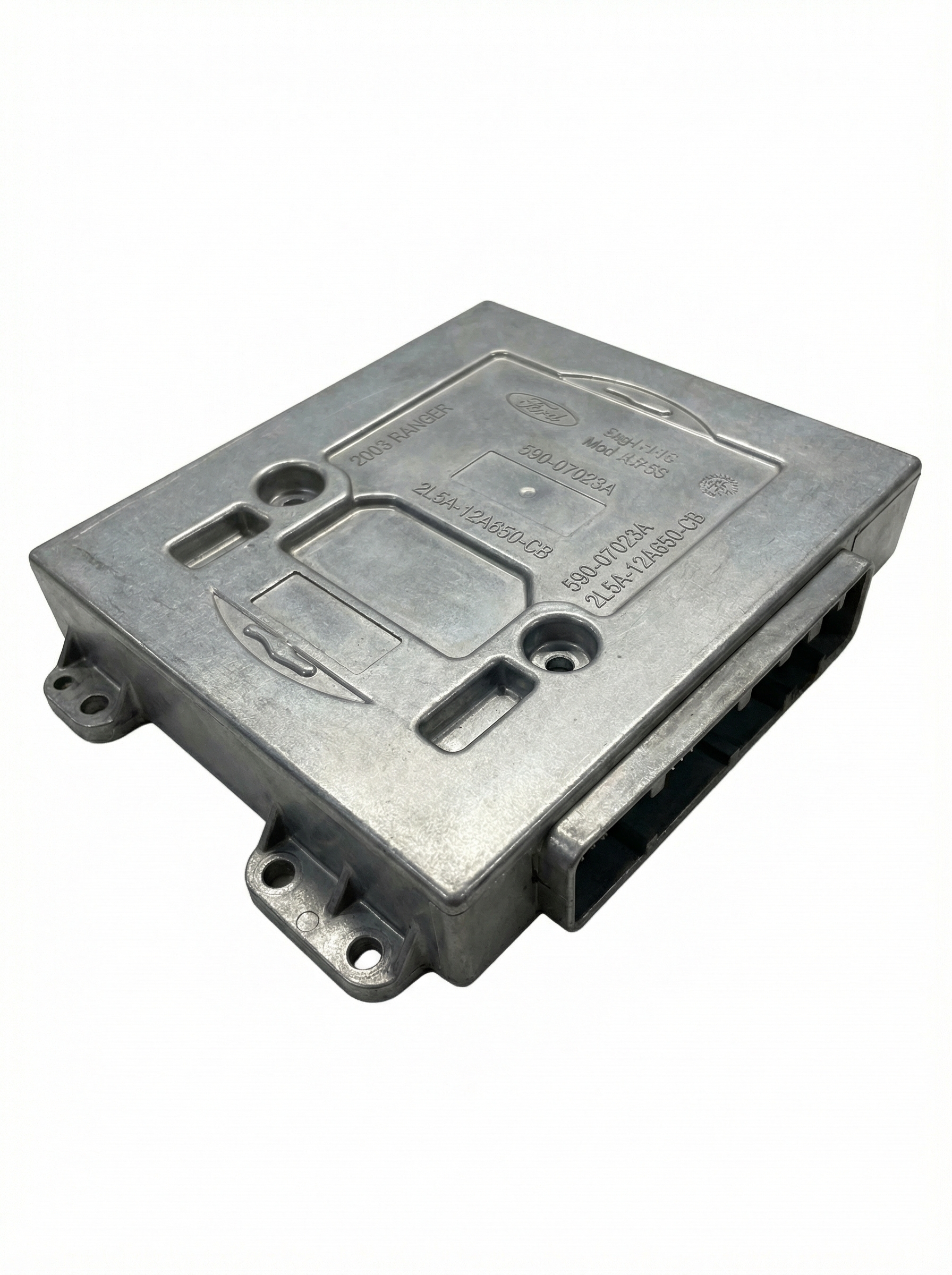
Known compatible OEM part numbers for this application include: 2L5A-CB, 2L5A-12A650-CB, and 2L5Z-12A650-CB.
2. Physical Inspection
When you receive your used ECM, inspect it carefully before installation:
- Connector Pins: Look for any signs of corrosion, which appears as a white or green powder. Bent or broken pins are an immediate red flag.
- Case Condition: Check for any signs that the case has been pried open, which could indicate a failed repair attempt. Look for dents or heavy corrosion on the aluminum housing.
3. Understand the Anti-Theft System (PATS)
This is the biggest hurdle. A used ECM is programmed to the donor vehicle's keys, not yours. When you install it, the PATS system will activate, and your truck will crank but not start. This is not a defect; it is the anti-theft system working as designed. You MUST have the module reprogrammed.
Programming and Installation
Warning: Installation of this module requires a programming or 'key relearn' procedure to sync it with your vehicle's anti-theft system. The vehicle will not start until this procedure is completed.
ECM Location and Replacement
The physical swap is straightforward for a DIY mechanic.
- Disconnect the battery. This is a critical safety step.
- Locate the ECM. It is mounted to the firewall in the engine compartment, typically near the center or on the passenger side.
- Disconnect the harness. A single 10mm bolt in the center of the large connector secures it to the ECM. Loosen this bolt completely (it will not come all the way out) and carefully pull the connector straight off.
- Remove the ECM. Remove the mounting bolts holding the ECM to the firewall and swap it with the replacement unit.
- Reconnect everything in the reverse order of removal.
Programming Options
After the physical installation, you must perform a PATS relearn. You have several options:
- Automotive Locksmith: This is often the best balance of cost and convenience. Many mobile locksmiths have the specialized scan tools needed to perform a PATS 'parameter reset' or key relearn on-site.
- Ford Dealership: The dealer can perform the programming using their proprietary IDS software. This is the most reliable but usually the most expensive option.
- Independent Repair Shop: Some independent shops that specialize in Fords may have the necessary high-end scan tools (like Autel or Snap-on) with PATS programming capabilities.
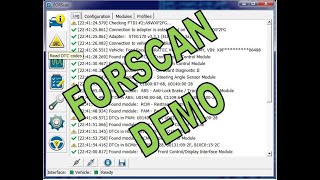
- Advanced DIY with FORScan: For technically savvy DIYers, it is possible to perform the PATS relearn using a laptop, a compatible OBD-II adapter, and FORScan software with an extended license. This process is complex and not recommended for beginners. 🎬 Watch: A demonstration of using FORScan on a Ranger
Pro Tip: You will need at least two working, programmed keys to perform the relearn procedure with most tools. If you only have one key, a trip to a locksmith or dealer is almost always required.
Cost Comparison
| Part Type | Estimated Cost |
|---|---|
| New OEM | $400 - $600+ (if available) |
| Remanufactured | $250 - $350 + Core Charge |
| Used OEM | $50 - $150 |
| Shop Labor (Programming) | $150 - $300 |
Frequently Asked Questions (FAQ)
Do I absolutely have to program a replacement ECM for my 2002 Ranger or B3000?
Yes. Due to the Ford PATS anti-theft system, the vehicle will not start until the replacement ECM is programmed to your existing keys. The engine will crank, but the ECM will not allow it to fire.
My truck cranks but won't start and the 'theft' light is flashing fast after I swapped the ECM. What's wrong?
This is the exact symptom of a PATS system mismatch. The new ECM does not recognize your keys. You must have a PATS key relearn procedure performed by a dealer, locksmith, or qualified shop.
Can I use an ECM from a Ranger with a 4.0L engine in my 3.0L truck?
No. The part number on the ECM must match your original module exactly. Different engines, transmissions, and even emissions standards use different ECMs with unique software and hardware.
Where is the ECM located on a 2002-2003 Ford Ranger?
The ECM is located in the engine bay, bolted to the center or passenger side of the firewall. It is an aluminum box with a large wiring harness connector held on by a single 10mm bolt.
Helpful Videos

Technical Specifications
OEM Part Numbers: 2L5A-CB 2L5A12A650CB 2L5Z12A650CB
Location: Engine bay, mounted to firewall. Connector: Single large harness connector secured by one 10mm bolt.
We Have This Part in Stock



The information in this article is provided for general reference and educational purposes only. Vehicle specifications, procedures, and part compatibility can vary by production date, trim level, and region. Always consult your vehicle's factory service manual and verify part numbers before purchasing or performing repairs. Safety-critical components such as airbags, seat belts, and braking systems should be installed by a qualified professional.
- Ford Ranger:
- Mazda B3000:
- 🎬 Helpful Videos
- 🛍️ Shop This Part
- Symptoms of a Failing ECM
- Diagnosing the ECM
- Known Issues, Recalls, and TSBs
- Buying a Used Engine Control Module: What You Must Know
- 1. Match the Part Number EXACTLY
- 2. Physical Inspection
- 3. Understand the Anti-Theft System (PATS)
- Programming and Installation
- ECM Location and Replacement
- Programming Options
- Cost Comparison
- Frequently Asked Questions (FAQ)
- 🎟️ Get 5% Off