

2007-2008 Ford Mustang 4.0L ECM: A Guide to Failures, Part Numbers, and Programming
This guide covers the essential information you need to diagnose, replace, and program the Engine Control Module (ECM) in your 2007-2008 Ford Mustang with a 4.0L V6 engine and automatic transmission.
- The replacement ECM must have the exact same part ID: 7R3A-AAB.
- The vehicle will NOT start until the PATS anti-theft system is reprogrammed by a dealer, automotive locksmith, or qualified shop with professional tools.
- You must have at least two working keys to perform the PATS relearn procedure.
- Before replacing the ECM, inspect for water leaks in the passenger footwell, a known issue that can cause similar electrical problems.
Symptoms of a Failing 2007-2008 Mustang ECM

A failing ECM can cause a wide range of issues, from a simple check engine light to a car that won't start at all. Because the ECM controls so many different systems, symptoms can often be mistaken for other problems. Here are some of the most common signs that your Mustang's ECM may be failing:
🎬 Watch: A breakdown of symptoms you should not ignore.- Check Engine Light: This is often the first sign of a problem. The ECM will store a Diagnostic Trouble Code (DTC) that can be read with an OBD-II scanner.
- Engine Performance Issues: You might experience problems like engine misfires, stalling, rough idling, poor acceleration, or a sudden decrease in fuel economy.
- Car Not Starting: A completely failed ECM can prevent the engine from starting. The engine may crank but won't turn over because the ECM isn't controlling the spark or fuel injectors.
- Communication Errors: In some cases, a diagnostic scan tool may not be able to communicate with the ECM, indicating a major internal failure.
- Erratic Automatic Transmission Shifting: Since the ECM works with the transmission control module, a faulty ECM can lead to hard or unpredictable shifting.
Common Diagnostic Trouble Codes (DTCs)
While many codes can indicate an ECM problem, some are more directly related to the module's internal circuits and memory. These include:
- P0603: Internal Control Module Keep Alive Memory (KAM) Error.
- P061C: Internal Control Module Engine RPM Performance.
- Communication codes (U-codes) indicating a loss of communication with other modules.
- Multiple, unrelated sensor circuit codes (e.g., for oxygen sensors or the EVAP system) that appear simultaneously can sometimes point to a faulty ECM driver circuit.
Known Issues, TSBs, and Recalls

While there are no specific recalls for the ECM itself on these models, it's important to be aware of related issues. The S197 Mustang platform (2005-2014) is known for water leaks into the cabin, particularly in the front passenger footwell area. These leaks, often caused by loose grommets or bad sealer in the cowl area, can damage the Smart Junction Box (SJB) and related wiring, which can sometimes mimic ECM failure.
🎬 See common S197 water leak and electrical issues explained.- NHTSA Recall #08V082000: This recall was for reprogramming the Restraint Control Module (RCM), not the ECM, to address an occupant crash protection standard. It is unrelated to engine performance.
- TSB 08-26-7: Ford issued this Technical Service Bulletin to address water leaks in the front floor area, which could lead to various electrical problems.
Pro Tip: Before condemning the ECM, always check for signs of water intrusion in the passenger-side footwell and inspect the condition of the Smart Junction Box and its connectors.
Programming and Anti-Theft Requirements

This is the most critical aspect of replacing the ECM in a 2007-2008 Mustang. You cannot simply swap the module and expect the car to work.
These vehicles are equipped with Ford's Passive Anti-Theft System (PATS). The PATS data, which recognizes your specific coded ignition keys, is stored in the ECM. When you install a replacement ECM, it will not recognize your existing keys, and the vehicle will not start.
To make the vehicle run, a "parameter reset" and key relearn procedure must be performed. This process syncs your vehicle's keys to the replacement ECM. 🎬 Watch: How the Ford PATS key relearn procedure works. This procedure requires specialized equipment:
- A professional bidirectional scan tool (like those from Snap-on or Autel) with Ford-specific PATS programming capabilities.
- Ford's Integrated Diagnostic System (IDS) software, which is used by dealerships.
You will need at least two working, programmable keys to complete the procedure. This service can be performed by a Ford dealership, a qualified independent mechanic with the right tools, or an automotive locksmith. Most DIY mechanics will not have the necessary equipment to perform this task.
Buying a Used Engine Control Module (ECM)

A used OEM ECM is often a reliable and cost-effective solution. Here’s what to look for when buying a replacement:
1. Verify Your Part Number
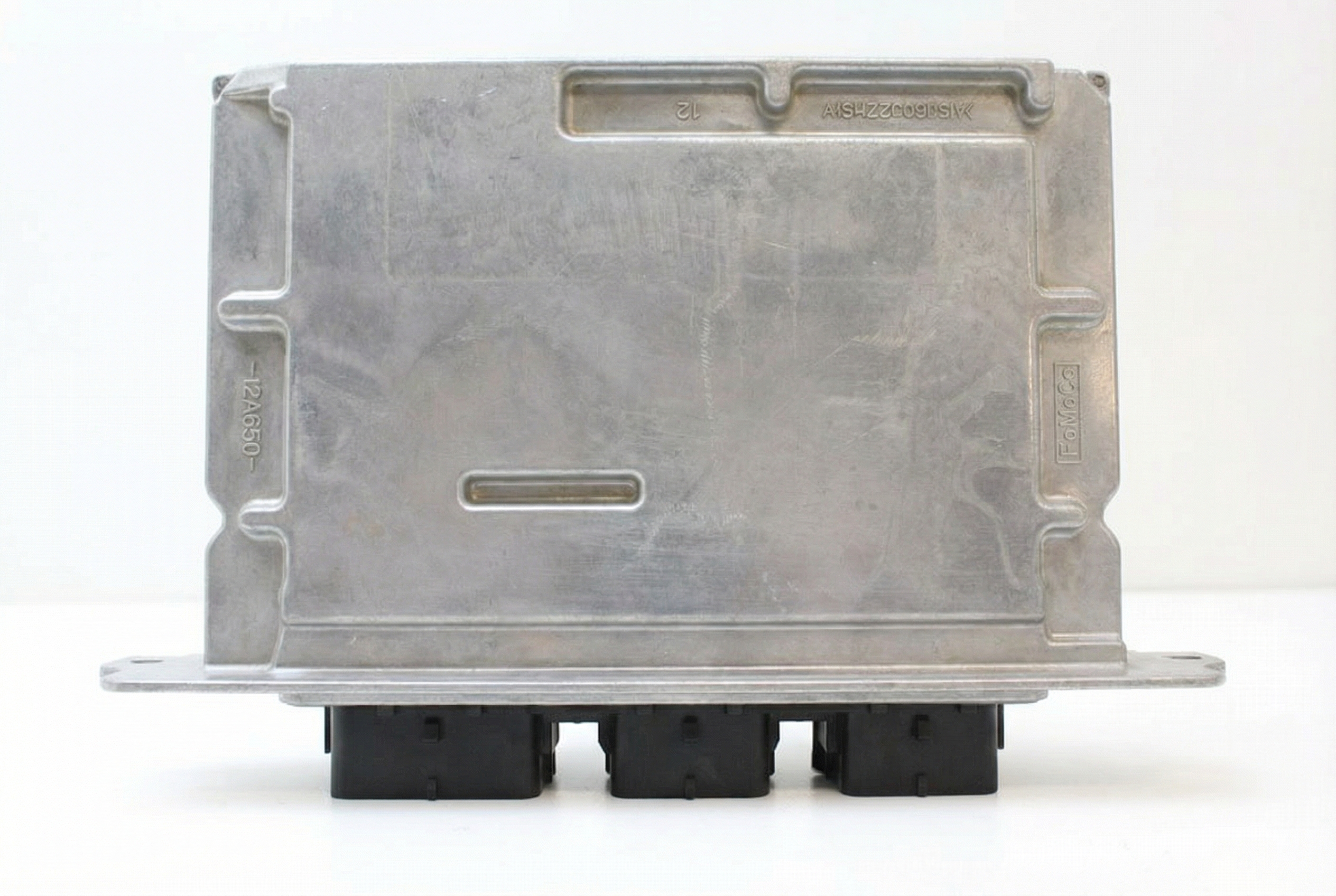
The most important step is to match the identification number on your original module. For this specific application (2007-2008 Mustang, 4.0L V6, Automatic Transmission), the primary ID number on the module's sticker is 7R3A-AAB. This may correspond to the full Ford part number 7R3A-12A650-AAB or the service part number 7R3Z-12A650-AAB. Do not install a module with a different ID number, even if it looks identical, as it may have different programming for another engine, transmission, or model year.
2. Physical Inspection
When you receive the used module, inspect it carefully:
- Connectors: Check for any bent, corroded, or damaged pins.
- Casing: Look for signs that the case has been opened, which could indicate a failed repair attempt.
- Corrosion: Any white or greenish powder-like substance on the housing or pins is a major red flag for water damage.
3. Plan for Programming Costs
Remember that the price of the used module is not the final cost. Factor in the expense of having it professionally programmed to your vehicle. Call local dealerships or automotive locksmiths beforehand to get a quote for PATS key reprogramming.
4. Why a Used OEM Module is Often a Good Choice
Original Equipment (OEM) modules were built to Ford's specifications and have a proven track record of reliability. While new aftermarket units are available, they can sometimes have quality control issues. A used OEM module from a reputable supplier is often a more dependable option than a cheap, new, non-OEM part.
Replacement Cost Comparison
| Part Type | Estimated Cost | Notes |
|---|---|---|
| New OEM | $500 - $800+ | May be discontinued or have limited availability from dealerships. |
| Remanufactured | $200 - $400 | A common option from specialty electronics rebuilders. |
| Used OEM | $75 - $200 | A cost-effective option from auto recyclers. Price depends on condition and availability. |
| Shop Labor (Installation) | $100 - $150 | Physical replacement is relatively simple. |
| Shop Labor (Programming) | $150 - $300 | This is a separate, required cost. Prices vary significantly between locksmiths and dealerships. |
Frequently Asked Questions (FAQ)
Will my car start after I install the replacement ECM?
No. Due to the PATS anti-theft system, the engine will crank but will not start until your existing keys have been reprogrammed to the replacement ECM by a professional.
Can I program the new ECM myself?
It is highly unlikely. The PATS key relearn procedure requires expensive, professional-grade diagnostic tools and software subscriptions that are not accessible to most DIY mechanics.
Where is the ECM located on a 2007-2008 Mustang?
The ECM is typically located in the engine compartment, on the passenger-side firewall.
Do I need to match the VIN from the donor vehicle?
No, the VIN does not need to match. The critical factor is matching the part number (7R3A-AAB). The programming process will involve inputting your vehicle's VIN into the replacement module.
Helpful Videos

Technical Specifications
OEM Part Numbers: 7R3A-AAB 7R3A-12A650-AAB 7R3AAAB 7R3Z-12A650-AAB
For 2007-2008 Ford Mustang with 4.0L SOHC V6 engine and automatic transmission.
We Have This Part in Stock



The information in this article is provided for general reference and educational purposes only. Vehicle specifications, procedures, and part compatibility can vary by production date, trim level, and region. Always consult your vehicle's factory service manual and verify part numbers before purchasing or performing repairs. Safety-critical components such as airbags, seat belts, and braking systems should be installed by a qualified professional.
- Ford Mustang:
- 🎬 Helpful Videos
- 🛍️ Shop This Part
- Symptoms of a Failing 2007-2008 Mustang ECM
- Common Diagnostic Trouble Codes (DTCs)
- Known Issues, TSBs, and Recalls
- Programming and Anti-Theft Requirements
- Buying a Used Engine Control Module (ECM)
- 1. Verify Your Part Number
- 2. Physical Inspection
- 3. Plan for Programming Costs
- 4. Why a Used OEM Module is Often a Good Choice
- Replacement Cost Comparison
- Frequently Asked Questions (FAQ)
- 🎟️ Get 5% Off