

2011 Ford Explorer ECM: Decoding Failures, Programming, and Ignition Coil Issues
This in-depth guide covers the critical programming requirements, common failure symptoms, and part number matching needed when replacing the Engine Control Module on your 2011 Ford Explorer.
- A replacement ECM must be programmed to the vehicle by a dealer or a properly equipped independent shop; the engine will not start otherwise.
- A common failure is ECM damage from a bad ignition coil, indicated by codes P0351-P0356. Always replace all coils and plugs with the ECM in this case.
- When buying a used ECM, you must match the engineering ID (e.g., BB5A-ABE) from your original module's sticker.
- Always factor the cost of professional programming into your total repair budget when considering a used or remanufactured ECM.
Symptoms of a Failing ECM

A faulty Engine Control Module in a 2011 Ford Explorer can cause a variety of symptoms, ranging from a simple check engine light to a complete no-start condition. It's important to distinguish between a primary ECM failure and other common vehicle issues that may present similar symptoms.
Direct ECM Failure Symptoms
- Check Engine Light: An illuminated check engine light is one of the most common signs. The ECM will store diagnostic trouble codes (DTCs) that can be read with an OBD-II scanner.
- Engine Stalling or Misfiring: The engine may stall intermittently, misfire, or run rough. This can feel like a sudden loss of power or stumbling during acceleration.
- No-Start Condition: The engine may crank but refuse to start. This can be caused by the ECM failing to send signals for spark (ignition pulse) or fuel (injector pulse).
- Poor Engine Performance and Fuel Economy: You might notice a significant decrease in power, acceleration, and gas mileage as the ECM struggles to manage the engine correctly.
- Communication Issues: In some cases, a diagnostic scan tool may be unable to communicate with the ECM, indicating a total failure of the module.
Known Issues and Common Failure Modes
Ignition Coil Driver Failure (Codes P0351-P0356)
A very common failure for the 2011-2015 Ford Explorer with the 3.5L engine involves the ECM being damaged by a faulty ignition coil. The internal circuitry of the ECM that controls the ignition coils can short out, causing a persistent misfire on one or more cylinders. This will typically store one or more of the following codes:
- P0351: Ignition Coil 'A' Primary/Secondary Circuit
- P0352: Ignition Coil 'B' Primary/Secondary Circuit
- P0353: Ignition Coil 'C' Primary/Secondary Circuit
- P0354: Ignition Coil 'D' Primary/Secondary Circuit
- P0355: Ignition Coil 'E' Primary/Secondary Circuit
- P0356: Ignition Coil 'F' Primary/Secondary Circuit
Warning: If you are replacing an ECM due to one of these codes, it is critical to replace all six ignition coils and spark plugs at the same time. Installing a new or used ECM without replacing the faulty coil(s) will cause immediate and irreversible damage to the replacement module.
Water and Corrosion Damage
Like any electronic module, the ECM is vulnerable to moisture. Water can get into the module through failed seals or travel down the wiring harness, causing corrosion on the circuit board. This can lead to a wide range of unpredictable electrical problems. When inspecting a used ECM, always check the connectors for any signs of green or white corrosion.
Distinguishing ECM Failure from Other Common 2011 Explorer Issues
Two other common problems on the 2011 Explorer can be mistaken for ECM failure:
- Internal Water Pump Failure: The 3.5L engine features an internal water pump. When it fails, coolant leaks directly into the engine oil, which can cause sudden stalling and catastrophic engine failure with little to no warning. This is a mechanical issue, not an ECM problem, but can present as a sudden vehicle shutdown.
- Throttle Body Failure: A faulty electronic throttle body is also common and can put the vehicle into "limp mode," drastically reducing engine power. This often triggers codes P2111 or P2112.
ECM Programming and Immobilizer Requirements

A replacement ECM for a 2011 Ford Explorer MUST be programmed to the vehicle. This is not an optional step. The ECM is a central component of the vehicle's Passive Anti-Theft System (PATS). If you install a module that is not programmed, the immobilizer will activate, and the engine will not start.
You have three main options for programming:
- Ford Dealership: A dealership has the factory-specific tools (like the Ford IDS) and software to program a new or used ECM to your vehicle. This is the most reliable but often most expensive option.
- Independent Repair Shop: Many independent shops now have advanced diagnostic tools, like the Autel IM608, that are capable of performing module programming and parameter resets for Ford vehicles. Labor rates may be lower than a dealership.
- Pre-Programmed Modules: Several online retailers sell used or remanufactured ECMs that are pre-programmed with your vehicle's VIN before shipping. While they often advertise these as "plug and play," you may still need a locksmith or a shop with the right tools to perform a "parameter reset" or key relearn procedure to sync your existing keys to the replacement ECM.
Pro Tip: Before buying a used ECM, call local dealerships and independent shops to get quotes for programming. This cost is a mandatory part of the total repair and should be factored into your budget from the start.
Buying a Used Engine Control Module (ECM)

A used OEM ECM can be a cost-effective and reliable alternative to an expensive new unit, provided you take the right steps. For a complex electronic part like this, a used original part is often superior to a cheap, new aftermarket clone.
- Match the Part Number: The most critical step is to match the part number from your original module. For this 2011 Explorer, you need to match the engineering ID, which will be in the format BB5A-12A650-ABx or simply BB5A-ABx. The last letter indicates a version, and later letters are often compatible with earlier ones, but an exact match is always safest.
- Physical Inspection: Carefully inspect the used module before purchase. Look for any signs of physical damage, bent pins on the connectors, or evidence of water intrusion like corrosion or water marks on the case or in the connectors. Do not buy a module that looks like it has been wet.
- Source and Warranty: Purchase from a reputable automotive recycler that offers a warranty. This gives you protection in case the part is defective.
- Remember Programming Costs: A cheap used ECM is not a bargain if the programming costs are prohibitive. Always factor in the cost of programming when comparing prices.
Cost Breakdown
Prices can vary significantly based on your location and the chosen repair path. The following is an estimate of what you can expect to pay.
| Part / Service | Estimated Cost |
|---|---|
| New OEM (Dealer) | $900 - $1,500+ |
| Remanufactured / Pre-Programmed | $250 - $500 |
| Used OEM | $75 - $250 |
| Shop Labor (Programming & Installation) | $150 - $400 |
Frequently Asked Questions (FAQ)
Can I replace the ECM myself?
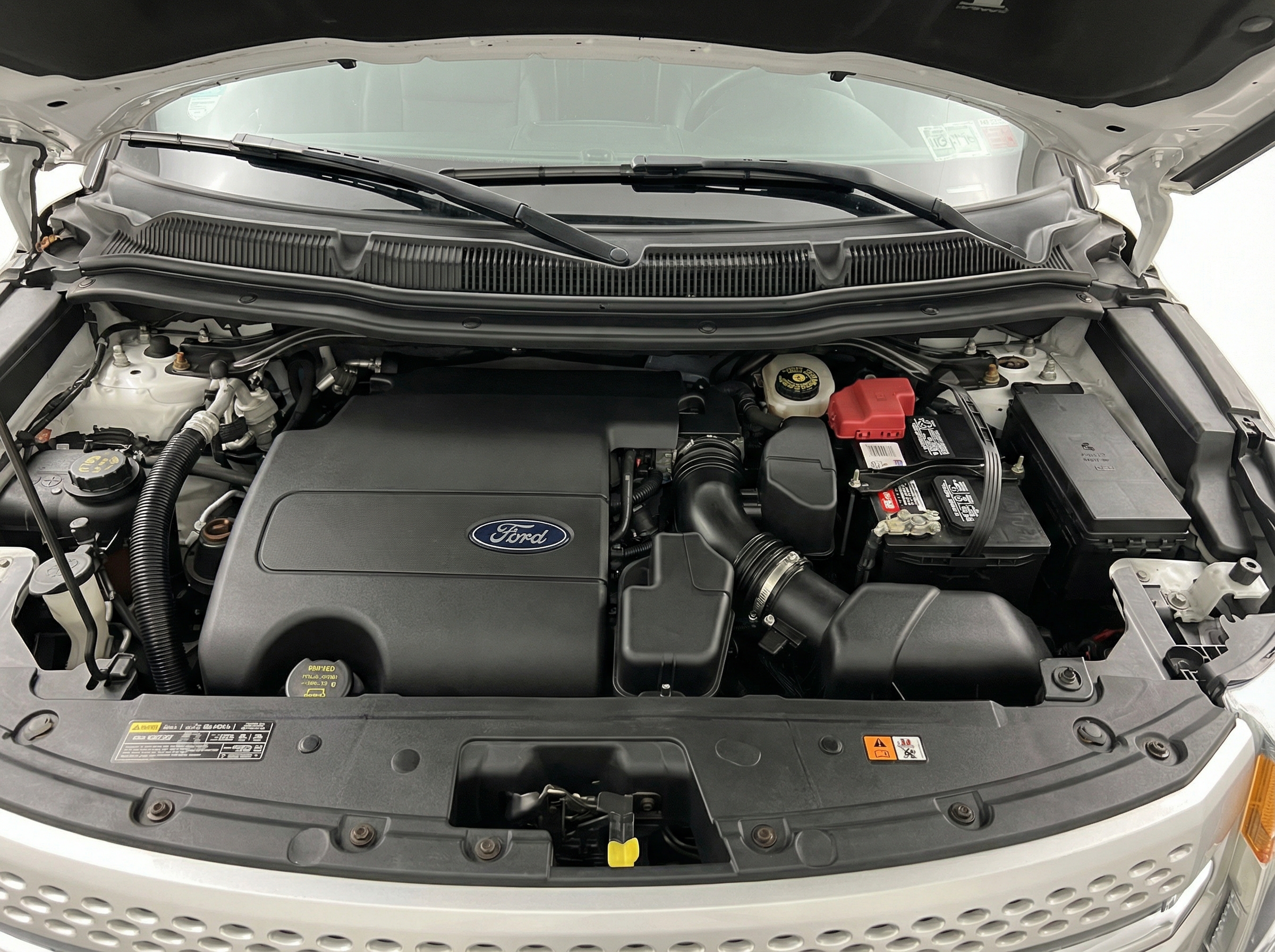
Physically swapping the module is straightforward for a DIY mechanic. It is typically located in the engine bay and secured with a few bolts and electrical connectors. However, the vehicle will not run until the replacement ECM is professionally programmed to the car.
What happens if I install a used ECM without programming it?
The engine will crank but will not start. The vehicle's anti-theft system (PATS) will not recognize the unprogrammed module and will prevent the engine from running.
Do I have to go to a Ford dealer for programming?
No, a dealer visit is not always mandatory. Many well-equipped independent shops and some mobile automotive locksmiths have the tools required to program a Ford ECM and perform the necessary key relearn procedures. However, you must confirm they have this capability for your specific vehicle before proceeding.
How do I find the part number on my original ECM?
The part number is printed on a sticker on the outside of the metal ECM case. You will need to locate the module in the engine bay and find the label. Look for the engineering ID, which will start with "BB5A".
Are there any recalls for the 2011 Explorer ECM?
As of early 2026, there are no specific NHTSA recalls for the Engine Control Module on the 2011 Ford Explorer. Existing recalls are for other components like the power steering, suspension, and door handles.
Technical Specifications
OEM Part Numbers: BB5A12A650ABE BB5A12A650ABF BB5A12A650ABG BB5A12A650ABH BB5AABE BB5AABF BB5AABG BB5AABH BB5Z12A650ABH BB5A-12A650-JA BB5A-12A650-JB BB5A-12A650-JC BB5A-12A650-JD BB5A-12A650-JE BB5A-12A650-JF BB5A-12A650-JG BB5A-12A650-JH BB5A-12A650-JJ BB5A-12A650-MG BB5A-12A650-MH BB5A-12A650-MJ BB5A-12A650-NJ BB5A-12A650-PH
Fits 2011 Ford Explorer with 3.5L non-turbo engine. Compatibility is determined by the engineering ID (e.g., BB5A-ABE) on the module's sticker.
We Have This Part in Stock




The information in this article is provided for general reference and educational purposes only. Vehicle specifications, procedures, and part compatibility can vary by production date, trim level, and region. Always consult your vehicle's factory service manual and verify part numbers before purchasing or performing repairs. Safety-critical components such as airbags, seat belts, and braking systems should be installed by a qualified professional.
- Ford Explorer:
- 🛍️ Shop This Part
- Symptoms of a Failing ECM
- Direct ECM Failure Symptoms
- Known Issues and Common Failure Modes
- Distinguishing ECM Failure from Other Common 2011 Explorer Issues
- ECM Programming and Immobilizer Requirements
- Buying a Used Engine Control Module (ECM)
- Cost Breakdown
- Frequently Asked Questions (FAQ)
- 🎟️ Get 5% Off