

1997-1999 Ford Escort & Mercury Tracer ECM: Solving No-Start, Stalling, and Programming Mysteries
This guide covers the common failures, symptoms, and critical programming requirements for the Engine Control Module in the 1997-1999 Ford Escort and Mercury Tracer.
- Programming is mandatory. A replacement ECM must be programmed to the vehicle's VIN and initialized with the PATS anti-theft system to allow the car to start.
- Part numbers must be matched exactly, paying close attention to emissions type (Federal vs. California) and market (Domestic vs. Export).
- Common physical failures include leaking capacitors and cracked solder joints. Inspect any used unit carefully for signs of corrosion or heat damage.
- Symptoms like no-start, stalling, and multiple random error codes often point to a failing ECM, but basic diagnostics on sensors and wiring should be performed first.
Symptoms of a Failing ECM

Diagnosing a faulty Engine Control Module in a 1997-1999 Ford Escort or Mercury Tracer can be tricky, as the symptoms often mimic other failed components. However, if you experience several unrelated issues at once, the ECM may be the culprit. Look for these common signs:
- Check Engine Light: An illuminated Check Engine Light is a common symptom. While it can indicate many problems, codes related to internal module failure (like P0600-P0605) are a strong pointer to the ECM. The ECM can also cause false codes for sensors that are actually working correctly.
- Engine Will Not Start: This is a critical symptom. The engine may crank over but will not start because the ECM is failing to control the fuel injectors or spark plugs.
- Stalling or Misfiring: The engine may stall intermittently for no apparent reason or run rough with frequent misfires. This happens when the ECM provides incorrect fuel or spark commands.
- Poor Performance and Fuel Economy: You might notice a sudden drop in gas mileage or a significant loss of acceleration power. This can be caused by the ECM sending incorrect signals, leading to an inefficient air-fuel mixture.
- Automatic Transmission Shifting Problems: In vehicles with an automatic transmission, a bad ECM can cause harsh or delayed shifting because it communicates critical data to the transmission controller.
Known Issues, TSBs, and Recalls

While there are no specific recalls for the Engine Control Module on the 1997-1999 Ford Escort or Mercury Tracer, there are known failure points and service bulletins to be aware of.
- Common Internal Failures: These EEC-V modules are known to fail due to age-related component breakdown. The most common culprits are leaking electrolytic capacitors. The fluid from these capacitors is corrosive and can eat away at the circuit board, causing shorts and other damage. Other known issues include cracked solder joints from years of heat cycles and vibration, and failure of integrated circuit (IC) chips on the board.
- Technical Service Bulletin (TSB) 99-4-3: This TSB was issued to inform dealerships and service centers about the availability of tools to reprogram EEC-V modules (like the one in your Escort or Tracer) outside of the vehicle. This confirms that these modules are indeed programmable.
- PATS Anti-Theft DTC P1260: A common diagnostic trouble code, P1260 (Theft Detected, Vehicle Immobilized), indicates that the PCM has received a signal from the Passive Anti-Theft System (PATS) to disable the engine. This code directs technicians to diagnose the PATS system, not necessarily the ECM itself, although a communication failure between the two can be the root cause.
Air Bag Module Recall: Note that recall 02V323000 was issued for 1997 Escort and Tracer models concerning the air bag control module, which could short out due to water intrusion. This is a separate computer from the engine control module and is located in a different area.
Programming, VIN Matching, and Anti-Theft

This is the most critical section for anyone replacing the ECM in an Escort or Tracer. These vehicles are equipped with Ford's Passive Anti-Theft System (PATS), which will prevent the car from starting if the ECM is not correctly paired with the vehicle.
Does the ECM need to be programmed?
Yes, programming is required. The replacement ECM must be programmed with your vehicle's specific VIN and calibration file. Furthermore, it must be electronically 'introduced' to the vehicle's existing PATS module. If this procedure is not done, the PATS module will not send the 'enable' signal to the new ECM, and the engine will be immobilized, resulting in a crank-no-start condition.
How the PATS System Works in Your Vehicle
The 1997-1999 Escort and Tracer use a PATS system where a transponder chip is embedded in the ignition key. A transceiver ring around the ignition cylinder reads the key's code and sends it to a separate PATS control module. If the key is valid, the PATS module sends an 'OK' signal to the ECM, allowing the engine to start and run. When you install a new ECM, it does not have the handshake information needed to communicate with your car's PATS module, so it must be programmed.
Who can program the ECM?
- Remanufacturers / Online Sellers: Many companies that sell remanufactured or used ECMs offer to pre-program the unit with your VIN before shipping. This can make the process much easier.
- Ford Dealerships: A Ford dealer has the factory tools (like the NGS Tester mentioned in TSB 99-4-3) to program a new or used ECM to your vehicle.
- Automotive Locksmiths & Independent Shops: Many well-equipped locksmiths and independent repair shops have advanced scan tools that can perform the PATS key relearn and module initialization procedures required to pair the new ECM.
Pro Tip: Even with a 'pre-programmed' ECM, you may still need a final key relearn procedure performed once the module is installed in the car. This is often called 'parameter reset' or 'module initialization' and can typically be done by an automotive locksmith.
Buying a Used Engine Control Module
A used OEM module is often a reliable and cost-effective solution, especially compared to expensive and sometimes unavailable new units. Here’s what to look for:
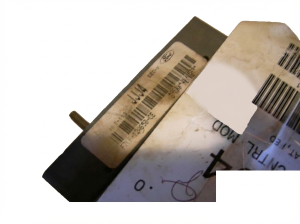
- Match the Part Number EXACTLY: This is the most important step. The part number is printed on a sticker on the ECM's case. You must match the main engineering number (e.g., F7CF-12A650-CC) and pay close attention to the final two letters, as they indicate the specific hardware and software calibration.
- Verify Compatibility (Emissions & Export): These ECMs have specific applications.
- For 1997 models, the provided data indicates a specific module for Sedans with Federal emissions. A California emissions vehicle will require a different ECM. Check the emissions sticker under your hood to confirm which system your car has.
- For 1999 models, certain part numbers are designated for 'Export' vehicles, which may have different emissions equipment and tuning. Ensure you are buying a domestic (US/North American) market ECM unless your vehicle is an export model.
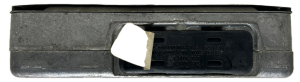
- Inspect for Physical Damage: Before purchasing, examine photos of the unit. Look for corrosion on the case or connectors, which could indicate water damage. Avoid any units with bent pins or cracks in the housing.
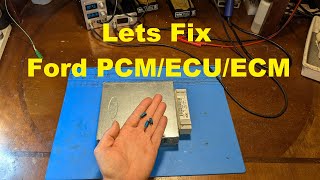
- Open the Case (If Possible): If you are inspecting a part in person or troubleshooting your own, carefully open the case. Look for the tell-tale signs of failure: bulging or leaking capacitors, dark burn marks on the circuit board, or a fishy/acidic smell, which indicates a leaking capacitor. 🎬 Watch: See how to identify and repair internal board damage. Any of these are red flags.
Cost of Replacement
Prices can vary significantly based on the source of the part and labor rates in your area.
| Part Source | Estimated Cost |
|---|---|
| New OEM | $400 - $900+ (Often discontinued and hard to find) |
| New Aftermarket | $250 - $450 |
| Remanufactured (Pre-Programmed) | $150 - $350 |
| Used OEM | $50 - $125 |
| Shop Labor (Installation & Programming) | $100 - $250 |
Replacement Location and Procedure

The ECM is located inside the vehicle, tucked under the center of the dashboard, where the dash meets the center console.
Replacement involves removing the center console to gain access. While not overly complex, it requires patience. The general steps are:
- Disconnect the negative battery terminal.
- Remove the gear shift knob (for manual transmissions) and the trim panels around the shifter and parking brake.
- Remove the screws and pushpins securing the main center console body. There is often a screw hidden inside the rear storage compartment or cupholder area.
- Lift the center console out of the way to expose the ECM.
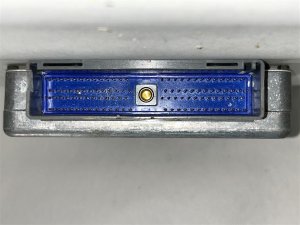
- Disconnect the large electrical connector(s) from the ECM. This is typically done by loosening a central 10mm bolt on the connector block from the engine bay side or by releasing a lever lock on the connector itself.
- Unbolt the ECM from its mounting bracket and remove it.
- Installation is the reverse of removal. After installation, the programming and PATS relearn procedure must be performed.
Frequently Asked Questions (FAQ)
Can I install an ECM from a junkyard?
Yes, but it is not a simple plug-and-play swap. The junkyard ECM must have the exact same part number and will need to be programmed to your vehicle's VIN and PATS system by a dealer or qualified shop before the car will start.
What is the difference between an ECM, PCM, and ECU?
ECU (Engine Control Unit) and ECM (Engine Control Module) are generic terms for the engine computer. Ford often uses the term PCM (Powertrain Control Module) because this single computer controls both the engine and the automatic transmission. For these vehicles, the terms are often used interchangeably.
Will a bad ECM prevent the car from cranking?
Generally, no. On this PATS system, a module mismatch will typically allow the engine to crank but will prevent it from starting by disabling fuel and spark. A no-crank condition is more likely related to the battery, starter, ignition switch, or neutral safety switch.
How do I know if my car has Federal or California emissions?
Look for the Vehicle Emission Control Information (VECI) sticker in the engine bay, usually on the underside of the hood or on the radiator support. The sticker will state that the vehicle conforms to U.S. EPA regulations and, if applicable, California regulations. If it only mentions EPA, it is a Federal emissions vehicle.
Helpful Videos
Technical Specifications
OEM Part Numbers: F7CF-12A650-CA F7CF-12A650-CC F7CF-12A650-CD F7CF-12A650-CE F7CF-12A650-CF F7CF-12A650-EA F7CF-12A650-EB F7CF-12A650-EC F7CF-12A650-ED F7CF-12A650-EE F7CFCA F7CFCC F7CFCD F7CFCE F7CFCF F7CZ-12A650-CD F7CZ-12A650-CE F7CZ-12A650-CF F7CZ-12A650-EA F7CZ-12A650-EB F7CZ-12A650-EC F7CZ-12A650-ED F7CZ-12A650-EE F8CF-12A650-AD F8CF-12A650-DJ F8CF-12A650-LE F8CF-12A650-NE F8CF-12A650-PD
Ford EEC-V (Electronic Engine Control, version 5) architecture. Communicates with vehicle systems via SCP (Standard Corporate Protocol) network. Integrates with Ford's PATS (Passive Anti-Theft System).
We Have This Part in Stock


The information in this article is provided for general reference and educational purposes only. Vehicle specifications, procedures, and part compatibility can vary by production date, trim level, and region. Always consult your vehicle's factory service manual and verify part numbers before purchasing or performing repairs. Safety-critical components such as airbags, seat belts, and braking systems should be installed by a qualified professional.
- Ford Escort:
- Mercury Tracer:
- 🎬 Helpful Videos
- 🛍️ Shop This Part
- Symptoms of a Failing ECM
- Known Issues, TSBs, and Recalls
- Programming, VIN Matching, and Anti-Theft
- Does the ECM need to be programmed?
- How the PATS System Works in Your Vehicle
- Who can program the ECM?
- Buying a Used Engine Control Module
- Cost of Replacement
- Replacement Location and Procedure
- Frequently Asked Questions (FAQ)
- 🎟️ Get 5% Off