

2008-2009 Ford Edge & Lincoln MKX ECM Failure: A Guide to Programming, Part Numbers, and Replacement
This guide covers the common failure symptoms, costs, and critical programming requirements for the Engine Control Module (ECM/PCM) in the 2008-2009 Ford Edge and Lincoln MKX.
- Programming is mandatory. A replacement ECM (new or used) will not start the car until it is programmed to your vehicle's VIN and anti-theft system (PATS).
- A common failure is a burnt-out ignition coil driver inside the ECM. Always replace all six ignition coils and spark plugs when replacing the ECM to prevent repeat failure.
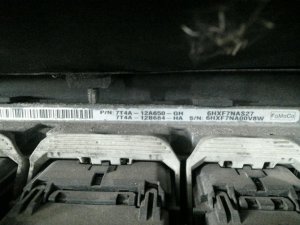
- Match the part number exactly. The engineering ID on the module's sticker (e.g., 8T4A-12A650-KC) is the best way to ensure compatibility.
- A "Repair and Return" service for your original ECM is an excellent option, as it avoids the need for anti-theft key programming.
Symptoms of a Failing ECM


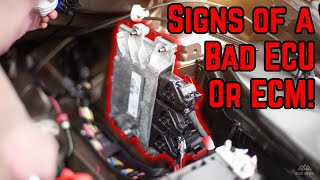
A failing Engine Control Module in a 2008-2009 Ford Edge or Lincoln MKX can cause a wide range of issues, which are often mistaken for other component failures. Because the ECM controls so many systems, symptoms can be varied and sometimes intermittent. If you experience several of these issues at once, the ECM is a likely culprit.
🎬 Watch: A breakdown of common symptoms of a bad ECM- Check Engine Light: This is the most common symptom. The ECM will store Diagnostic Trouble Codes (DTCs) that can be read with an OBD-II scanner.
- Engine Performance Issues: You may notice rough idling, engine stalling (sometimes for no reason), hesitation during acceleration, or a general loss of power.
- No-Start or Hard-Starting: The vehicle may crank but refuse to start, or it may take an unusually long time to turn over. This can happen if the ECM fails to properly command the fuel injectors or ignition system.
- Misfires (Ignition Coil Driver Failure): A very common failure on this platform is the burnout of the internal ignition coil drivers within the PCM. This will cause a persistent misfire on one or more cylinders and will set codes like P0351 through P0356.
- Poor Fuel Economy: A sudden and significant decrease in gas mileage can be caused by an incorrect air-fuel mixture controlled by a faulty ECM.
- Erratic Transmission Shifting: The ECM communicates with the transmission control module. A failing ECM can cause harsh, delayed, or irregular shifting. However, be aware that some transmission issues on these models are caused by faulty sensors, not the PCM itself.
- Communication Errors: Other modules in the vehicle may report a loss of communication with the PCM, setting codes like U0100.
Known Issues, TSBs, and Recalls
While there are no specific recalls for the ECM on the 2008-2009 Ford Edge and Lincoln MKX, there are known issues and technical service bulletins (TSBs) that are relevant to diagnosing problems in this area.
- Ignition Coil Driver Failure: The most prevalent issue is the failure of the ignition coil drivers inside the PCM. This is often caused by a shorted ignition coil. When replacing the PCM for this reason, it is critical to replace all six ignition coils and spark plugs at the same time to prevent the new PCM from being damaged.
- TSB 07-21-11: Addresses harsh transmission engagement, no upshifts, or being stuck in fifth gear. These symptoms may be accompanied by various sensor-related DTCs (P0715, P0717, P0720, etc.). The bulletin advises that the cause is likely an intermittent short in the Turbine Shaft Speed (TSS) or Output Shaft Speed (OSS) sensor, and specifically warns technicians NOT to replace the PCM for this issue until the sensors and wiring have been thoroughly checked.
- TSB 08-25-13: For complaints of engine hesitation from a stop, a dealer may perform a PCM reprogram with updated software to resolve the issue. This indicates that some performance problems can be fixed with a software update rather than a full hardware replacement.
Pro Tip: Before condemning the ECM, always check for other potential causes. A faulty sensor, damaged wiring, or poor electrical ground can mimic the symptoms of a bad computer. Diagnosing an ECM failure is often a process of elimination.
🎬 Watch: Learn the warning signs before replacing your moduleBuying a Used Engine Control Module

Purchasing a used OEM Engine Control Module is a smart, cost-effective alternative to buying a new or remanufactured unit from a dealership. Used OEM modules are the original factory parts, ensuring perfect fitment and hardware reliability. However, there are critical steps to ensure you get the right part and that it will work in your vehicle.
1. Verify Compatibility by Part Number
This is the most important step. You must match the part number from your original ECM. For the 2008-2009 Edge and MKX, the key identifier is the engineering ID, which will look like 8T4A-12A650-Kx, where 'x' is a letter (e.g., KC, KD, KE, KF). While modules with different final letters can sometimes be interchanged after programming, it is safest to match the full number as closely as possible. The service part number may appear as 8T4Z-12A650-Kx.
- Look for the sticker on your vehicle's original ECM to find the number.
- Provide the seller with your Vehicle Identification Number (VIN) to help them confirm compatibility if possible.
2. Physical Inspection
When you receive the used module, inspect it carefully before installation:
- Check for Corrosion: Look for any white or greenish powder on the case or, more importantly, on the connector pins. Any sign of water damage is a major red flag.
- Inspect the Case: Ensure the case has not been pried open or physically damaged. An opened case could mean a failed repair was attempted.
- Examine the Connectors: The pins should be straight, clean, and free of any damage or corrosion.
3. Understand Programming Requirements
A used ECM will not work by simply plugging it in. It must be professionally programmed to your vehicle. This is not optional. The vehicle will not start until this is done because of Ford's Passive Anti-Theft System (PATS). When buying a used module, you are buying the hardware only; the software must be configured for your specific car. Factor the cost of programming into your budget.
4. Aftermarket vs. Used OEM
While new aftermarket ECMs are available, they can be a gamble. Some remanufacturers like Cardone have a mixed reputation for quality control, with some units failing prematurely. A used OEM module from a reputable recycler is often a more reliable choice, as it is the original factory-built hardware. Another excellent option is a "Repair and Return" service, where you send your original module to be repaired. This is often the best choice as it requires no key programming upon reinstallation, saving a significant amount of hassle and cost.
Programming and Installation

Replacing the ECM in a 2008-2009 Ford Edge or Lincoln MKX is a two-stage process: physical installation and electronic programming.
Warning: A replacement ECM, whether new, used, or remanufactured, MUST be electronically programmed to your vehicle's VIN and its security system. The engine will not start until this procedure is completed.
ECM Location and Physical Replacement
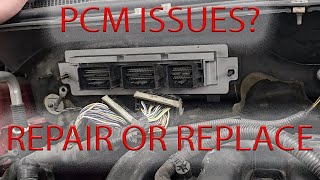
The ECM is located in the engine bay, under the plastic cowl cover near the base of the windshield. 1. Disconnect the negative battery terminal. 2. Remove the plastic cowl paneling to access the module. 3. Disconnect the electrical connectors from the ECM. There are typically levers or locks that need to be released. 4. Unbolt the ECM from its mounting bracket. You will need 10mm and 11mm sockets. 🎬 See this step-by-step PCM replacement and programming walkthrough 5. Install the new module, reconnect the electrical connectors and battery, and replace the cowl.
Required Programming (PATS Synchronization)
After the new module is installed, it must be synchronized with the vehicle's Passive Anti-Theft System (PATS). This process is often called a "parameter reset." It pairs the replacement ECM to your existing keys.
Who can program the ECM?
- Ford/Lincoln Dealership: They have the required IDS software and can perform the programming reliably. This is often the most straightforward, though potentially most expensive, option.
- Independent Repair Shop: Many independent shops that specialize in Ford vehicles have the same IDS software or equivalent high-end scan tools (like Autel) and can perform the programming.
- Automotive Locksmith: Some mobile locksmiths have advanced tools capable of performing the PATS parameter reset and key programming.
A DIY approach using software like FORScan is technically possible for advanced users with the correct OBD-II adapter, but it is complex and not recommended for beginners.
Cost to Replace the ECM
The total cost includes the part itself, plus labor for installation and programming. Labor for the physical swap is minimal (around 0.5-1.0 hours), but programming adds time and cost.
| Item | Estimated Cost |
|---|---|
| New OEM (Remanufactured) | $590 - $900 + core charge |
| New Aftermarket | $250 - $450 |
| Used OEM | $50 - $150 |
| Repair & Return Service | $250 - $350 |
| Shop Labor (Installation & Programming) | $150 - $300 (Typically 1.5-2.5 hours of labor) |
Note: Prices are estimates and can vary based on location, supplier, and vehicle condition.
Frequently Asked Questions (FAQ)
Do I have to go to the dealer to get a new ECM programmed?
No, you do not have to go to a dealer. A well-equipped independent auto repair shop or a specialized automotive locksmith with Ford-specific diagnostic tools can also program the replacement ECM and synchronize it with your keys.
What is the difference between an ECM and a PCM?
ECM stands for Engine Control Module and PCM stands for Powertrain Control Module. For most modern vehicles, including the Ford Edge and Lincoln MKX, the terms are used interchangeably. Technically, a PCM controls both the engine and the transmission, which is the case for these vehicles.
Will a used ECM from a junkyard work?
Yes, a used ECM can work, provided it is the correct part number and is properly programmed to your vehicle after installation. It is a cost-effective option, but you must factor in the mandatory programming cost.
Why do I need to replace my ignition coils with the ECM?
A common reason for ECM failure in these vehicles is a short circuit in an ignition coil, which damages the coil driver circuit inside the computer. If you install a new ECM without replacing the faulty coil that caused the original failure, the new ECM will likely be damaged immediately. It is strongly recommended to replace all six coils and spark plugs as a preventative measure.
Helpful Videos

Technical Specifications
OEM Part Numbers: 8T4A-12A650-KC 8T4A-12A650-KD 8T4A-12A650-KE 8T4A-12A650-KF 8T4A-12B684-BA 8T4Z-12A650-KC 8T4Z-12A650-KD 8T4Z-12A650-KE 8T4Z-12A650-KF 8T4Z-12A650-KFRM
Controls the 3.5L DOHC V6 engine and 6F50 6-speed automatic transmission. Requires VIN and PATS (Passive Anti-Theft System) programming.
We Have This Part in Stock



The information in this article is provided for general reference and educational purposes only. Vehicle specifications, procedures, and part compatibility can vary by production date, trim level, and region. Always consult your vehicle's factory service manual and verify part numbers before purchasing or performing repairs. Safety-critical components such as airbags, seat belts, and braking systems should be installed by a qualified professional.
- Ford Edge:
- Lincoln MKX:
- 🎬 Helpful Videos
- 🛍️ Shop This Part
- Symptoms of a Failing ECM
- Known Issues, TSBs, and Recalls
- Buying a Used Engine Control Module
- 1. Verify Compatibility by Part Number
- 2. Physical Inspection
- 3. Understand Programming Requirements
- 4. Aftermarket vs. Used OEM
- Programming and Installation
- ECM Location and Physical Replacement
- Required Programming (PATS Synchronization)
- Cost to Replace the ECM
- Frequently Asked Questions (FAQ)
- 🎟️ Get 5% Off