

2009-2010 Journey, Avenger & Sebring 3.5L V6 ECM: Stalling, No-Start, and Programming Guide
This guide covers the common failure symptoms, recalls, and critical VIN programming requirements for the Engine Control Module (ECM) in the 2009-2010 Dodge Journey, Dodge Avenger, and Chrysler Sebring with the 3.5L V6 engine.
- This ECM is ONLY for models with the 3.5L V6 engine.
- A replacement ECM MUST be programmed with your vehicle's VIN and synced to the immobilizer system to function.
- Sudden stalling may be caused by a recalled ignition (WIN) module, not necessarily the ECM.
- Buying a pre-programmed used or remanufactured ECM online is often the most cost-effective solution.
Critical: VIN Programming and Security Synchronization

Before diagnosing or replacing the ECM in your 2009-2010 Dodge Journey, Dodge Avenger, or Chrysler Sebring, it is essential to understand that a replacement module must be programmed to your vehicle. You cannot simply swap a used ECM from another vehicle and expect it to work.
Warning: An unprogrammed or incorrectly programmed ECM will result in a no-start condition or an engine that starts for two seconds and then immediately stalls. This is due to the vehicle's Sentry Key Immobilizer System (SKIM), which prevents theft by ensuring the ECM, ignition, and key are all synced.
🎬 Watch: How to program a used Chrysler/Dodge immobilizerProgramming involves two main steps:
- VIN Programming: The vehicle's unique 17-digit Vehicle Identification Number (VIN) must be written to the replacement ECM. This ensures the ECM communicates correctly with other modules in the car.
- SKIM/Immobilizer Relearn: The ECM must be introduced to the vehicle's security system to recognize the programmed ignition keys.
This programming can be performed by:
- A Chrysler/Dodge/Jeep dealership.
- A qualified independent auto repair shop with a dealer-level scan tool or a J2534 pass-thru device.
- Some mobile automotive locksmiths who specialize in module programming.
- Online retailers who sell pre-programmed or "plug-and-play" ECMs. With this option, you provide your VIN at the time of purchase, and the module arrives ready for installation without needing further programming.
Known Issues, Recalls, and Technical Service Bulletins (TSBs)
Several official service campaigns are relevant to the ECM and related systems on these vehicles. Engine stalling or a no-start condition may not always be the ECM itself.
2009 Dodge Journey: Engine Wiring Harness Recall (NHTSA #09V169000)
Chrysler recalled 6,692 Dodge Journeys from the 2009 model year equipped with the 3.5L V6 engine. The engine wiring harness could rub against the left transaxle mount, potentially chafing the wires. This could cause a short circuit, leading to stalling or even an engine compartment fire. The fix involves inspecting the harness, repairing any damage, and securing it with a tie-wrap to prevent future contact.
All Models: Ignition Switch (WIN Module) Recall (NHTSA #14V373000)
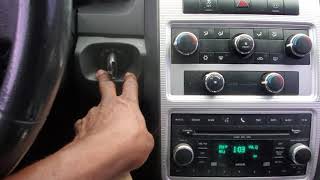
A major recall was issued for 2009-2010 Dodge Journey, Grand Caravan, and Chrysler Town & Country models for a faulty Wireless Ignition Node (WIN) module. A jarring event, like hitting a pothole, could cause the ignition switch to move from the 'RUN' position to 'ACCESSORY' or 'OFF', shutting down the engine while driving. This would disable power steering, power brakes, and airbags, increasing crash risk. While the Avenger and Sebring were not part of this specific recall number, they use similar hardware, and the symptom (sudden stalling) can easily be misdiagnosed as a bad ECM.
🎬 See how to replace and program the ignition switch moduleAll Models: No-Start / No-Crank TSB (S1121000006 Rev. A)
Chrysler issued a technical service bulletin for a condition where the engine will not crank or start, with no related trouble codes stored. This bulletin guides technicians through a diagnostic procedure to identify the cause, which could be related to the starter, wiring, or control modules.
Symptoms of a Failing ECM

A failing ECM can cause a wide variety of confusing and often intermittent symptoms.
- Check Engine Light: The check engine light is almost always on. You may see a flood of seemingly unrelated codes, especially for sensor circuits or communication errors (U-codes).
- Engine Stalling or Misfiring: The engine may stall unexpectedly, run rough, or misfire. This can be intermittent and unpredictable.
- No-Start Condition: The engine may crank but refuse to start, or it may not crank at all. A classic symptom is the engine starting and then dying after two seconds, which points to an immobilizer issue.
- Poor Engine Performance: You may experience a noticeable loss of power, poor acceleration, and a significant drop in fuel economy.
- Transmission Shifting Problems: The ECM works with the transmission controller. A faulty ECM can cause harsh shifting, getting stuck in one gear (limp mode), or other transmission issues.
Common Diagnostic Trouble Codes (DTCs)
- P0300-P0306: Random or specific cylinder misfire codes.
- U0100: Lost Communication with ECM/PCM.
- P0601: Internal Control Module Memory Check Sum Error.
- P0605: Internal Control Module Read Only Memory (ROM) Error.
- P1388/P1389: Auto Shutdown (ASD) Relay Control Circuit fault. The ASD relay powers the fuel pump and ignition coils, and it's controlled by the ECM.
- P0513: Invalid Sentry Key Immobilizer Key.
Buying a Used Engine Control Module
Purchasing a used OEM ECM is a cost-effective repair strategy, but careful verification is required to avoid complications.
Pro Tip: Many online sellers offer pre-programmed used or remanufactured ECMs. By providing your vehicle's VIN when ordering, the module arrives ready to install, saving you a trip to the dealer for programming. This is often the best balance of cost and convenience.
- Match the Part Number: The most critical step is to match the OEM part number exactly. The part number is printed on a sticker on the ECM's case. While several part numbers may be compatible, it's safest to match your original number. The hardware ID 05150244AC or 05150244AD is a key identifier for this 3.5L V6 application.
- Verify the Application: Ensure the donor vehicle had the same engine (3.5L V6), transmission, and drivetrain (FWD or AWD) as your vehicle. An ECM from a 2.4L 4-cylinder car will not work.
- Physical Inspection: When you receive the used module, inspect the case for any signs of physical damage, such as dents, cracks, or pry marks. Check the electrical connector pins to ensure they are straight, clean, and free of corrosion.
- Programming Plan: Before you buy, have a plan for programming. Either purchase a pre-programmed unit or confirm that your local mechanic or locksmith has the capability to program a Chrysler ECM. Do not install an unprogrammed module and expect it to work.
Replacement Location and Procedure

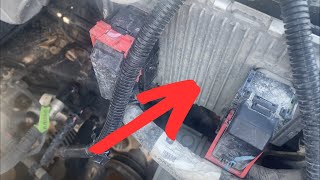
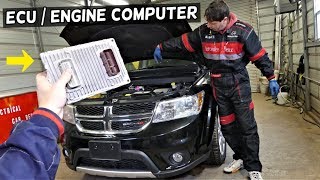
On the 2009-2010 Dodge Journey, Avenger, and Chrysler Sebring, the ECM is located in the engine compartment on the driver's side, mounted to a bracket near the firewall and fuse box.
- Disconnect the Battery: Always disconnect the negative battery terminal before working on any electronic components.
- Access the Module: The module is typically held to a bracket with 10mm bolts or nuts. It may be easier to remove the entire bracket with the ECM attached rather than trying to unbolt the ECM from the bracket while it's in the car. 🎬 Watch: Step-by-step Dodge Journey ECU removal and replacement
- Disconnect Wiring Harnesses: The ECM has two or three large electrical connectors. These have locking levers or tabs that must be released to unplug them. Press the release tab and pivot the lever to gently push the connector out. Do not force them.
- Install the New Module: Bolt the replacement ECM into place, reconnect the wiring harnesses until they click and the locking levers are secure, and then reconnect the negative battery terminal.
- Programming/Key Relearn: If you did not use a pre-programmed module, the vehicle must now be towed or visited by a mobile technician to have the VIN and security information programmed.
Estimated Costs
Prices can vary based on location and supplier, but here is a general cost breakdown:
| Part Type | Estimated Cost |
|---|---|
| New OEM | $700 - $1000+ |
| Remanufactured | $180 - $400 |
| Used OEM | $90 - $160 |
| Shop Labor (Replacement & Programming) | $150 - $300 |
Frequently Asked Questions (FAQ)
Can I drive my car with a bad ECM?
It is not recommended. A failing ECM can cause the engine to stall at any time, which is a serious safety hazard, especially in traffic or at highway speeds. It can also leave you stranded with a no-start condition.
Do I absolutely need to program a replacement ECM?
Yes. For these vehicles, a replacement ECM will not allow the engine to run for more than a couple of seconds without being programmed to the vehicle's VIN and Sentry Key immobilizer system.
My car stalls but has no codes. Could it still be the ECM?
Yes, it's possible, but you should investigate other causes first. Check for the wiring harness recall on the Dodge Journey and the WIN module (ignition switch) recall, as both can cause stalling without necessarily setting a specific ECM fault code.
Is the ECM the same as the TCM?
No. On these vehicles, the Engine Control Module (ECM) is a separate unit from the Transmission Control Module (TCM). However, they are often mounted on the same bracket in the engine bay. They communicate with each other, so a fault in one can sometimes cause symptoms in the other.
Helpful Videos
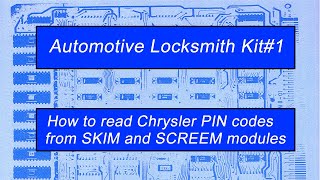
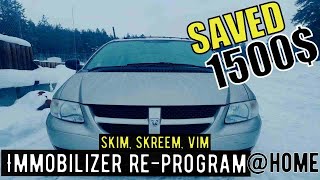
Technical Specifications
OEM Part Numbers: R5150244AD 05150244AD 5150244AA 5150244AC 68003157AE P05150244ACP 05150244AA 68049430AD 68049432AD 68061204AF 68062201AA
Fits 2009-2010 Dodge Journey, Dodge Avenger, and Chrysler Sebring vehicles equipped with the 3.5L V6 engine. Requires VIN and SKIM (immobilizer) programming.
We Have This Part in Stock



The information in this article is provided for general reference and educational purposes only. Vehicle specifications, procedures, and part compatibility can vary by production date, trim level, and region. Always consult your vehicle's factory service manual and verify part numbers before purchasing or performing repairs. Safety-critical components such as airbags, seat belts, and braking systems should be installed by a qualified professional.
- Dodge Journey:
- Dodge Avenger:
- Chrysler Sebring:
- 🎬 Helpful Videos
- 🛍️ Shop This Part
- Critical: VIN Programming and Security Synchronization
- Known Issues, Recalls, and Technical Service Bulletins (TSBs)
- 2009 Dodge Journey: Engine Wiring Harness Recall (NHTSA #09V169000)
- All Models: Ignition Switch (WIN Module) Recall (NHTSA #14V373000)
- All Models: No-Start / No-Crank TSB (S1121000006 Rev. A)
- Symptoms of a Failing ECM
- Common Diagnostic Trouble Codes (DTCs)
- Buying a Used Engine Control Module
- Replacement Location and Procedure
- Estimated Costs
- Frequently Asked Questions (FAQ)
- 🎟️ Get 5% Off