

2016-2020 Dodge Journey 2.4L ECM: Programming, Recalls, and Failure Guide
This guide covers the critical programming requirements, common failure codes, and compatibility details for the 2016-2020 Dodge Journey 2.4L Engine Control Module.
- A replacement ECM (new or used) MUST be professionally programmed to your vehicle's VIN and anti-theft system; the car will not run without this step.
- This specific ECM only fits 2016-2020 Dodge Journey models with the 2.4L engine and 4-speed automatic transmission.
- Before replacing the ECM for a stalling or no-start issue, check for open recalls, especially NHTSA 16V-907 (crank sensor) and 18V-524 (PCM voltage regulator).
- Common failure symptoms include a no-start condition, random stalling, poor performance, and specific internal error codes like P0601 or P0606.
Symptoms of a Failing Dodge Journey ECM

A failing Engine Control Module can cause a wide range of problems, from a simple check engine light to a vehicle that won't start at all. Because the ECM controls so many different systems, symptoms can sometimes be mistaken for other issues. If you experience several of these symptoms, the ECM could be the culprit.
- Check Engine Light: An illuminated Check Engine Light is one of the most common signs of an ECM problem. Specific diagnostic trouble codes (DTCs) pointing to internal module failure are a strong indicator.
- Engine Stalling or Misfiring: The engine may stall unexpectedly, either while driving or at an idle. This can be intermittent and may be related to a faulty sensor input or an internal ECM issue.
- No-Start or No-Crank Condition: You may turn the key or press the start button and get nothing, or the engine may crank but refuse to start. This happens when the ECM fails to control the ignition or fuel systems, or when it loses communication with other modules.
- Poor Engine Performance: A noticeable loss of power, poor acceleration, and reduced fuel economy can all be traced back to a faulty ECM that is not managing the engine correctly.
- Erratic Transmission Shifting: Since the PCM also controls the transmission, you might experience harsh shifting, delayed engagement, or the transmission getting stuck in one gear (limp mode).
- Communication Errors: A technician using a scan tool may find that they cannot communicate with the ECM, or that there are multiple communication-related 'U' codes stored.
Common Diagnostic Trouble Codes (DTCs)
While many codes can indicate a problem that affects the ECM, certain codes point directly to an internal failure of the module itself. These are the most definitive codes for diagnosing a bad ECM:
- P0601: Internal Control Module Memory Check Sum Error
- P0604: Internal Control Module Random Access Memory (RAM) Error
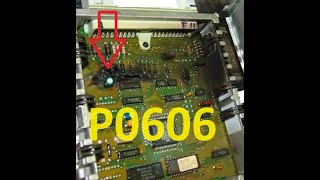
- P0606: ECM/PCM Processor Fault
- P060C: Internal Control Module Main Processor Performance 🎬 See how to diagnose a P0606 ECM processor error code.
Known Issues, Recalls, and Technical Service Bulletins (TSBs)

Several official communications from FCA (Chrysler/Dodge) relate to the engine control systems on the 2016-2020 Dodge Journey. It's important to check if these have been performed on your vehicle, as they can cause symptoms identical to a failing ECM.
Recall S89 / NHTSA 16V-907: Crankshaft Sensor Connector
This safety recall affects some 2016 Dodge Journey models equipped with the 2.4L engine and built between May 9, 2016, and July 15, 2016. The issue is an intermittent connection at the crankshaft or camshaft position sensor, which can cause the engine to stall while driving or fail to start. The remedy involves replacing the sensor's electrical connector. Since stalling and no-start are also primary symptoms of ECM failure, it is critical to ensure this recall is not the actual cause of the problem.
🎬 Watch: This simple fix might solve your engine stalling issues.Recall U49 / NHTSA 18V-332: Cruise Control Software Update
This recall applies to a broad range of FCA vehicles, including the 2014-2018 Dodge Journey. An electronic fault in the PCM software could prevent the cruise control from being deactivated. The fix is a simple software update (flash) performed by a dealer. While not a failure of the ECM hardware, it highlights the importance of keeping the module's software up to date.
Recall V66 / NHTSA 18V-524: PCM Voltage Regulator
This recall affects certain 2018 Dodge Journey models. The Powertrain Control Module may have a voltage regulator chip that can fail, causing the vehicle to stall or not start. The remedy is to replace the PCM. This is a direct recall for a known hardware failure within the ECM itself.
Warning: Before replacing your ECM for stalling or a no-start condition, have a dealer check your Vehicle Identification Number (VIN) for open recalls. Your problem could be covered by a free repair.
Buying a Used Engine Control Module: What You MUST Know

This is the most critical section for anyone considering a replacement ECM. Unlike a simple mechanical part, you cannot just swap a used ECM into your Dodge Journey and expect it to work. Programming is mandatory.
1. Programming is Absolutely Required
A replacement ECM, whether it is new, used, or remanufactured, must be programmed to your specific vehicle. The ECM is linked to the vehicle's anti-theft system, known as the Sentry Key Immobilizer Module (SKIM) or Wireless Ignition Node (WIN). If you install an ECM from another vehicle, the anti-theft system will activate, and the engine will either not start or will start for two seconds and then immediately stall. The replacement ECM needs to be flashed with your vehicle's unique VIN and security information.
2. Who Can Program the ECM?
- Dodge/Chrysler Dealerships: A dealer can always program a new or, in most cases, a used ECM to your vehicle. This is the most straightforward but often most expensive option. Some dealers may be hesitant to program a part they did not supply.
- Specialized Independent Shops: Many independent shops that specialize in automotive electronics can program a replacement ECM. They use a tool called a J2534 Pass-Thru device and a software subscription from FCA to perform the same functions as a dealer.
- Mail-In Programming Services: Numerous online vendors offer a service where you buy a used or remanufactured ECM from them, provide your VIN, and they will program it before shipping it to you. This makes the module 'plug and play' upon arrival. Some services can also perform a "SKIM delete," which removes the immobilizer function from the ECM entirely.
Pro Tip: For DIYers, the most practical approach is often to use a mail-in programming service. This allows you to perform the simple physical installation yourself while the complex electronic programming is handled by a specialist, avoiding a trip to the dealership.
🎬 Watch: How a used PCM is programmed for a Dodge Journey.3. Verifying Compatibility
You must match two key things for compatibility:
- Engine and Transmission: This ECM is ONLY for the 2.4L 4-Cylinder engine with the 4-speed automatic transmission. It is not interchangeable with the module from the 3.6L V6 model.
- Part Number: Match the OEM part number exactly. The correct part numbers for this application are 68259127AA and 68259127AB. The final letters (AA, AB) indicate revisions. The later revision (AB) is newer and supersedes the older one, but both should be compatible.
4. Physical Inspection of a Used ECM
When buying a used ECM, inspect it carefully. Look for signs of corrosion on the pins of the electrical connectors, which can indicate water damage. Check if the case has been pried open, which suggests a previous, likely failed, repair attempt. Avoid any module that shows signs of physical damage or water intrusion.
ECM Replacement Cost Comparison
The cost can vary significantly depending on the source of the part and labor rates. Programming is often an additional charge on top of the physical installation.
| Part/Service | Estimated Cost |
|---|---|
| New OEM (Mopar) Part | $475 - $600 + $125 Core Charge |
| Remanufactured (Pre-Programmed) | $300 - $450 |
| Used OEM (from a salvage yard) | $75 - $200 (Requires separate programming) |
| Shop Labor (Physical Swap) | $100 - $200 (approx. 1 hour) |
| Shop Labor (Programming) | $100 - $250 |
Frequently Asked Questions (FAQ)
Will my Journey start if I just plug in a used ECM?
No, it will not. The engine will either fail to crank or will start and then stall after two seconds. The used ECM must be professionally programmed with your vehicle's VIN and security key information before it will allow the engine to run.
Does the part number on the ECM have to match exactly?
Yes, it is critical to match the main part number (e.g., 68259127). The two-letter suffix, like AA or AB, indicates a revision. A later revision like AB will replace an earlier one like AA. Always confirm compatibility with the 2.4L engine and 4-speed transmission.
Can I program a new ECM myself?
For the average DIY mechanic, the answer is no. Programming requires expensive, specialized diagnostic tools (like a J2534 device) and a paid subscription to FCA's dealer software (wiTECH). It is not something that can be done with a standard OBD-II code reader.
Where is the ECM located on the 2016-2020 Dodge Journey?
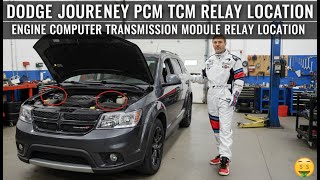
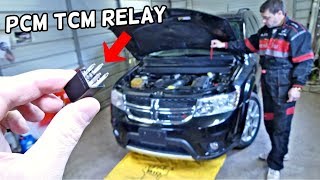
The ECM (or PCM) is located in the engine compartment. You can find it mounted near the firewall or on one of the inner fenders. The relays that power the ECM are located in the under-hood fuse box, also known as the Totally Integrated Power Module (TIPM).
Helpful Videos
Technical Specifications
OEM Part Numbers: 68259127AA 68259127AB
Application: 2.4L I4 DOHC 16V Dual VVT Engine with 4-Speed Automatic VLP Transmission
We Have This Part in Stock



The information in this article is provided for general reference and educational purposes only. Vehicle specifications, procedures, and part compatibility can vary by production date, trim level, and region. Always consult your vehicle's factory service manual and verify part numbers before purchasing or performing repairs. Safety-critical components such as airbags, seat belts, and braking systems should be installed by a qualified professional.
- Dodge Journey:
- 🎬 Helpful Videos
- 🛍️ Shop This Part
- Symptoms of a Failing Dodge Journey ECM
- Common Diagnostic Trouble Codes (DTCs)
- Known Issues, Recalls, and Technical Service Bulletins (TSBs)
- Recall S89 / NHTSA 16V-907: Crankshaft Sensor Connector
- Recall U49 / NHTSA 18V-332: Cruise Control Software Update
- Recall V66 / NHTSA 18V-524: PCM Voltage Regulator
- Buying a Used Engine Control Module: What You MUST Know
- 1. Programming is Absolutely Required
- 2. Who Can Program the ECM?
- 3. Verifying Compatibility
- 4. Physical Inspection of a Used ECM
- ECM Replacement Cost Comparison
- Frequently Asked Questions (FAQ)
- 🎟️ Get 5% Off