

2015 Dodge Journey 2.4L ECM: Programming, Failure Symptoms, and Replacement Guide
This guide covers the critical programming requirements, common failure symptoms, and compatibility details for the 2015 Dodge Journey 2.4L engine control module.
- A replacement ECM for a 2015 Dodge Journey MUST be programmed to the vehicle's VIN and security system; it is not a plug-and-play part.
- This specific ECM only fits 2015 Journey models with the 2.4L engine and 4-speed automatic transmission. It will not work with the V6 or 6-speed models.
- Common failure symptoms include a no-start condition, engine stalling, poor performance, and internal fault codes like P0601.
- Programming can be performed by a dealer, a qualified independent shop with J2534 tools, or by purchasing a pre-programmed unit from a mail-in service.
Critical Compatibility Warning
Warning: This Engine Control Module (ECM) is ONLY for 2015 Dodge Journey models equipped with the 2.4L 4-cylinder engine and a 4-speed automatic transmission. It is not compatible with models that have the 3.6L V6 engine or the 6-speed automatic transmission. Installing the wrong module will result in a no-start condition and potential communication errors.
Symptoms of a Failing 2015 Dodge Journey ECM

A failing ECM can cause a wide range of confusing and intermittent issues. Because it controls so many different systems, the symptoms can often be mistaken for other problems. Here are the most common signs that the ECM itself may be the culprit:
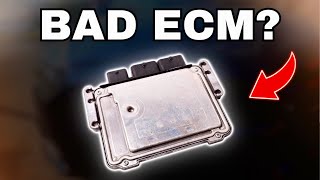
🎬 Watch: Common symptoms of a bad ECM you shouldn't ignore.- Engine Will Not Start: The engine may crank but refuse to start, or it may not crank at all. This can happen if the ECM is not properly energizing the fuel pump, injectors, or ignition system.
- Engine Stalling or Stuttering: The engine may stall unexpectedly while driving or idle very roughly. This can be caused by the ECM failing to maintain the correct air-fuel ratio or ignition timing.
- Check Engine Light: An illuminated Check Engine Light is a common symptom. Codes specifically pointing to an internal module failure, such as P0601 (Internal Control Module Memory Check Sum Error) or P0606 (PCM Processor Fault), are strong indicators of a bad ECM. You may also see communication error codes like U0100 (Lost Communication With ECM/PCM).
- Poor Performance and Fuel Economy: A noticeable drop in gas mileage or a feeling that the engine is sluggish and lacks power can be caused by an ECM that is no longer making efficient calculations for fuel and timing.
- Erratic Transmission Shifting: Since the ECM (or PCM) also controls the transmission, you might experience harsh shifting, getting stuck in one gear (limp mode), or delayed shifting.
Known Issues, Recalls, and Technical Service Bulletins (TSBs)

While there are no major recalls specifically for ECM failure on the 2015 Journey, there are several related service bulletins and a recall involving software updates:
- NHTSA Recall 18V-332 (Cruise Control): A large recall was issued because a software glitch could prevent the cruise control from being disengaged. The fix was for dealers to perform a software flash on the Powertrain Control Module. Any used or replacement module should have this update.
- TSB 18-014-15: This bulletin was released to address various diagnostic and system improvements for both the 2.4L and 3.6L engines. The procedure involves updating the PCM software to the latest version.
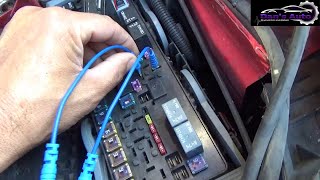
- TSB S1121000006RevA: This TSB addresses a "No Start No Crank" condition where the starter won't engage. While it can have multiple causes, it highlights potential electrical issues in the starting circuit that can be misdiagnosed as a bad ECM. 🎬 See how to troubleshoot a no-crank condition on a Journey.
- NHTSA Recall 15V-431 (Engine Cover): Specific to the 2.4L engine, this recall was for engine covers that could become dislodged and contact the hot exhaust manifold, creating a fire risk. While not an ECM issue, it's a critical safety check for any owner of this vehicle.
Buying a Used Engine Control Module: What You Must Know

Purchasing a used ECM can be a cost-effective solution, but it requires careful attention to detail to avoid compatibility problems. Given that this part is central to the vehicle's operation, getting it right is crucial.
Part Number Verification
The most reliable way to ensure compatibility is to match the part number from your original module. The number is printed on a sticker on the ECM's case. Known OEM part numbers for the 2015 Journey with the 2.4L engine and 4-speed transmission include 05150918AB, 5150918AB, and 68239181AC. Newer part numbers often supersede older ones, so a direct match isn't always required, but it's the safest method.
Physical Inspection
When you receive a used ECM, inspect it carefully before installation. Look for:
- No Corrosion: Check the pins in the electrical connectors for any signs of green or white corrosion, which indicates water damage.
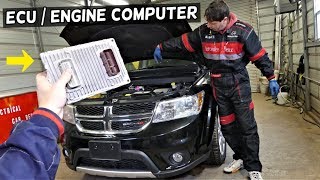
- Intact Housing: The case should be sealed and show no signs of being pried open. 🎬 Watch this walkthrough on how to remove and replace the module. An opened module is a major red flag.
- No Burn Marks or Water Stains: Any discoloration on the housing or connectors could indicate internal damage from heat or moisture.
Programming and Installation: This is NOT Plug-and-Play

Critical Warning: You cannot simply install a used ECM and start the car. The vehicle's anti-theft system (immobilizer) is linked to the ECM. A replacement module must be programmed with your vehicle's unique Vehicle Identification Number (VIN) and security key information. Failure to do so will result in a no-start condition.
Who Can Program a Dodge Journey ECM?
Programming requires specialized equipment and software subscriptions. This is not a typical DIY task.
- Dodge/Chrysler Dealerships: A dealer is the most reliable option. They use the official WiTECH 2.0 diagnostic tool and have direct access to the necessary software and security information.
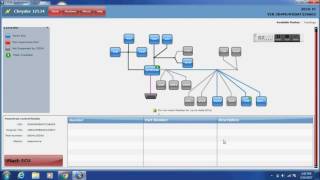
- Qualified Independent Shops: Many modern repair shops invest in professional-grade scan tools (like Autel or Snap-on) and J2534 pass-thru devices. With a subscription to Chrysler's TechAuthority, they can perform the same programming as a dealer.
- Mail-In Programming Services: Several companies offer services where you can buy a used ECM that they will pre-program with your VIN before shipping it to you. This can make the installation "plug-and-play," but you must provide your exact VIN at the time of purchase.
- Automotive Locksmiths: Some specialized locksmiths have the tools and expertise to program keys and modules, including ECMs.
Cost Comparison for a 2015 Dodge Journey ECM
| Part Type | Estimated Cost (Part Only) |
|---|---|
| New OEM | $620 - $770 |
| Remanufactured / Pre-Programmed | $250 - $450 |
| Used OEM (from a salvage yard) | $75 - $200 |
| Shop Labor (Installation & Programming) | $150 - $300 |
Note: Prices are estimates and can vary based on supplier, location, and vehicle condition. Used parts do not include the cost of programming.
Frequently Asked Questions (FAQ)
Do I absolutely have to program a replacement ECM?
Yes. The ECM is tied to the vehicle's anti-theft system. Without programming the replacement module to your vehicle's VIN and security keys, the engine will not be authorized to start. The only exception is if you purchase a pre-programmed or "plug-and-play" unit from a specialized vendor who has already performed this service.
What's the difference between an ECM, PCM, and ECU?
The terms are often used interchangeably. ECM (Engine Control Module) and ECU (Engine Control Unit) typically refer to the computer that manages the engine. PCM (Powertrain Control Module) is a more inclusive term for a module that controls both the engine and the transmission, which is the case for the 2015 Dodge Journey. For this vehicle, ECM and PCM refer to the same part.
Can I use an ECM from a Journey with a V6 engine in my 2.4L model?
No. The ECMs are specific to the engine and transmission combination. The hardware, connectors, and software are different. Using an ECM from a 3.6L V6 model will not work in a 2.4L vehicle.
My car won't crank. Is it definitely the ECM?
Not necessarily. A no-crank condition can also be caused by simpler issues like a dead battery, a bad starter relay, a faulty starter motor, or a problem with the ignition switch or key fob system. It's important to diagnose the starting and charging systems thoroughly before condemning the ECM, as it is a more expensive and complex repair.
Helpful Videos
Technical Specifications
OEM Part Numbers: 05150918AB 5150918AB 68239181AC 68239174AC 68239175AC 68239176AC 68239177AC 68239178AC 68239179AC 68239180AC 68239181AB
For 2015 Dodge Journey with 2.4L I4 DOHC 16V Dual VVT engine and 4-Speed VLP Automatic Transmission.
We Have This Part in Stock



The information in this article is provided for general reference and educational purposes only. Vehicle specifications, procedures, and part compatibility can vary by production date, trim level, and region. Always consult your vehicle's factory service manual and verify part numbers before purchasing or performing repairs. Safety-critical components such as airbags, seat belts, and braking systems should be installed by a qualified professional.
- Dodge Journey:
- 🎬 Helpful Videos
- 🛍️ Shop This Part
- Critical Compatibility Warning
- Symptoms of a Failing 2015 Dodge Journey ECM
- Known Issues, Recalls, and Technical Service Bulletins (TSBs)
- Buying a Used Engine Control Module: What You Must Know
- Part Number Verification
- Physical Inspection
- Programming and Installation: This is NOT Plug-and-Play
- Who Can Program a Dodge Journey ECM?
- Cost Comparison for a 2015 Dodge Journey ECM
- Frequently Asked Questions (FAQ)
- 🎟️ Get 5% Off