

2020-2023 Charger, Challenger, 300 3.6L ECM: Why Programming is the Most Critical Step
This guide covers the Engine Control Module (ECM) for the 2020-2023 Dodge Charger, Dodge Challenger, and Chrysler 300 with the 3.6L engine, focusing on symptoms, replacement costs, and mandatory programming requirements.
- This ECM MUST be programmed to your vehicle's VIN to function; it is not a plug-and-play part.
- It fits 2020-2023 Charger, Challenger, and 300 models with the 3.6L V6 engine ONLY.
- Always match your original part number; 68434924AC is the latest revision and replaces older versions.
- Symptoms like no-start or poor performance can be caused by many parts; thorough diagnosis is required before replacing the ECM.
Symptoms of a Failing ECM in a Charger, Challenger, or 300
A failing Engine Control Module can cause a wide range of problems, many of which can be mistaken for other issues. It's important to properly diagnose the issue, as the ECM is often blamed when the real fault lies with a sensor, wiring, or another component. Common symptoms include:
🎬 Watch: Top 3 signs of a bad engine control module- Check Engine Light: An illuminated Check Engine Light is one of the most common signs. Specific codes related to the ECM itself (P0600-P0699) or communication errors (U-codes) are strong indicators.
- Engine Performance Issues: You might experience engine stuttering, misfires, rough idling, or a sudden drop in fuel economy. This can happen if the ECM is sending incorrect commands for fuel delivery or spark timing.
- No-Start or Intermittent Starting: The vehicle may crank but fail to start, or it may start unreliably. This can be due to the ECM not sending the proper signals to the fuel pump or ignition system.
- Stalling: The engine may shut off unexpectedly while driving or when coming to a stop.
- Poor Acceleration: A noticeable lack of power when you press the gas pedal can be a sign of an ECM fault.
- Transmission Shifting Problems: On automatic transmission vehicles, the ECM communicates with the transmission controller. A bad ECM can cause hard, erratic, or delayed shifting.
Common Diagnostic Trouble Codes (DTCs)
While many codes can point to a faulty ECM, some are more direct. An OBD-II scanner is required to read these codes.
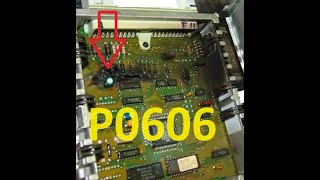
- P0600 - P0606: These codes directly indicate internal processor or communication faults within the ECM/PCM. For example, P0606 means "ECM/PCM Processor Fault". 🎬 See how to diagnose an internal ECM processor error code
- U-Series Codes: Codes like U0100 (Lost Communication With ECM/PCM) indicate that other modules in the vehicle cannot communicate with the engine computer.
- P16xx Codes: These are manufacturer-specific codes. For Chrysler/Dodge, codes like P1698 ("No CCD Messages Received From PCM") can point to an ECM issue.
Known Issues, Recalls, and Technical Service Bulletins (TSBs)
While there are no widespread recalls specifically targeting the ECM on these 2020-2023 models, there are related service bulletins and other recalls to be aware of.
- TSB S1808000152: Released for the 2020 Chrysler 300, this TSB addresses situations where the Check Engine Light illuminates and sets brake-related trouble codes (P057B, P1572) after the PCM has been replaced or flashed. This highlights the interconnectedness of the vehicle's systems and the importance of proper programming.
- Recall 20V-788 / NHTSA Campaign 20V788000: Affects 2020-2021 Charger, Challenger, and 300 models for a windshield that may not have been properly bonded, which could allow it to detach in a crash.
- Recall 01B / NHTSA Campaign 24V054000: Affects 2023 Charger, Challenger, and 300 models for an improperly adjusted parking brake.
The absence of a recall for the ECM itself suggests that failures are isolated incidents rather than a widespread manufacturing defect.
Warning: This ECM fits vehicles with the 3.6L V6 engine only. It will not work with the 5.7L, 6.2L, or 6.4L V8 engines. For Dodge Charger models, it specifically fits vehicles without the severe duty fuel filtration option.
Buying a Used Engine Control Module: What You MUST Know
Buying a used ECM can save you a significant amount of money, but it's not a simple plug-and-play part. Failure to follow these guidelines will result in a part that does not work.
1. Programming is NOT Optional
This is the single most important fact to understand. A used ECM must be professionally programmed to your vehicle's specific Vehicle Identification Number (VIN). The ECM is tied into the vehicle's anti-theft system (immobilizer). If the VIN in the ECM does not match the VIN stored in the other modules of your car, the engine will not start. You cannot simply swap the module and expect it to work.
2. Match Your Part Number
You must match the part number on your original ECM to the replacement unit. The primary OEM part numbers for this application are 68434924AA, 68434924AB, and 68434924AC. The later letters in the suffix (e.g., AC) are typically newer revisions that supersede the older ones (AA, AB). It is generally safe to use a newer revision, but you should never use an older one. Always confirm compatibility with the seller.
3. Physical Inspection
When your used ECM arrives, inspect it carefully before installation. Look for any signs of physical damage, bent pins on the connectors, or corrosion. The modules are located in the engine bay, making them susceptible to the elements if not properly sealed. Ensure the security seals or inspection bags from the seller are intact if they are required for warranty purposes.
ECM Replacement and Programming
ECM Location
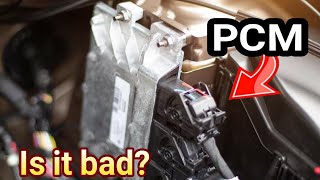
On the 2020-2023 Dodge Charger, Challenger, and Chrysler 300 with the 3.6L engine, the ECM is typically located in the engine bay, mounted to the side of the firewall or inner fender. It is a silver metal box with several large electrical connectors.
Step 1: Physical Installation (DIY Feasible)
- Disconnect the battery: Always disconnect the negative battery terminal before working on any vehicle electronics.
- Access the ECM: Remove any covers or components blocking access to the module.
- Disconnect electrical connectors: Carefully release the locking tabs and unplug the large wiring harnesses from the old ECM.
- Unbolt the module: Remove the bolts holding the ECM to its bracket.
- Install the new ECM: Bolt the replacement ECM into place, reconnect the wiring harnesses, and re-install any covers.
- Reconnect the battery.
Step 2: Programming (Professional Required)
Warning: After the physical swap, the vehicle will NOT start or run correctly until the ECM is programmed. You will need to have the vehicle towed to a facility for programming unless you use a mobile service.
You have a few options for programming:
- Dealership: Any Chrysler, Dodge, Jeep, or Ram dealer has the factory tools (wiTECH) to program the module. This is the most reliable but often most expensive option.
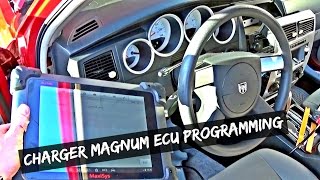
- Independent Repair Shop: Many independent shops have the necessary J2534 pass-thru tools and a subscription to the manufacturer's software to perform programming. You must call ahead to confirm they have this capability for late-model Chrysler products.
- Mail-In Service: Some companies offer a service where you mail them your original ECM and the replacement unit. They will clone the data (including VIN and immobilizer info) from your old module to the new one, making it plug-and-play when you get it back. This only works if your original module is still able to communicate.
- Pre-Programmed Units: Some sellers of remanufactured ECMs will pre-program the unit with your VIN before shipping it to you, making the installation much simpler.
Cost to Replace the ECM
Prices can vary based on your location and the supplier. Here is an estimated breakdown:
| Part Type | Estimated Cost |
|---|---|
| New OEM (Mopar) | $150 - $250 |
| Used OEM (Recycled) | $60 - $120 |
| Remanufactured / Pre-Programmed | $200 - $400 |
| Shop Labor (Installation & Programming) | $150 - $300 |
Frequently Asked Questions (FAQ)
Do I have to go to the dealer to program a new ECM?
Not necessarily. While a dealer is a guaranteed option, many well-equipped independent auto repair shops and some mobile automotive locksmiths have the tools and software subscriptions to program a new or used ECM to your vehicle. You can also use a mail-in cloning service if your old module is readable. Always call ahead to verify capabilities.
Will a used ECM from another Charger/300/Challenger work in my car?
Yes, but only if the part number is compatible and it is professionally reprogrammed with your car's VIN and security information. You cannot simply take a module from another car and plug it into yours; it will not start.
What's the difference between an ECM and a PCM?
The terms are often used interchangeably. ECM stands for Engine Control Module, while PCM stands for Powertrain Control Module. In most modern vehicles, including these Chrysler/Dodge models, a single module controls both the engine and the transmission. Therefore, PCM is the more accurate term, but ECM is still widely used and understood to mean the same thing.
Can I drive my car with a failing ECM?
It is not recommended. Depending on the failure mode, you risk the engine stalling in traffic, which is a major safety hazard. Running with a bad ECM can also cause damage to other expensive components, like the catalytic converters, due to an incorrect air-fuel mixture.
Technical Specifications
| Specification | Value |
|---|---|
| Vehicle Fitment | 2020-2023 Dodge Charger, 2020-2023 Chrysler 300, 2020-2023 Dodge Challenger |
| Engine Fitment | 3.6L V6 24V VVT Engine Only |
| OEM Part Numbers | 68434924AA, 68434924AB, 68434924AC |
| Supersession | 68434924AC replaces 68434924AB and 68434924AA |
Helpful Videos
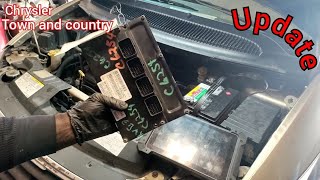
Technical Specifications
OEM Part Numbers: 68434924AA 68434924AB 68434924AC
Fits vehicles with 3.6L V6 24V VVT engine. For Dodge Charger, excludes severe duty fuel filtration option. Requires VIN programming for function.
We Have This Part in Stock



The information in this article is provided for general reference and educational purposes only. Vehicle specifications, procedures, and part compatibility can vary by production date, trim level, and region. Always consult your vehicle's factory service manual and verify part numbers before purchasing or performing repairs. Safety-critical components such as airbags, seat belts, and braking systems should be installed by a qualified professional.
- Dodge Charger:
- Chrysler 300:
- Dodge Challenger:
- 🎬 Helpful Videos
- 🛍️ Shop This Part
- Symptoms of a Failing ECM in a Charger, Challenger, or 300
- Common Diagnostic Trouble Codes (DTCs)
- Known Issues, Recalls, and Technical Service Bulletins (TSBs)
- Buying a Used Engine Control Module: What You MUST Know
- 1. Programming is NOT Optional
- 2. Match Your Part Number
- 3. Physical Inspection
- ECM Replacement and Programming
- ECM Location
- Step 1: Physical Installation (DIY Feasible)
- Step 2: Programming (Professional Required)
- Cost to Replace the ECM
- Frequently Asked Questions (FAQ)
- Technical Specifications
- 🎟️ Get 5% Off