

2013-2014 Challenger & Wrangler Engine Control Module: Failure, Recalls, and Programming Guide
This guide covers common failure symptoms, critical recalls, and the mandatory VIN programming required when replacing the engine computer in your 3.6L Dodge Challenger or Jeep Wrangler.
- A replacement ECM for a 2013-2014 Challenger or Wrangler MUST be programmed to the vehicle's VIN to disable the anti-theft system; otherwise, the engine will not start.
- The easiest option for most people is to buy a used or remanufactured ECM that is pre-programmed with your VIN by the seller.
- The ECM is in a different location on each vehicle: in the trunk on the Challenger and in the engine bay on the Wrangler.
- Before replacing the ECM, always check for the alternator recall (NHTSA 14V634000), as a failing alternator can damage the ECM or mimic its symptoms.
Symptoms of a Failing ECM

A faulty Engine Control Module can cause a wide variety of symptoms, ranging from a simple check engine light to a car that won't start at all. Because the ECM controls so many different systems, its failure can sometimes be misdiagnosed as a bad sensor or other component. Always perform a full diagnostic before condemning the ECM.
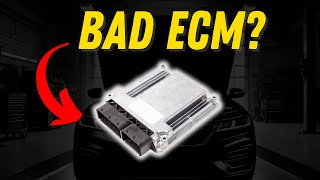
🎬 Watch: A breakdown of common ECM failure symptoms and repair costs.- Check Engine Light: This is the most common symptom. Specific fault codes pointing to the ECM itself, like P0601 (Internal Control Module Memory Check Sum Error) or P0606 (ECM/PCM Processor Fault), are a strong indicator of failure.
- Engine Stalling or Misfiring: The engine may stall unexpectedly while driving or at idle. This can happen intermittently and may be caused by the ECM failing to properly command fuel and spark.
- No-Start Condition: The engine may crank but refuse to start. This can happen if the ECM is not activating the fuel pump or ignition coils.
- Poor Engine Performance: You may experience a noticeable loss of power, poor acceleration, hesitation, and a significant drop in fuel economy.
- Erratic Shifting: On automatic transmission models, a bad ECM can send incorrect data to the transmission controller, leading to harsh or delayed shifts.
- Communication Failures: A diagnostic scan tool may be unable to communicate with the ECM, which is a definitive sign of a major internal failure.
Known Issues, Recalls, and Technical Service Bulletins (TSBs)

For these specific vehicles, several factory issues can either mimic ECM failure or directly cause it. It is critical to check if your vehicle has had these recalls performed before replacing the ECM.
NHTSA Recall 14V634000: Failing Alternator
A widespread recall was issued for failing alternators on many 2011-2014 Chrysler vehicles equipped with the 3.6L engine, including the Dodge Challenger. A faulty alternator can cause the vehicle to stall without warning. More importantly, a failing alternator can produce voltage spikes or unstable voltage, which can permanently damage sensitive electronics, including the Engine Control Module. If you are experiencing ECM-like symptoms, it is essential to have your charging system and alternator tested first.
NHTSA Recall 13V090000: Challenger Starter Cable Short
This recall affects 2013 Dodge Challengers with the V6 engine. The battery positive cable at the starter motor could short circuit, potentially leading to a fire. Owners were advised to stop driving their vehicles and not park near structures until the repair was made. An electrical short of this magnitude can easily destroy the ECM.
Diagnosing a Faulty ECM

Diagnosing an ECM should be a process of elimination. Due to its cost and the need for programming, it should be the last part you replace after ruling out all other possibilities.
- Scan for Codes: Use an OBD-II scanner to check for diagnostic trouble codes. Codes specifically for the module itself (P0600-P060F) point strongly to an internal failure. However, if you have multiple, seemingly unrelated sensor or circuit codes, it could also indicate a faulty ECM that is misinterpreting data.
- Check Power and Ground: The most common cause of ECM failure is not the module itself, but a loss of power or ground to it. Use a multimeter to verify that the ECM's power and ground circuits have proper voltage and continuity. A wiring diagram is essential for this step.
- Rule Out Other Components: If you have a code for a specific sensor (e.g., crankshaft position sensor), test that sensor and its wiring thoroughly before assuming the ECM is the problem. A history of repeatedly replacing the same sensor without fixing the issue can point towards a bad driver circuit within the ECM.
- Inspect the Charging System: As noted in the recall section, have the alternator's output tested to ensure it is providing stable voltage.
Warning: Never probe ECM connectors with standard multimeter probes. This can spread the delicate pins and cause permanent connection problems. Use proper back-probes or pin-out test adapters.
Buying a Used Engine Control Module: What You MUST Know
Buying a used ECM is a great way to save money, but it is not a simple plug-and-play part. Failure to follow the correct procedure will result in a vehicle that does not start.
Programming is MANDATORY
A replacement ECM, whether it's new, remanufactured, or used, must be programmed to your vehicle's specific Vehicle Identification Number (VIN). The ECM is a key part of the vehicle's anti-theft system, often called the Sentry Key Immobilizer Module (SKIM). If the VIN in the ECM does not match the VIN stored in the other modules of the car, the anti-theft system will activate and prevent the engine from starting.
Who Can Program the ECM?
- Pre-Programmed Modules: Many online retailers sell used or remanufactured ECMs that are pre-programmed to your VIN before they are shipped. You provide your VIN at the time of purchase, and the module arrives ready for installation. This is often the easiest and most cost-effective option for DIYers.
- Dealership: A Chrysler, Dodge, or Jeep dealer can program a new or used ECM to your vehicle using their proprietary wiTECH diagnostic software. This is the most reliable but also the most expensive option.
- Automotive Locksmiths & Independent Shops: Some advanced locksmiths and repair shops have the necessary tools and software subscriptions (like AutoAuth for Chrysler products) to program the ECM and sync the immobilizer keys. Always call ahead to confirm they have this capability for your specific model year.
Pro Tip: When buying a used ECM, ensure the part number on the module matches your original part number exactly. While some numbers may supersede others, an exact match is the safest way to ensure compatibility.
Replacement Procedure Overview

The physical replacement of the ECM is relatively simple, but the location differs between the Challenger and the Wrangler.
Warning: Always disconnect the negative terminal of the battery before beginning any work on the ECM to prevent electrical damage.
2013-2014 Dodge Challenger Location
On the Dodge Challenger, the ECM is located in the trunk, on the driver's side, behind the carpeted trim panel.
🎬 See this walkthrough on how to remove a Challenger PCM.- Disconnect the negative battery terminal.
- Remove the plastic trunk trim and pull back the carpet liner on the driver's side to expose the ECM and its metal bracket.
- Unbolt the bracket (typically 10mm and 13mm bolts).
- Carefully unplug the two large electrical connectors from the ECM. They have a locking tab and a lever that must be actuated.
- Remove the old ECM from the bracket and install the new one.
- Reconnect everything in the reverse order of removal.
2013-2014 Jeep Wrangler (JK) Location
On the Jeep Wrangler, the ECM is located in the engine bay, mounted to the firewall, typically on the passenger side.
- Disconnect the negative battery terminal.
- Locate the ECM on the firewall.
- Release the red locking tabs on the two large electrical connectors and unplug them.
- Unbolt the three bolts holding the ECM to its mounting bracket.
- Install the new ECM and reconnect everything in the reverse order. Ensure any ground straps are securely re-fastened.
Cost of Replacing the ECM (2013-2014 Challenger & Wrangler)
The total cost can vary significantly based on the part source and labor for programming.
| Item | Estimated Cost |
|---|---|
| New OEM (Mopar) | $780 - $1,155 (plus a refundable core charge of ~$125) |
| Remanufactured / Used OEM (Pre-Programmed) | $250 - $450 |
| New Aftermarket | Not commonly available |
| Shop Labor (Physical Swap) | $120 - $190 (approx. 1 hour) |
| Shop Labor (Programming Only) | $150 - $400 (1-2 hours at dealer/shop rate) |
Frequently Asked Questions (FAQ)
Do I have to get a used ECM programmed?
Yes, absolutely. A used ECM must be programmed with your vehicle's VIN. Without programming, the anti-theft system will prevent the engine from starting.
Can I drive my car with a bad ECM?
It is not recommended. If the ECM is failing, it can cause the engine to stall at any time, which is a major safety hazard. If the car won't start, it is undrivable.
What's the difference between an ECM and a PCM?
The terms are often used interchangeably. ECM stands for Engine Control Module, while PCM stands for Powertrain Control Module. In most modern vehicles like the Challenger and Wrangler, a single PCM controls both the engine and the automatic transmission, so PCM is the more accurate term, but ECM is still widely used.
Can I program a Chrysler ECM myself?
For the average DIY mechanic, the answer is no. Programming requires expensive, specialized scan tools (like the dealer's wiTECH system) and a paid subscription to the manufacturer's software service. The most practical solution is to buy a pre-programmed module or have it done by a dealer or specialist shop.
Helpful Videos

Technical Specifications
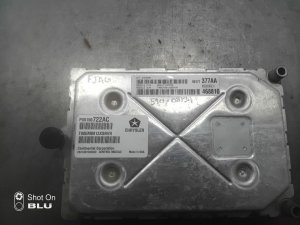
OEM Part Numbers: 05150722AC 05150783AA 05150783AB 5150722AC 5150783AB P05150783AB 68149822AA
Engine: 3.6L Pentastar V6
We Have This Part in Stock



The information in this article is provided for general reference and educational purposes only. Vehicle specifications, procedures, and part compatibility can vary by production date, trim level, and region. Always consult your vehicle's factory service manual and verify part numbers before purchasing or performing repairs. Safety-critical components such as airbags, seat belts, and braking systems should be installed by a qualified professional.
- Dodge Challenger:
- Jeep Wrangler:
- 🎬 Helpful Videos
- 🛍️ Shop This Part
- Symptoms of a Failing ECM
- Known Issues, Recalls, and Technical Service Bulletins (TSBs)
- NHTSA Recall 14V634000: Failing Alternator
- NHTSA Recall 13V090000: Challenger Starter Cable Short
- Diagnosing a Faulty ECM
- Buying a Used Engine Control Module: What You MUST Know
- Programming is MANDATORY
- Who Can Program the ECM?
- Replacement Procedure Overview
- 2013-2014 Dodge Challenger Location
- 2013-2014 Jeep Wrangler (JK) Location
- Cost of Replacing the ECM (2013-2014 Challenger & Wrangler)
- Frequently Asked Questions (FAQ)
- 🎟️ Get 5% Off