

BMW B58 Engine Computer (DME) Failure: A Guide for X3, 540i, 740i & More (2016-2022)
If your 2016-2022 BMW with the B58 engine won't start or runs poorly, the engine computer (DME) might be the cause, but replacement requires critical programming steps you must know before buying a used part.
- A used DME MUST be 'cloned' from your original failed unit to work. It is not plug-and-play due to anti-theft systems.
- Cloning involves sending your original DME and a compatible used DME to a specialist service; it is far cheaper than buying a new DME from a dealer.
- Common failure symptoms include a no-start condition, 'Drivetrain Malfunction' warnings, and the inability to communicate with the DME via a scan tool.
- Check for a software-related recall (NHTSA 21V-586) that can cause brake assist failure, as the fix is a free dealer software update, not a DME replacement.
- Water and coolant intrusion are common causes of DME failure; check for corrosion on the connectors and resolve any leaks.
Symptoms of a Failing B58 DME


A failing DME can cause a wide range of confusing and severe symptoms. Because it controls all engine functions, its failure can mimic other problems, making diagnosis tricky. Look for these common signs:
- Complete No-Start or Crank-No-Start: This is the most serious symptom. The engine may not crank at all, or it may crank over but refuse to start.
- "Drivetrain Malfunction" Warnings: You will likely see a "Drivetrain Malfunction: Drive moderately" or "Driving not possible" error on the iDrive screen.
- Engine Misfires and Rough Idle: The engine may run very poorly, shake, or stall unexpectedly. This can be isolated to specific cylinders or affect all of them.
- Loss of Communication: A mechanic may be unable to communicate with the DME using a standard OBD-II scanner or professional diagnostic tools like ISTA. This is a strong indicator that the module itself has failed.
- Multiple, Unrelated Fault Codes: A failing DME can trigger a cascade of fault codes for various sensors and systems because it can no longer process their signals correctly. You might see errors for camshaft sensors, fuel pressure, and more, all at once.
- Water or Coolant Damage: Physical inspection may reveal corrosion on the DME pins or case. This is a common failure mode caused by clogged cowl drains or coolant wicking up the wiring harness during a separate repair, such as an oil filter housing gasket replacement.
Common Diagnostic Trouble Codes (DTCs)
While many codes can appear, some are more directly linked to an internal DME failure:
- DME Internal Fault Codes: Codes like 133902 (DME internal fault) or 2D58/2D59 (DME internal failure) point directly to a problem with the computer itself.
- Communication Codes: Faults indicating no communication with the DME are a major red flag.
- Misfire Codes: You may see codes like 29CC (misfirings, several cylinders) or 29CD through 29D2 for individual cylinders.
- Valvetronic and Sensor Codes: Codes related to Valvetronic system failures (e.g., 134B02) or multiple sensor shorts can also be triggered by a faulty DME.
Pro Tip: Before condemning the DME, check the battery and charging system. A weak battery can cause a host of strange electronic issues in these vehicles that may mimic DME failure.
Known Issues, Recalls, and Service Bulletins

Safety Recall 21V-586: DME Software and Brake Assist
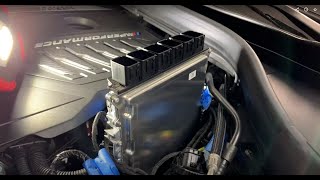
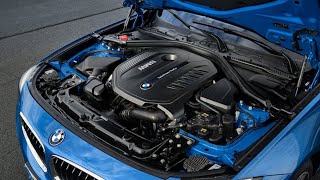
In July 2021, BMW issued a safety recall for a DME software issue affecting many 2019-2021 models, including the X3, 5-Series, and 7-Series. A software error could damage the tandem vacuum/oil pump under specific engine start conditions, leading to a loss of power brake assist. This would make the brake pedal feel very hard and increase stopping distances. The fix is a simple DME software update performed for free 🎬 Watch: Overview of B58 engine reliability and common recall issues. by any BMW dealer. If your vehicle falls in this range, check with a dealer or on the NHTSA website to see if this recall is open for your VIN.
Service Bulletin SIB 66 24 19: BDC and No-Start Issues
Some vehicles may experience a no-start condition where the key is not detected. This is often caused by a software error in the Body Domain Controller (BDC), not the DME. The symptoms can be similar to a DME failure, but the fix is a software update for the BDC. This highlights the importance of proper diagnosis before replacing expensive components.
Buying a Used Engine Control Module (DME)

Replacing a failed DME is not a simple plug-and-play job. Due to the sophisticated anti-theft system in these vehicles, you cannot simply install a used DME from another car. It will not work. Here is what you must know before you buy.
The #1 Rule: Programming is Mandatory
The DME is "married" to the car it came from. It stores the vehicle's unique Vehicle Identification Number (VIN) and a secret code called the Individual Serial Number (ISN) that must match the immobilizer module (known as CAS, FEM, or BDC in BMWs). If these do not match, the car will not start.
There are two main ways to address this:
- Dealer Replacement (New DME Only): A BMW dealer can install and program a brand new DME ordered for your specific VIN. They will NOT program a used DME you provide. This is the most expensive option by far.
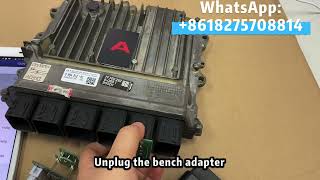
- DME Cloning (For Used DMEs): This is the most cost-effective solution. A specialized service can transfer all the critical data from your original, faulty DME to a compatible, used donor DME. This process involves reading the VIN, ISN, software, and coding from your old unit and writing it to the replacement. Once cloned, the used DME becomes a perfect copy of your original and is 100% plug-and-play—no further programming is needed. 🎬 See how the B58 DME cloning process works step-by-step.
Warning: You must send both your original DME and the used replacement DME to a cloning service. They need the data from your original module to make the replacement work in your car.
How to Choose a Compatible Used DME
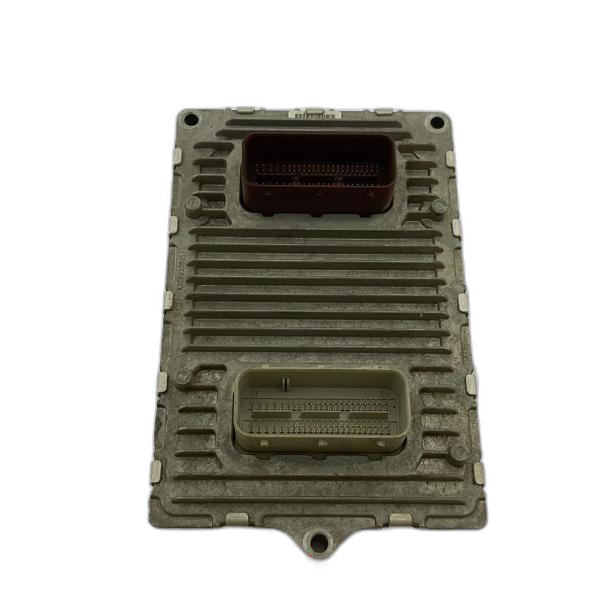
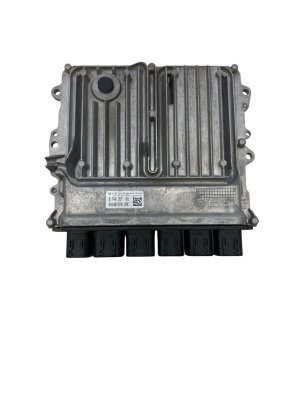
- Match the Part Number: The Bosch or BMW part number on the replacement DME should match your original unit. The primary OEM part number for these vehicles is 12148680195, with other compatible numbers including 5A4C365, 9485817, and the Bosch number 0261S105VT.
- Inspect for Damage: When buying a used DME, check the connectors for any bent or corroded pins. Look for any signs of water intrusion or physical damage to the case.
- Tuning Lock Warning (For Tuners): DMEs manufactured after June 2020 have a factory-installed software lock that prevents OBD-II tuning with popular platforms like Bootmod3 or MHD. If you plan to tune your vehicle, seek a DME with a production date of 06/2020 or earlier, or be prepared to pay for a specialized "bench unlock" service.
Replacement Overview & Difficulty
On these G-chassis platforms (G01 X3, G30 5-Series, G11/G12 7-Series, G32 6-Series GT), the DME is located in the engine compartment, typically on the passenger side under a plastic electronics box cover near the firewall. Access is generally straightforward but requires care.
- Disconnect the negative battery terminal.
- Remove any engine bay cross-braces that may be covering the electronics box.
- Remove the plastic cover for the electronics box.
- Carefully disconnect the numerous electrical connectors. It is highly recommended to label them or take a photo first to ensure correct reassembly. The connectors have locking levers that must be released.
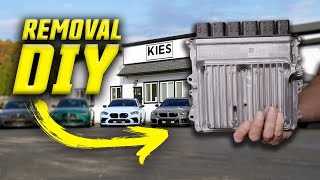
- Release the locking tabs holding the DME in its tray and slide it out. 🎬 Watch: A complete walkthrough of the DME removal and installation.
Installation is the reverse of removal. If you are using a cloned DME, the car should start and run normally once everything is reconnected.
Cost Breakdown
The cost to replace a failed DME can vary dramatically depending on the path you choose. Here are typical estimates:
| Repair Option | Estimated Cost |
|---|---|
| New OEM DME from Dealer | $2,000 - $4,000+ (Part, programming, and labor) |
| Used OEM DME | $250 - $750 (Part only) |
| DME Cloning Service | $200 - $400 (Mail-in service) |
| Shop Labor (Install Only) | $150 - $300 |
As you can see, sourcing a used DME and having it cloned can save you thousands of dollars compared to a dealer replacement.
Frequently Asked Questions (FAQ)
Can I drive my car with a failing DME?
No. If the DME is causing a no-start, stalling, or severe running issues, the vehicle is not drivable. If symptoms are intermittent, you risk the engine shutting off while driving, which is a major safety hazard. The vehicle should be towed to a repair facility.
What is the difference between programming, coding, and cloning?
Programming (or 'flashing') is loading the base operational software onto the module. Coding is configuring that software for your car's specific options (e.g., transmission type, features). Cloning is an exact, bit-for-bit copy of all data—including programming, coding, VIN, and immobilizer keys—from one module to another. A cloned module requires no extra setup.
Can an independent shop or locksmith program a used DME?
Most standard independent shops and locksmiths cannot. Programming a used BMW DME requires specialized tools and knowledge to handle the immobilizer system. Your best bet is to use a mail-in cloning service that specializes in BMW electronics or find a high-end European specialist shop that offers this service.
Why won't the dealer just program a used DME for me?
For security and liability reasons, BMW's official policy and tooling only allow for the programming of brand new, virgin DMEs that are ordered specifically for a vehicle's VIN. They will not and cannot program a used part from another vehicle.
Helpful Videos
Technical Specifications
OEM Part Numbers: 12148680195 5A4C365 9485817
Bosch Part Number: 0261S105VT
We Have This Part in Stock




The information in this article is provided for general reference and educational purposes only. Vehicle specifications, procedures, and part compatibility can vary by production date, trim level, and region. Always consult your vehicle's factory service manual and verify part numbers before purchasing or performing repairs. Safety-critical components such as airbags, seat belts, and braking systems should be installed by a qualified professional.
- BMW X3:
- BMW 540i:
- BMW 740i:
- BMW 540i xDrive:
- BMW 640i xDrive Gran Turismo:
- BMW 740i xDrive:
- 🎬 Helpful Videos
- 🛍️ Shop This Part
- Symptoms of a Failing B58 DME
- Common Diagnostic Trouble Codes (DTCs)
- Known Issues, Recalls, and Service Bulletins
- Safety Recall 21V-586: DME Software and Brake Assist
- Service Bulletin SIB 66 24 19: BDC and No-Start Issues
- Buying a Used Engine Control Module (DME)
- The #1 Rule: Programming is Mandatory
- How to Choose a Compatible Used DME
- Replacement Overview & Difficulty
- Cost Breakdown
- Frequently Asked Questions (FAQ)
- 🎟️ Get 5% Off