

Audi A6, A8, S6, S7, RS7 & S8 (2012-2018) ECM Failure: Water Damage, Programming, and Part Number Confusion
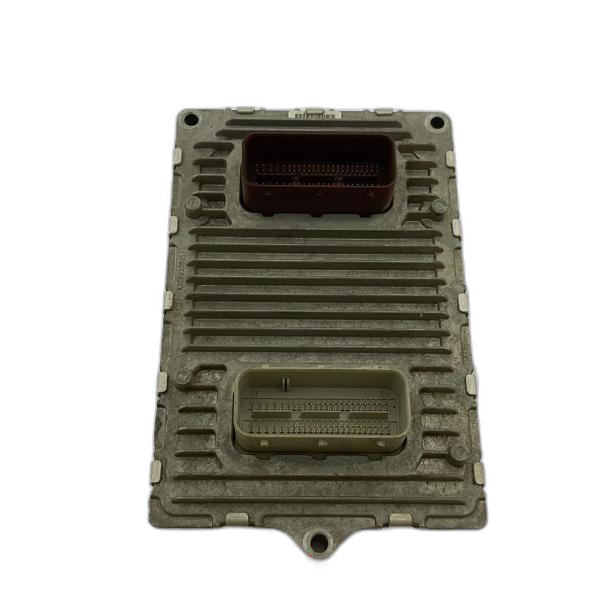
This guide clarifies the difference between the main Engine Control Module (ECM) and the Engine Mount Module, and details the critical programming and component protection steps required for replacement.
- A replacement ECM MUST be programmed. Due to Audi's Component Protection and immobilizer, you cannot simply swap in a used module.
- The best option for a used ECM is a mail-in 'cloning' service, which makes the replacement part plug-and-play.
- Water damage from clogged plenum drains is the #1 killer of ECMs in the A6/S6/A7/RS7 models.
- The part number 4H0-907-145-B is for the engine MOUNT control module, not the main engine computer (ECM).
Part Number Warning: Is it the ECM or the Engine Mount Module?

Before diagnosing any issue, it is crucial to identify the correct part. The OEM part number 4H0-907-145-B (and its variant 4H0907145B) does not refer to the main Engine Control Module (ECM). It is the control unit for the hydraulic engine mounts. While a failure of this mount module can affect ride comfort, it will not cause the engine to run poorly or fail to start. If you are experiencing major engine performance problems, you are likely dealing with the main ECM, which has different part numbers and a much more complex replacement process. The remainder of this guide focuses on the main Engine Control Module (ECM).
Symptoms of a Failing Engine Control Module (ECM)

A failing ECM can cause a wide and often confusing array of symptoms. Because it is connected to so many systems, its failure can mimic other problems. Here are the most common signs:
- Complete No-Start Condition: The engine may crank but will not fire. This can be caused by the ECM failing to control the fuel pump, injectors, or ignition coils.
- Sudden Stalling: The engine may die unexpectedly while driving or idling. This could be related to internal processor failure or a loss of power to the module.
- Multiple, Unrelated Warning Lights: A classic sign of ECM failure is the sudden appearance of numerous warning lights on the dashboard, such as the Check Engine Light, EPC (Electronic Power Control), ABS, and stability control lights. This often points to a communication failure on the vehicle's network.
- Limp Mode / Drastically Reduced Power: The vehicle may enter a protective 'limp mode' with very limited acceleration and speed. This is the ECM trying to prevent further damage.
- Rough Running and Misfires: If the ECM's injector or ignition coil drivers fail, the engine may run very poorly, misfire, and idle erratically.
- No Communication with Diagnostic Scan Tools: If a scan tool cannot communicate with the ECM (address word 01), it is a strong indicator that the module itself has failed or lost power.
Common Diagnostic Trouble Codes (DTCs)
While many codes can be triggered, some are more specific to ECM integrity:
- P0600-P0606: These codes generally indicate internal control module processor faults, ROM errors, or other critical internal failures.
- P1603: Internal Control Module Malfunction.
- P1681: Control Unit Programming Not Finished.
- P1609: Crash Shut-Down Activated (can sometimes be triggered erroneously by an internal fault).
Warning: Many symptoms of ECM failure, especially the EPC light and limp mode, are identical to those of a blocked 🎬 See this guide on EPC light causes and fixes turbocharger oil strainer, a common issue covered by Audi Recall 21H7 for 4.0T engines. This more common problem must be ruled out before condemning the ECM.
Known Issues, TSBs, and Recalls

Critical Issue: Water Damage from Clogged Plenum Drains
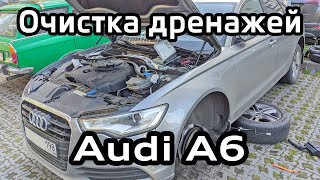
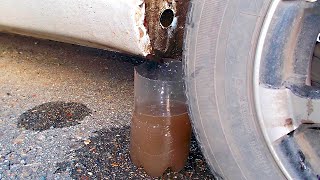
The most common cause of ECM failure on the Audi A6/S6/RS7 (C7 platform) is water intrusion. The ECM is located in the engine bay, inside a plastic box in the plenum area below the windshield. The drains in this area can become clogged with leaves and debris. When this happens, rainwater fills the plenum and floods the ECM and its wiring connectors, causing corrosion and short circuits. This often leads to a sudden no-start condition accompanied by a cascade of electrical fault messages.
Pro Tip: Prevention is key. Regularly inspect and clean the plenum drains under the windshield cowl 🎬 Watch: How to clean your Audi A6 C7 plenum drains to ensure water can drain properly. This simple maintenance can prevent a multi-thousand dollar repair.
Recalls and Technical Service Bulletins (TSBs)
- NHTSA Recall 16V619000 (A8/S8): On some A8 models, a coolant valve can leak directly onto the engine control module, potentially causing a short circuit and engine stalling.
- TSB 2046724/5 (4.0T Engines): Addresses sporadic no-start or long-crank issues when the engine is warm. The fix involves an ECM software update.
- Emissions Campaign 24CO (3.0T Engines): An ECM software update was issued to correct overly sensitive diagnostic thresholds for the catalytic converters, which could cause a false Check Engine Light.
The #1 Challenge: Programming, Immobilizer, and Component Protection

You cannot simply swap a used ECM into these vehicles and expect it to work. The ECM is a central part of the vehicle's anti-theft system, which involves two key features: the Immobilizer and Component Protection.
Immobilizer & Component Protection (CP) Explained
The ECM, ignition key, and instrument cluster are all cryptographically linked as part of the Immobilizer system. If the ECM doesn't recognize the key data, the engine will not start. Additionally, Audi uses a system called Component Protection (CP), which registers major electronic modules to the car's unique Vehicle Identification Number (VIN) in a central factory database. If you install a used ECM, the car will recognize it as a foreign part, trigger Component Protection, and disable or limit many functions, often resulting in a no-start condition or severe limp mode.
Solutions for Replacing an ECM
- Audi Dealer (New Part): A dealer can install a brand new ECM and program it to the vehicle using their ODIS diagnostic system, which has a live online connection (GeKo) to Audi's servers to adapt the Component Protection and immobilizer. This is the most expensive option.
- Specialist Independent Shop (Used Part): Some high-end independent shops have the specialized tools and subscriptions (like ODIS or AVDI) to adapt a used module to your car. However, many dealers will refuse to program a used part supplied by a customer.
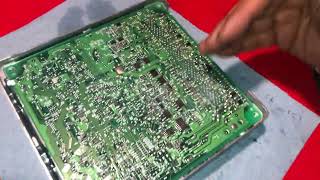
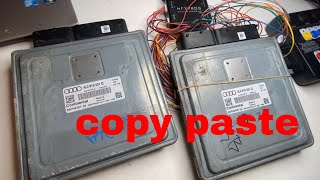
- Mail-in Cloning Service (Used Part): This is the most reliable and cost-effective method for DIYers and most shops using a recycled part. You send your original (failed) ECM and the replacement (used) ECM to a specialist service. They will read all the critical data—VIN, immobilizer, software, and coding—from your original module and write it directly onto the replacement. The replacement then becomes an exact 'clone' of the 🎬 Watch: How a specialist clones an original ECM to a donor original, requiring no further programming. It will be plug-and-play.
Buying a Used Engine Control Module (ECM)
Buying a used ECM is an excellent way to save money, but you must follow these rules to avoid getting a part you can't use.
- Match the Part Number Exactly: The OEM part number on the replacement ECM case must be an exact match to your original module. Also pay attention to the Bosch or Siemens hardware and software numbers on the label. Even a single digit difference can mean it's incompatible.
- Plan for Cloning Before You Buy: A used ECM is only half the solution. Before you even purchase the part, you must have a plan for programming. Research and contact a reputable mail-in cloning service. You will need to send them both your original module and the used one you purchase.
- Inspect for Physical Damage: When the part arrives, check it carefully. Look for any signs of corrosion on the pins, which indicates past water damage. Check if the case has been pried open, which could mean a failed repair attempt.
- Buy from a Reputable Supplier: Purchase from a recycled parts seller that offers a warranty. This protects you if you receive a defective part that cannot be cloned.
Replacement Cost Comparison
| Part or Service | Estimated Cost |
|---|---|
| New OEM ECM (Part Only) | $1,800 - $2,200 |
| Used OEM ECM (Part Only) | $150 - $500 |
| Remanufactured / Repaired ECM | $350 - $600 |
| Mail-in Cloning Service | $150 - $400 |
| Shop Labor (Diagnosis & Installation) | $150 - $300 |
| Dealer Programming (if not cloning) | $200 - $400 |
Costs are estimates and can vary based on location, vehicle model, and specific part number.
Frequently Asked Questions (FAQ)
Can I just install a used ECM and drive?
No. Due to Audi's immobilizer and Component Protection systems, a used ECM must be either cloned from your original unit or adapted by a dealer or specialist with online programming capabilities. Simply plugging it in will result in a no-start condition or severe functional limitations.
My mechanic says my ECM is bad. What should I do first?
First, verify the diagnosis. Ask for the specific fault codes. If you own an A6, S6, or RS7, check the plenum drains for water and look for signs of corrosion on the ECM connectors. If you own a 4.0T model, ensure the turbo oil strainer recall (21H7) has been performed or ruled out, as its symptoms are very similar.
What is 'cloning' and is it safe?
Cloning is a process where a specialist service copies the complete software and security data from your original ECM to a compatible used ECM. This makes the used unit an identical twin of your original. It is a very safe and reliable method, often more so than trying to get a dealer to program a used part. It is the recommended procedure when using a recycled ECM.
Where is the ECM located?
On the C7 platform vehicles (A6/S6/A7/S7/RS7), the ECM is located in the engine compartment, under the plastic cowl panel near the base of the windshield, typically on the driver's side. On the D4 platform (A8/S8), it is in a similar location. It is housed within a black plastic box for protection, but this box is not always waterproof if the main plenum drains are clogged.
Helpful Videos

Technical Specifications
OEM Part Numbers: 4H0-907-145-B (Hydraulic Engine Mount Module) Note: Main ECM part numbers vary greatly by engine, year, and software. Always match the number from your original ECM.
Location: In the engine bay, under the windshield cowl, inside a black electronics box.
We Have This Part in Stock




The information in this article is provided for general reference and educational purposes only. Vehicle specifications, procedures, and part compatibility can vary by production date, trim level, and region. Always consult your vehicle's factory service manual and verify part numbers before purchasing or performing repairs. Safety-critical components such as airbags, seat belts, and braking systems should be installed by a qualified professional.
- Audi A6:
- Audi RS7:
- Audi S6:
- Audi S7:
- Audi A8 Quattro:
- Audi S8:
- 🎬 Helpful Videos
- 🛍️ Shop This Part
- Part Number Warning: Is it the ECM or the Engine Mount Module?
- Symptoms of a Failing Engine Control Module (ECM)
- Common Diagnostic Trouble Codes (DTCs)
- Known Issues, TSBs, and Recalls
- Critical Issue: Water Damage from Clogged Plenum Drains
- Recalls and Technical Service Bulletins (TSBs)
- The #1 Challenge: Programming, Immobilizer, and Component Protection
- Immobilizer & Component Protection (CP) Explained
- Solutions for Replacing an ECM
- Buying a Used Engine Control Module (ECM)
- Replacement Cost Comparison
- Frequently Asked Questions (FAQ)
- 🎟️ Get 5% Off